


Fitted Travelling Case
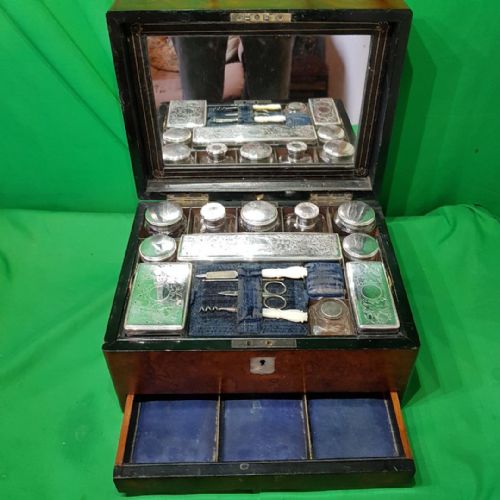
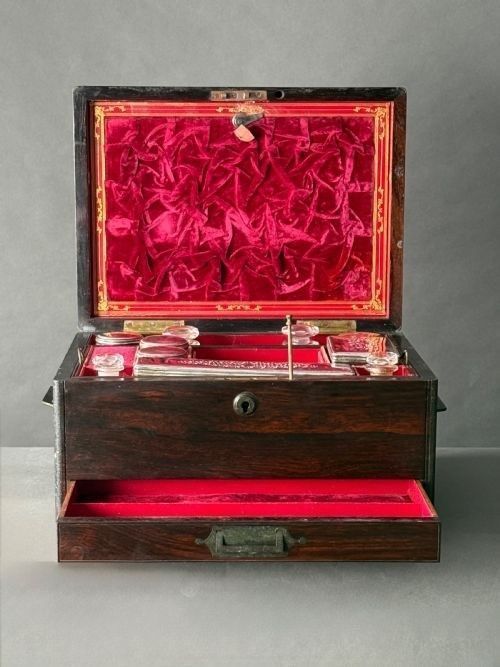
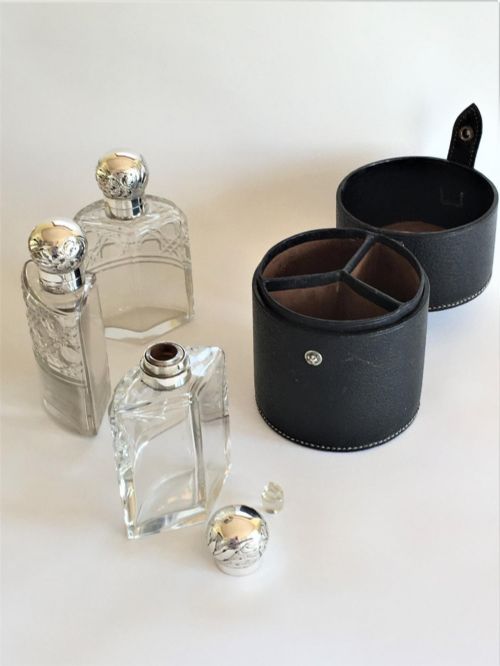
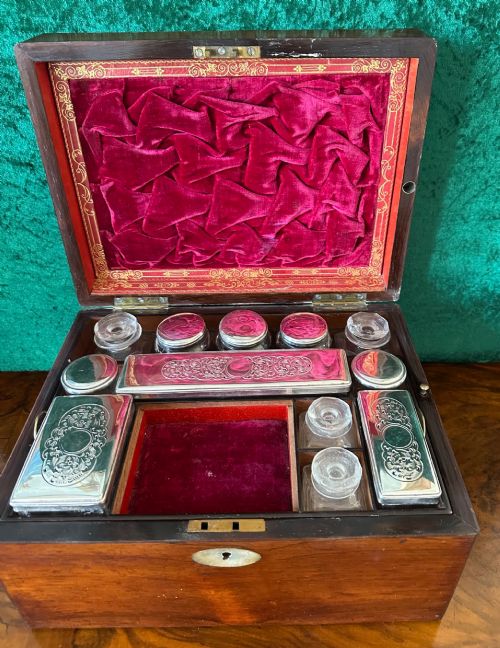
A fitted travelling case brings order to personal belongings on the move, housing everything from silver cologne bottles to shaving sets in compartments designed for the journey.
Fitted Travelling Case
A fitted travelling case serves the needs of travellers through dedicated compartments for grooming items, jewellery, writing materials, or even spirits. When searching for a fitted travelling case, buyers encounter items built to protect specific possessions during transit.
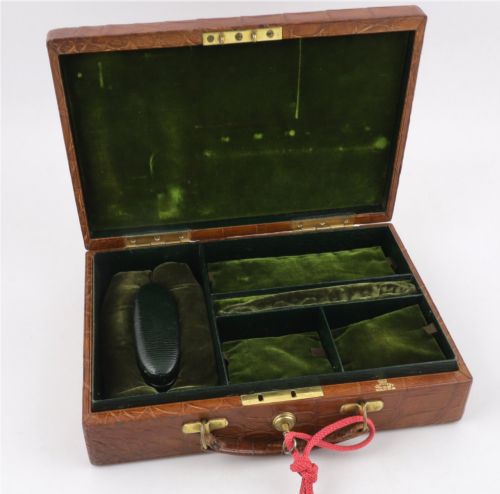
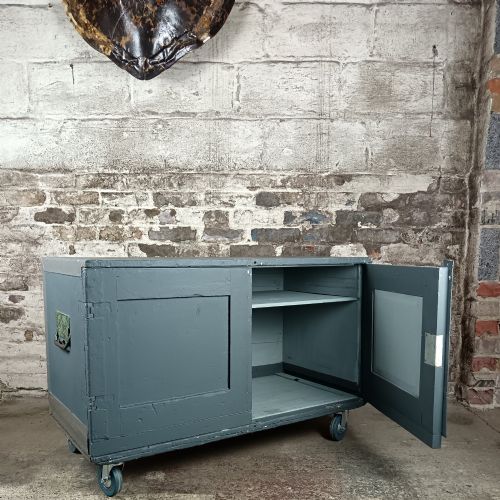
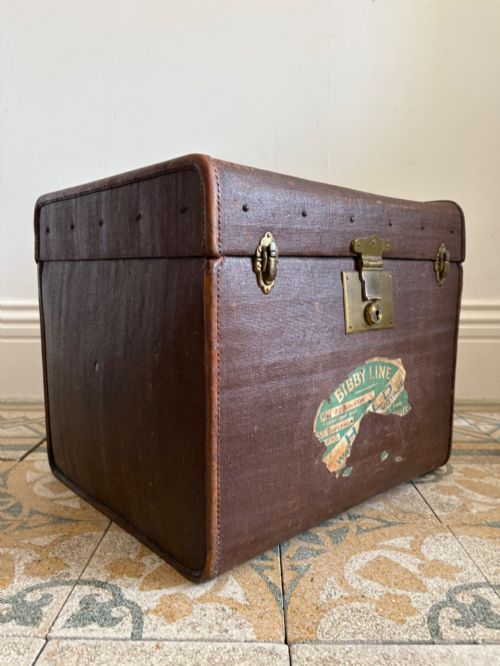
Victorian and Edwardian examples dominate the selection, appearing alongside Georgian, Regency, and early twentieth-century pieces. These items take the form of vanity boxes, dressing cases, leather suitcases, campaign chests, and trunks.
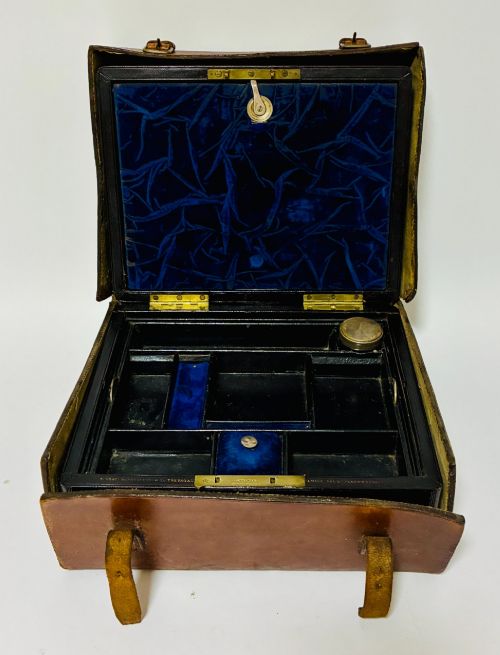
Materials range from rich timbers like burr walnut, mahogany, and rosewood to tough leather, canvas, vellum, and brass-bound woods. Interiors often feature velvet linings, glass bottles, and silver or silver-gilt fittings tailored to the owner's habits.
Assessing quality and completeness
Quality rests heavily on the intactness of the internal fittings and the original contents, such as matched sets of silver-lidded glass bottles, razors, or manicure tools remaining in their designated slots.
The execution of the exterior woodwork, the tightness of the joinery, and the grade of materials like coromandel or solid leather separate standard utility pieces from luxury examples produced for wealthy patrons.
Makers' marks and signatures on locks, silver hallmarks, or leather stamps indicate workshop origin, adding distinction to cases by established retailers and manufacturers.
Listings feature travel gear spanning the Georgian, Victorian, and Edwardian eras through to the 1920s and 1930s.
F. West·J C Vickery·Asprey·Harrods·C. Antrobus·Finnegans of Bond Street·Au Depart·Winsor & Newton
The Fitted Travelling Case Glossary
- Campaign case
- A portable chest or box built for military officers on active service, featuring recessed brass handles and reinforced corners to withstand rough transport.
- Vanity box
- A portable container fitted with mirrors, brushes, and cosmetic jars for personal grooming.
- Coromandel
- A dense, heavily figured timber from Asia utilised for luxury nineteenth-century boxes and writing slopes.
- Silver-gilt
- Sterling silver coated with a thin layer of gold, frequently found on interior bottle caps and instruments within high-grade dressing sets.
- Vellum
- A fine parchment material prepared from calfskin, stretched over frames to form durable, lightweight luggage covers.
Fitted Travelling Case: Frequently Asked Questions
What fits inside a fitted travelling case?
These cases contain bespoke compartments designed to hold specific accessories securely during transport. Interiors typically accommodate glass scent bottles, shaving gear, hairbrushes, writing materials, or drinking flasks.
Depending on the intended user, some cases organise jewellery and cosmetics, while others hold gentleman's valeting tools or picnic equipment.
How do I identify the period of a case?
Dating relies on a combination of materials, construction methods, lock stamps, and silver hallmarks. Georgian and Regency examples often display classical mahogany or rosewood forms with subtle brass detailing.
Victorian and Edwardian versions introduce exotic woods like coromandel and burr walnut alongside comprehensive silver-gilt vanity sets, while later twentieth-century items shift toward reinforced leather suitcases and canvas trunks.
Were these cases meant for long journeys?
Many examples served the rigorous demands of nineteenth-century travel, whether by railway, carriage, or steamship. Campaign pieces accompanied military officers on deployment, while vanity boxes travelled between country estates and town houses.
Robust leather suitcases and vellum trunks from the early twentieth century reflect the rise of modern tourism and international cruising.
How should I care for leather and wood?
Preserving these pieces involves maintaining stable indoor humidity to prevent wood from warping and leather from drying out. Natural waxes help protect historic timber surfaces without altering the finish.
Interior velvet and fabric linings benefit from gentle dust removal using soft brushes, avoiding moisture that could damage aged paper or metal fittings.