


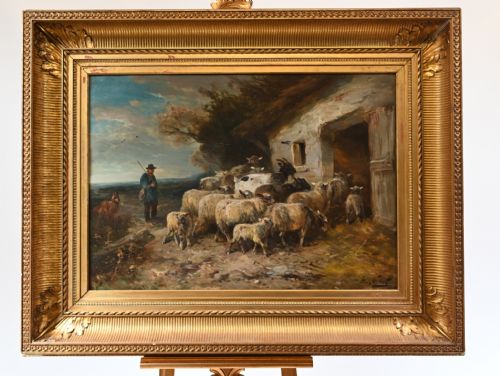


Fine Art Pastoral Landscape
A fine art pastoral landscape brings the quiet rhythm of the countryside, grazing herds, and sheltered valleys directly onto your wall.
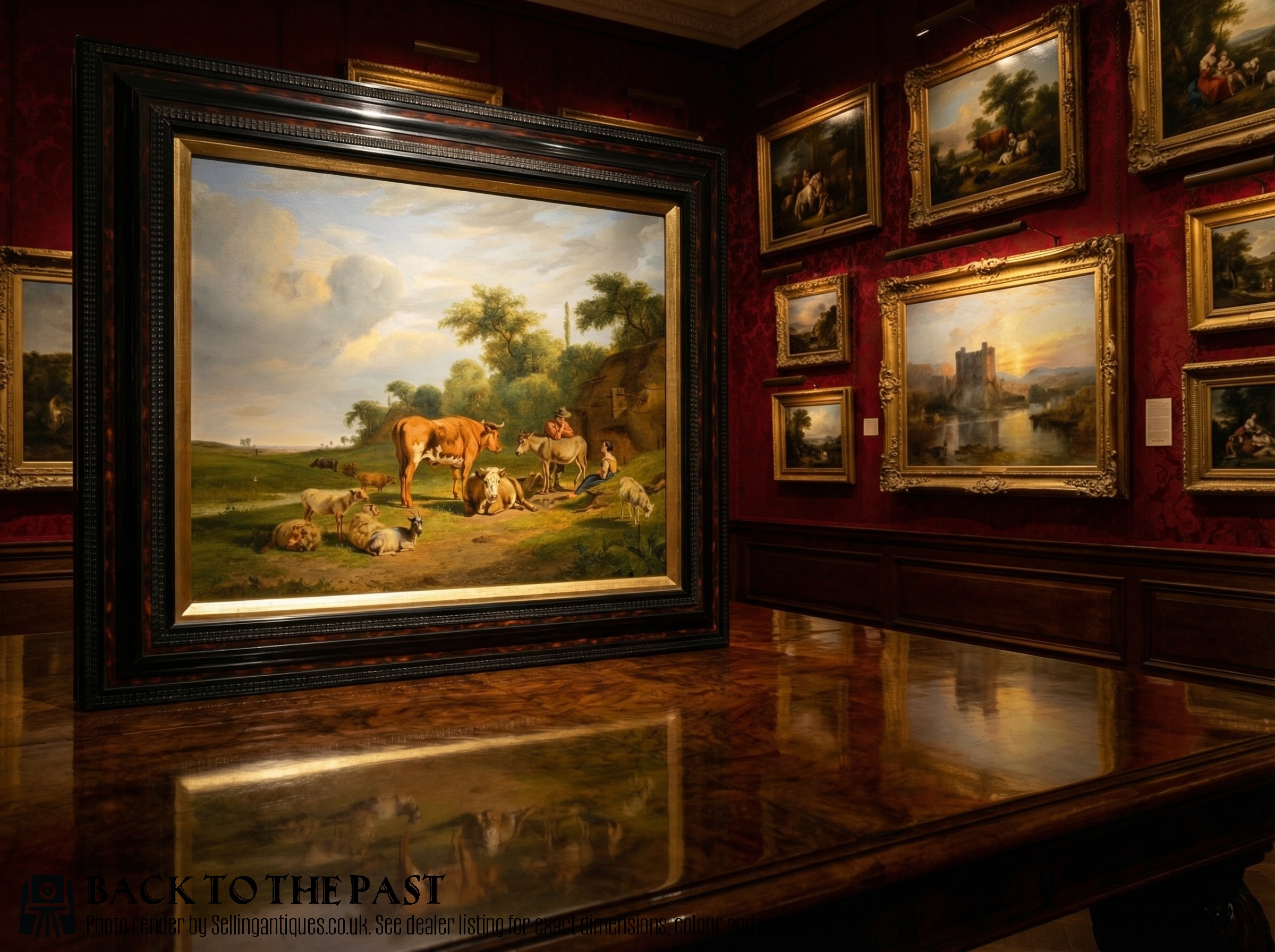
Fine Art Pastoral Landscape
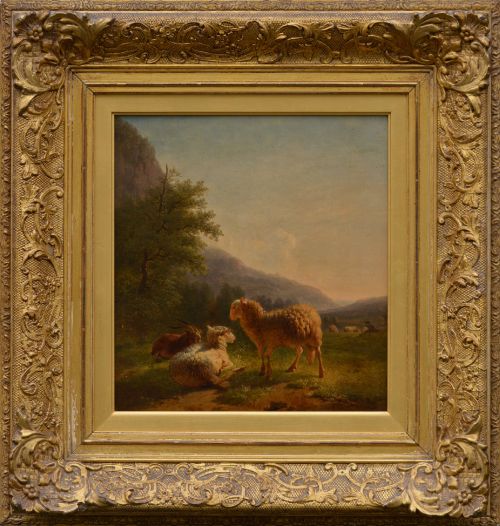
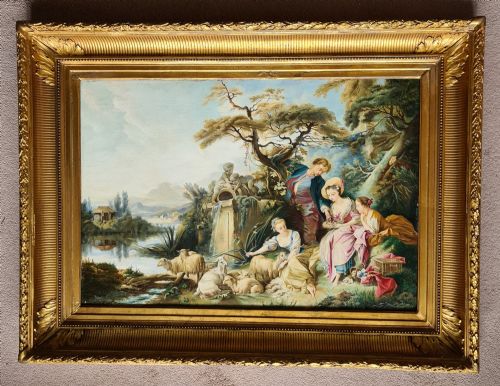
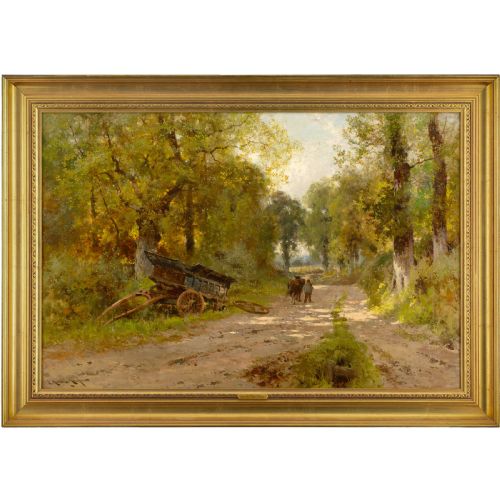
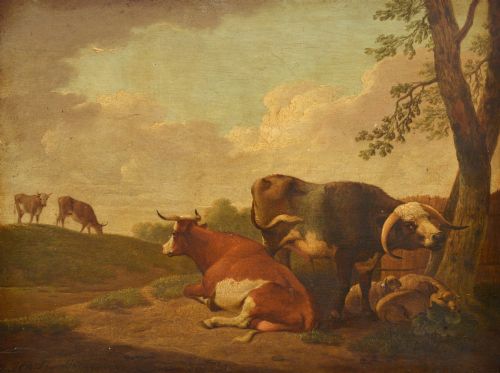
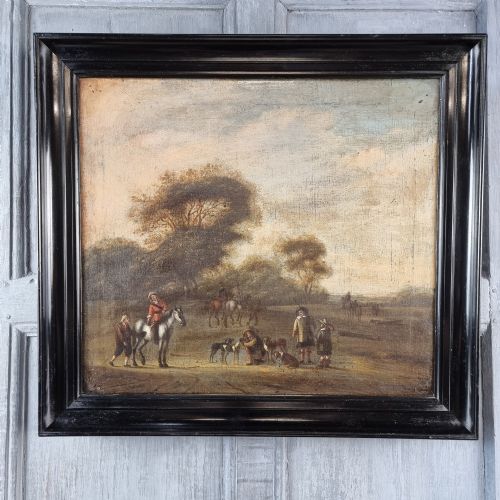
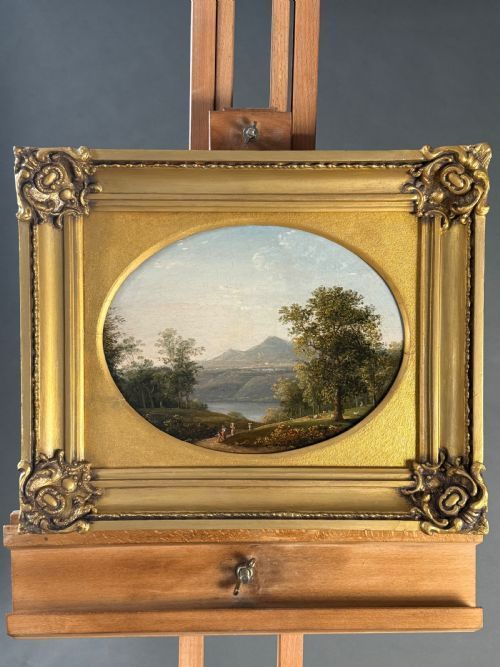
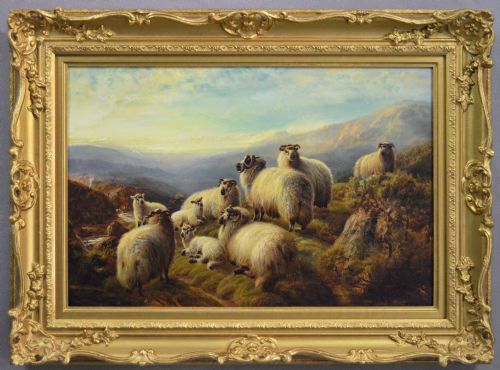
A fine art pastoral landscape portrays rural scenes populated by shepherds, cattle, sheep, and agrarian workers within gentle, idealized country settings. You will most frequently encounter nineteenth-century oil paintings on canvas or wood panel, alongside occasional watercolours and antique textile art from British and continental European makers.
The compositions often balance expansive skies and verdant valleys with detailed animal studies and pastoral figures, spanning from Georgian and Victorian realisms to early twentieth-century British impressionism. These framed artworks capture a romanticized view of traditional rural life that dominated European fine art production across the eighteenth, nineteenth, and early twentieth centuries.
Materials and construction
Artists relied primarily on oil paint applied to prepared canvas or wood panels, building up rich layers of pigment to achieve depth in foliage, skies, and animal fleeces. Watercolours on paper and mixed-media techniques also appear, capturing lighter atmospheric effects in rural settings.
Many of these paintings retain their period frames constructed from wood, gesso, and giltwood, sometimes enhanced with hand-applied gold leaf that complements the warm tones of the pastoral scene within.
Listings feature works spanning from the seventeenth century through the Edwardian period, executed in oil, watercolour, and woven tapestry.
Assessing quality
Quality rests heavily on the confidence of the brushwork, the anatomical accuracy of the animals, and the natural harmony of light and shadow across the landscape. Master artists achieved subtle transitions in atmosphere and texture that lesser hands missed, particularly when rendering the wool of sheep or the musculature of cattle.
The integrity of the original support, the preservation of the paint surface without heavy restoration, and the presence of a period giltwood frame further distinguish the finest examples from standard decorative works.
Eugène Verboeckhoven·Tom Campbell·Hendrik Willem Schweickhardt·Jacob Philipp Hackert·Thomas Sidney Cooper·George Vicat Cole·Sidney Richard Percy·Henry H Parker
The Fine Art Pastoral Landscape Glossary
- Oil on Canvas
- Pigment mixed with drying oil applied to a woven fabric stretched across a wooden frame. This medium allowed artists to build rich textures and deep colour ranges in pastoral compositions.
- Giltwood
- Wood carved and coated with a thin layer of gold leaf or metallic powder. This material frequently frames nineteenth-century landscape paintings.
- Gesso
- A plaster-like mixture applied to wood or canvas as a base for painting or moulding. In frames, it provides a smooth surface for intricate decorative carving before gilding.
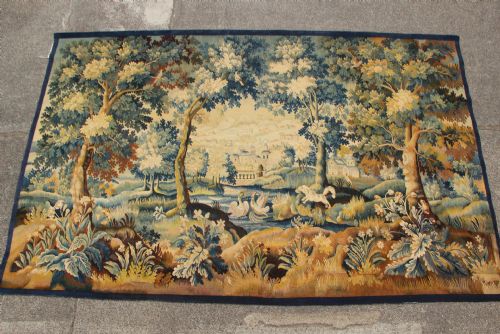
- Verdure Tapestry
- A wall hanging depicting a stylised landscape dominated by foliage, trees, and occasionally grazing animals. Aubusson workshops produced notable examples of these textile artworks.
- Wood Panel
- A rigid wooden support used by artists before canvas became universally adopted. These panels offer a stable surface that preserves fine brushwork over centuries.
Fine Art Pastoral Landscape: Frequently Asked Questions
What defines a pastoral landscape?
A pastoral landscape depicts country life with an emphasis on agriculture, shepherds, herds of cattle, and tranquil rural scenery. These artworks romanticise agrarian harmony rather than industrial activity.
Artists across the eighteenth and nineteenth centuries used these idyllic settings to evoke peace, nostalgia, and a connection to traditional European countryside living.
How do I date a pastoral painting?
Dating relies on stylistic clues, clothing of the figures, framing techniques, and signatures or inscriptions on the reverse of the canvas or wood panel. Eighteenth-century works often favour classical compositions, while nineteenth-century pieces lean towards realism and impressionism.
Examining the canvas weave, stretcher bars, and framing materials provides additional physical evidence of the period.
Where should I hang these artworks?
These paintings suit traditional living spaces, libraries, or dining rooms where their warm earth tones and calm subject matter can complement period furniture and architecture. Proper placement avoids direct sunlight to protect oil paint and giltwood frames.
Pairing a landscape with complementary lighting allows the subtle details of the brushwork and gilding to stand out.
What is the difference between oil and watercolour?
Oil paintings utilise pigment bound in drying oil on canvas or wood, offering rich textures, deep layers, and vibrant colour blending. Watercolours use water-soluble pigments on paper, creating lighter, translucent effects.
Oils generally dominate fine art pastoral listings due to their durability and ability to capture dramatic atmospheric light.