
Gold Framed Pastoral Art
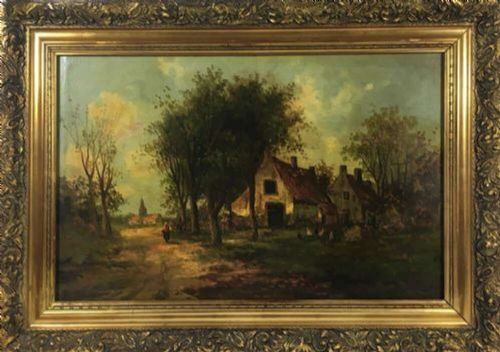
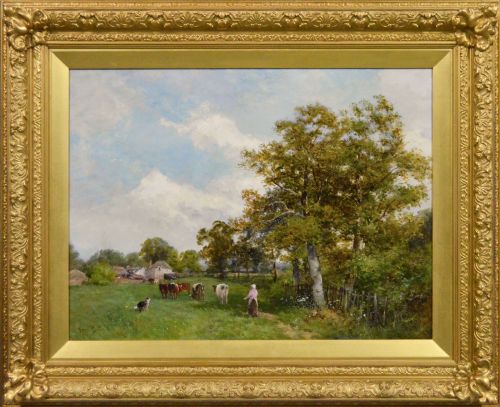
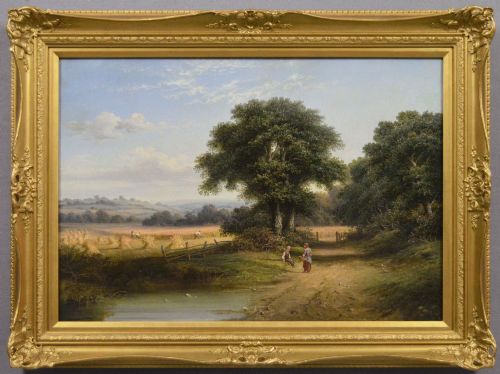
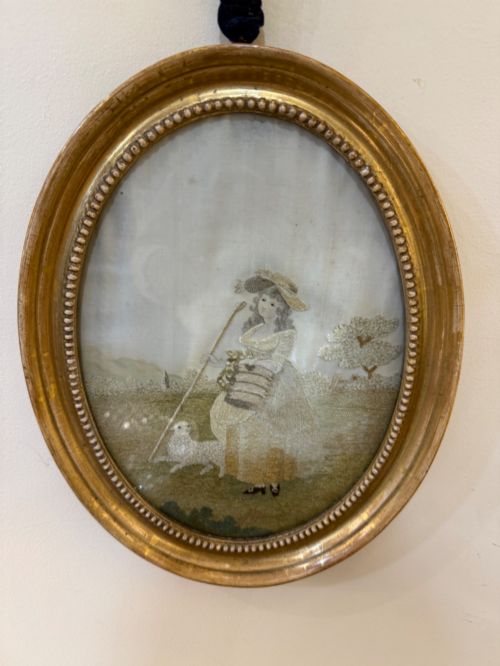
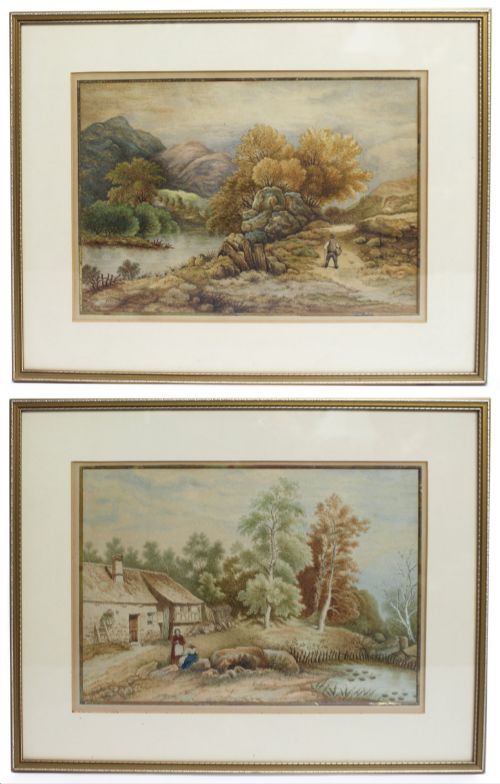
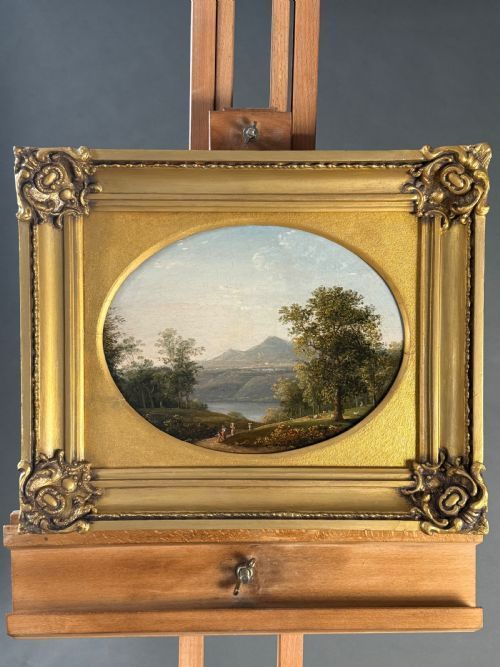
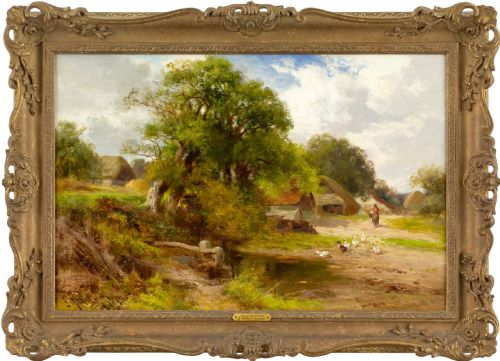
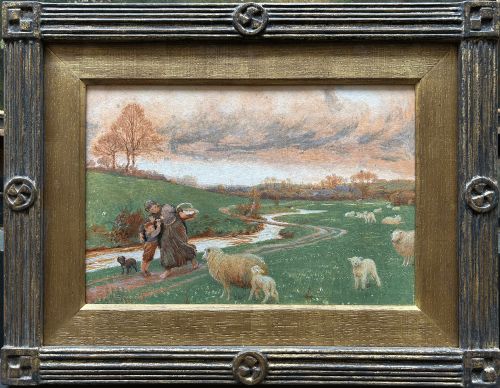
Gold framed pastoral art comprises period paintings and works on paper celebrating rural life, housed in ornate surrounds that highlight their rustic charm.
Gold Framed Pastoral Art
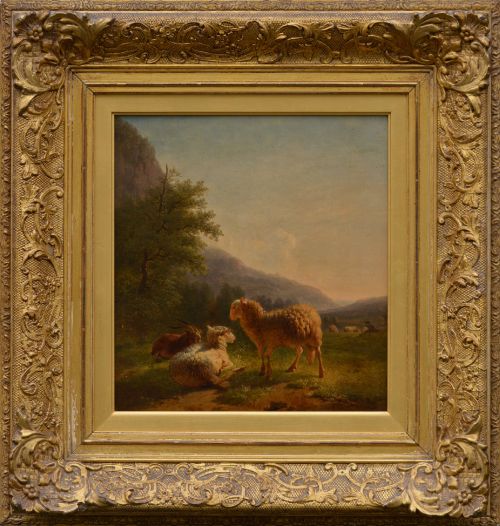
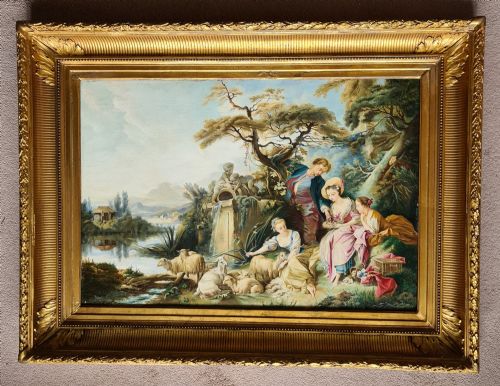
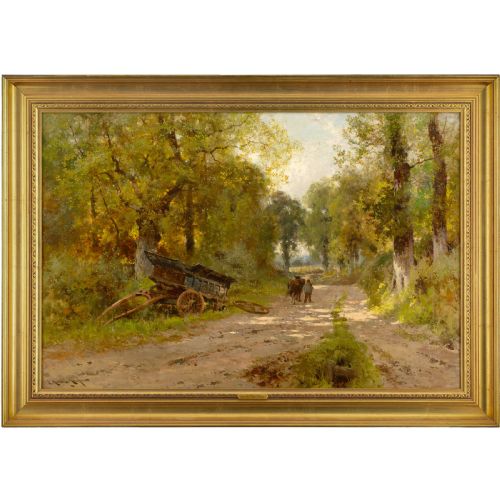
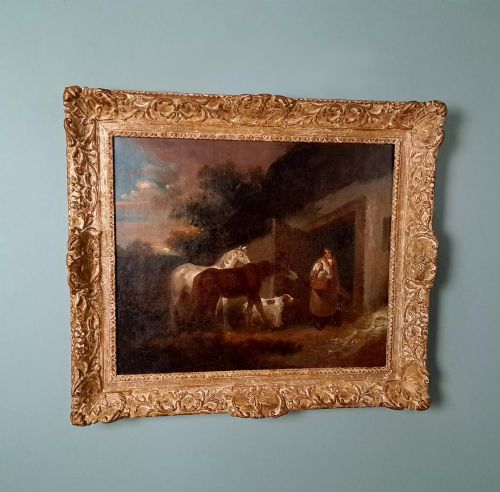
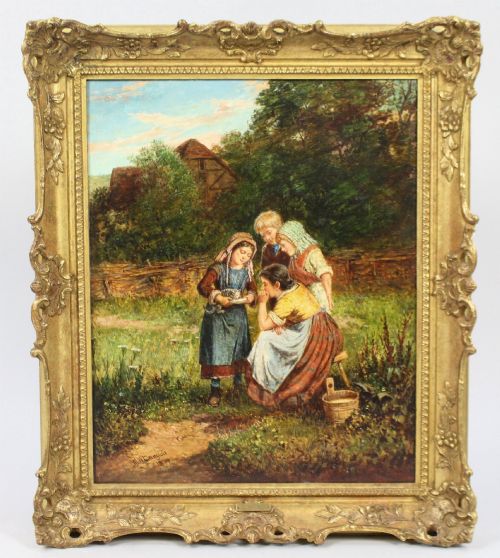
Gold framed pastoral art captures rural scenes, agricultural landscapes, and depictions of farm animals, shepherds, and country figures from past centuries. These works reflect an idealized view of country life that held immense appeal for collectors during the Georgian, Victorian, and Edwardian eras.
The pieces appearing on this page span several mediums, with oil on canvas and watercolour paintings predominating alongside needlework pictures and engravings. Dating primarily from the eighteenth through to the early twentieth century, these artworks originate from British, French, Belgian, and Italian schools.
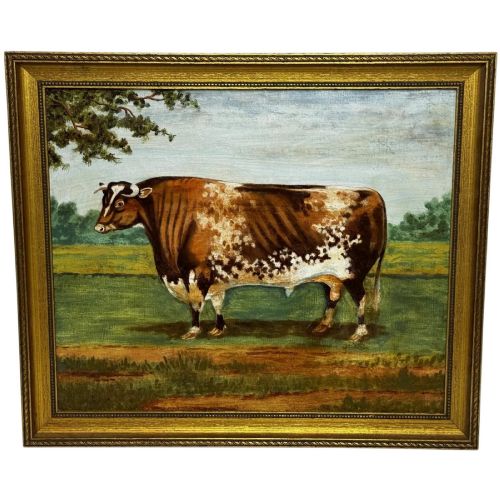
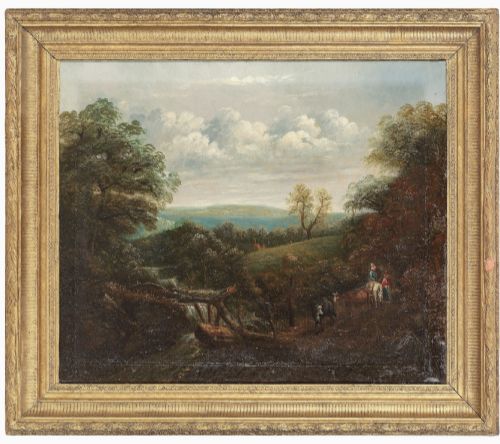
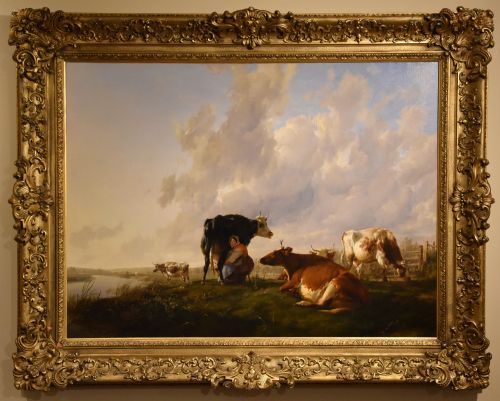
Buyers encountering this selection will find compositions ranging from quiet river landscapes with figures to detailed studies of cattle, sheep, and farmyard workers. Each piece retains its period character, often preserved within framing that complements the natural subject matter with metallic ornamentation.
Materials and construction
Canvas and paper serve as the primary supports for these pastoral scenes, receiving applications of oil paint or watercolour applied by period artists. Wooden panels and boards also appear as stable bases for earlier compositions.
The frames accompanying these works typically utilise carved wood or gesso foundations finished with layers of giltwood or applied gold leaf. This reflective boundary was designed to catch ambient light and draw the eye inward toward the painted composition.
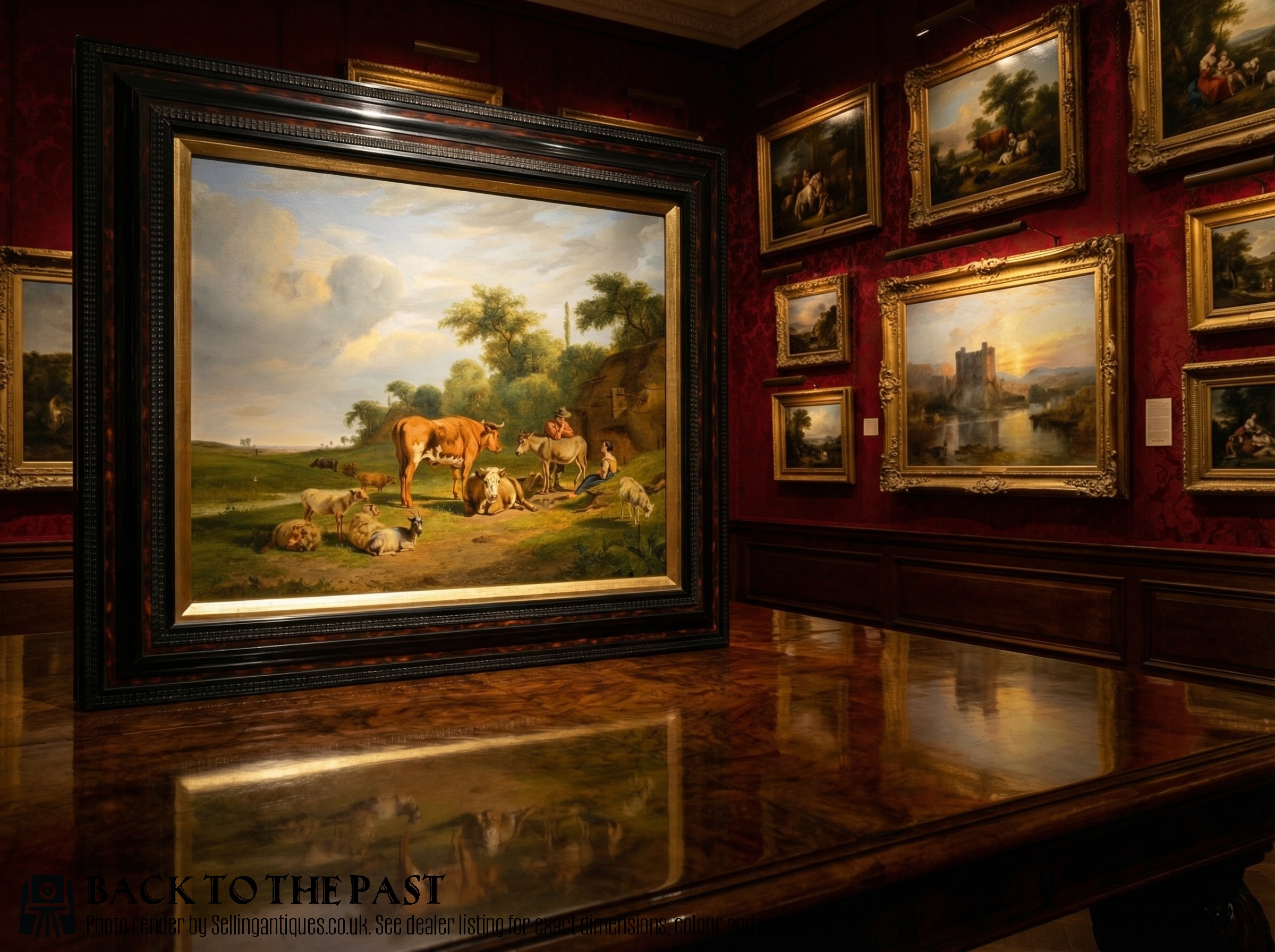
Several sheep and shorthorn bulls quietly oversee the landscape.
Elements of quality
Distinctions in quality often rest on the handling of light and anatomical accuracy in figures and livestock, separating accomplished academic hands from decorative workshop output. Finer canvases display nuanced brushwork and atmospheric depth that capture specific times of day.
The integrity and originality of the surrounding frame contribute significantly to the overall standing of a piece. Period frames with untouched gilding and matching corner ornaments elevate the presentation compared to later replacements.
Eugène Verboeckhoven·John Horace Hooper·William Joseph Shayer Senior·David Bates·Walter Heath Williams·George Oyston·Robert Watson·William Watson Jnr·Johann Friedrich Voltz·Henry H Parker·Henry Schouten·Charles Henry Slater
The Gold Framed Pastoral Art Glossary
- Giltwood
- Wood that has been coated with gold leaf or a gold-coloured metallic finish. This material forms the ornate borders characteristic of period framing.
- Gesso
- A plaster-like mixture applied to wooden frame bases to create a smooth surface for carving and gilding. It allows for intricate relief ornamentation.
- Pastoral
- An artistic genre depicting rural life, shepherds, and agricultural landscapes in an idealized manner. It derives from classical traditions celebrating country simplicity.
- Realism
- An artistic movement focusing on everyday scenes and ordinary people without romantic idealization. In pastoral works, this translates to lifelike depictions of farm animals and labourers.
Gold Framed Pastoral Art: Frequently Asked Questions
What subjects appear in these pastoral artworks?
The imagery focuses predominantly on rural scenes, including shepherds with flocks, cattle in pastures, harvest fields, and quiet country paths.
Human figures engaged in daily agricultural tasks or leisurely pursuits frequently anchor these landscapes, reflecting nineteenth-century romanticism of the countryside.
How should I care for an antique oil painting?
Display the artwork away from direct sunlight and fluctuating humidity levels to protect both the canvas and the delicate gilt frame.
Dust the frame gently with a soft, dry brush and avoid using liquid cleaners or chemical solvents on the painted surface.
How do I determine the age of a piece?
Dating relies on stylistic markers, artist signatures, framing techniques, and the physical composition of the canvas or paper support.
Examine the reverse of the work for period inscriptions, dealer labels, or stamps that offer clues to its origin and history.