




Coloured Mezzotint Print
These coloured mezzotint print examples offer rich tonal depth and hand-finished pigment on paper, bringing distinct historical character to your walls.
Coloured Mezzotint Print
A coloured mezzotint print brings together rich tonal depth and hand-applied pigment, functioning primarily as framed wall art for domestic interiors. When you examine this selection, you encounter works spanning the eighteenth century through to the early twentieth century.
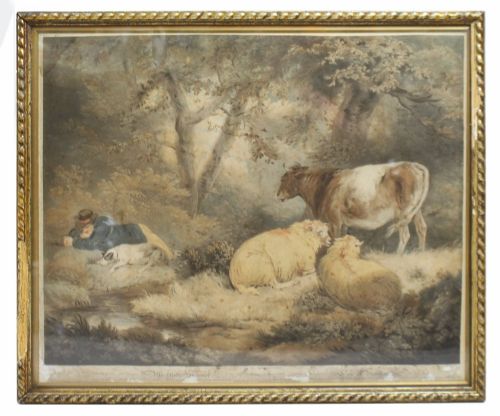
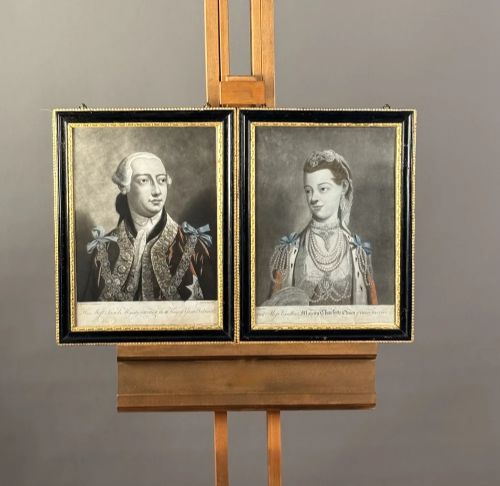
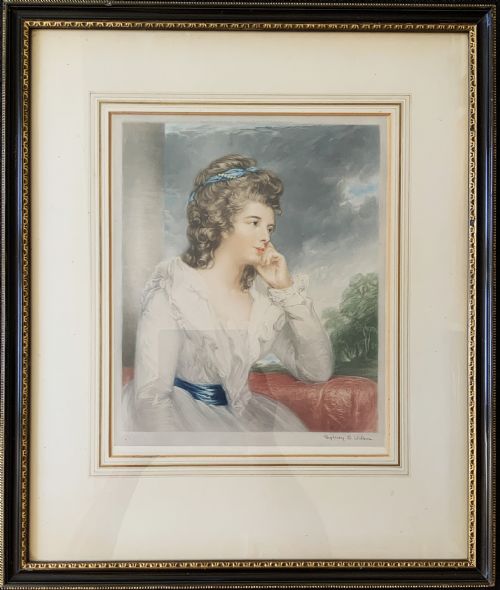
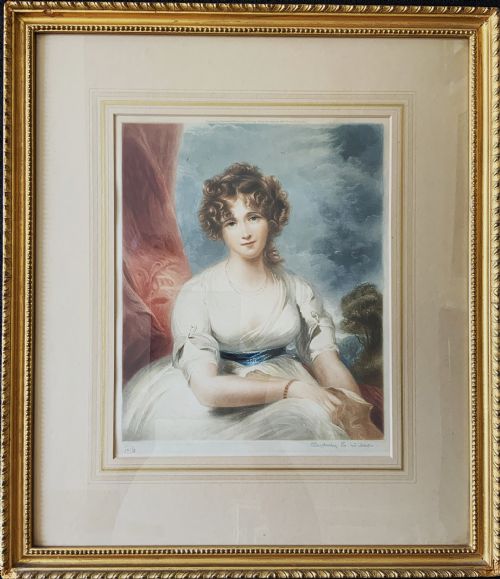
The objects take the form of framed prints, engravings, and reverse glass pictures housed in wood, giltwood, and gold leaf frames. Pieces range from detailed portraits of ladies to pastoral genre scenes depicting rural life.
Victorian and Edwardian reinterpretations sit alongside Georgian and Regency originals, demonstrating how printmakers adapted these techniques across successive eras. Most examples rely on ink and pigment applied to paper or sealed behind glass.
Materials and technique
Makers produced these works by roughening a copper plate with a rocker to create a burr that held ink for deep, velvety darks. Lighter areas were scraped and burnished smooth to hold less ink, producing subtle tonal gradations.
Colour was typically applied by hand to the plate before printing, or painted onto the finished monochrome impression using delicate pigments. Framers then enclosed the paper sheets behind glass within timber mouldings finished with gold leaf or giltwood.
Coloured Mezzotint Print Retail Price Guide 2026
Typical asking prices for coloured mezzotint print among the pieces listed under this phrase on Sellingantiques today, from the lower quarter to the upper quarter. They describe what is for sale here now, not the wider market.
Some pigs get immortalised in print while humans sleep.
Assessing quality
Quality rests upon the crispness of the plate impression and the subtlety of the hand-colouring applied across the surface. Early impressions retain a velvety richness in the dark tones that worn plates simply fail to deliver.
The integrity of the original framing, whether Hogarth moulding or gilded wood, significantly influences the overall character of the piece. Preservation of the paper surface without excessive fading or damp staining also distinguishes superior examples.
Fletcher·Sydney Wilson·Robert Sayer·W Ward·I R Smith·F Petitjean
The Coloured Mezzotint Print Glossary
- Mezzotint
- A printmaking process where the copper plate is roughened uniformly and scraped to produce rich tones and subtle light gradations. This method allows for a smooth transition from dark to light without using traditional line etching.
- Reverse glass print
- An image painted or transferred onto the back of a glass panel and viewed from the front. This technique imparts a glossy finish and protects the pigment from atmospheric degradation.
- Artist proof
- An early trial impression pulled before the main edition, often carrying the signature of the printmaker or artist. These impressions typically show superior crispness in the inked details.
- Giltwood
- Timber carved and coated with a thin layer of gold leaf or metallic powder. It provides a reflective, ornate border suited to framing formal portraits and classical scenes.
- Hogarth frame
- A narrow, dark wooden moulding with a subtle profile, popular for framing prints during the eighteenth and nineteenth centuries. The understated design directs the eye squarely toward the artwork.
Coloured Mezzotint Print: Frequently Asked Questions
How do I hang a heavy framed print?
Secure the frame using appropriate wall anchors and picture wire rated well above the weight of the glass and timber. Ensure the hanging point bites directly into a wall stud or uses heavy-duty plaster fixings.
Position the centre of the artwork at eye level to achieve the best visual balance in your room. Keep the piece away from direct sunlight and damp walls to protect the paper and pigments.
Are these prints hand coloured?
Many examples feature pigment applied by hand to the printed surface, adding subtle hues to dresses, foliage, and skies. This manual enhancement makes each surviving sheet visually distinct.
Examining the surface under magnification reveals the brushwork or pigment pooling characteristic of hand-finished work. Printed colour dots are absent in traditional mezzotint augmentation.
How do I date an old frame?
Examine the timber construction, joinery methods, and the type of backing boards used behind the print. Hand-cut nails, tongue-and-groove joints, and aged pine point toward earlier Georgian or Regency periods.
Check the gilding technique and composition ornament applied to the wooden mouldings. Victorian and Edwardian frames often utilise distinct plaster composition details not found on eighteenth-century work.