



Dutch Pastoral Painting
Dutch pastoral painting brings home quiet fields, grazing cattle and golden light from centuries of European countryside life.
Dutch Pastoral Painting
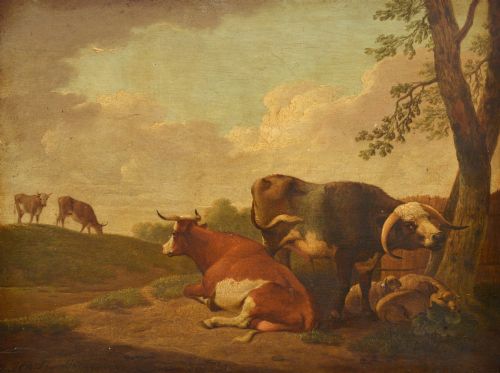
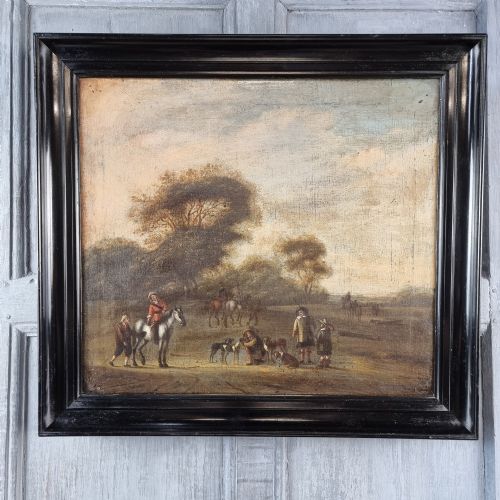
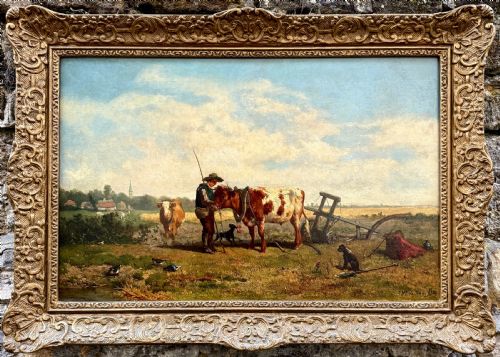
When you search for dutch pastoral painting, you encounter fine art works depicting rural scenes, farm animals and countryside figures spanning from the seventeenth century through to the twentieth century. These pieces record agrarian life, rivers, and pastures through various historical lenses including the Dutch Golden Age, nineteenth century realism, and twentieth century revivals.
Most examples available combine traditional oil paint on canvas or wood panels, often housed within ornate giltwood frames. You will find both intimate panel works and larger canvas compositions that capture traditional pastoral views of cattle, sheep, and shepherds.
The selection ranges from early foundational landscape pieces to later nineteenth century romanticism and twentieth century interpretations. Each object reflects the enduring appeal of rural tranquility captured by regional artists across different eras.
Assessing quality in the medium
Quality rests primarily in the handling of light, atmospheric perspective, and the anatomical precision of figures and livestock within the landscape. Master works demonstrate subtle tonal gradations and confident brushwork that bring depth and movement to the pastoral scene.
The integrity of the primary support and the preservation of the original paint layer heavily influence the overall standard of a piece. Works executed on stable wood panels or well-tensioned canvases with minimal retouching command greater appreciation from collectors.
Countless nineteenth century cows gaze placidly outward, seemingly unimpressed by the shifting fortunes of European art history.
Hendrik Willem Schweickhardt·Johannes de Haas·Willem Anton Alexander Knip·James de Rijk·Gudrun Sibbons·Anthonij Anton Mauve·Laurens Plas·Hermanus van Brussel·Cor De Boer·Cornelis Jan Bolt
The Dutch Pastoral Painting Glossary
- Wood Panel
- A rigid wooden support used instead of canvas for painting. Artists frequently utilised seasoned timber boards during the seventeenth and nineteenth centuries.
- Gesso
- A plaster-like mixture applied to wood or canvas as a prepared base for painting, or moulded onto frames before gilding.
- Giltwood
- Wood that has been covered with a thin layer of gold leaf or gold paint. This finish frequently decorates traditional picture frames.
- Oil Paint
- A slow-drying paint made by mixing pigments with oils such as linseed. It allows for rich blending and textured impasto application.
- Pastoral Realism
- An artistic style focusing on accurate depictions of rural life, agricultural workers, and livestock in natural settings.
Dutch Pastoral Painting: Frequently Asked Questions
How do I identify a seventeenth century piece?
Seventeenth century works typically display the dark, rich earth tones and dramatic lighting characteristic of the Dutch Golden Age. Examination of the wood panel preparation and pigment analysis often supports these historical attributions.
Panel construction methods and canvas weaves from this early period differ noticeably from later nineteenth century manufacturing techniques.
Were these always painted on wood?
Artists utilised both wood panels and canvas depending on the period and the scale of the composition. Smaller works frequently employed wood panels, whilst larger landscape scenes tended to use stretched canvas supports.
Both materials persisted across centuries, though panel usage was particularly prevalent in earlier centuries and certain revival periods.
How should I care for an oil painting on panel?
Keep the artwork away from direct sunlight, extreme heat sources, and rapid humidity fluctuations to prevent wood warping or paint cracking. Stable environmental conditions preserve both the wooden support and the delicate oil paint layers.
Dust the surface very gently with a dry, soft brush and avoid using any liquid cleaners or chemical solvents.
What defines a pastoral landscape?
A pastoral landscape centres on countryside views featuring farm animals, grazing livestock, shepherds, and rural farm buildings. These scenes romanticise agrarian life and the natural harmony between humans, animals, and the environment.
The inclusion of cattle, sheep, and pastoral workers remains the defining characteristic across all eras represented.