
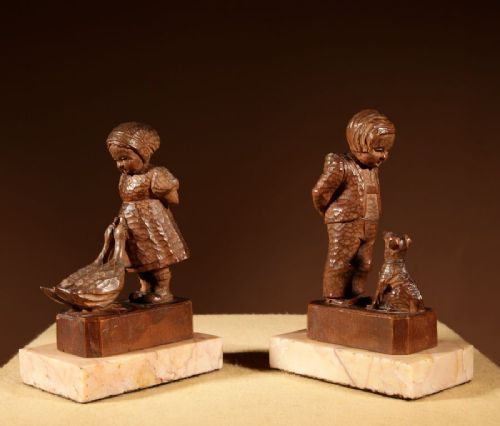
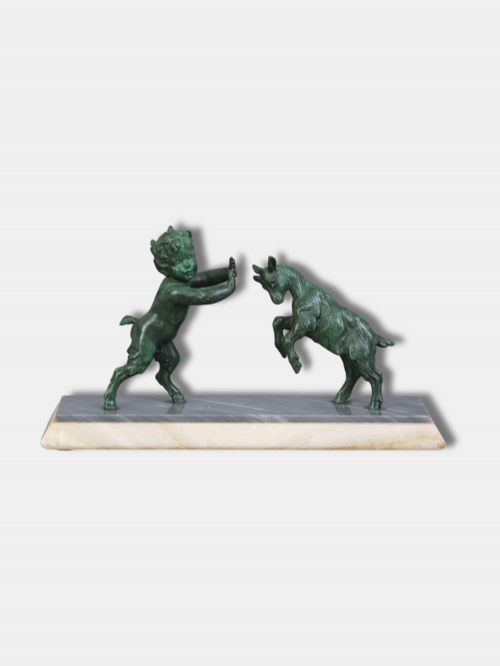
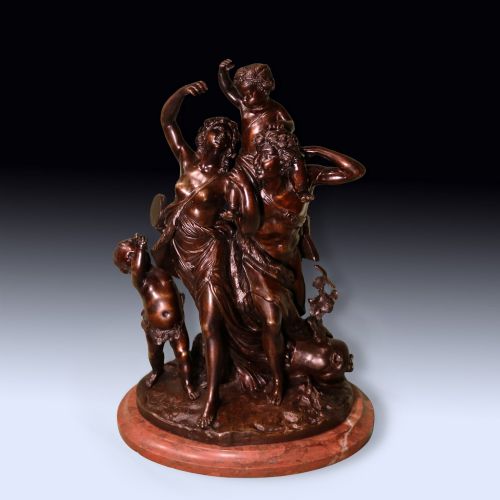


Figural Marble Statue
A figural marble statue brings classical form and carved stone presence into a room, capturing human and allegorical subjects through enduring materials.
Figural Marble Statue
When you search for a figural marble statue, you encounter carved stone sculptures and sculptural elements integrated with materials like bronze, alabaster, and ormolu. These works span nineteenth-century classical depictions and early twentieth-century decorative forms.
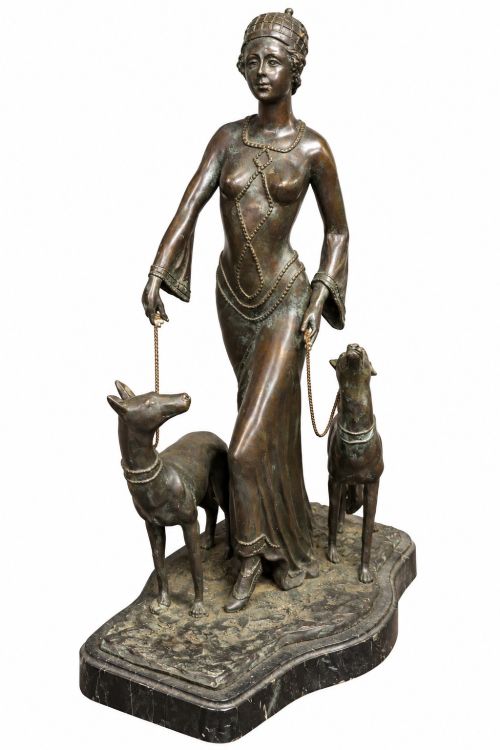
The selections on this page frequently combine carved marble bases or figures with patinated metal work, reflecting Victorian and Art Deco tastes. Subjects range from mythological figures and musicians to children and dancers.
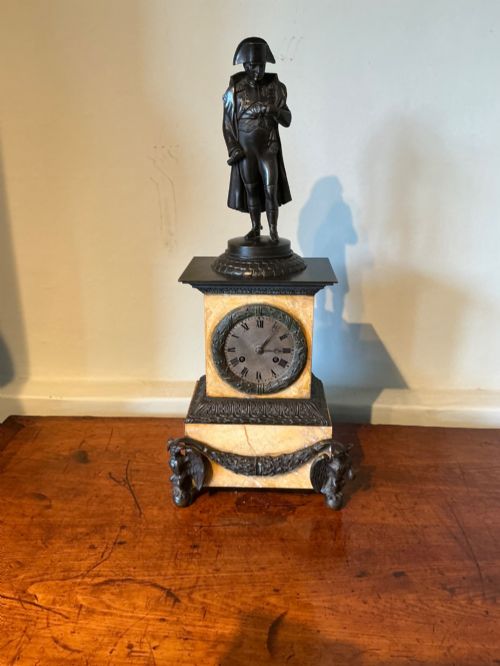
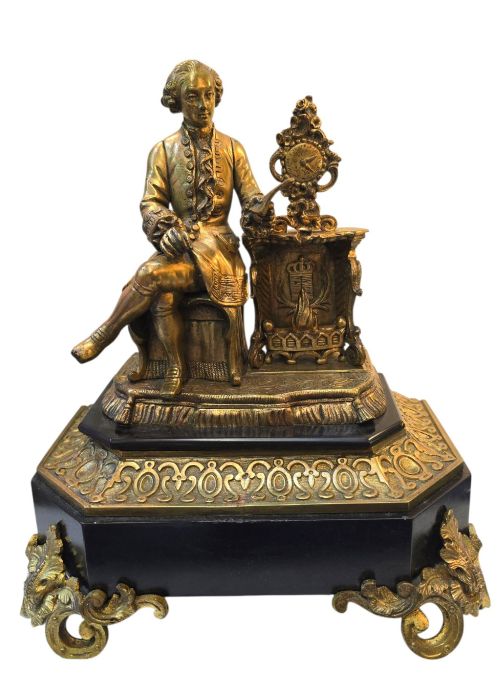
Originating largely from French and Italian workshops, these statues often double as decorative lamps, clock sets, or mantel ornaments. Buyers find both monumental pairs and smaller cabinet pieces carved from white and variegated stone.
How they were made
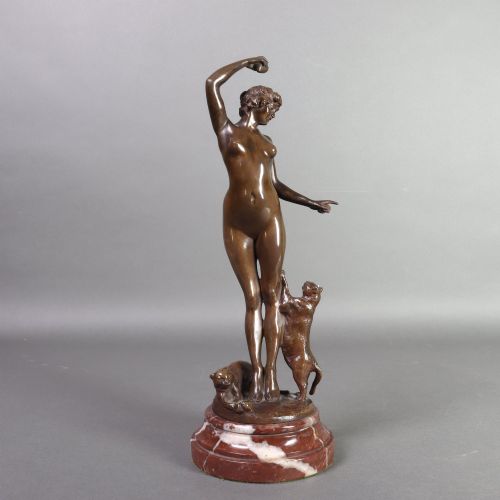
The fabrication of these pieces relies on the union of carved stone and cast metal, utilising marble and alabaster alongside bronze, spelter, and gilt brass. Sculptors shaped the stone through manual chiselling and polishing, while metal elements were produced using the lost-wax casting technique or metal alloys.
Many works combine these media deliberately, mounting carved marble figures upon contrasting plinths or pairing stone bases with patinated bronze and brass fixtures. Surface treatments include cold painting, ormolu gilding, and smooth stone finishing to accentuate the details of drapery and skin.
Sculptural forms include mantel clocks, oil lamps, torcheres, and standalone figures depicting historical, mythological, and everyday subjects.
What varies in quality
Quality reveals itself in the crispness of the carving and the precision of the metal casting, where facial expressions, hands, and drapery folds show the hand of a skilled artisan rather than a generic mould. Finer pieces demonstrate careful attention to anatomy and the harmonious integration of the marble base with the sculptural figure above.
The selection of the stone itself dictates much of the visual weight, with dense, uniform white marble or rich variegated types marking superior examples. Furthermore, the patination of the bronze or the refinement of the ormolu mounts separates standard decorative objects from works bearing recognised signatures.
Emile Carlier·Georges Van Der Straeten·Carrier Belleuse·Ernst Barrias·Alexandre Kelety·Carl Kauba·Bruno Zach·P Sega
The Figural Marble Statue Glossary
- Alabaster
- A fine-grained, translucent stone often used for soft-hued sculptural figures and decorative lamp bases. It allows light to diffuse gently through the carved surface.
- Ormolu
- Gilt bronze mounted on decorative objects, clocks, and furniture. This technique involves applying a finely ground high-carat gold mercury amalgam to a bronze object.
- Spelter
- A zinc alloy commonly utilised as a less costly alternative to bronze for figural sculptures. It is frequently given a bronze-like patina.
- Patina
- The surface sheen and coloration developed naturally over time or applied chemically to bronze and metal. It protects the underlying metal and adds visual depth.
- Neoclassical
- An artistic style inspired by the classical art and culture of ancient Greece and Rome. It emphasises restrained proportions, symmetry, and heroic subject matter.
Figural Marble Statue: Frequently Asked Questions
What is the difference between bronze and spelter?
Bronze is an alloy of copper and tin known for its durability, heavy weight, and ability to hold fine casting details. Spelter is a softer, zinc-based alloy that feels lighter and was frequently used for affordable decorative figures.
Inspect the underside or drilled areas to check the base metal colour. Spelter often shows a greyish interior beneath the patinated surface.
How were figural lamps used originally?
These pieces served as functional lighting and decorative centrepieces in Victorian and Art Deco interiors. Torchieres and figural lamp bases provided ambient illumination in grand hallways and parlours.
Many incorporate burners for oil or early electrical wiring adaptations. They combined art with utility to project status and refined taste.
How do I date a marble and bronze piece?
Examine the style of the sculpture, the clothing of the figure, and the materials used in the construction. Art Deco pieces from the 1920s and 1930s feature geometric lines and stylised drapery, whereas Victorian works lean towards classical realism.
Signatures, foundry marks, and the type of mounting hardware provide further chronological clues. Comparing the patina and wear patterns helps confirm the period.