
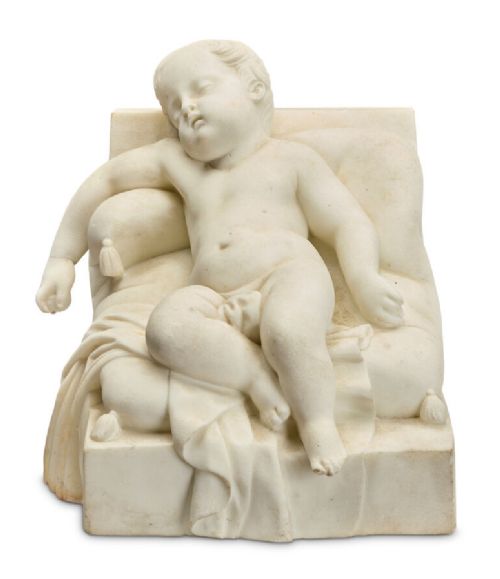
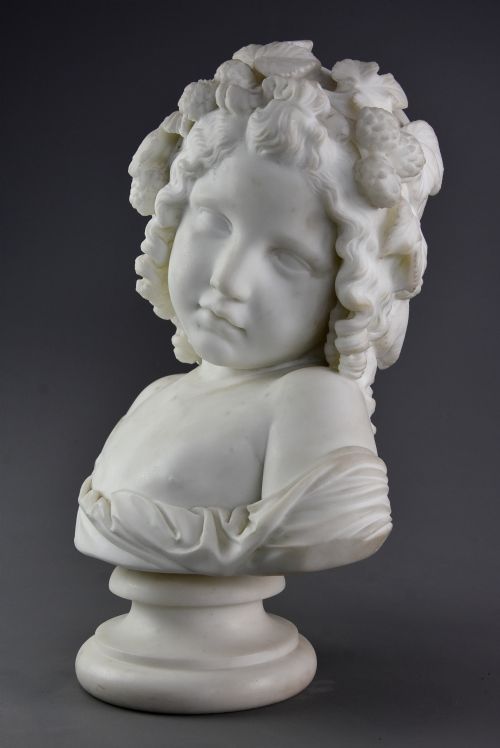
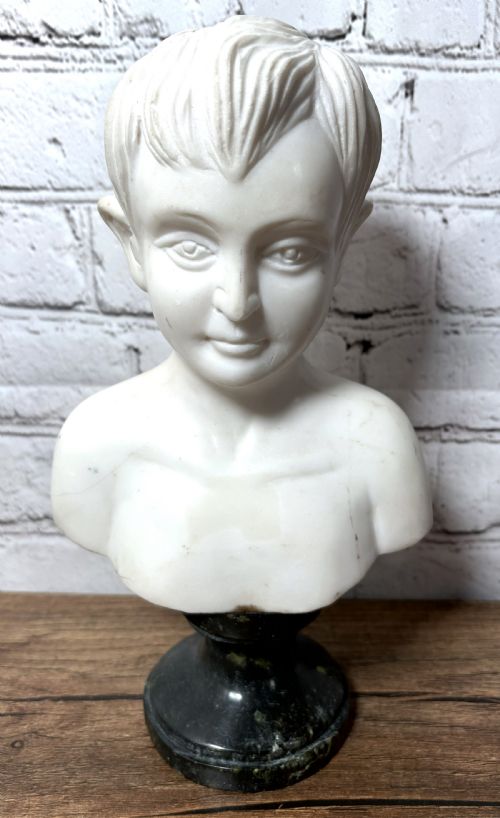


Marble Child Figure
A marble child figure captures youthful innocence in enduring stone, offering collectors a classic sculptural study from the nineteenth and twentieth centuries.
Marble Child Figure
A marble child figure brings together classical sculpture, decorative busts, and figural groupings that depict young boys and girls. When exploring this selection, buyers encounter works ranging from early nineteenth-century Italian and French studio carvings to twentieth-century interpretations.
The objects take several distinct forms beyond traditional freestanding statues. Library busts, bookends, table lamps, and multi-figure groups appear alongside single standing pieces, capturing subjects like children with animals or holding flowers.
The nineteenth century provides a strong foundation of grand tour pieces and signed studio works, while later decades introduce Art Deco styling. These variations reflect shifting interior tastes across the Victorian era into the 1930s.
Materials and construction
Carvers shaped these pieces primarily from white marble, Carrara marble, alabaster, and onyx, employing traditional chiselling and polishing techniques. Artisans also utilised bronze, patinated bronze, gilded bronze, spelter, and chromed metal for companion pieces and distinct figural statuary.
Ceramic works rely on Parian porcelain, an unglazed biscuit porcelain developed to imitate carved marble. Foundries cast metal components while stone sculptors worked by hand to define facial expressions, drapery, and detailed hair.
Children appear alongside loyal dogs, pet cats, teddy bears, lobsters, and bunches of grapes.
Evaluating the craftsmanship
Signed works and pieces associated with known sculptors or potteries demonstrate superior execution in proportion and detail. The choice of unblemished Carrara marble or translucent alabaster elevates the visual impact of the sculpture.
Houdon·P. Sega·H. Chiparus·Carl Kauba·John Durham·Alexandre Kelety·P. Della Vedova·Joseph Gott·Pugi
The Marble Child Figure Glossary
- Carrara marble
- A fine-grained white or blue-grey stone quarried in Italy. It served as the primary material for classical and nineteenth-century European sculpture.
- Alabaster
- A soft, fine-grained stone that allows light to penetrate slightly beneath the surface. Sculptors utilised it for smooth, luminous figural carvings and busts.
- Parian porcelain
- A hard-paste biscuit porcelain developed in the nineteenth century. Manufacturers used it to replicate the appearance of carved marble in statuary figures.
- Grand Tour
- A cultural journey of Europe undertaken by wealthy young men in the eighteenth and nineteenth centuries. Travellers often returned with small marble sculptures and busts.
- Vienna Bronze
- Small, cold-painted metal sculptures produced in Austrian workshops during the late nineteenth and early twentieth centuries. They frequently depicted children, animals, and genre scenes.
Marble Child Figure: Frequently Asked Questions
Where were marble child figures displayed?
Victorian and Edwardian households placed these sculptures on mantelpieces, library desks, and dedicated pedestals in drawing rooms.
Smaller pieces functioned as decorative bookends or integrated into table lamps to illuminate domestic spaces.
How do I distinguish marble from alabaster?
Marble is a hard, crystalline metamorphic rock that resists scratching from metal implements and feels cold to the touch. Alabaster is a softer stone that allows light to pass through thin sections and can be marked more easily.
Examining the translucency and surface hardness helps identify which material forms the sculpture.
What is Parianware?
Parianware is a type of fine white ceramic developed in the nineteenth century to imitate carved marble statuary. Potteries cast the liquid porcelain into moulds to produce highly detailed figures with a matte, unglazed finish.
Copeland and other manufacturers used this ceramic body to make affordable reproductions of famous classical and contemporary sculptures.
How should I clean a marble child figure?
Dust the surface regularly with a soft, dry cloth to prevent dirt accumulation in the carved crevices of the stone. Avoid using household detergents, acidic cleaners, or excessive water, which can damage unsealed marble or alabaster.
Professional conservation advice is recommended for historic pieces showing deep staining or structural grime.