


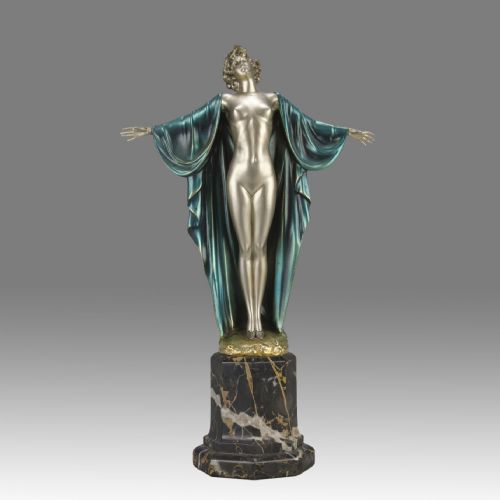
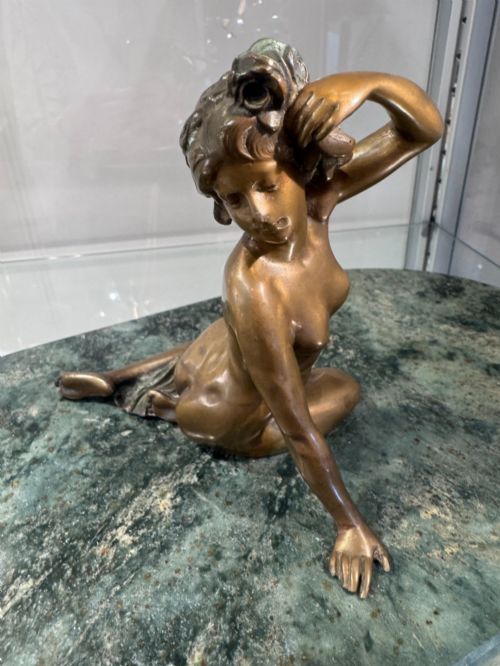
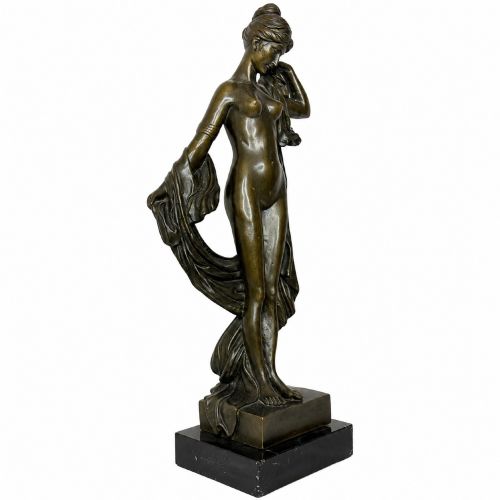
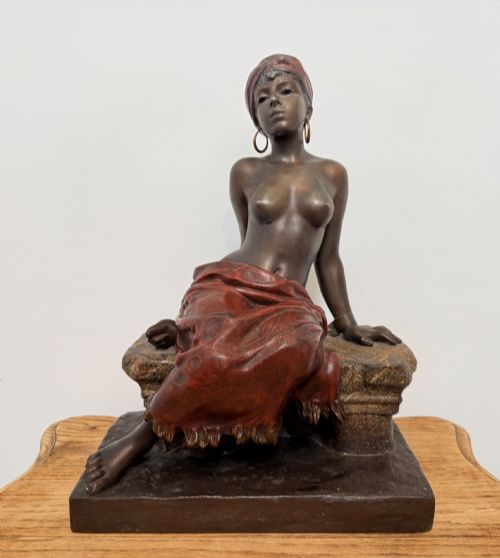
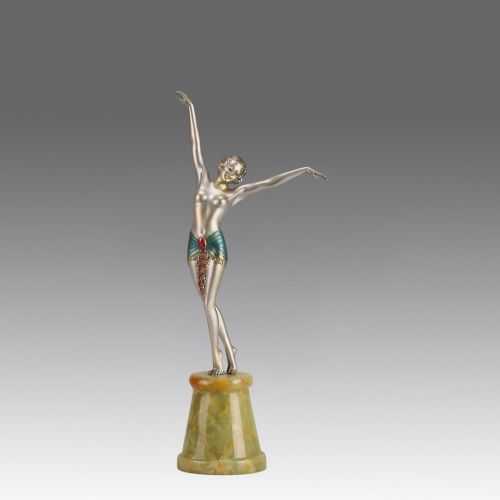

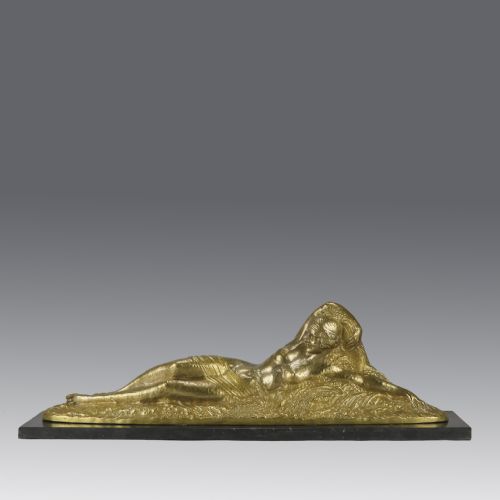


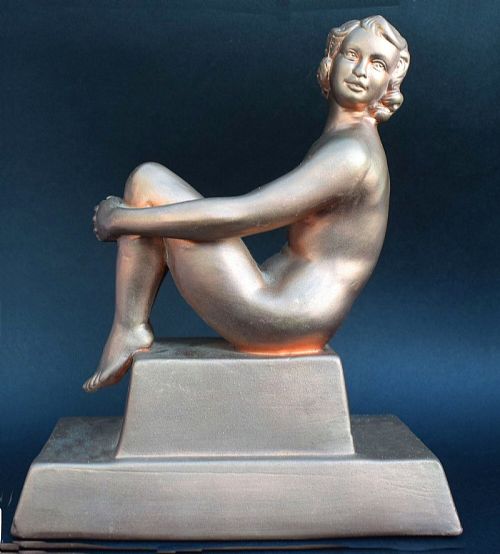

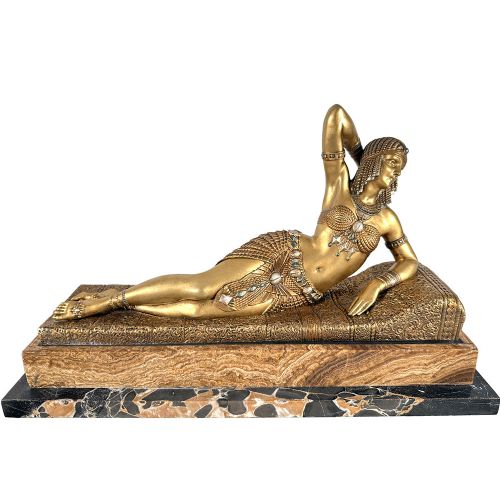


Female Nude Bronze Sculpture
A female nude bronze sculpture captures the human form through metal, offering lasting decorative elegance for the collector.
Female Nude Bronze Sculpture
A female nude bronze sculpture encompasses figurative works produced across the nineteenth and early twentieth centuries, spanning periods from the 1850s to the 1930s. These pieces include dancers, mythological figures, and allegorical studies executed in styles ranging from Neoclassical and Art Nouveau to Art Deco. Collectors encounter standing figures, seated subjects, and reclining poses that reflect the shifting artistic priorities of their respective decades.
The versions most commonly met on this page originate from French and Austrian foundries of the late nineteenth century and the interwar Art Deco period. Many incorporate mixed media bases, pairing patinated or silvered metal with marble and onyx plinths. These works vary from small cabinet statuettes to substantial interior bronzes designed for domestic display.
Distinctions in craftsmanship
The refinement of the chasing and finishing work after the casting process separates superior examples from simpler productions. Master founders achieved crisp anatomical detail, subtle facial expressions, and clean drapery folds that required extensive manual labour by skilled artisans.
The quality of the patination and the integrity of the foundry markings indicate the standard of production. Finer pieces demonstrate careful attention to surface tone and secure mounting to their stone or marble plinths.
Several dancers hold ivory hoops while others balance precariously on tiny toes.
Ferdinand Barbedienne·Ferdinand Preiss·Josef Lorenzl·Demetre Chiparus·Franz Bergman·James Pradier
The Female Nude Bronze Sculpture Glossary
- Cold-painted bronze
- A technique where paint is applied to a cold metal surface rather than fired in a kiln. This method allows for detailed polychromatic effects on garments and skin.
- Patination
- The chemical treatment or natural weathering applied to the surface of metal. It produces specific colours and tones on the bronze.
- Spelter
- A zinc alloy frequently used as a substitute for bronze. It offers a lighter, more affordable alternative for sculptural figures.
- Grand Tour
- The nineteenth-century practice of collecting classical antiquities and reductions of famous sculptures during European travel. These bronze reductions served as souvenirs of cultural journeys.
- Cire perdue
- The lost-wax casting method that allows for intricate detail and complex undercut forms. Each wax model is melted away during the mould-making process.
Female Nude Bronze Sculpture: Frequently Asked Questions
How do I identify Art Deco bronzes?
Art Deco bronzes typically display stylised geometric forms, streamlined silhouettes, and themes of modern dance or athleticism. They often date from the 1920s and 1930s and frequently feature dancers or mythological subjects with clean lines.
Many of these figures are mounted on stepped marble or onyx bases. The surface finishes range from dark patination to bright silvering and gilt applications.
What is cold-painted bronze?
Cold-painted bronze refers to metal sculptures painted with oil or enamel colours without high-temperature firing. This technique gained popularity in Austrian workshops during the late nineteenth and early twentieth centuries.
It allows for vibrant depictions of costumes, skin tones, and decorative motifs. Collectors look for the preservation of this delicate paint layer over the metal surface.
Are spelter figures the same as bronze?
Spelter is a zinc-based alloy rather than copper and tin, making it lighter and softer than bronze. Makers utilised spelter as an accessible medium for decorative figurines during the early twentieth century.
Examining the weight, underside, and finish helps distinguish spelter from genuine bronze castings. Spelter pieces often display a characteristic grey metal beneath worn surface patination.
Where were these sculptures made?
The majority of these sculptures originated in European artistic centres, particularly Paris and Vienna. French foundries produced substantial Neoclassical, Art Nouveau, and Art Deco editions, while Austrian workshops specialised in cold-painted decorative bronzes.
Foundry marks, signatures on the base, and stylistic conventions often indicate the specific country and workshop of origin.