





Female Figure Sculpture
These female figure sculpture pieces capture human form and classical grace across Victorian and modern periods.
Female Figure Sculpture
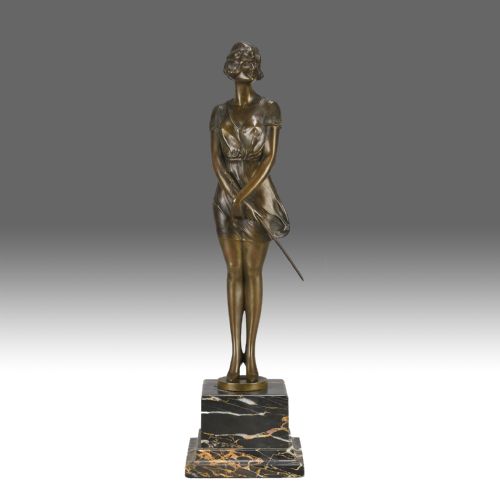
The objects on this page span the nineteenth century through the early twentieth century, capturing distinct shifts in aesthetic taste. French and Austrian foundries dominate the selection, producing both monumental gallery pieces and smaller cabinet bronzes.
Full-length figures, dancers, and allegorical subjects appear frequently alongside detailed portrait busts of noblewomen and mythological figures. These pieces reflect prevailing academic, romantic, and modernist ideals of their respective decades.
Materials and Casting Techniques
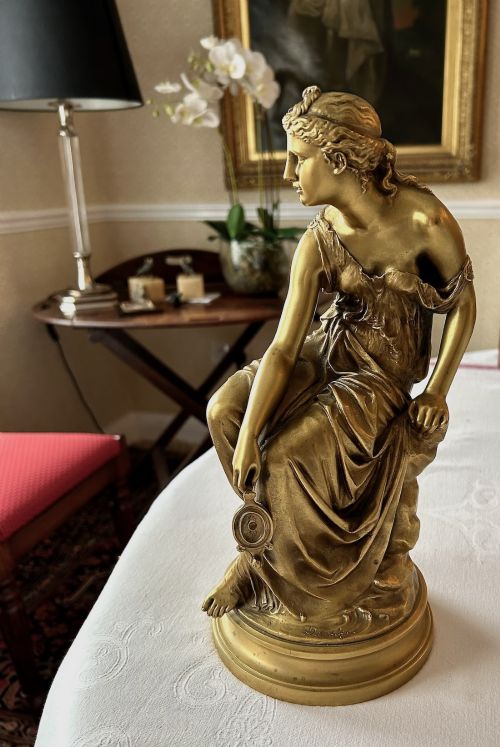
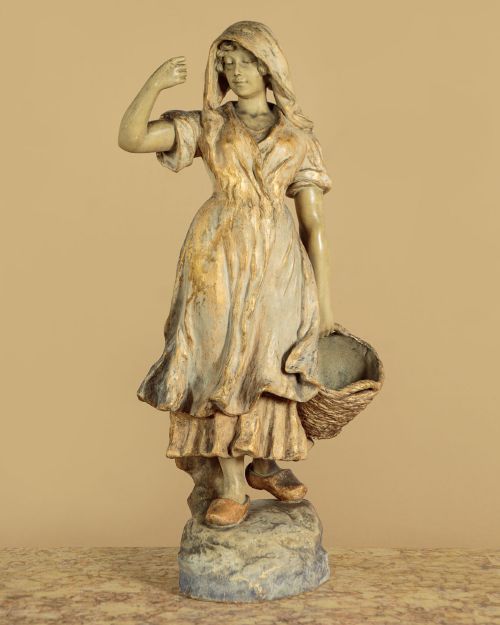
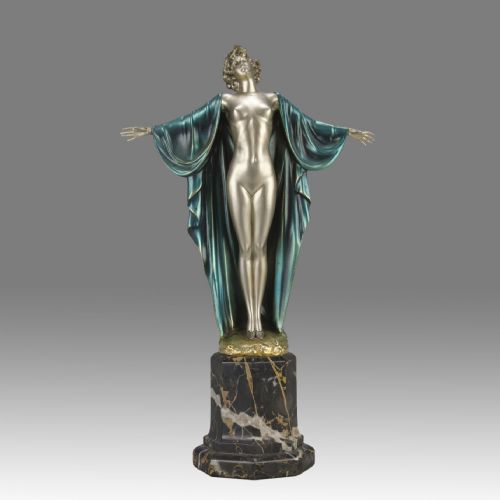
Foundries utilised the lost-wax casting method for bronze pieces, allowing intricate detail in hair, drapery, and facial expression. Many bronzes feature cold-painted surfaces or rich patination ranging from deep brown to gilt finishes.
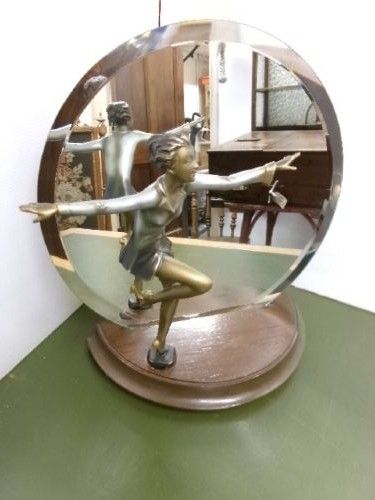
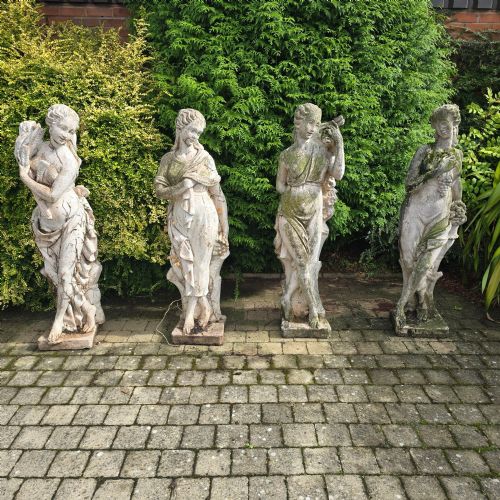
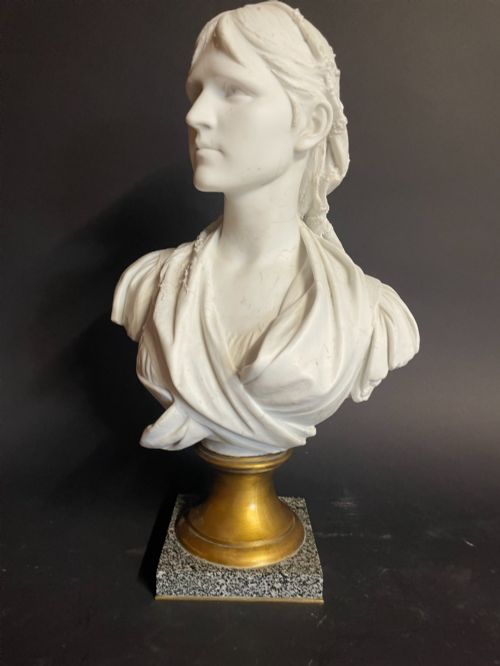
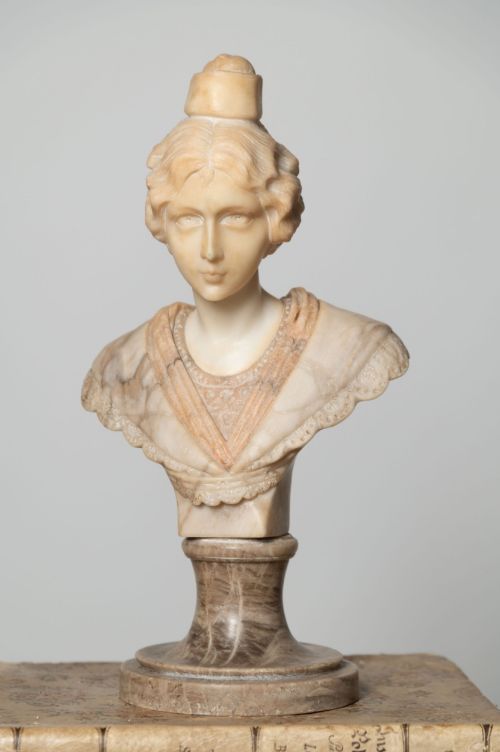
Carved pieces rely on softer mediums such as alabaster, Carrara marble, and terracotta, which demand precise hand-chiselling and polishing. Spelter frequently appears as a cost-effective alternative to bronze in decorative figures and lamp bases.
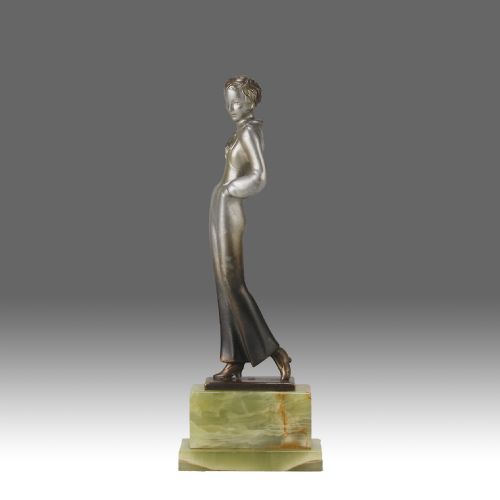
Complex sculptures often combine multiple media, mounting bronze or spelter figures onto heavy bases of marble, onyx, or slate to provide stability and visual contrast.
The inventory spans Victorian academic classicism through to Art Nouveau naturalism and geometric Art Deco modernism.
Judging Quality in Sculpture
The crispness of the casting and the sensitivity of the hand-finishing separate superior sculptures from mass-produced commercial castings. Master founders preserved subtle anatomical transitions and sharp drapery folds without excessive filing or smoothing.
The quality of patination and cold-painted enamel dictates the visual depth and preservation of the piece over time. Original surface treatments retain tonal variation, whereas later repainting obscures the underlying metalwork and artist marks.
The integration of base materials significantly influences the overall character of the work. High-grade marbles and veined onyxes selected by prominent studios complement the central figure rather than serving as mere structural supports.
Etienne-Henri Dumaige·Goldscheider·Rudolf Küchler·Ferdinand Barbedienne·Bruno Zach·Pierre le Faguays·Ferdinand Preiss·Josef Lorenzl·August Moreau·E Villanis·Antonio Canova·Mathurin Moreau·Eugene Aizelin·Demetre Chiparus·Emmanuel Villanis·Henri Godet·Aurore Onu·Henry Wissen Senior
The Female Figure Sculpture Glossary
- Patina
- The surface coloration and chemical sheen developed naturally over time or applied intentionally by the foundry. It protects the metal and adds visual depth to bronze sculptures.
- Spelter
- A zinc alloy commonly utilised as a less expensive substitute for bronze in nineteenth and twentieth-century decorative figures. It is softer than bronze and frequently carries a patinated bronze-like finish.
- Cold-painted bronze
- A technique where paint is applied to a cold bronze object without subsequent firing, often seen on Austrian Art Deco figures. The delicate pigments require careful handling to prevent flaking.
- Parian ware
- A fine-grained, unglazed porcelain developed in the nineteenth century to imitate carved marble. It is frequently employed for classical and literary portrait busts.
- Grand Tour
- The nineteenth-century practice where affluent travellers acquired miniature bronzes and carved alabaster busts of classical antiquities in Italy. These souvenirs often replicated famous museum sculptures.
Female Figure Sculpture: Frequently Asked Questions
How do I clean a bronze sculpture?
Dust the surface gently with a soft, dry microfibre cloth to remove accumulated particles without disturbing the underlying patina. Avoid commercial metal polishes, water, and chemical detergents, which strip historical finishes.
Apply a very light coat of microcrystalline wax annually if the bronze appears dry, buffing it gently with a clean cloth. Professional conservation is recommended for pieces showing active corrosion or flaking cold-painted surfaces.
Are spelter figures worth collecting?
Spelter figures represent an accessible category of nineteenth and early twentieth-century decorative art with distinct historical charm. They offer sculptural forms similar to bronze but require careful handling due to the relative softness of the alloy.
Collectors value spelter pieces that retain their original patination and mountings securely. Understanding the material helps distinguish these decorative works from heavier, more durable bronze castings.
How can I tell Art Nouveau from Art Deco figures?
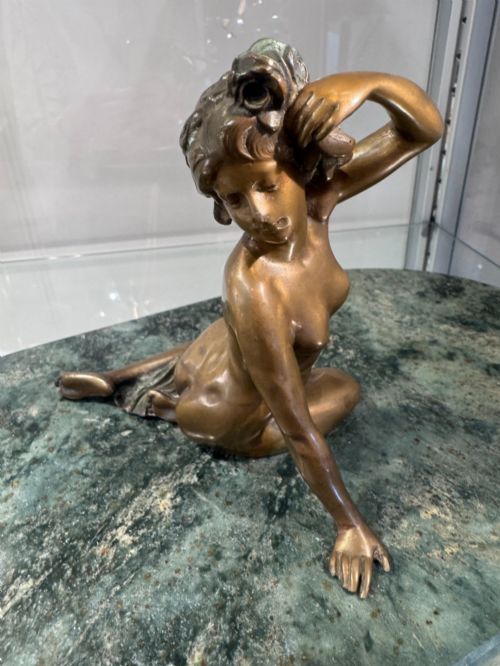
Art Nouveau sculptures, produced around the turn of the twentieth century, feature flowing organic lines, naturalistic floral motifs, and sweeping drapery. The female subjects often have long, cascading hair and introspective expressions.
Art Deco works from the 1920s and 1930s embrace geometric precision, stylised forms, and dynamic movement, particularly in depictions of dancers and athletes. The silhouettes are sharper and reflect the industrial modernity of the interwar period.