



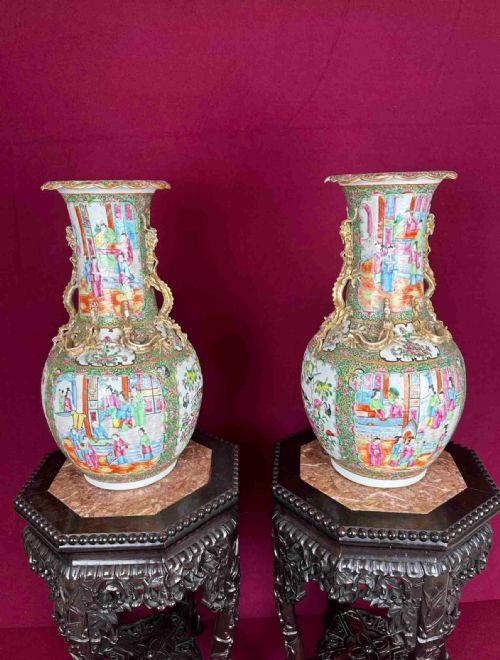


Famille Rose Baluster Vases
Famille rose baluster vases bring exuberant Qing palette enamels and curved silhouettes to any room.
Famille Rose Baluster Vases
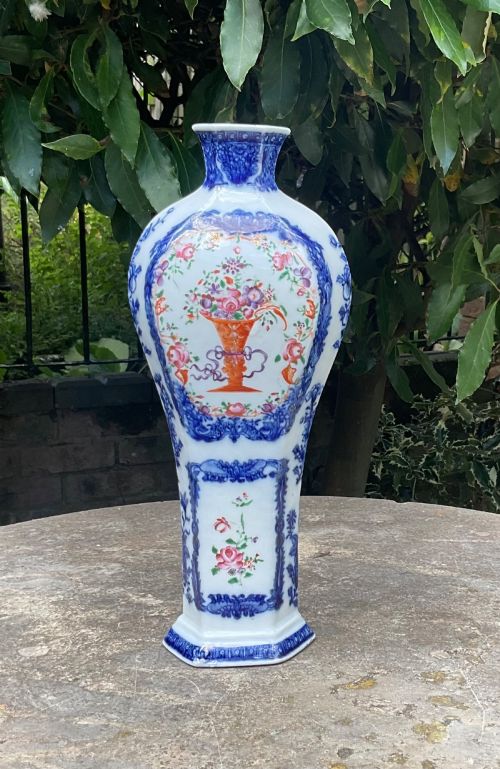
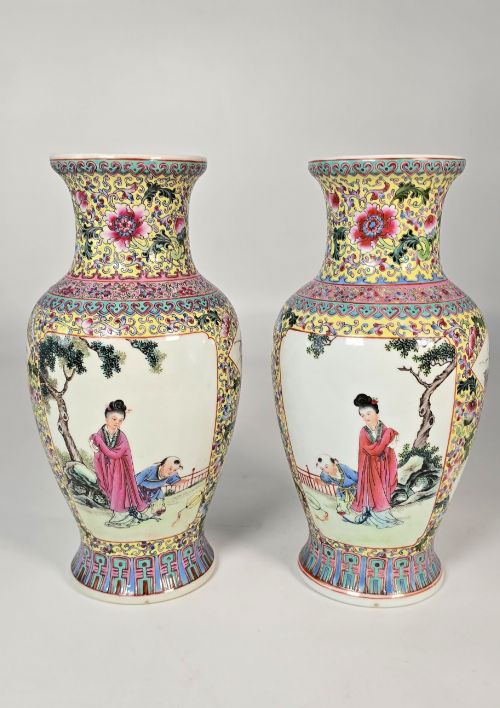
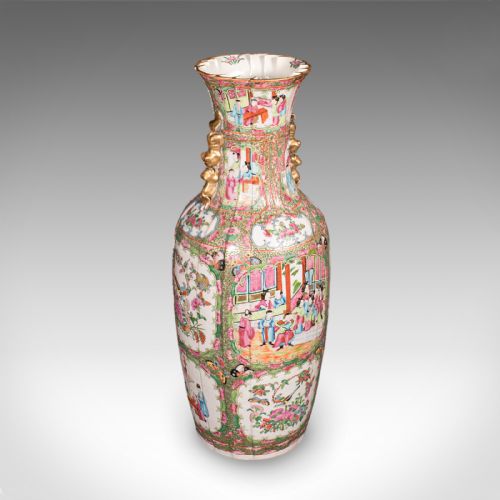
Famille rose baluster vases are curved ceramic vessels named for their distinctive pink enamel palette, which arrived in Chinese ceramics during the Qing dynasty. These pieces display bulbous bodies tapering toward the foot and neck, often decorated with hand-painted figural scenes, birds, and flowers. Buyers searching for famille rose baluster vases commonly encounter 19th-century examples, including Canton and Rose Medallion patterns.
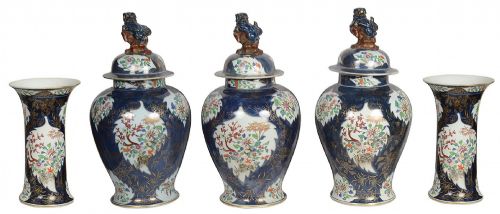
The selection ranges from large monumental floor pieces and pairs of garniture vessels to converted table lamps mounted with brass or wood bases. Alongside antique Qing dynasty works, pieces from the Chinese Republic period and later 18th-century styles appear frequently. These varied forms reflect both original export production and subsequent Victorian adaptation for European interiors.
How they were made
Makers shaped these vases from white porcelain before applying intricate polychrome enamel glazes by hand. The characteristic pink enamel, derived from colloidal gold, combines with gold leaf highlights and dense floral borders across the ceramic surface.
Later adaptations often integrated wood, brass, or gilt bronze mounts when converting the porcelain bodies into lamps during the Victorian and early 20th-century eras.
Some floor vases survived centuries of trade only to spend their golden years wired for electricity beneath pleated silk lampshades.
What varies in quality
Quality in these vases rests upon the precision and detail of the hand-painted enamels, where the finest examples exhibit crisp brushwork and balanced compositions across the pink ground. Dense panel scenes featuring numerous figures require superior artistic control compared to repetitive floral borders.
The weight and purity of the porcelain body, alongside the richness of the gilding and enamel glaze, distinguish exceptional export and Qing dynasty pieces from later decorative wares.
The Famille Rose Baluster Vases Glossary
- Baluster
- A vase form with a rounded bulbous lower body that tapers toward the neck, resembling a architectural baluster. This silhouette provides a stable and balanced canvas for detailed surface decoration.
- Famille Rose
- A ceramic palette defined by opaque pink enamels introduced to Chinese porcelain in the 18th century. The term belongs to a broader French classification system for Qing dynasty colour groups.
- Rose Medallion
- A specific Canton pattern featuring divided panels of figures, birds, and flowers arranged around a central medallion. This style became prominent on export porcelain during the 19th century.
- Garniture
- A matching set of vases or vessels designed to be displayed together on a mantelpiece or cabinet top. These sets typically comprise three or five pieces of graduated heights.
- Qing Dynasty
- The final imperial dynasty of China, lasting from 1644 to 1912, encompassing the primary historical periods for these porcelain wares. Many pieces bear reign marks associated with emperors from this era.
Famille Rose Baluster Vases: Frequently Asked Questions
Are these vases waterproof?
Most antique porcelain pieces can hold water, but hairline fractures or older conversion holes drilled for lamp fittings mean testing is discouraged.
Displaying them dry protects the enamel glaze and any underlying structural repairs from moisture damage.
How do I date a vase?
Dating relies on examining the porcelain body, enamel colours, and style of the painted panels against known production periods. Base marks offer clues, though reign marks frequently honour earlier emperors rather than recording the exact year of manufacture.
Why are some mounted as lamps?
Many Victorian and early 20th-century owners converted large export vases into lighting fixtures to suit contemporary domestic interiors. These adaptations often involved adding wooden or brass bases while retaining the original hand-painted porcelain bodies.
What is Canton porcelain?
Canton porcelain refers to white wares painted and fired in workshops around the southern Chinese port city of Guangzhou for export to Western markets. These items are characterised by colourful enamel decoration, including Rose Medallion and dense bird-and-flower motifs.