




Green Enamel Chinese Vases
Green enamel chinese vases bring brilliant colour and intricate pattern to a room, ranging from small transitional jars to monumental nineteenth century baluster forms.
Green Enamel Chinese Vases
Green enamel chinese vases encompass diverse forms from the seventeenth century through the nineteenth century, including baluster shapes, jars, urns, and cong vases. These vessels reflect major decorative traditions such as Qing Dynasty production, Chinese Export work, and Chinoiserie interpretations.
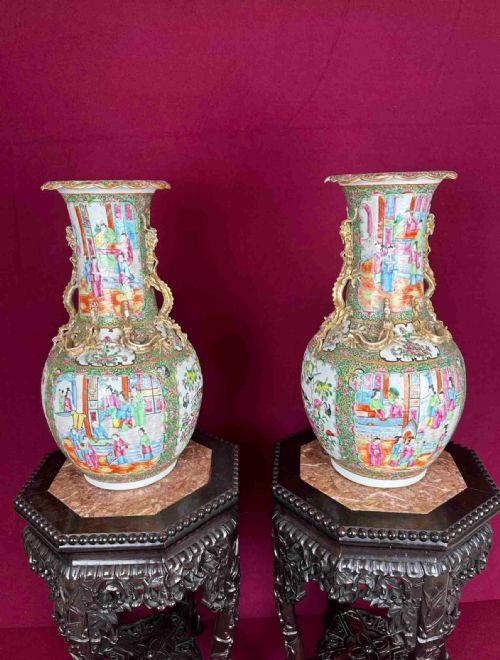
Buyers browsing this selection will most frequently encounter nineteenth century pieces, particularly Canton, Rose Mandarin, and Famille Verte styles. Many of these larger examples have been converted into table lamps over time while retaining their original ceramic bodies and painted details.
The assortment also includes smaller jars from earlier periods, such as seventeenth century transitional pieces featuring wucai decoration and Buddhistic lions. These varied objects bridge the gap between traditional scholar items and grand decorative furnishings.
How they were made
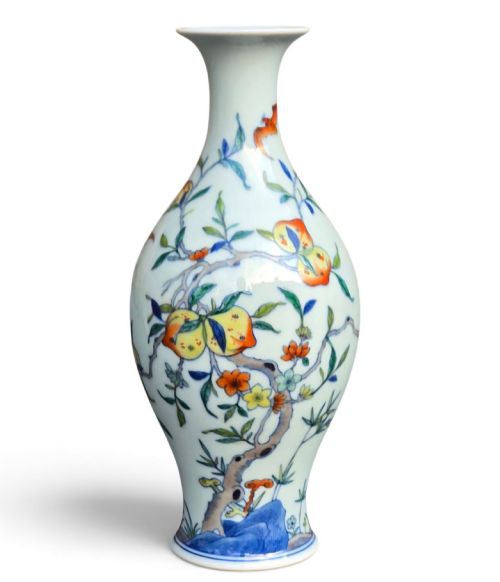
Makers shaped these vessels using ceramic and porcelain bodies, applying hand-painted designs that incorporated green enamel alongside other colours like iron red. Certain pieces display biscuit enamelling or doucai techniques, requiring precise control during multiple firings.
Finishing touches often involved gilding, gold leaf, and gilt bronze mounts. Some later nineteenth century examples were fitted onto hardwood bases or adapted for electrical wiring with metal hardware.
Listings feature porcelain and ceramic bodies finished with enamel, gilding, and gold leaf, occasionally mounted in gilt bronze or set on hardwood.
What varies in quality
Quality rests in the crispness of the hand-painted brushwork and the vibrancy of the enamel palette against the porcelain ground. Superior examples display precise control over complex motifs such as five claw dragons, figural scenes, and intricate floral borders.
The structural integrity of the ceramic body and the precision of any gilt bronze mounts or added lamp conversions also determine the standing of a piece. Better finished items retain clear definitions in their polychrome details without blurring or running in the kiln.
The Green Enamel Chinese Vases Glossary
- Famille Verte
- A palette dominated by green enamel, introduced during the Qing Dynasty and used to depict figures, birds, and botanical scenes. This palette defines many nineteenth century vases.
- Baluster vase
- A tall vessel form with a rounded body that tapers toward a flared neck and foot, frequently seen in monumental nineteenth century pairs.
- Doucai
- A technique combining underglaze blue outlines with overglaze enamel infill, requiring separate firings for each stage.
- Wucai
- Meaning five colours, this style uses underglaze blue combined with contrasting overglaze enamels such as iron red and green.
- Cong
- A jade-inspired tubular vase form with a square section and circular bore, translated into ceramic bodies during the Qing Dynasty.
Green Enamel Chinese Vases: Frequently Asked Questions
Are these vases antique?
The selection spans several centuries, with pieces originating from the seventeenth century through to the late nineteenth century.
Most items date from the Victorian era and the Qing Dynasty, reflecting traditional imperial and export manufacturing periods.
How were these vases used?
Original vessels served as ornamental furnishings within scholar spaces and wealthy households, often displayed in pairs.
Many nineteenth century examples were later adapted with gilt bronze mounts to function as table lamps.
What is Famille Verte?
Famille Verte refers to a ceramic decoration style where green enamel forms the dominant hue within a broader polychrome palette.
Artisans used this palette to create detailed pictorial scenes of figures, landscapes, and natural subjects.
Can I use them as lamps?
Several vases on this page arrived with nineteenth century gilt bronze mounts configured for lighting.
These converted pieces combine decorative ceramic bodies with functional electrical fittings while preserving the painted exterior.
What does transitional mean?
Transitional pieces date from the mid-seventeenth century, bridging the shift between imperial dynasties.
These earlier jars often feature distinct wucai painting styles and subject matter like Buddhistic lions.