


Fall Front Secretary Bureau
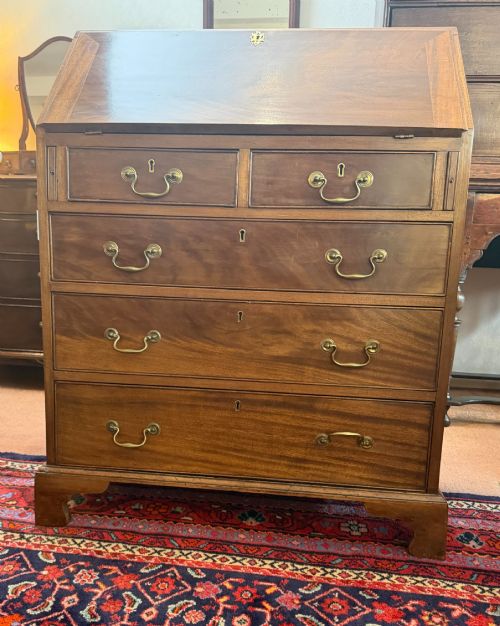
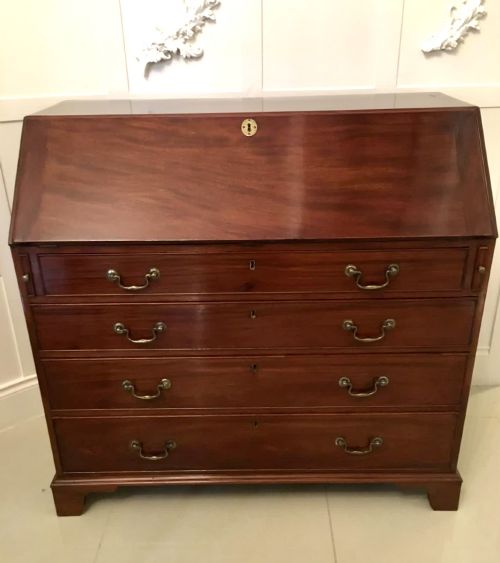
These fall front secretary bureau pieces combine a writing surface with concealed drawers behind a folding panel, offering compact storage for daily correspondence.

Fall Front Secretary Bureau
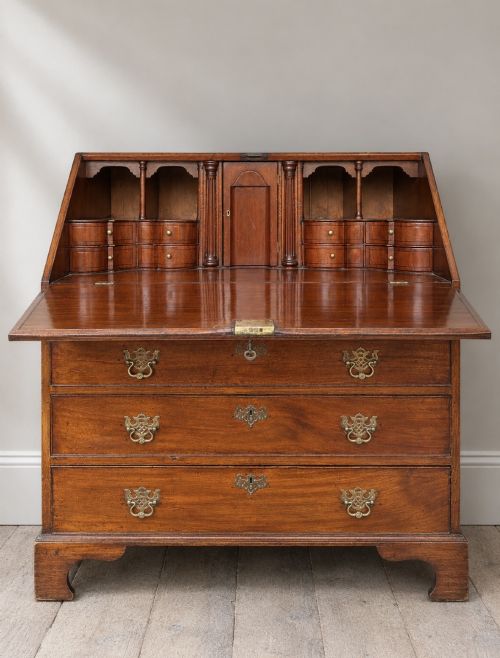
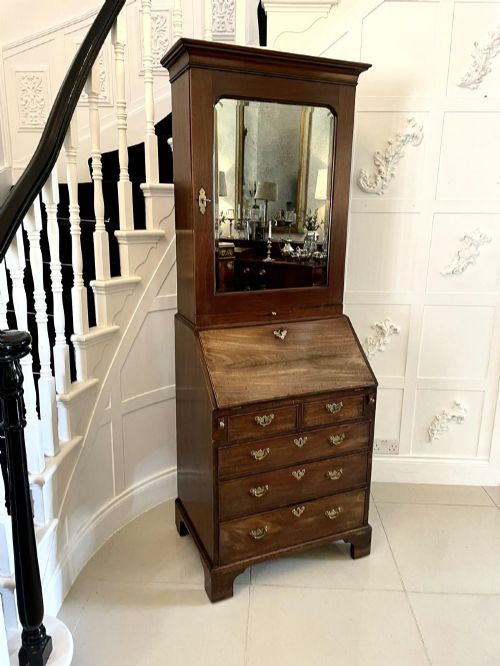
A fall front secretary bureau is essentially a writing desk featuring a hinged flap that drops down to form a writing surface, hiding interior pigeonholes and small drawers within. You will frequently encounter examples from the Georgian and 18th century periods alongside later Edwardian and 20th century interpretations.
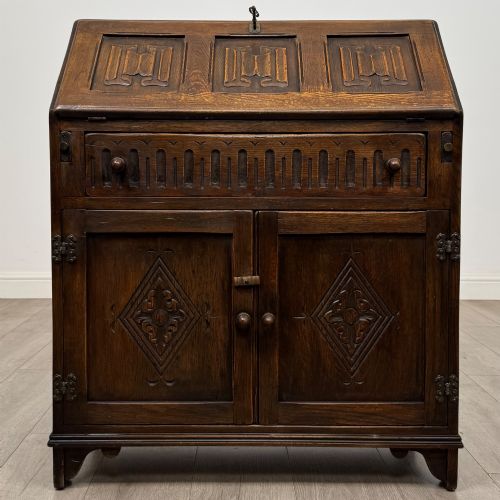
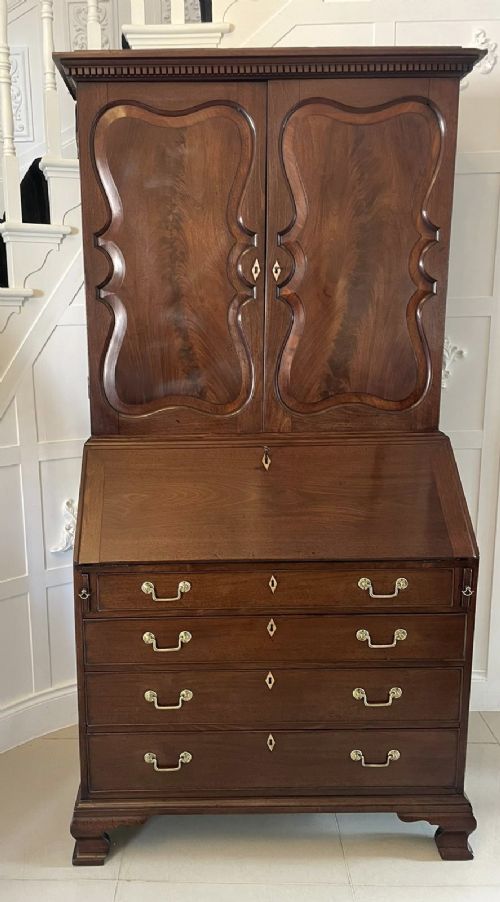
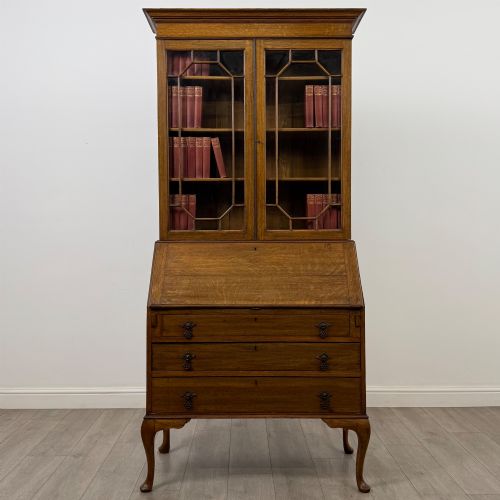
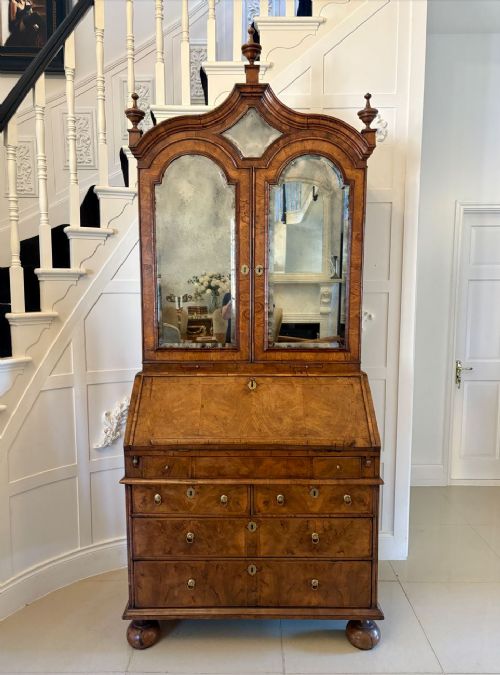
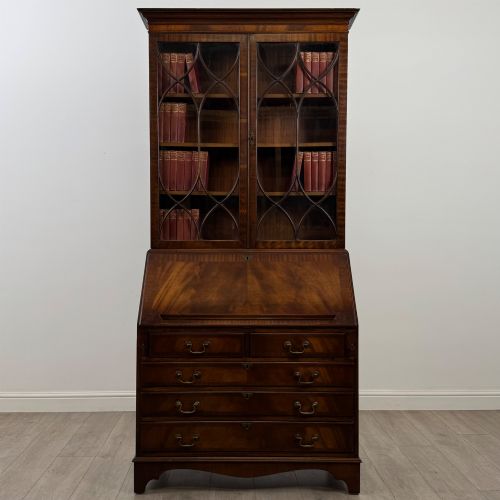
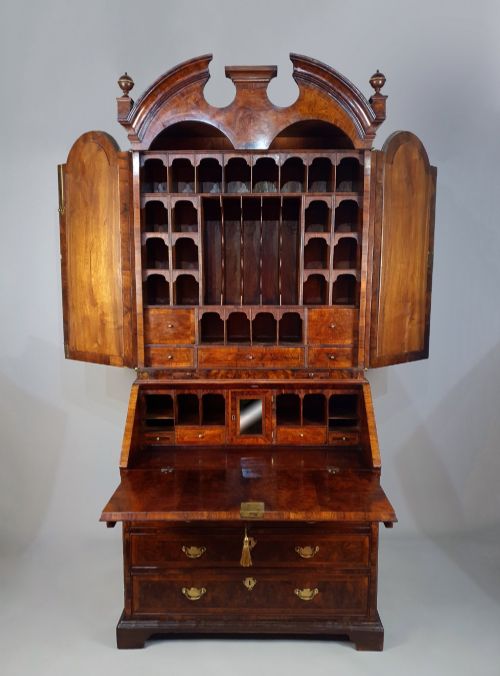
The selection ranges from compact oak and mahogany desks to taller bureau bookcases topped with glazed shelving for display. These forms originate across British, Dutch, and French workshops, utilising woods like walnut, burr walnut, and fruitwood.
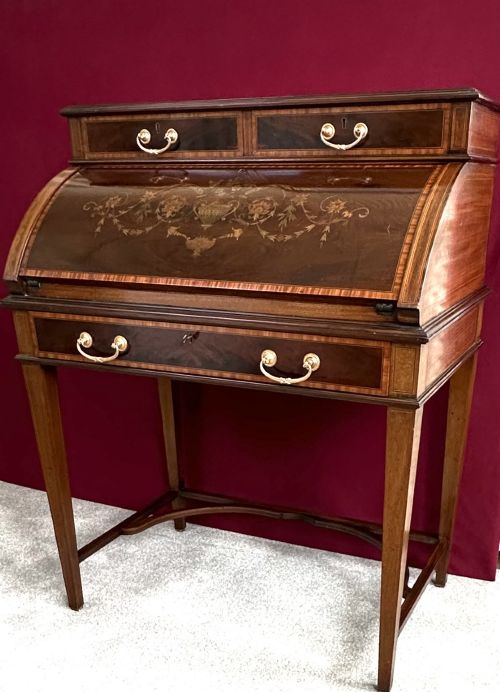
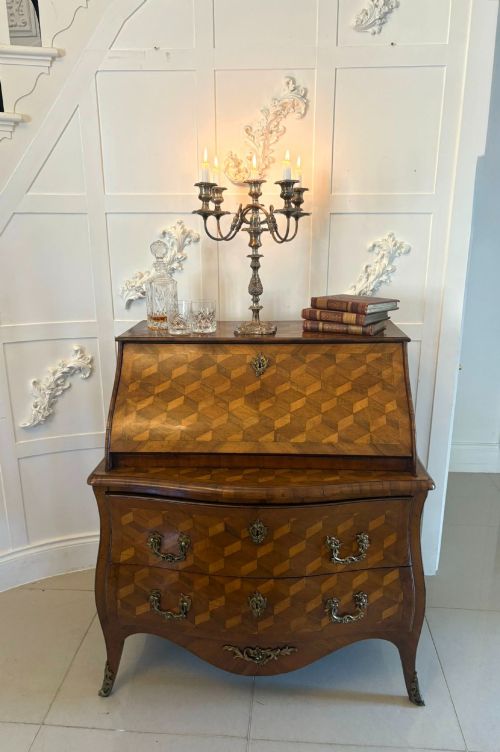
Simpler workspace variants sit alongside elaborate marquetry and parquetry pieces decorated with floral patterns or featherbanding. Buyers seeking this form will find both dedicated writing desks and multi-tier cabinet combinations across the selection.
Materials and construction methods
Cabinetmakers utilised solid timbers and veneers of mahogany, oak, and walnut, often applying burr walnut or satinwood for decorative effect on the fall front panel. Structural stability depended on tightly joined corners and sturdy bracket feet or carved paw feet.
Interiors typically house fitted drawers, pigeonholes, and stepped compartments constructed from secondary woods like cedarwood or pine. Brass handles, escutcheons, and hinges secure the moving parts and punctuate the darker wood tones.
One remarkably forward-thinking early oak bureau bookcase has been adapted for television.
Distinguishing quality across examples
The distinction between tiers rests upon the figure of the wood veneer, the complexity of the interior joinery, and the crispness of any inlaid marquetry. Finer pieces display matched burr walnut figures and meticulously stepped pigeonhole sections behind the fall front.
Secondary details such as original brass hardware, finely dovetailed drawer linings, and the overall balance of proportions indicate superior workshop standards. Alterations or later replacements to the feet or interior fittings alter the standing of a piece.
Heals of London·Arthur Basil Reynolds·Larkin
The Fall Front Secretary Bureau Glossary
- Fall front
- A hinged writing flap that drops into a horizontal position to serve as a desk surface. It conceals the interior compartments when closed.
- Featherbanding
- A decorative wood inlay technique using thin strips arranged in a V-shape pattern around drawer fronts or borders. It frames the central grain.
- Marquetry
- The art of applying pieces of veneer into a decorative mosaic or picture. Floral and geometric motifs appear frequently on Dutch and continental examples.
- Bracket foot
- A simple foot shape supporting case furniture, formed by two pieces mitred at the corner. It lifts the body slightly off the floor.
Fall Front Secretary Bureau: Frequently Asked Questions
How do I use a fall front secretary bureau?
Lower the hinged writing flap to reveal the internal compartments, pigeonholes, and small drawers intended for correspondence and stationery. The surface supports casual writing tasks while keeping paperwork concealed when folded.
Keep the writing flap closed when not in use to protect the interior woodwork and maintain a tidy appearance in the room.
What is the difference between a bureau and a bureau bookcase?
A standard bureau consists solely of the lower writing desk section with a fall front panel and internal drawers. These pieces sit low against a wall and function primarily as desks.
A bureau bookcase adds an upper cabinet with shelving, extending the height and utility of the furniture to include book storage and display behind doors.
How do I date an antique bureau?
Examine the secondary woods inside the drawers, the style of the brass hardware, and the construction methods used for the dovetails. Earlier 18th century pieces often show hand-cut joinery and specific wood choices like oak or figured walnut.
Later Edwardian and 20th century interpretations display different proportions, machine-cut elements, and revival styling traits characteristic of their respective decades.
Where should I place a bureau in my home?
Position the piece against a flat wall in a study, living room, or bedroom where there is sufficient clearance to drop the fall front panel. Ensure the desk area receives adequate ambient or task lighting for writing.
Avoid placing wooden furniture directly in front of heat sources or in areas with strong direct sunlight to protect the veneer and polished finish.