
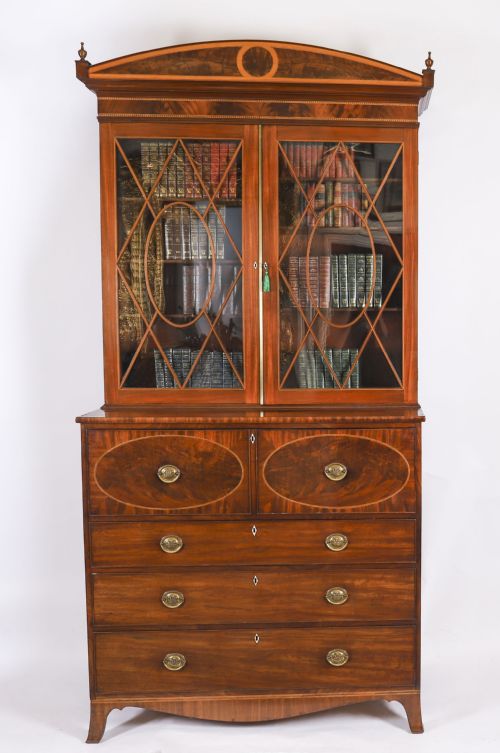
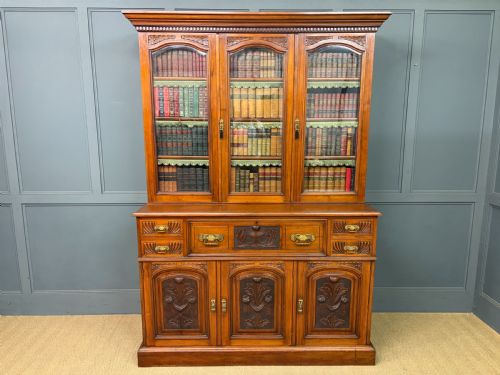

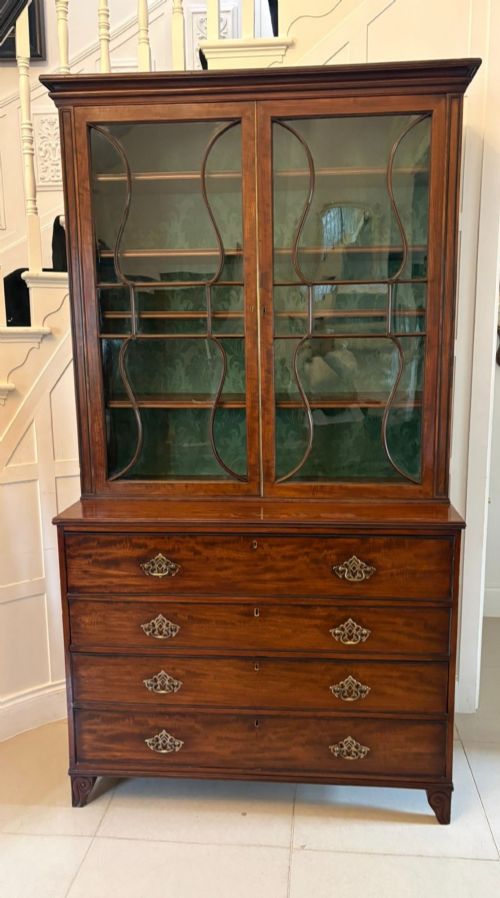
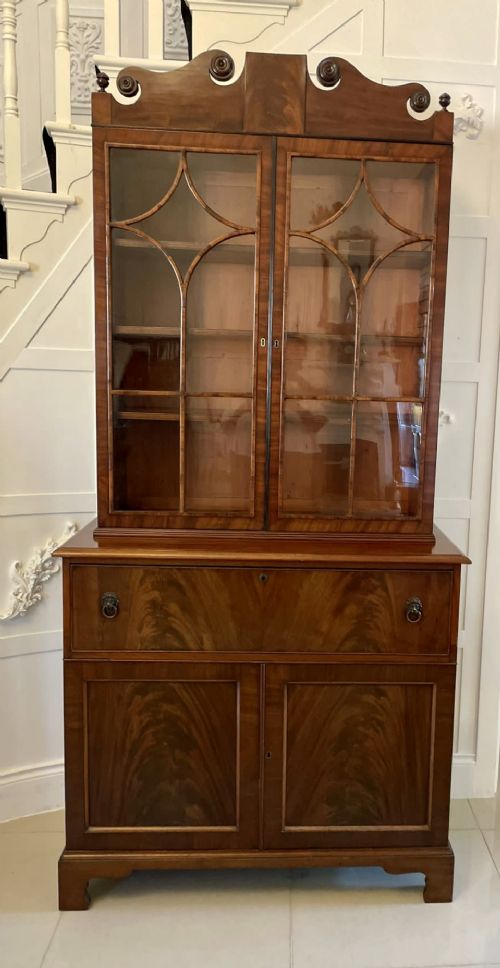
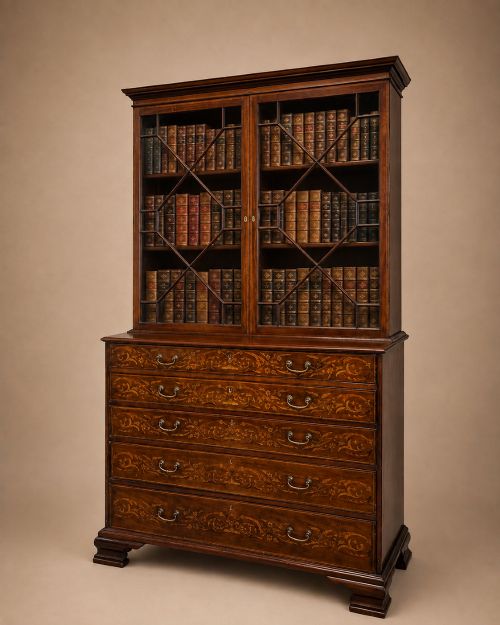
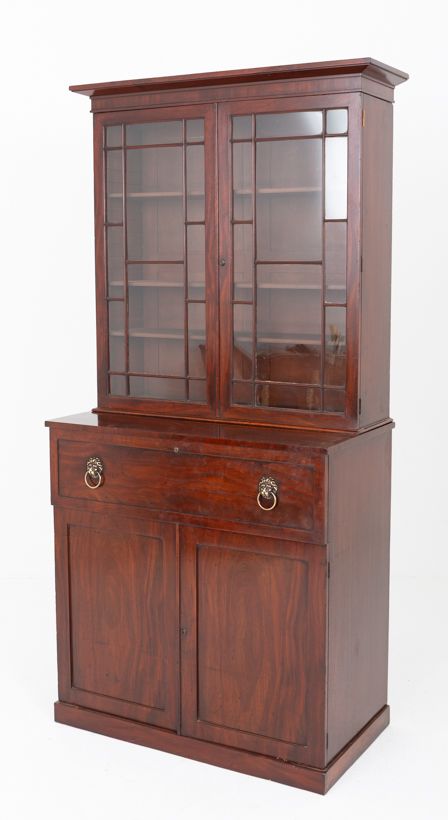
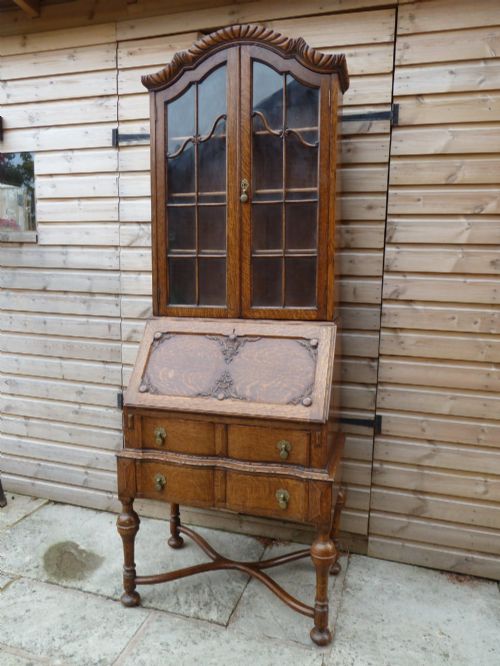
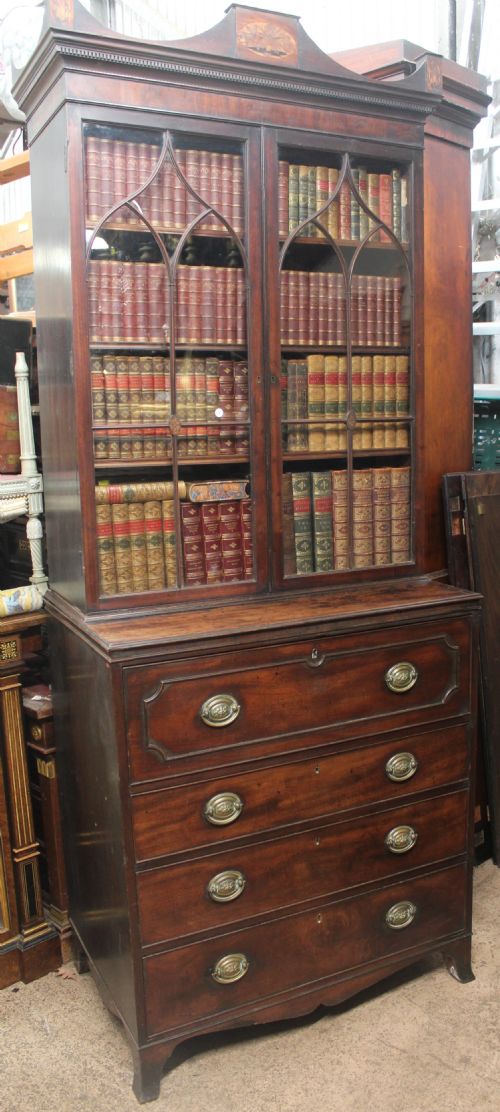
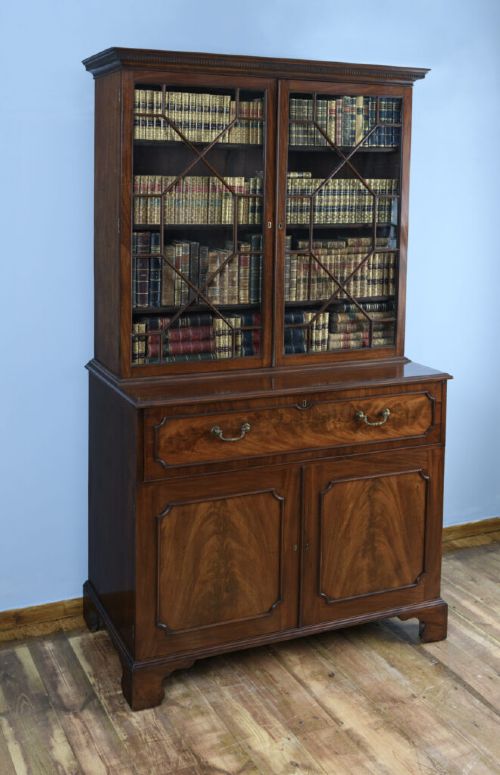
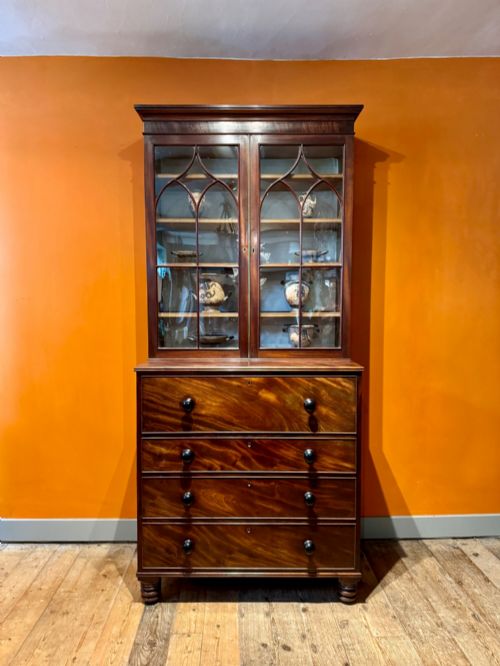
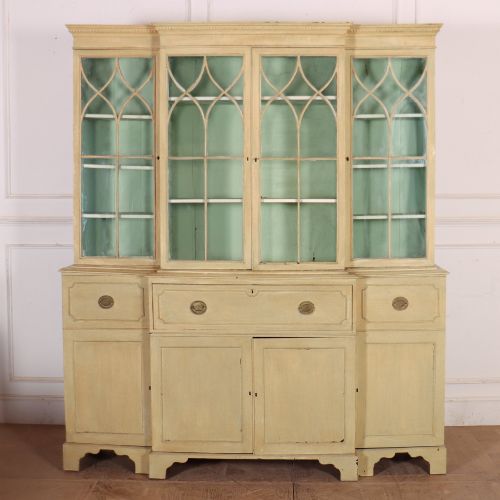
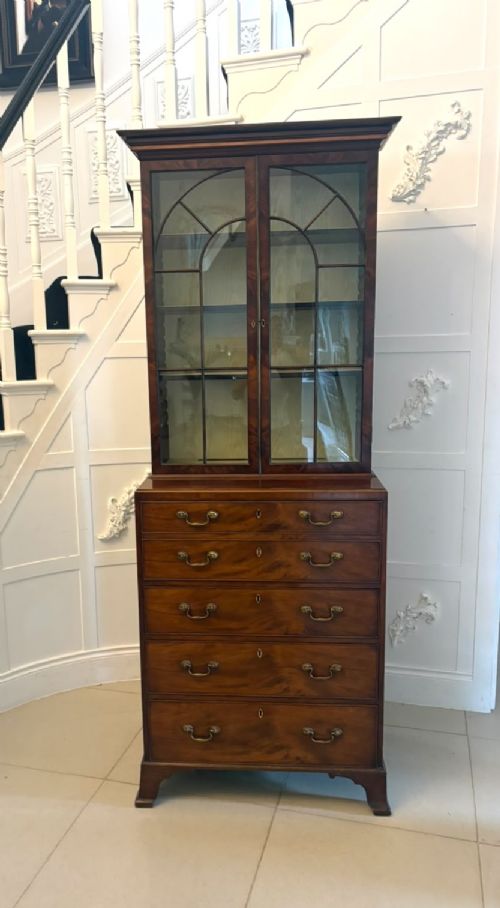


Glazed Display Bureau Desk
A glazed display bureau desk combines a fitted writing drawer with upper shelving behind glass, offering both storage and a workspace.

Glazed Display Bureau Desk
When you examine a glazed display bureau desk, you are looking at a combined piece of furniture that unites a bookcase or display cabinet with a fitted writing drawer. The most common examples on this page date from the Georgian and Victorian periods, alongside Edwardian interpretations.
Forms range from grand scale Regency library cabinets to compact Edwardian variations. You will encounter descriptions referencing secretaire bookcases, bureau bookcases, and writing cabinets across these listings.
Judging quality in construction
Quality separates pieces through the selection of timber veneers and the precision of the cabinet work. Finely figured flame mahogany or burr walnut indicate higher status pieces commissioned from skilled workshops.
The complexity of the interior fitted drawers, secret compartments, and the delicacy of astragal glazing bars distinguish superior examples from standard utility items.
Listings feature pieces spanning from the 18th century through the Georgian, Victorian, and Edwardian eras, constructed in mahogany, walnut, oak, and satinwood.
Gillows·Maple and Co·Morris and Co·George W Jack
The Glazed Display Bureau Desk Glossary
- Secretaire
- A drawer designed to pull out and fold down, revealing a writing surface and small pigeonholes. This serves as the core writing function in these combination cabinets.
- Astragal
- A moulded bar of timber dividing panes of glass within a glazed door. These form intricate lattice patterns typical of Georgian and Regency cabinet work.
- Flame mahogany
- A veneer cut from the fork of the mahogany tree where the branch joins the trunk. It creates a distinctive rippling flame pattern across the drawer fronts.
- Burr walnut
- A prized timber veneer taken from the abnormal growth of a walnut tree. It produces a swirling, mottled grain highly favoured in Victorian cabinet making.
- Marquetry
- The art of applying pieces of veneer to a structure to form decorative patterns. Craftsmen use various tinted woods to create pictures or geometric designs.
Glazed Display Bureau Desk: Frequently Asked Questions
What is a secretaire bookcase?
A secretaire bookcase combines a shelved upper cabinet with glass doors and a lower section containing a pull-out writing drawer.
This design allows owners to store books above while using the fold-down drawer as a desk.
How do I date these pieces?
Dating relies on observing timber choices, construction methods, and prevailing decorative styles across the Georgian, Victorian, and Edwardian periods.
Earlier pieces often use solid mahogany with astragal glazing, while later Edwardian examples incorporate lighter satinwood or marquetry.
How were these desks used?
These pieces functioned as domestic workspaces and display units for libraries or drawing rooms. Owners kept correspondence and writing materials in the fitted interior drawers.
The glass-fronted upper sections protected valuable book collections from dust while keeping them visible.
Where should I place one?
These cabinets suit studies, living rooms, or hallways with sufficient floor space to allow the fall front or drawer to open fully.
Positioning them away from direct sunlight protects vulnerable timber veneers and polished finishes.