

Mahogany Writing Desk Cabinet
Mahogany writing desk cabinet pieces combine practical workspace with fitted storage, built by cabinetmakers across the Georgian, Regency, and Victorian eras.

Mahogany Writing Desk Cabinet
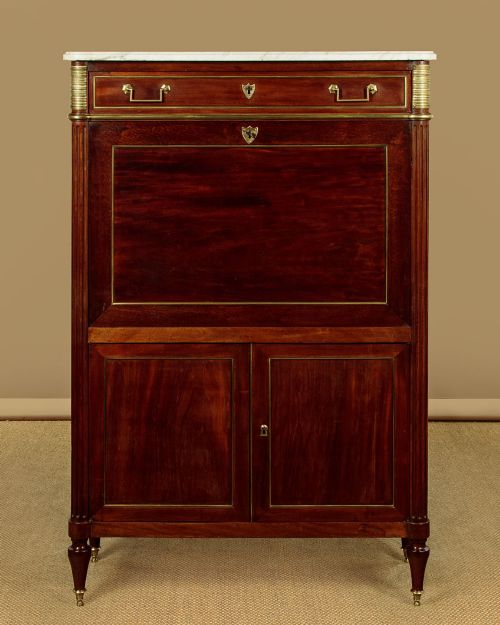
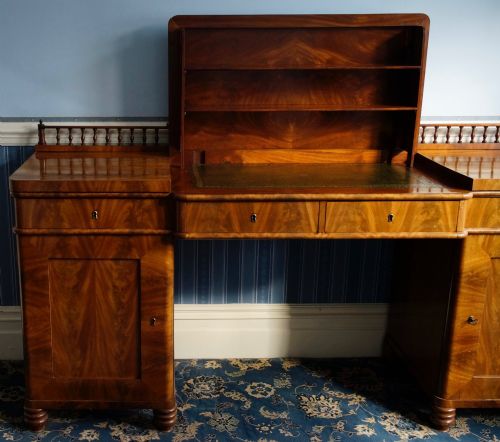
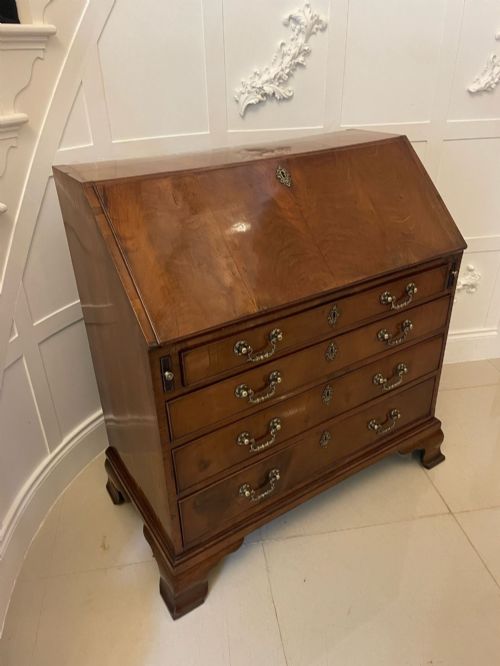
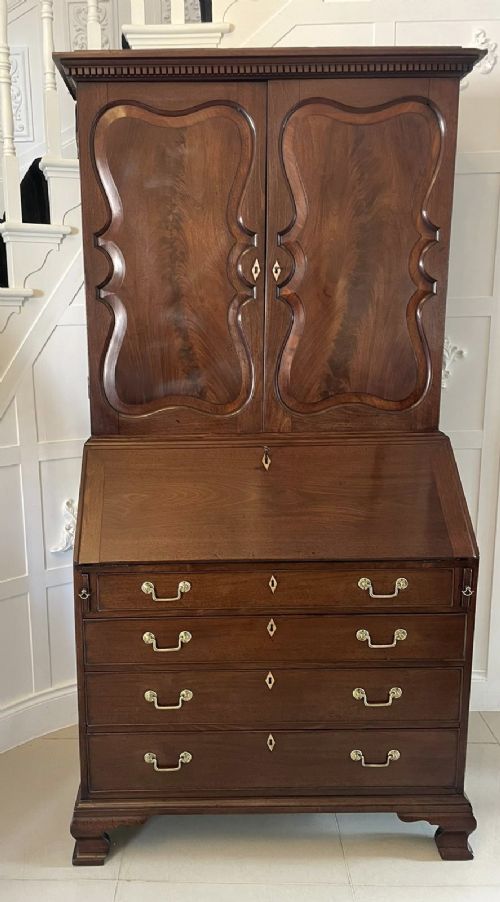
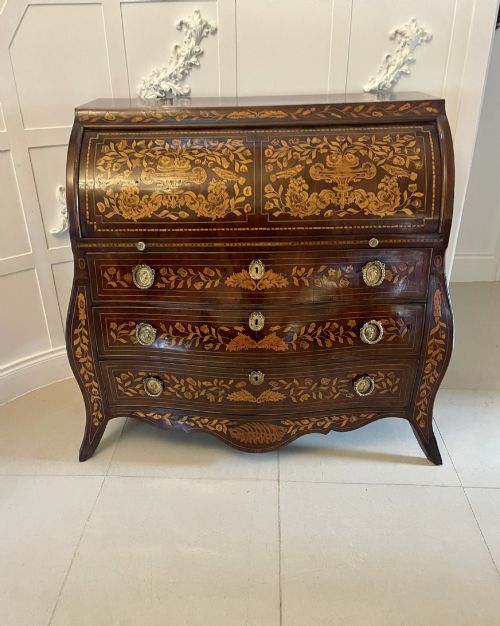
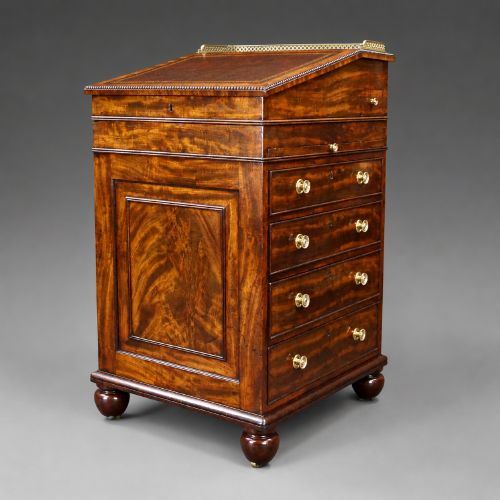
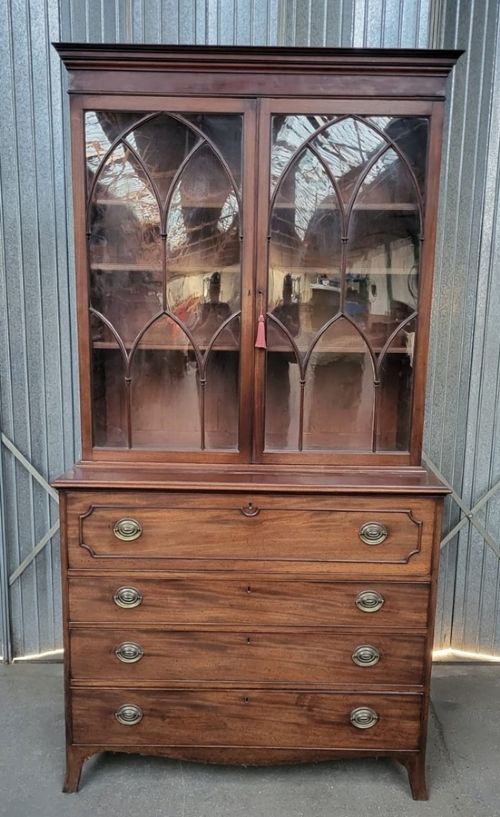
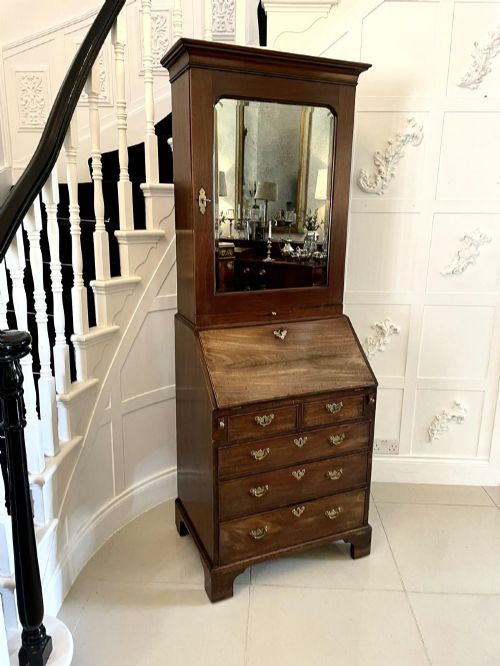
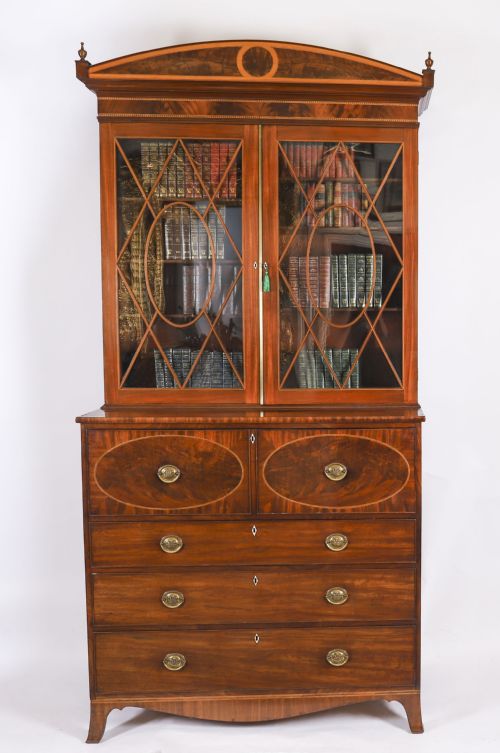
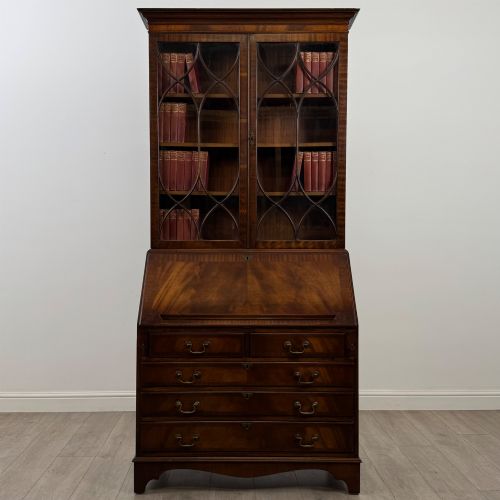
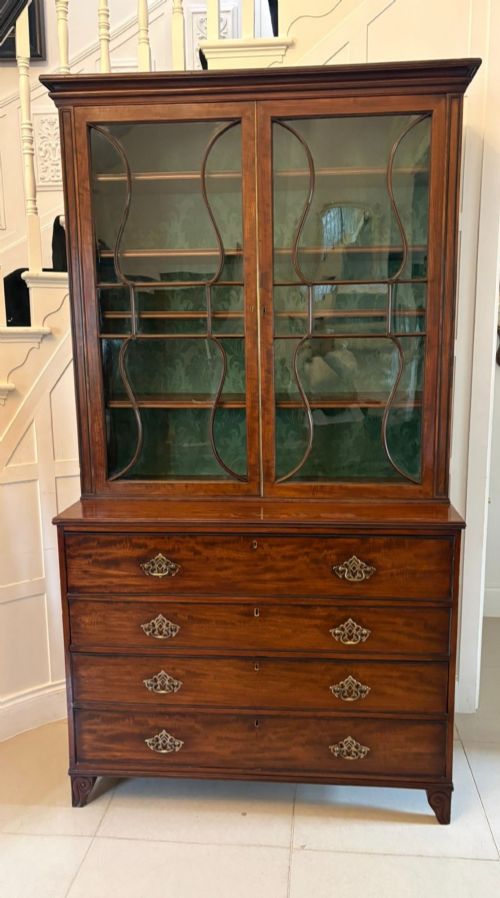
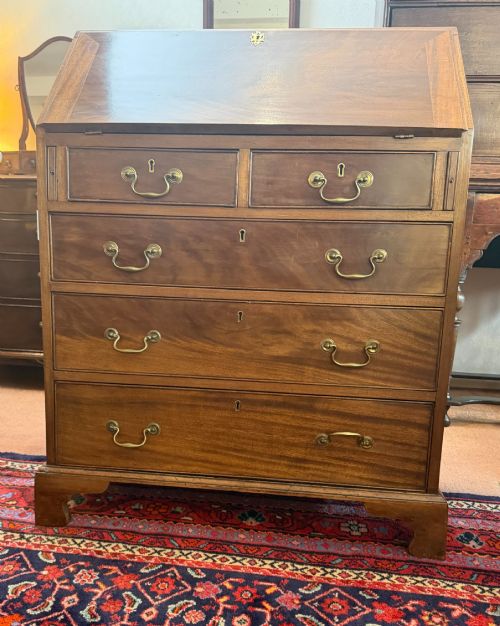
A mahogany writing desk cabinet brings together a surface for correspondence and enclosed storage for books or papers, spanning forms like bureau bookcases, secretaire abattants, and davenports. When searching for a mahogany writing desk cabinet, buyers encounter diverse regional and period interpretations dating from the eighteenth century through to the Edwardian period.
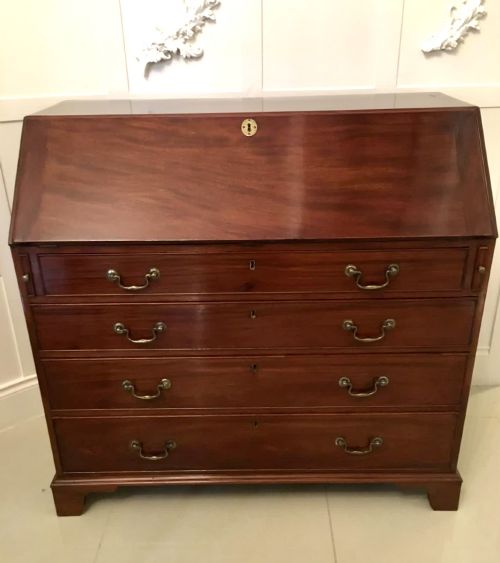
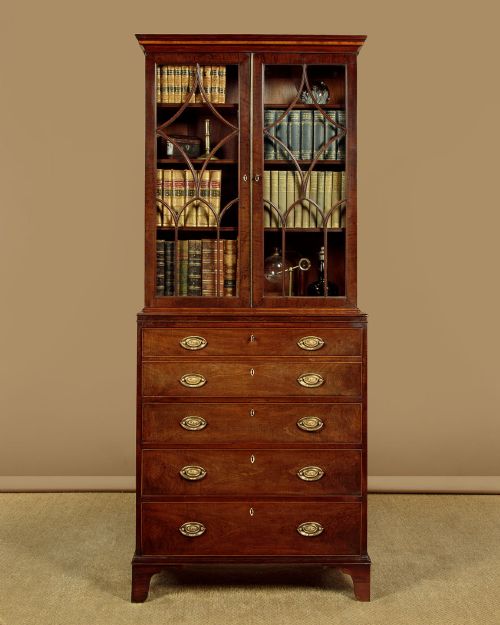
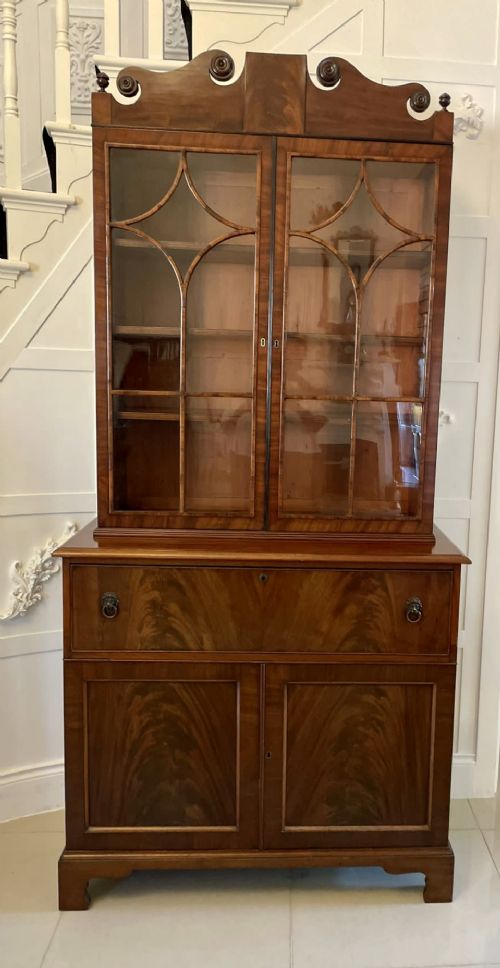
The evidence shows heavy representation of bureau bookcases and secretaire cabinets featuring glazed doors, fitted interior compartments, and drop-front writing surfaces. Examples range from compact George III pieces to larger William IV and Victorian variations, often incorporating auxiliary drawers or upper shelving units.
How they were made
Workshops relied primarily on solid mahogany and figured mahogany veneers, frequently enhanced with flame mahogany grain patterns, boxwood stringing, and floral marquetry inlays. Secondary structural elements commonly utilised oak, while brass hardware secures doors, drop-fronts, and internal drawers.
Joiners constructed writing compartments with complex sets of pigeonholes, small drawers, and hidden compartments behind fall fronts or cylinder lids. Glazed upper sections utilise individual wooden glazing bars holding glass panes to display books or porcelain.
Secret drawers within these desks often required pressing hidden spring catches disguised as innocent pigeonhole dividers to open.
What varies in quality
Quality rests upon the selection of timber figures, where symmetrical flame mahogany veneers and dense grain patterns elevate a piece above plain stock. The crispness of inlaid boxwood lines and the precision of marquetry details indicate the level of labour invested by the maker.
Internal engineering distinguishes finer examples, particularly the smooth mechanical action of sliding tambour shutters, balanced fall-front hinges, and well-fitted secret compartments. The integrity of original brass mounts, fitted stationery pigeonholes, and hand-cut dovetailing in the drawers further define superior execution.
Gillows
The Mahogany Writing Desk Cabinet Glossary
- Secretaire
- A piece of furniture containing a concealed writing drawer or a drop-down writing flap. It usually disguises its function behind what appears to be a standard chest of drawers or upper cabinet front.
- Abattant
- A tall cabinet featuring a vertical drop-front panel that pulls down to serve as a writing desk. This French form conceals internal pigeonholes and small drawers.
- Tambour
- A flexible shutter made of narrow vertical strips of wood glued to canvas or leather backing. It slides in a track to cover a cylinder desk or bureau opening.
- Davenport
- A compact writing desk featuring a sloping top with a leather writing surface above a pedestal of side drawers. Early versions often incorporate a small side-hinged inkwell compartment.
- Marquetry
- Decorative veneer work forming pictorial or geometric patterns using various coloured woods. Craftsmen cut contrasting timbers like boxwood and mahogany to fit flush into a background veneer.
Mahogany Writing Desk Cabinet: Frequently Asked Questions
How do I identify a Georgian bureau bookcase?
Georgian bureau bookcases generally display bracket feet, solid brass swan-neck handles, and heavy cornice moulding at the top. The upper section typically encloses adjustable shelving behind two mullioned glass doors.
Inside the fall-front desk, look for stepped arrangements of pigeonholes and secret sliding compartments typical of mid-to-late eighteenth-century cabinetmaking.
What is the difference between a secretaire and a cylinder desk?
A secretaire incorporates a hinged fall-front panel that drops into a horizontal position to create a flat writing surface. The internal fittings remain exposed or are covered only when the main panel closes.
A cylinder desk uses a quarter-circle rotating wooden shutter that pulls forward and down over the desk surface to hide the writing area completely.
How should I care for antique mahogany furniture?
Keep mahogany pieces away from direct sunlight and heat sources to prevent the wood veneers from drying, cracking, or fading. Maintain a stable room humidity level.
Dust regularly with a soft, dry cloth and apply occasional applications of traditional beeswax to nourish the polished surface without building up synthetic residues.
Are these desks suitable for daily use?
Most antique writing desks and cabinets handle contemporary laptops and stationery comfortably, provided the writing surface is treated with care. Drop-front flaps and pull-out slides have structural weight limits that require gentle handling.
Protect leather inserts from sharp pens and moisture by using a blotter during extended writing sessions.