

Extending Wooden Dining Table
An extending wooden dining table accommodates gathering over meals through clever mechanical leaves or drop sections.

Extending Wooden Dining Table
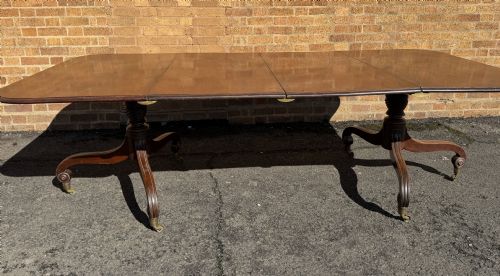
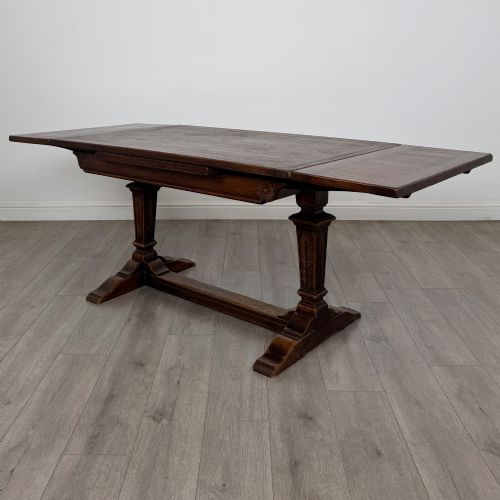
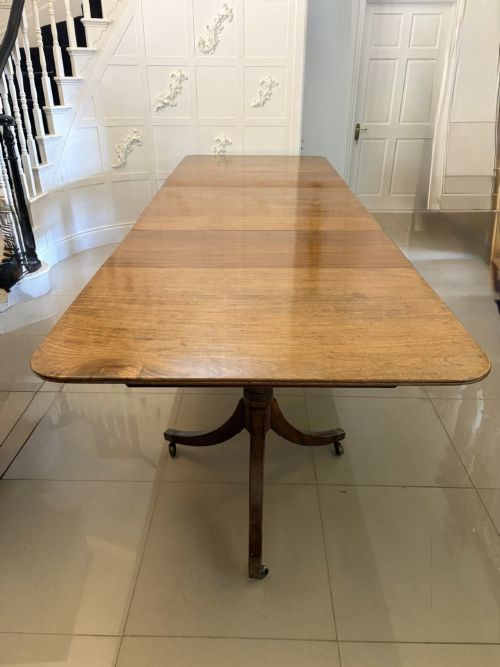
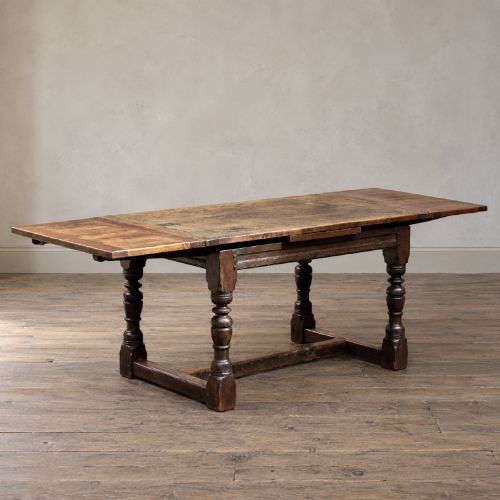
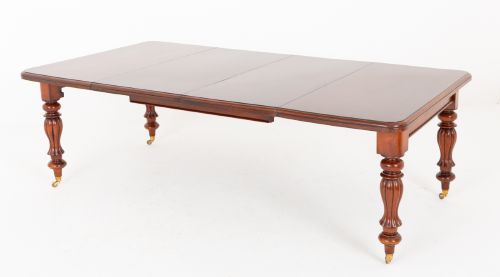
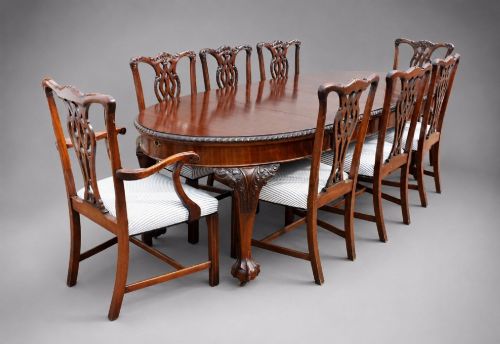
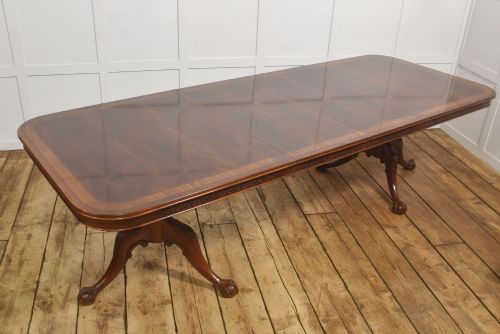
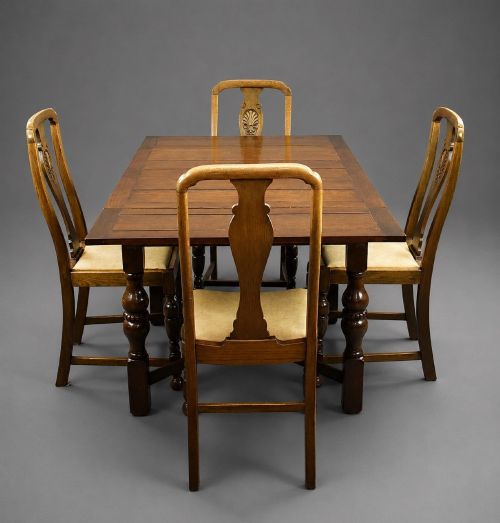
An extending wooden dining table serves dining rooms with expandable surfaces designed for varying numbers of guests. Buyers searching for an extending wooden dining table encounter robust examples spanning several centuries of cabinetmaking.
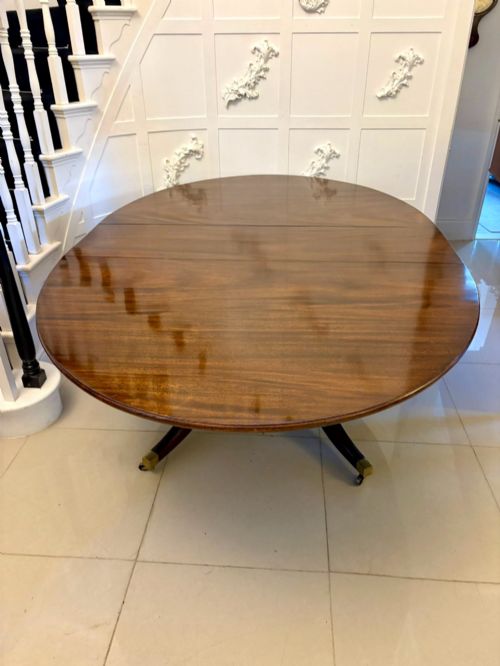
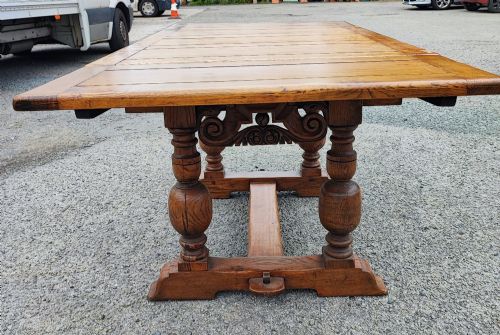
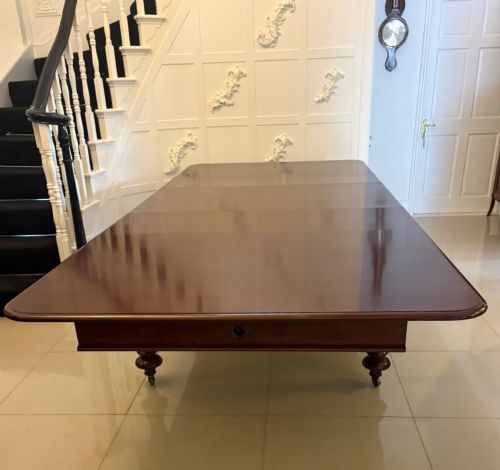
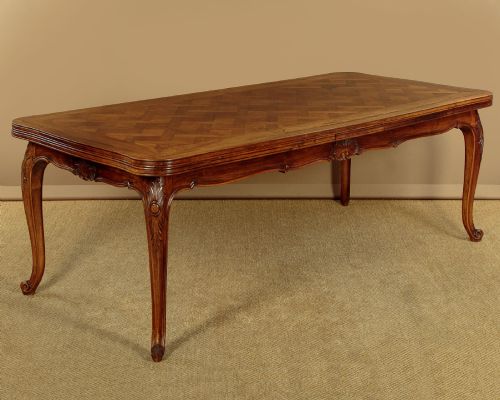
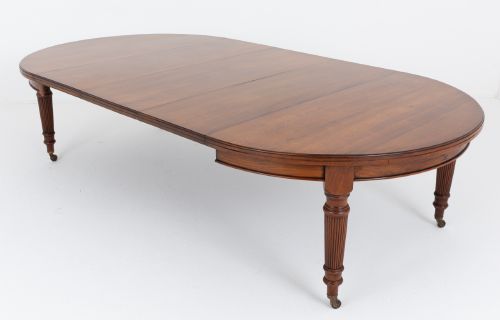
The selections on this page draw predominantly from nineteenth century Victorian and Regency periods, alongside Edwardian and earlier oak interpretations. Mahogany and oak dominate the timber choices, appearing in formats ranging from twin pedestal bases to refectory draw leaf mechanisms.
Materials and Construction
Cabinetmakers utilised dense hardwoods such as mahogany, oak, walnut, and fruitwood to build surfaces capable of withstanding daily use. Brass mechanisms, castor fittings, and pull-out draw leaf supports underpin the engineering of these expanding formats.
Timber selection dictated the visual character, utilising figured mahogany and burr walnut veneers alongside solid oak and cherry planks. Joinery techniques like draw leaves, drop leaves, and multi-pillar pedestal arrangements allowed tables to lengthen smoothly.
Extending Wooden Dining Table Retail Price Guide 2026
Typical asking prices for extending wooden dining table among the pieces listed under this phrase on Sellingantiques today, from the lower quarter to the upper quarter. They describe what is for sale here now, not the wider market.
Certain grand configurations stretch to accommodate upwards of twenty diners for substantial nineteenth century banquets.
Judging the Standard
The calibre of timber preparation and grain matching across additional leaves dictates visual continuity when the table is fully extended. Superior examples maintain stability and alignment across multiple pedestals or heavy draw leaf runners.
Refinement in the carving of pillar bases, legs, and edge mouldings separates standard utility pieces from grander architectural commission work. Original brass hardware and smooth mechanical operation contribute significantly to the standing of a piece.
Maple & Co·Whytock & Reid·F & J Smith
The Extending Wooden Dining Table Glossary
- Draw leaf
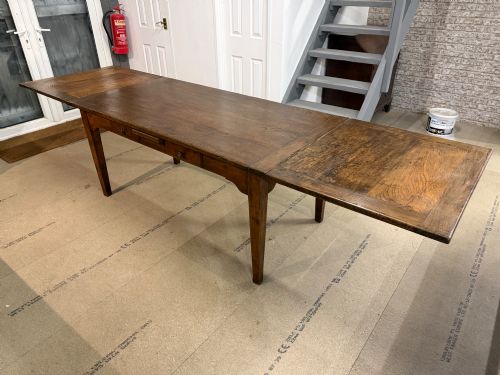
- A table fitted with two leaves stored beneath the main top that pull out from each end to extend the surface. This mechanism allows rapid adjustment without removing separate boards.
- Pedestal base
- A central column support resting on branched legs, commonly utilised in multiple numbers for longer dining formats. This configuration allows greater legroom around the perimeter of the table.
- Refectory table
- A long narrow dining table traditionally associated with monastic or communal halls and constructed in solid oak. Modern iterations frequently incorporate pull-out extensions.
- Gateleg table
- A drop leaf table where hinged flaps are supported by swing-out legs resembling a gate. This design permits the table sides to fold down when not in use.
- Figured mahogany
- Timber cut to reveal distinctive grain patterns such as flame or curl figures. Cabinetmakers selected these boards for prominent tabletop surfaces.
Extending Wooden Dining Table: Frequently Asked Questions
How do draw leaf tables operate?
Draw leaf tables feature two underlying leaves positioned beneath the main surface. Pulling these ends outwards causes the centre top to rise slightly into place as the leaves slide into alignment.
This self-contained mechanism removes the need to store separate loose leaves in a separate cupboard. It provides a swift method for expanding table capacity during meals.
What is a multi pedestal table?
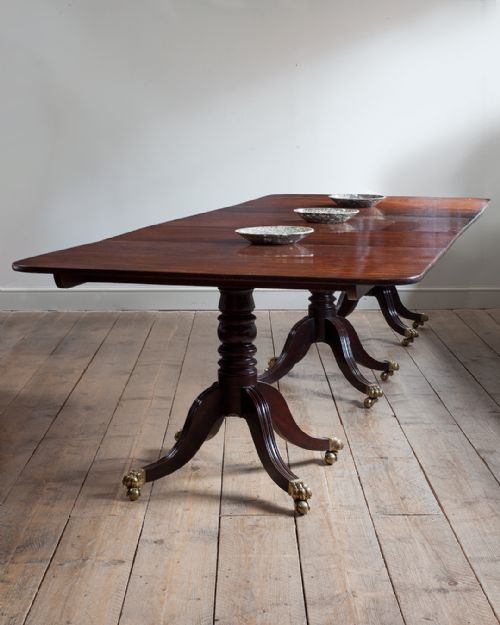
A multi pedestal table utilises two, three, or more central columns to support a long tabletop. These heavy pillars distribute weight effectively across large spans of mahogany or walnut.
Pedestal bases offer practical advantages for seating arrangements by eliminating corner legs. This layout maximises legroom for diners seated along the length of the table.
How do I distinguish Regency styles?
Regency style dining tables often exhibit classical architectural influences inspired by ancient Greece and Rome. They frequently feature reeded legs, brass paw castors, and dark figured mahogany timbers.
Proportions remain balanced and elegant, avoiding excessive ornamentation in favour of clean structural lines. Twin and triple pillar configurations are particularly characteristic of this era.
Are oak and mahogany both common?
Oak and mahogany appear frequently across different centuries and design movements. Oak is typical in earlier refectory and draw leaf formats, imparting a rustic or revivalist aesthetic.
Mahogany dominates later Georgian, Regency, and Victorian dining tables where formal entertaining required polished dark timbers. Walnut and fruitwood also appear in specific regional or revivalist pieces.