


Pull Out Leaf Table
A pull out leaf table gives you a generous surface for dining that shrinks away when floor space matters.
Pull Out Leaf Table
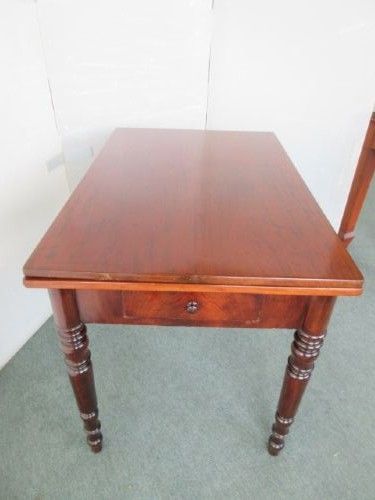
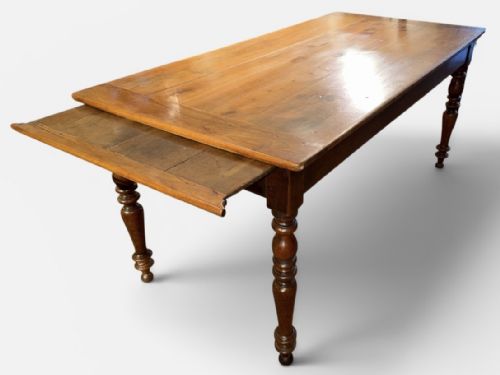
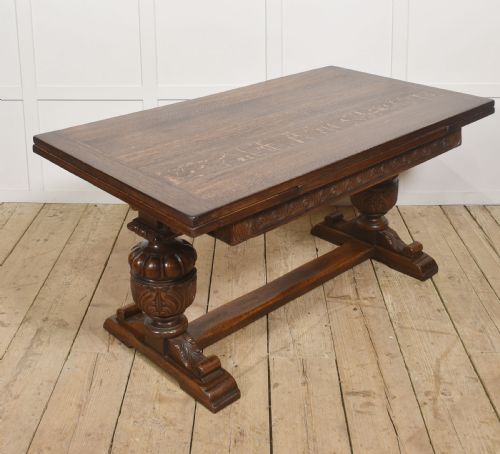
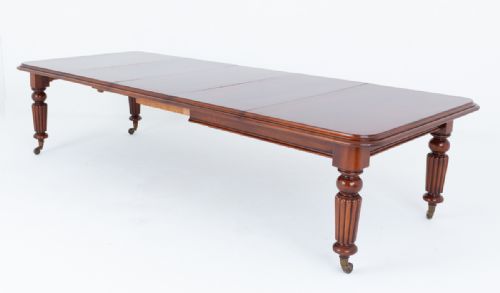
A pull out leaf table is primarily a dining table designed to extend via internal leaves or draw mechanisms to accommodate extra guests. You will frequently find these in mahogany, oak, and walnut across this selection.
The periods represented stretch from the seventeenth century through to the early twentieth century, taking in Regency, William IV, and Victorian eras. These pieces function as robust dining furniture as well as occasional tea tables.
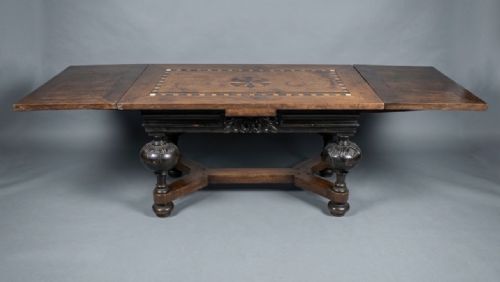
Early examples include seventeenth-century oak draw leaf tables and Dutch inlaid versions, whilst later pieces lean towards mahogany with multiple leaves. Most items serve principally as dining tables with substantial seating capacity.
Distinguishing quality in these tables
Quality rests upon the selection of timber, such as figured pollard oak or rich mahogany, and the precision of the pull-out mechanism. Smooth operation of the extending leaves separates superior examples from stiffer, more basic constructions.
Mahogany and oak dominate the material selections across these dining table listings, spanning from the seventeenth century to the twentieth century.
Gillows
The Pull Out Leaf Table Glossary
- Draw leaf table
- A table with two leaves tucked beneath the main top that pull out to extend the surface. This clever mechanism allows the surface area to double with minimal effort.
- Quadrapartite base
- A four-way pedestal or branching support base commonly found beneath nineteenth-century dining tables. It provides sturdy weight distribution for heavy timber tops.
- Pollard oak
- Oak timber taken from trees that have been pollarded, resulting in a dense, highly figured grain pattern. Cabinet makers prize this wood for its decorative surface movement.
- Refectory table
- A long narrow dining table traditionally used in monasteries and large halls. These heavy wooden tables often feature stretcher bases for stability.
- Inlay
- The technique of embedding contrasting pieces of wood or other materials into the primary surface to form a decorative pattern. Dutch examples often display intricate floral motifs in this manner.
Pull Out Leaf Table: Frequently Asked Questions
How do pull out leaves work?
The secondary leaves slide out from underneath the main top surface on wooden runners.
Once pulled fully outward, the leaves drop or lock into place to create a level dining surface.
Can I seat ten people comfortably?
Many of these extending tables are specifically constructed to seat ten or twelve guests when fully opened.
Shorter tables can be adjusted down for daily use and expanded only when hosting larger gatherings.
How do I care for mahogany tops?
Protect the polished wood from direct sunlight and excessive heat to prevent fading and cracking.
Apply a quality beeswax periodically and buff gently to maintain the rich sheen of the timber.
Are these tables heavy to move?
Solid timber construction in oak or mahogany makes these dining tables quite substantial and heavy.
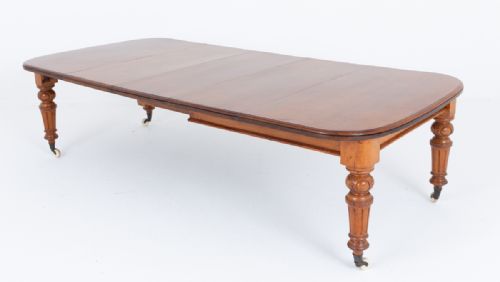
Many Victorian and Regency examples incorporate castors on the base to ease repositioning across the room.
How do I identify a Victorian table?
Victorian dining tables often feature darker mahogany or walnut timbers combined with heavier turned legs.
Mechanised extending systems also became more prevalent during the nineteenth century compared to earlier draw leaf formats.