
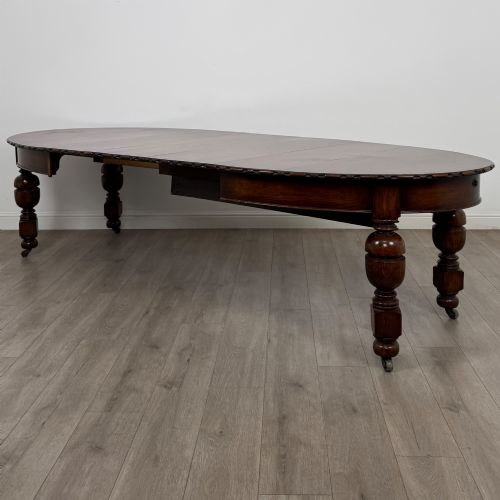
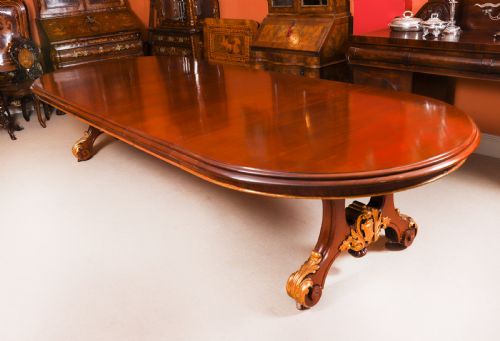
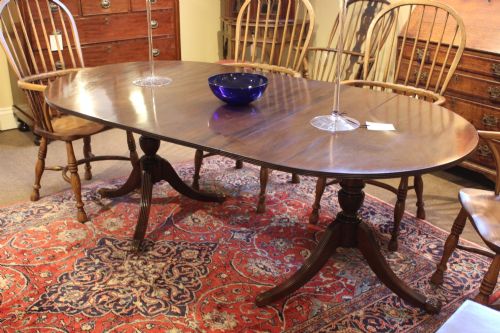
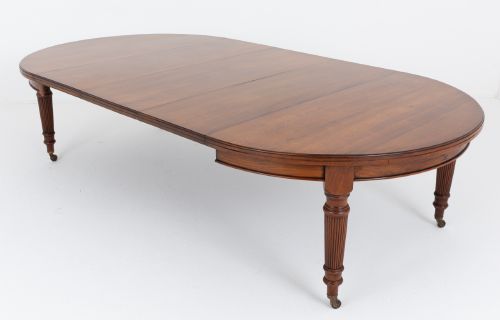
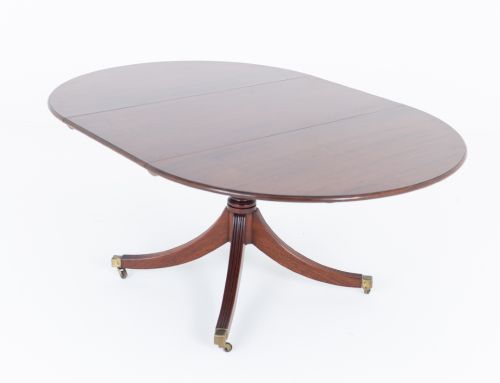
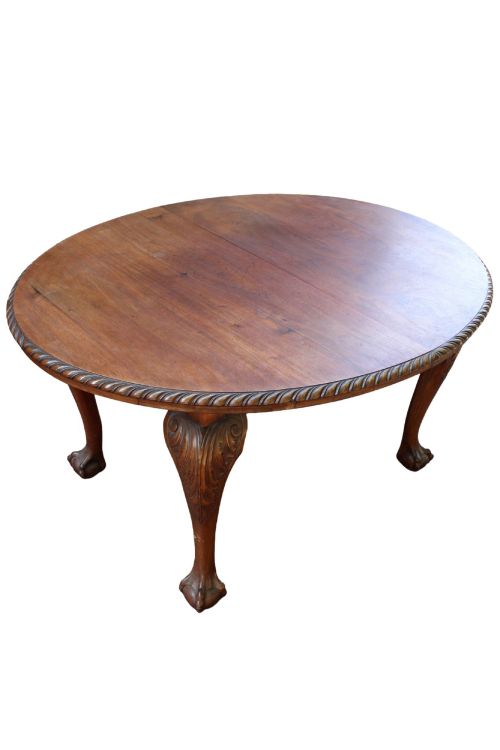
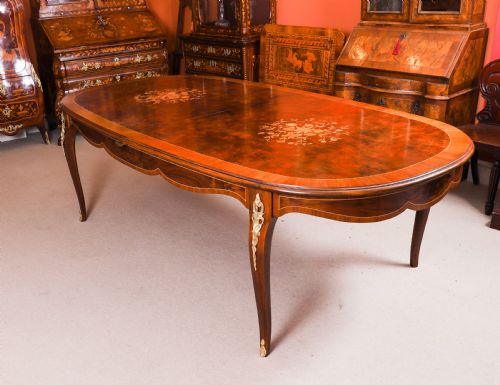
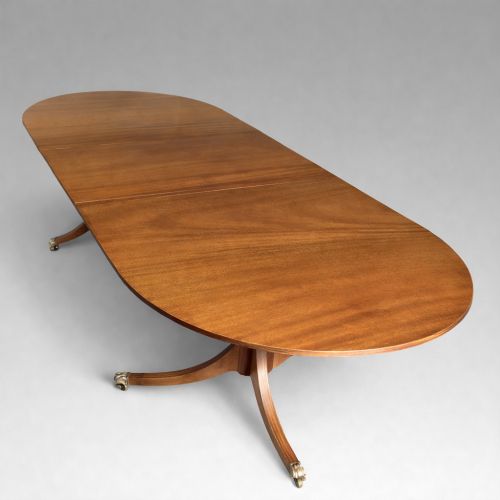

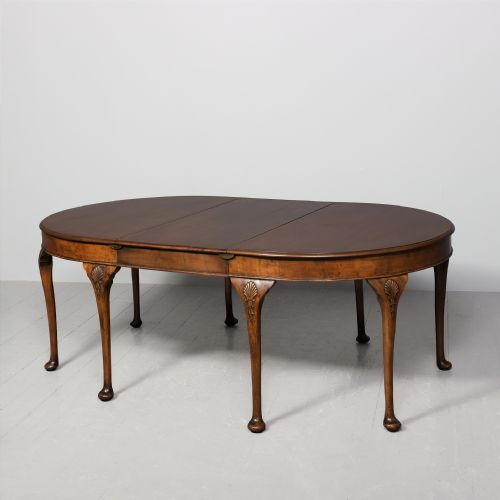

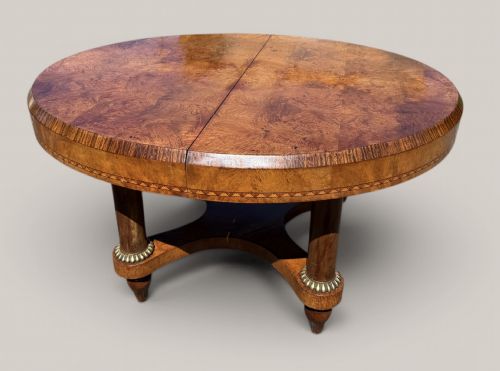
Extending Oval Dining Table
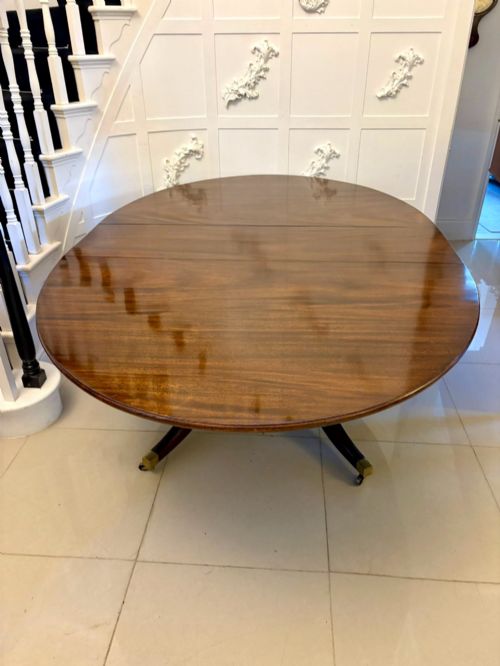
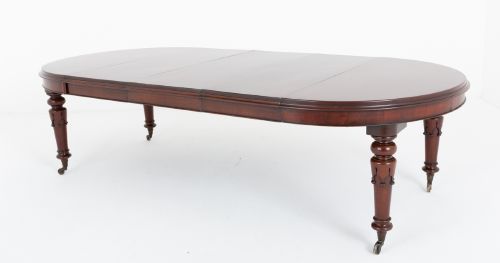
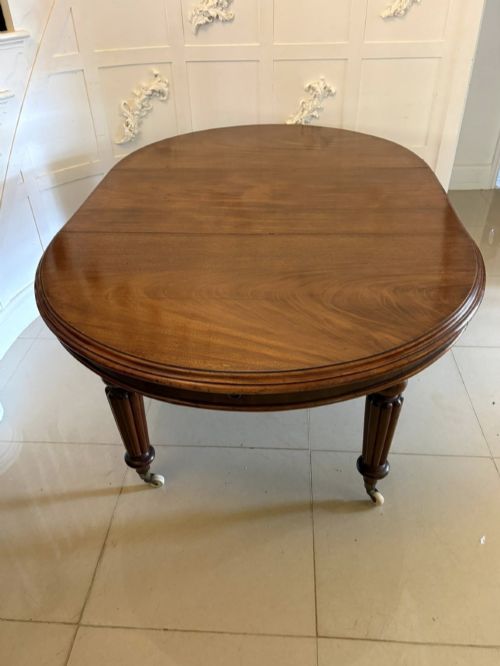
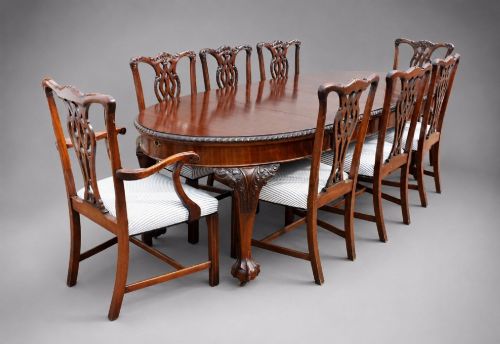
An extending oval dining table provides generous seating for gatherings while offering the rich character of mahogany, oak, and walnut from past centuries.
Extending Oval Dining Table
When searching for an extending oval dining table, a buyer encounters pieces primarily spanning from the Georgian and William IV eras through the Victorian, Edwardian, and 1920s periods. These items range from wind-out pedestal designs to drop-leaf gateleg forms capable of seating large groups.
The most common formats on this page are mahogany and oak examples that expand with removable leaves or internal screw mechanisms. Many incorporate twin pedestals or multi-legged frames to support substantial lengths when fully extended.
Originating largely from British cabinet-making traditions alongside later revival movements, these tables combine practical dining capacity with formal silhouettes. They bridge the gap between everyday utility and antique craftsmanship.
Materials and Construction Methods
Makers relied heavily on solid and veneered timbers, with mahogany dominating the surviving stock alongside figured walnut, burr wood, and sturdy oak. These woods were chosen for structural stability and striking grain patterns.
Mechanical ingenuity defined the larger formats, utilising brass wind-out screws, drop-leaf hinges, and heavy castors to allow smooth expansion. Cabinet makers also applied satinwood inlay, ormolu mounts, and fabric upholstery for decorative emphasis.
Listings feature mahogany, oak, and walnut across 19th-century and Edwardian periods.
Distinctions in Quality
The standard of a piece often rests upon the depth of timber selection, such as flame mahogany or burr walnut veneers, paired with precise joinery in the extension mechanism. Finer examples maintain smooth operation across multiple leaf additions without sagging at the centre.
Maker attribution and stylistic restraint further separate standard production from superior workshops. Pieces showing refined pedestal carving, matched grain patterns across inserted leaves, and robust internal framing represent the higher tier of the surviving range.
Wylie & Lochead·Whytock & Reid·Gillows
The Extending Oval Dining Table Glossary
- Wind out
- A mechanical system using a crank handle to expand the table frame apart for extra leaves. This mechanism became widespread during the Victorian period.
- Pedestal
- A central column support resting on a tripod or platform base with legs. Twin pedestal configurations use two such columns for stability.
- Drop leaf
- A table design featuring hinged flaps on the sides that fold down when not in use. Some variants incorporate gatelegs to support the lowered flaps.
- Gateleg
- A hinged table leg that swings out like a gate to support an open leaf. This construction appears frequently in oak wake and dining tables.
- Flame mahogany
- A veneer cut from timber fork sections exhibiting a fiery, undulating grain pattern. It was highly prized for formal dining surfaces.
Extending Oval Dining Table: Frequently Asked Questions
How do wind-out dining tables operate?
These tables utilise a concealed internal screw mechanism activated by a detachable metal crank handle. Turning the handle rotates gears that pull the table halves apart evenly.
Once the gap is wide enough, additional wooden leaves drop into the centre slot. The mechanism then reverses to lock the leaves tightly in place between the ends.
How many people can these tables seat?
Seating capacity varies widely depending on the number of leaves and the original length of the frame. Standard configurations comfortably accommodate anywhere from six up to twelve diners.
Larger estate-sized examples found in the records extend further to seat fourteen or more guests. Measuring the room and checking leaf dimensions ensures adequate space when fully expanded.
How do I care for antique wood surfaces?
Maintenance requires regular dusting with a soft, dry cloth and avoiding placement near direct heat sources or strong sunlight. These precautions prevent the timber and veneers from drying out or splitting.
Applying natural beeswax periodically nourishes the polish and preserves the grain. Moisture should be wiped away immediately to protect the antique finish.
How can I tell the period of a table?
Dating relies on examining the timber species, construction joints, hardware, and stylistic cues. Georgian and Regency pieces often feature simpler mahogany frames or brass inlay, while Victorian examples frequently introduce heavy pedestals and wind-out mechanisms.
Edwardian and 1920s revivals typically blend earlier aesthetic influences with lighter construction methods. Comparing the leg shapes and undercarriage engineering clarifies the era of manufacture.