


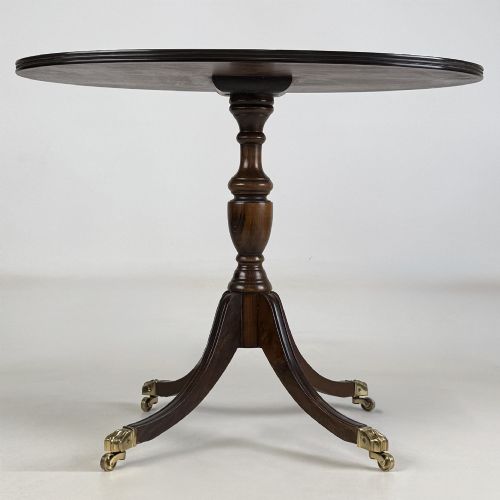
Regency Style Pedestal Table
A regency style pedestal table brings classical proportion and flexible extension to a room through solid pillar supports and rich timber grain.
Regency Style Pedestal Table
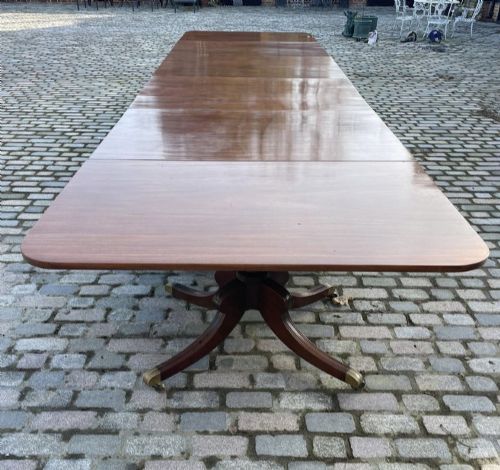
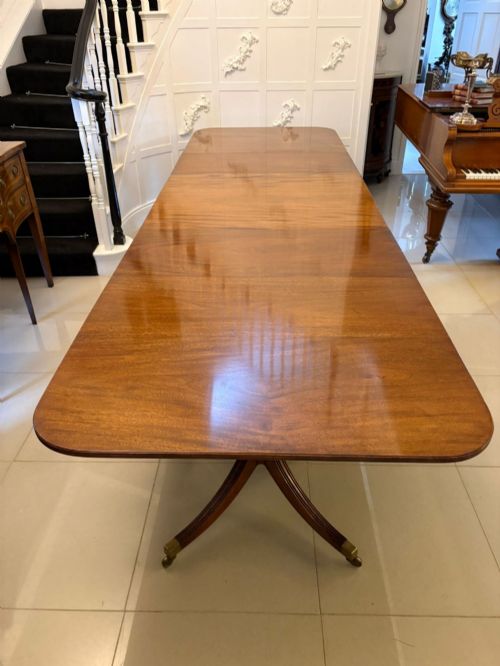
When you search for a regency style pedestal table, you encounter a form defined by a central column or multiple pillars standing on splayed legs. These surfaces range from compact occasional and lamp tables to expansive dining tables capable of seating large numbers of guests through extending leaves.
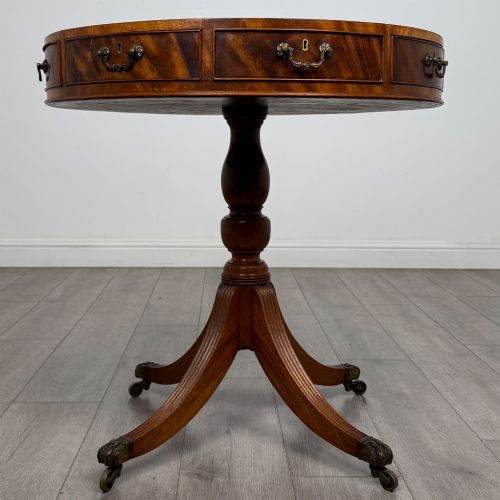
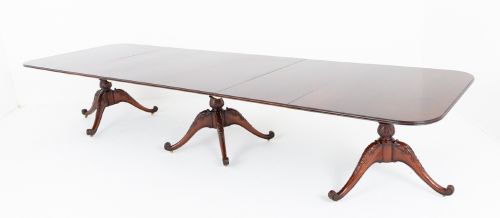
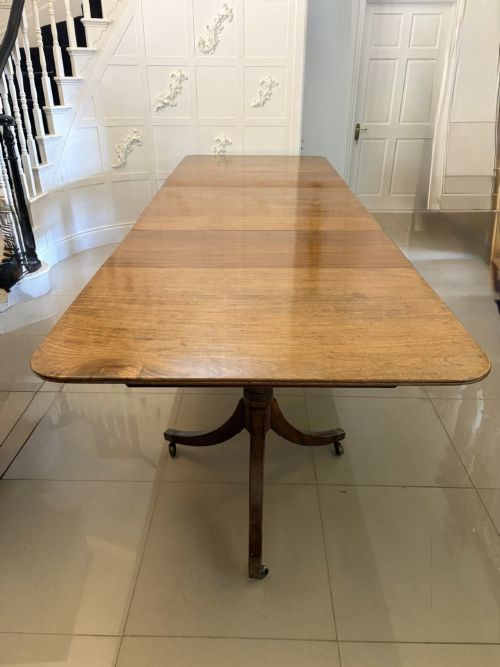
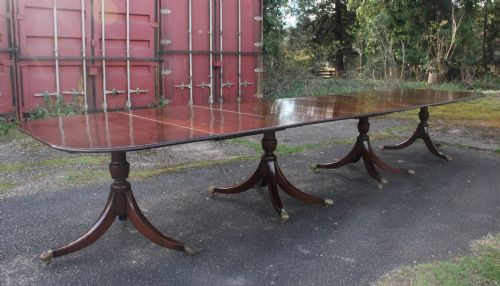
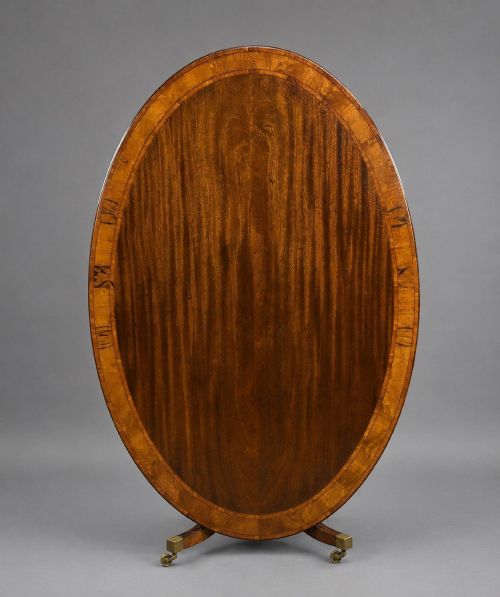
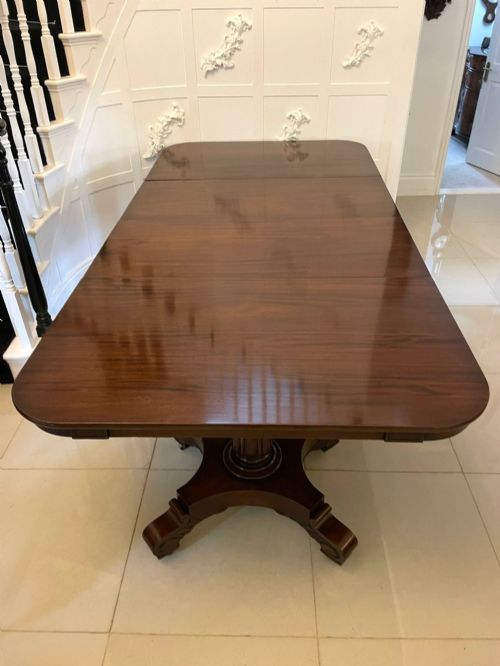
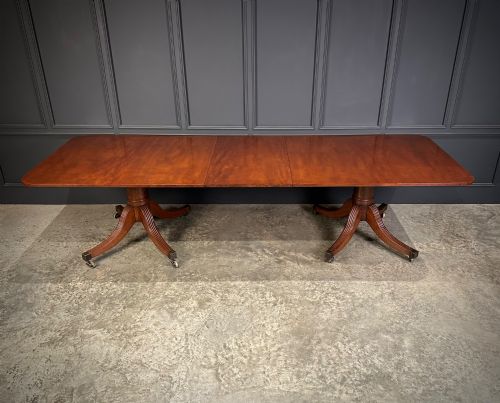
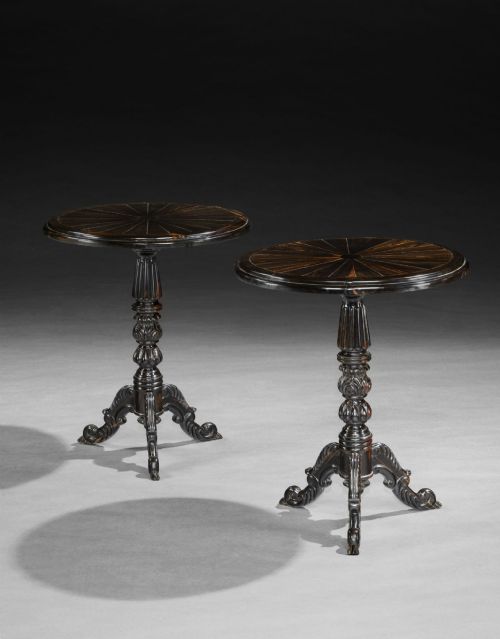
The versions you meet most frequently on this page are mahogany dining tables featuring twin, triple, or four pillars, alongside smaller drum, tripod, and occasional tables dating from the nineteenth century through the Edwardian period and the 1920s and 1930s.
Makers across different eras adapted these classical proportions for varying domestic spaces, producing everything from intimate breakfast and card tables to grand twenty-seater dining furniture.
How they were made
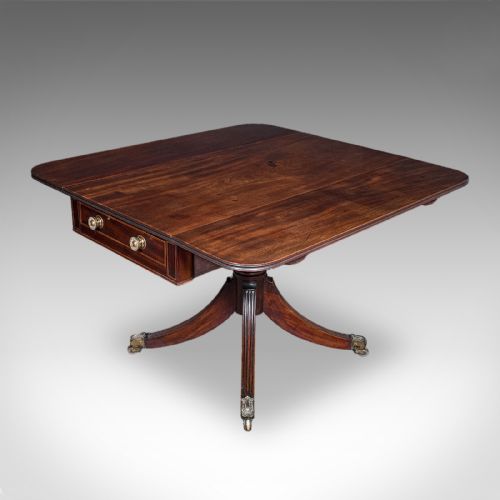
Cabinet makers relied heavily on mahogany, rosewood, and burr oak, often selecting figured timbers for table tops to display natural grain patterns. Workshops enhanced these surfaces with boxwood inlay, brass stringing, and leather inserts.
Construction techniques focused on stability beneath the central column, utilising heavy triform or quadrimeral bases with brass castors to support expanding lengths of timber.
Materials span solid mahogany, rosewood, burr oak, and satinwood, frequently accented with brass and leather.
What varies in quality
Quality rests in the selection of the timber and the depth of figure in the mahogany or rosewood, where heavily figured surfaces elevate a piece significantly above plain equivalents. The crispness of carved details on the central pillars and the precise fit of removable extension leaves also dictate the standing of an individual table.
Proportion and structural integrity matter equally, distinguishing robust multi-pillar dining tables designed for heavy use from lighter occasional pieces.
George Bullock·Holland and Sons·Gillows
The Regency Style Pedestal Table Glossary
- Pedestal table
- A table supported by a central pillar or multiple columns rather than four corner legs. This design allows greater legroom around the perimeter.
- Drum table
- A circular library or centre table with a deep skirt containing drawers, typically supported by a single central pillar. The cylindrical top resembles the shape of a drum.
- Tilt-top table
- A table with a hinged top that can be rotated to a vertical position when not in use. This mechanism allowed tables to be stored flat against a wall.
- Triform base
- A three-sided pedestal support radiating outward from the central column. It provides stability on uneven floors and frequently terminates in brass castors.
- D-end table
- A dining table whose end sections finish in a semicircular shape resembling the letter D. These sections often combine with central leaves to form an extended banquet surface.
Regency Style Pedestal Table: Frequently Asked Questions
How do I extend a pedestal dining table?
Extending tables typically utilise a system of internal runners housed beneath the top, allowing the pillars to pull apart smoothly. Additional removable leaves insert into the centre to increase the seating capacity.
Securing latches underneath maintain alignment across the joins, keeping the surface level for dining.
Where should I place a tripod table?
Tripod occasional tables suit corners, beside armchairs, or acting as lamp surfaces where a full four-legged table takes up too much floor space. Their compact footprint makes them highly versatile in living areas.
Avoid placing them in heavy traffic paths if the top tilts, keeping the mechanism functional yet safe.
How do I care for mahogany surfaces?
Maintain mahogany timber by dusting regularly with a soft, dry cloth and applying natural beeswax periodically to nourish the grain. Keep tables away from direct heat sources and strong sunlight to prevent warping and fading.
Use protective mats under hot dishes and damp glasses to safeguard the polished finish.
What is the difference between a breakfast table and a dining table?
Breakfast tables are traditionally smaller, circular or oval surfaces often featuring a tilt-top mechanism and a single central pillar for intimate morning meals. Dining tables are built longer and heavier, frequently supported by twin or triple pillars to accommodate multiple leaves.
Breakfast tables prioritize flexible placement in smaller rooms, while dining tables serve formal communal gatherings.