

Etched Glass Light
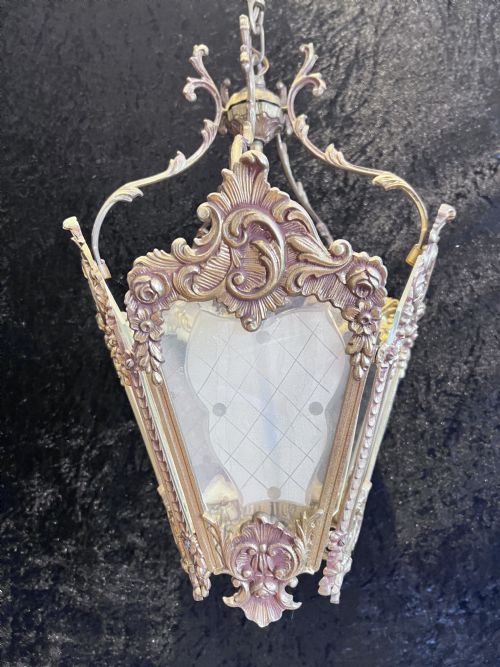
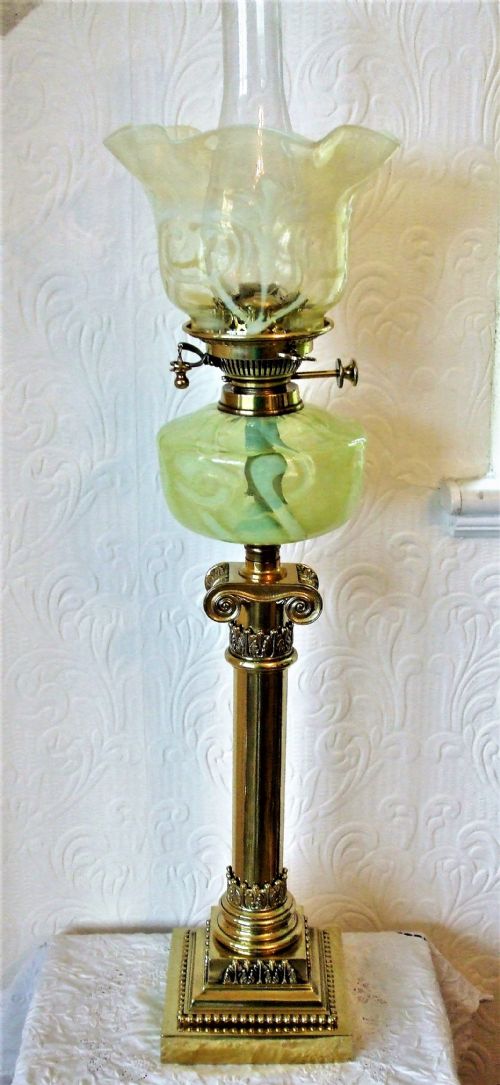
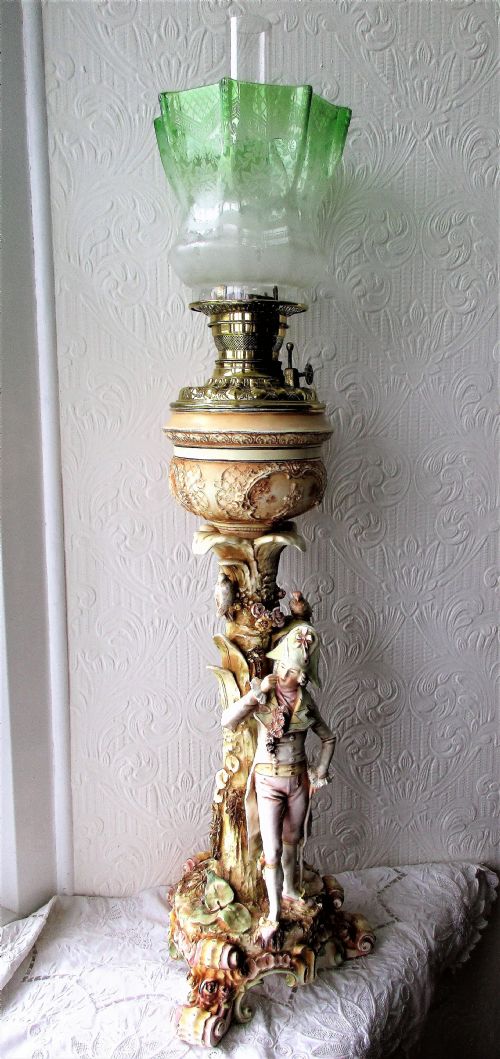
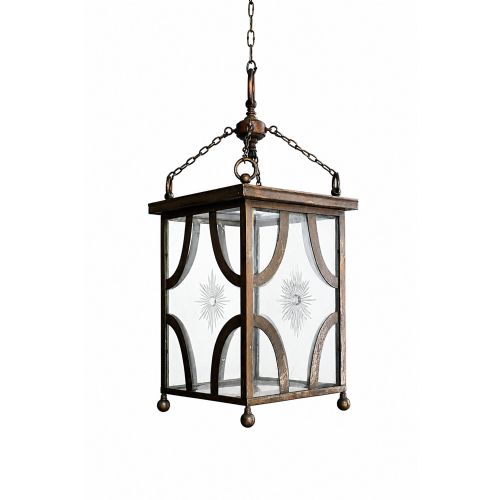
These etched glass light selections comprise oil lamps, hall lanterns, and pendant lights fashioned with decorative glass and metal frameworks.
Etched Glass Light
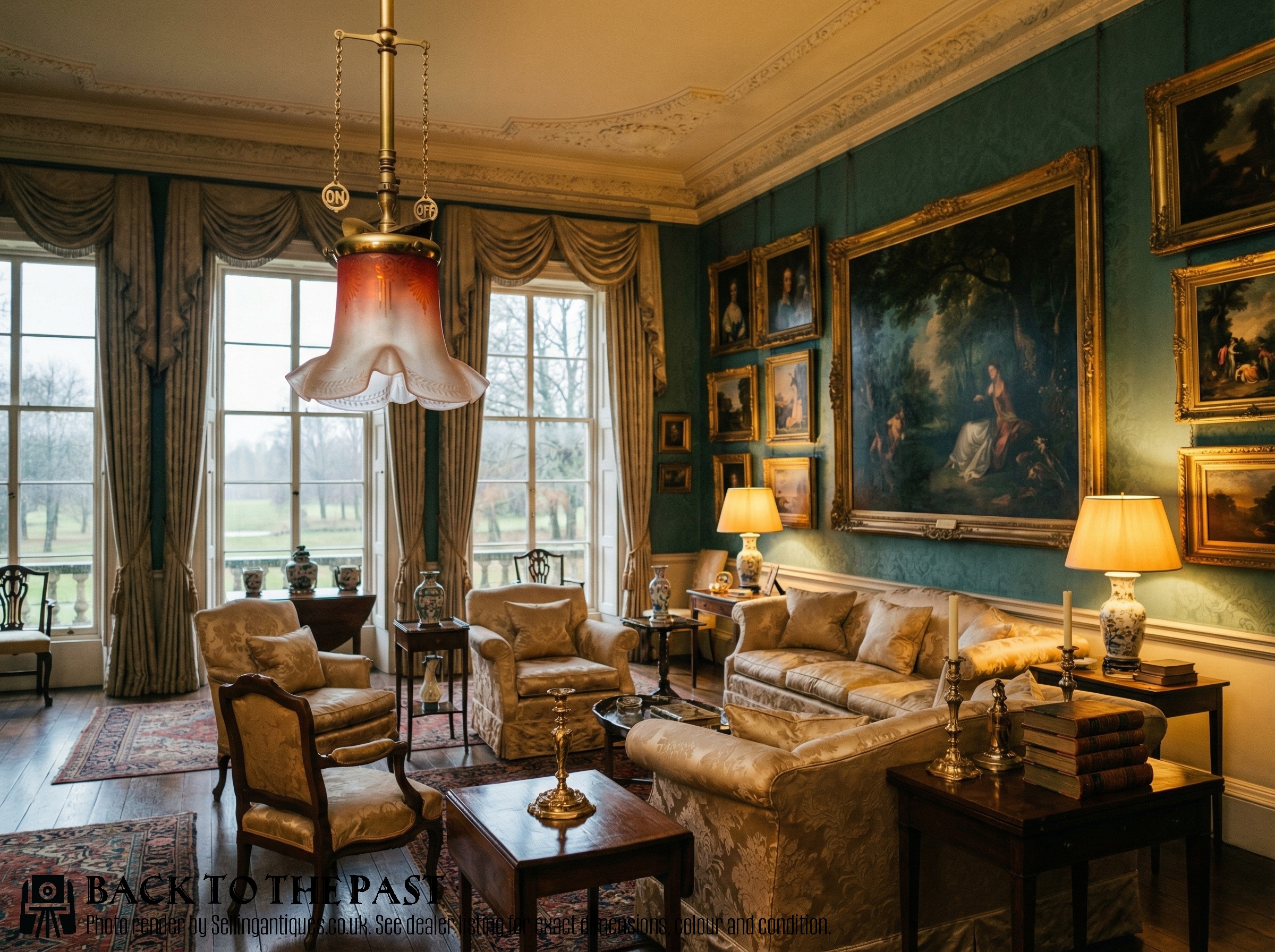
An etched glass light brings together period illumination fixtures ranging from Victorian oil lamps to Edwardian and Art Deco hall lanterns. The pieces span the nineteenth and early twentieth centuries, drawing upon English, French, and German manufacture.
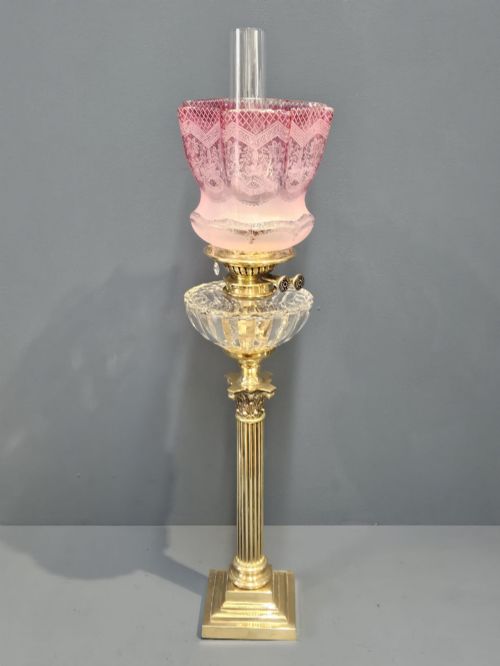
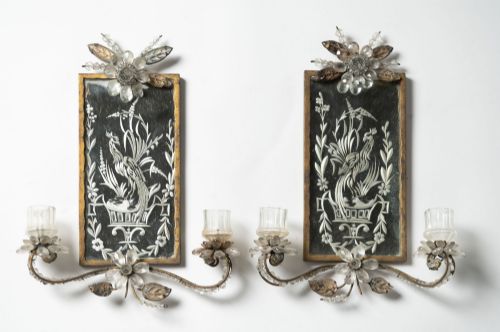
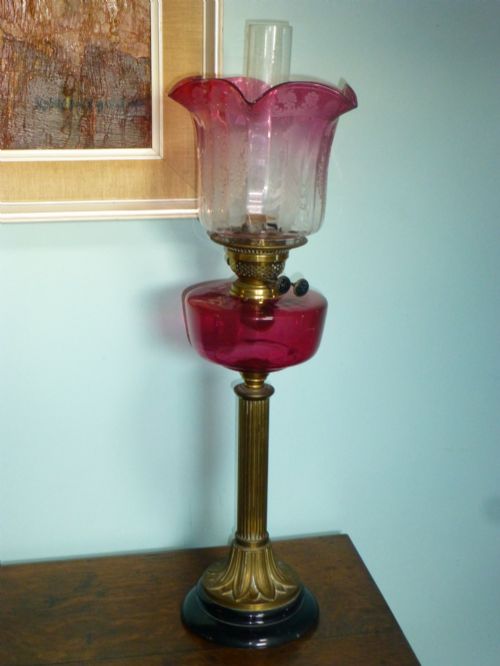
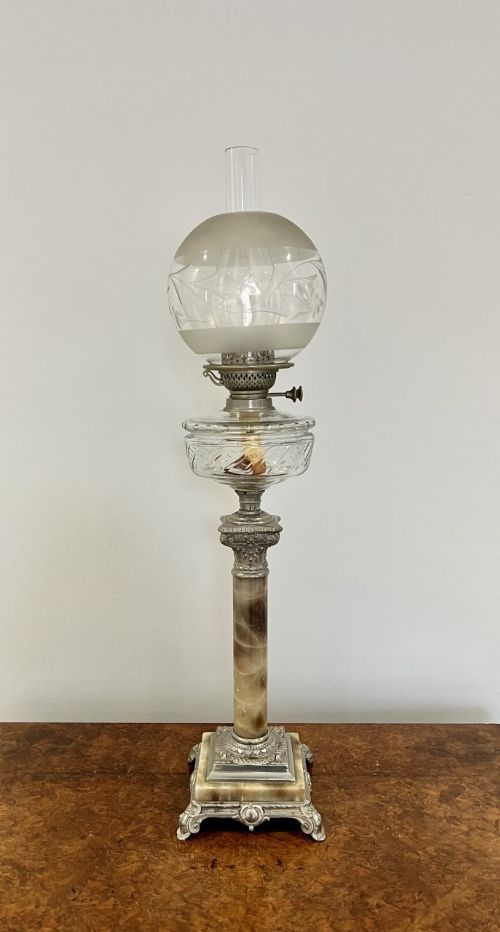
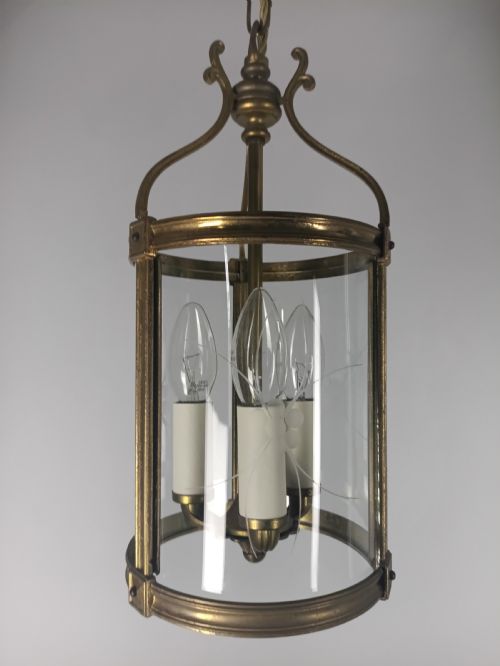
Oil lamps mounted on brass columns and table lamp bodies frequently appear alongside hanging ceiling lights, wall sconces, and hallway lanterns enclosed in brass frames. Cranberry glass, frosted glass, and clear crystal shade components feature prominently across these varied forms.
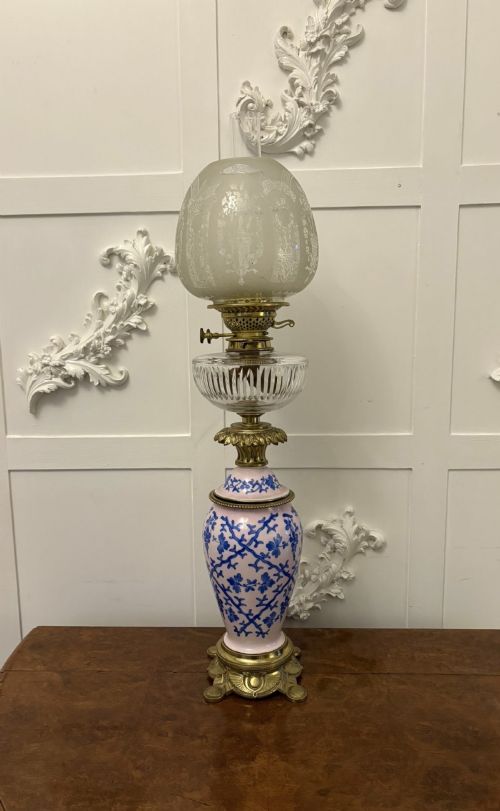
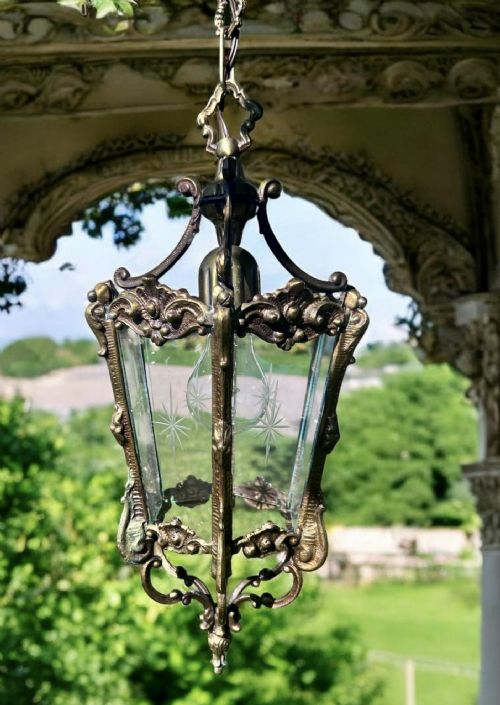
Victorian and Edwardian iterations dominate the selection, often pairing decorative ceramic or porcelain fonts with etched glass tulip shades and brass mountings. French styles manifest primarily through gilt brass, ormolu, and rococo or neoclassical hanging lanterns.
Materials and Technique
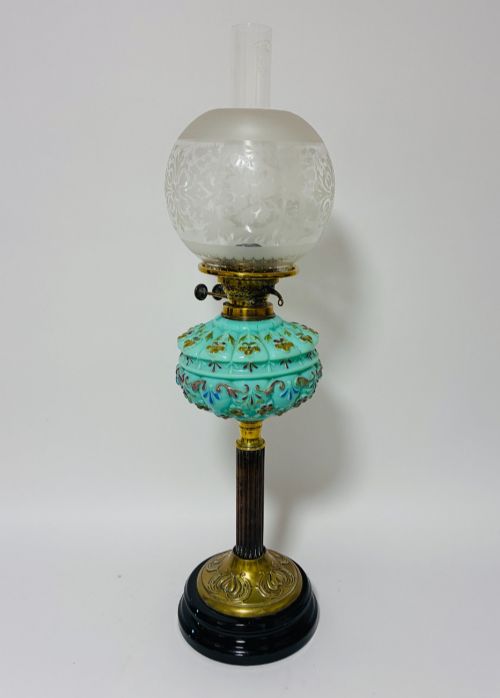
Brass, bronze, and copper provide the structural framework for columns, burner assemblies, and hanging lantern frames, frequently joined by onyx, porcelain, or ceramic font bodies. Metal components receive cast, turned, or gilt finishes depending on the stylistic period.
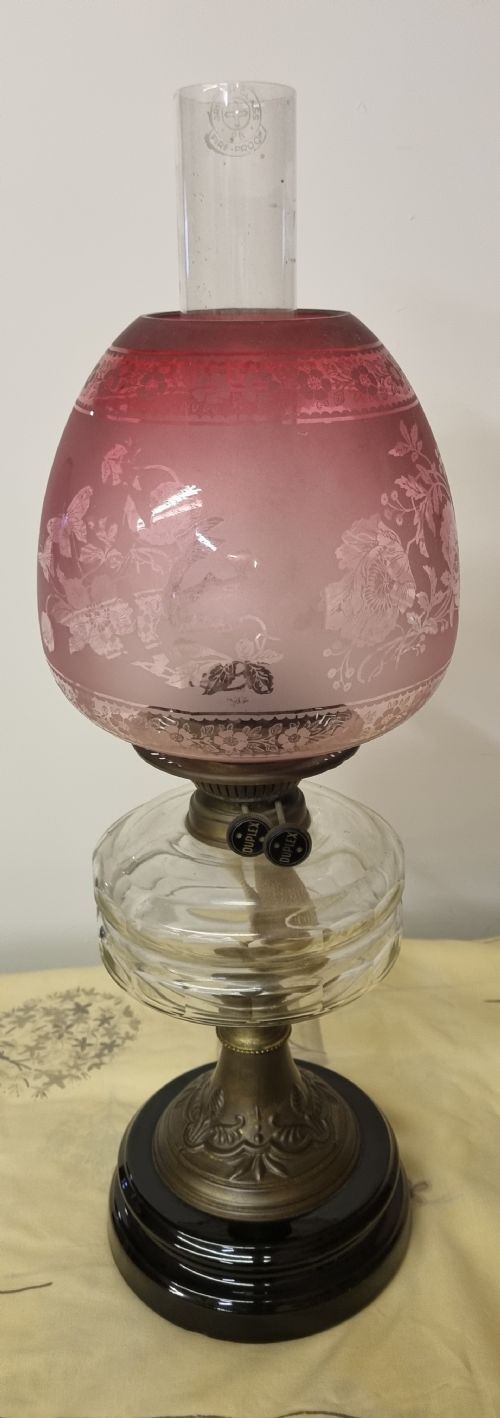
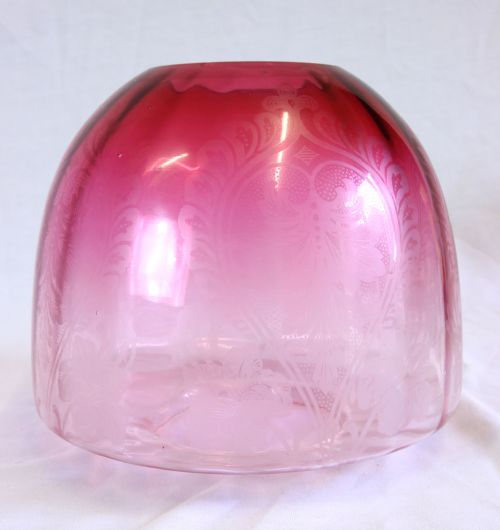
Shades and vessels utilise clear, cranberry, ruby, or frosted glass subjected to cutting, etching, and hand painting. Acid etching and wheel cutting produce intricate botanical, figurative, or geometric motifs across the surface of the glass globes and lamp shades.
Listings feature brass, cranberry glass, porcelain, and etched crystal across Victorian, Edwardian, and Art Deco periods.
Design and Execution
Superior examples distinguish themselves through the crispness of the brass casting, the depth and clarity of the glass etching, and the integration of distinct maker components such as specialised burners. Substantial weight in the metal elements and refined hand-painted details on ceramic fonts indicate higher manufacturing standards.
The relationship between the shade and the base dictates visual harmony, where original matching glass components maintain greater integrity than later replacements. Finely chased metalwork on French lanterns and robust Corinthian column architecture on Victorian lamps represent the upper tier of production.
Hinks·Taylor Tunnicliff·Sitzendorf·Maison Baguès·Daum
The Etched Glass Light Glossary
- Duplex burner
- A double wick mechanism used in nineteenth-century oil lamps to produce a brighter flame. This fitting requires specific twin wicks to operate correctly.
- Cranberry glass
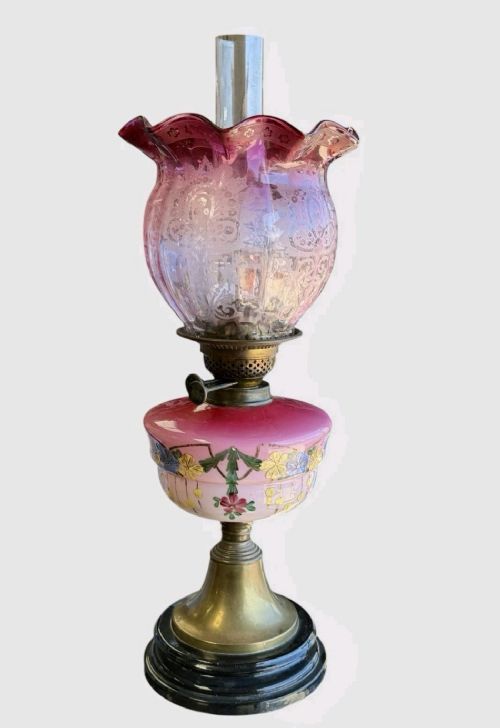
- A rich red-pink transparent glass created by adding gold chloride to the molten batch. It is frequently seen in Victorian lamp shades and fonts.
- Hall lantern
- An enclosed ceiling-hung light fixture designed for entranceways and corridors. These fixtures typically feature glazed panels within a brass or bronze frame.
- Font
- The oil or fuel reservoir of a lamp, often fashioned from coloured glass, porcelain, or ceramic. It sits atop the column or base.
- Ormolu
- Gilded bronze or brass mounts applied to decorative objects and light fixtures, popular in French neoclassical and rococo revival designs.
Etched Glass Light: Frequently Asked Questions
How do I wire an old lamp?
Rewiring requires running modern flexible cable through the existing central channels without damaging the historical metal or ceramic structure. Professional installation ensures safety while preserving the original burner and collar fittings.
Many ceiling lights and table lamps are adapted to modern electrical standards by feeding insulated wire through the historic gas poles or oil lamp columns.
Were these fixtures originally oil?
Numerous pieces began as burning lamps fueled by oil or gas before subsequent conversion to electricity during the twentieth century. Burner assemblies and gallery rings often remain intact on converted table and pendant lighting.
Candles also served as the primary illumination source for early hall lanterns before gas and electric burners were retrofitted into the metal frames.
How do I identify a Victorian piece?
Victorian lighting typically displays heavy brass casting, classical architectural motifs like Corinthian columns, and rich coloured glass components such as cranberry fonts. Makers' names stamped onto the brass burner thumbscrews often provide a definite period indicator.
Proportions tend to be substantial, utilising ceramic bases, hand-painted floral motifs, and elaborate duplex burner mechanisms characteristic of the mid to late nineteenth century.