

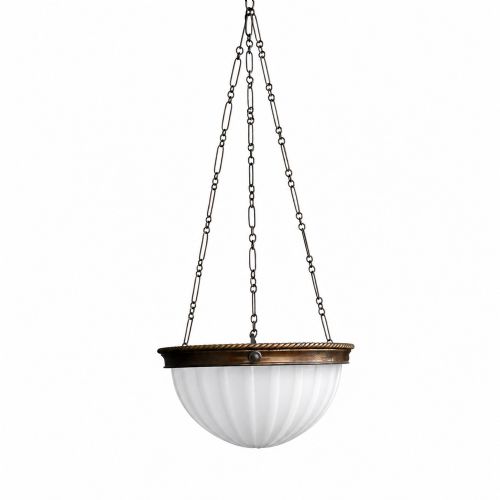
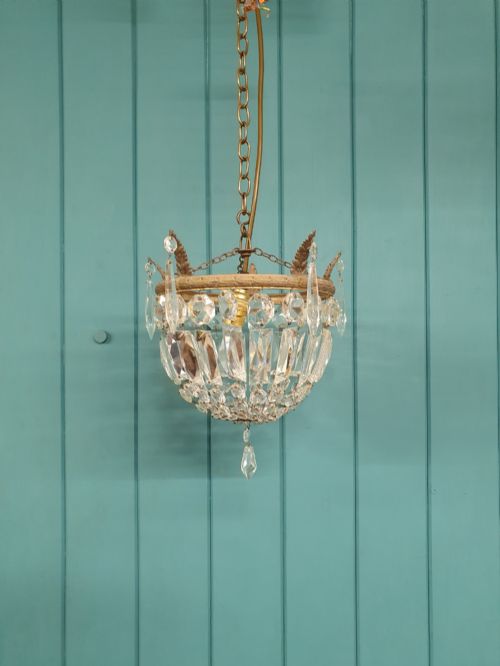
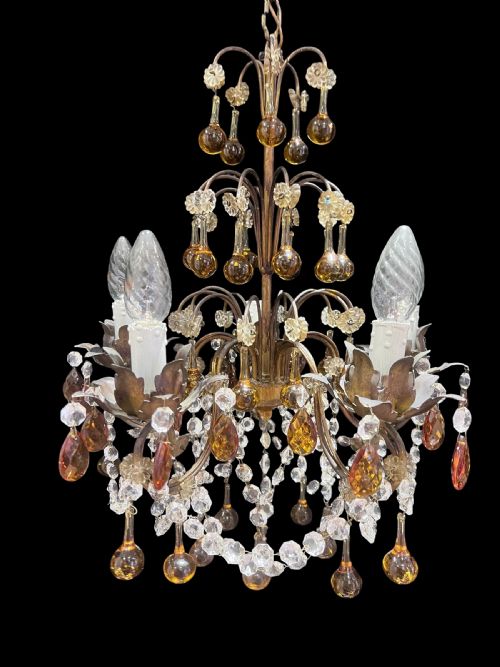
Edwardian Glass Light Fixture
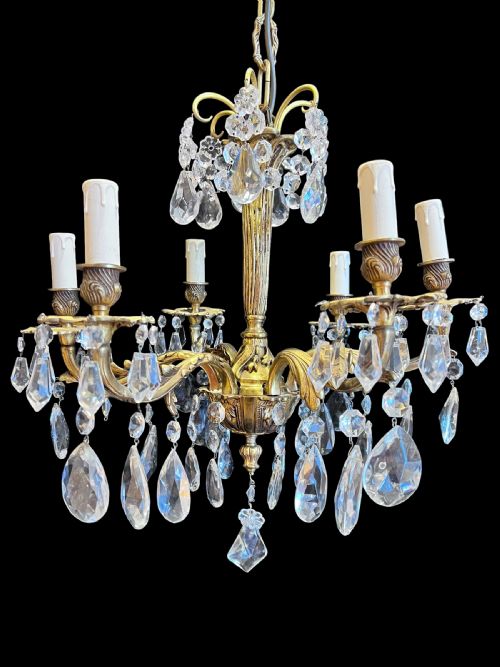
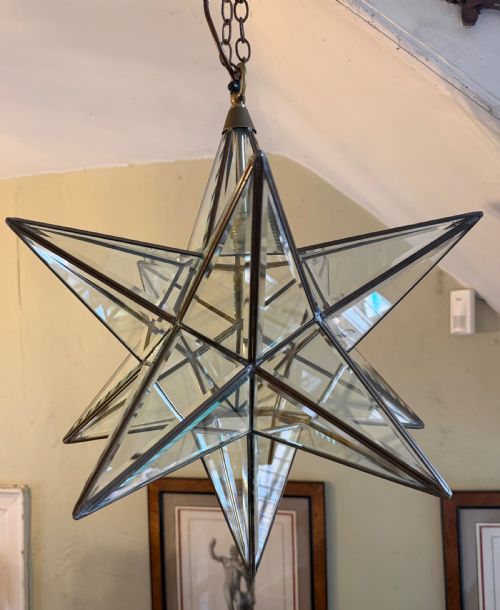
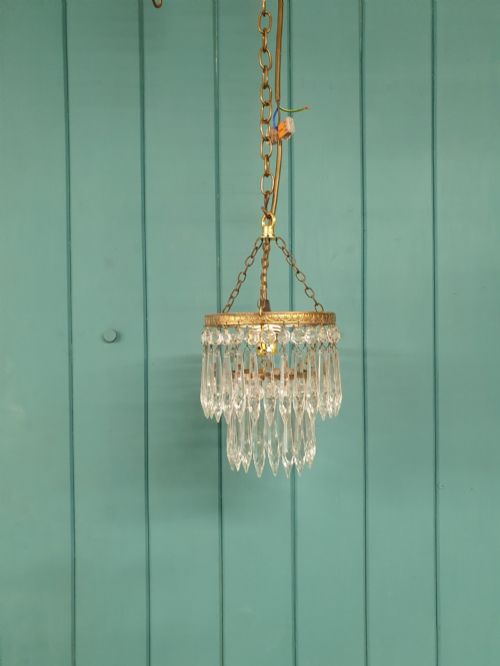
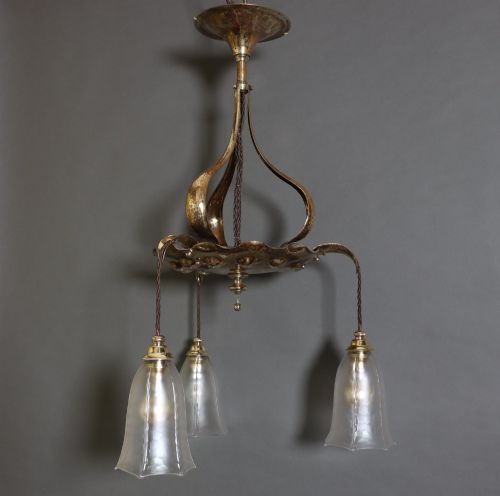
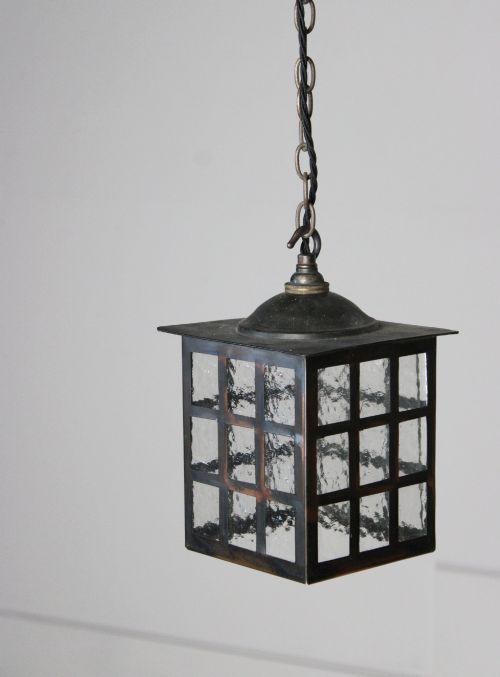
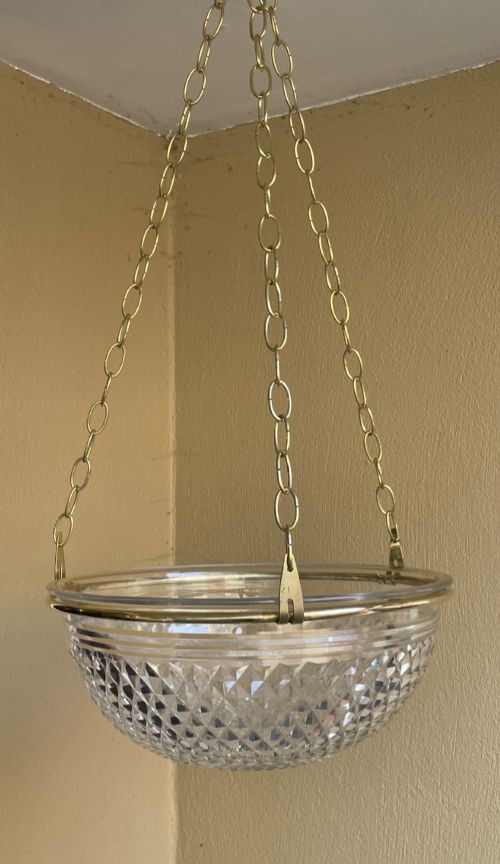
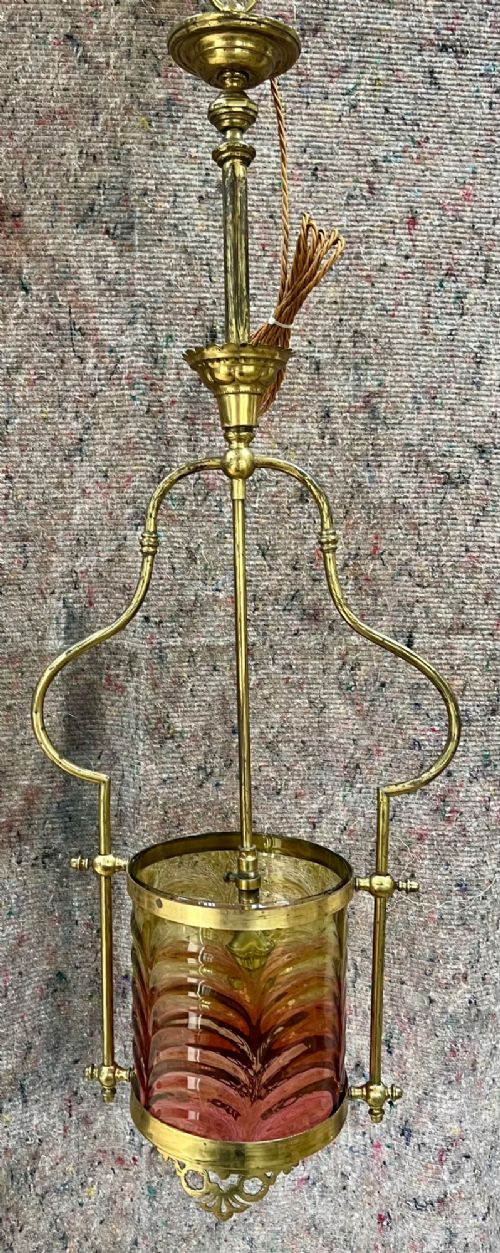
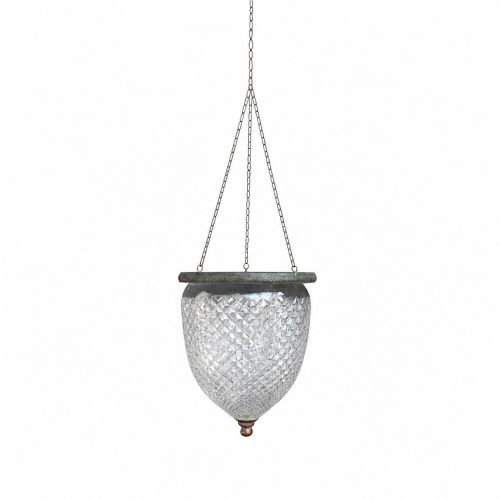
These edwardian glass light fixture examples bring period illumination to a hall or room, combining brass frames with cut glass and crystal components.
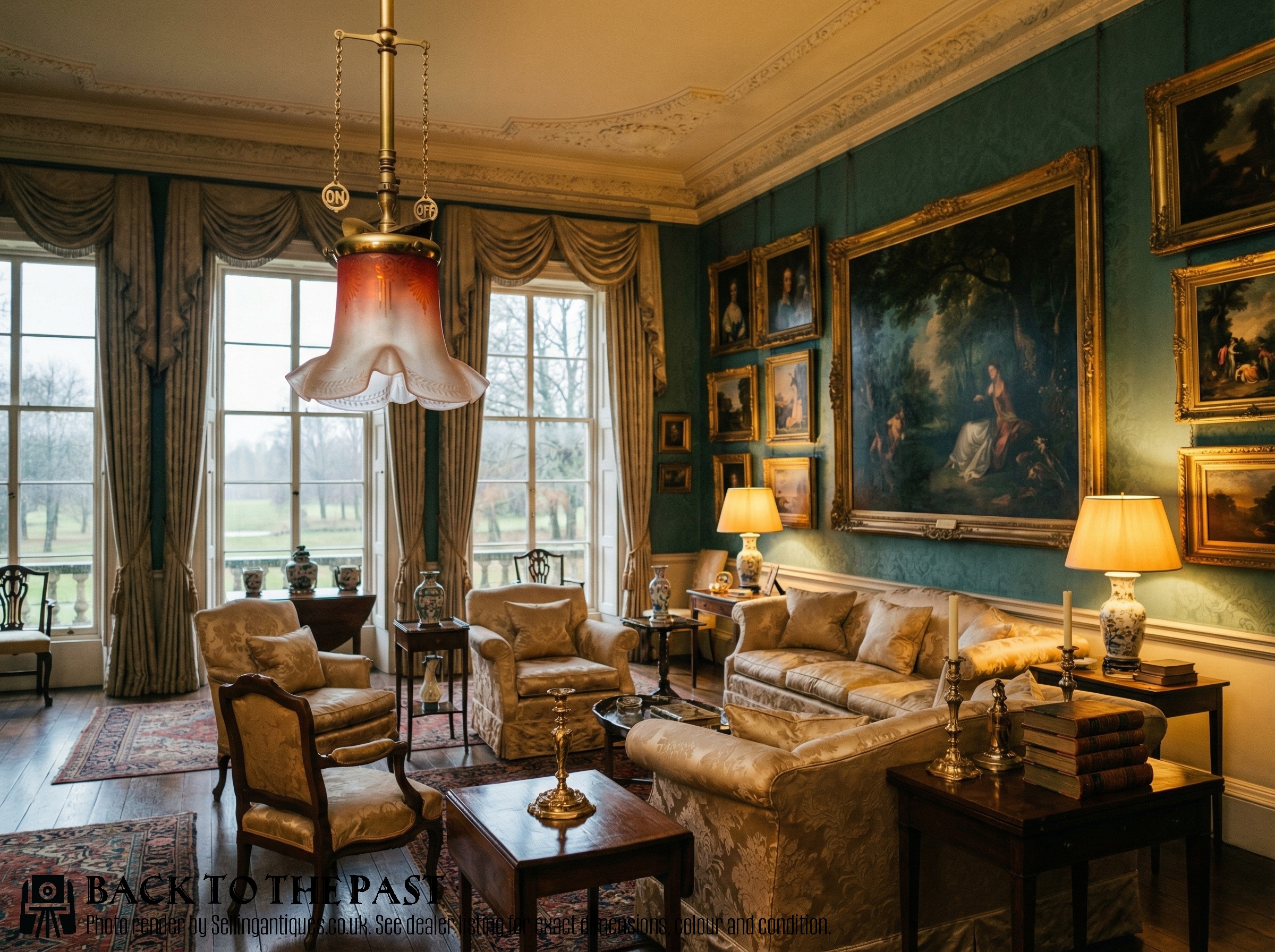
Edwardian Glass Light Fixture
When searching for an edwardian glass light fixture, buyers encounter a variety of ceiling hung forms originating primarily from the late nineteenth and early twentieth centuries. The selection frequently includes chandeliers, pendant lights, hall lanterns, and plafonniers.
Many specimens date from the Edwardian period itself, alongside related pieces spanning the Victorian era through to the nineteen thirties. Common variations range from simple glass domes to elaborate multi arm crystal and brass chandeliers.
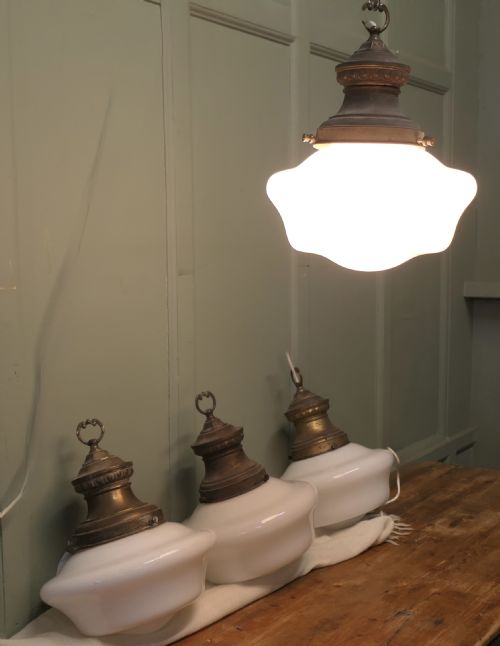
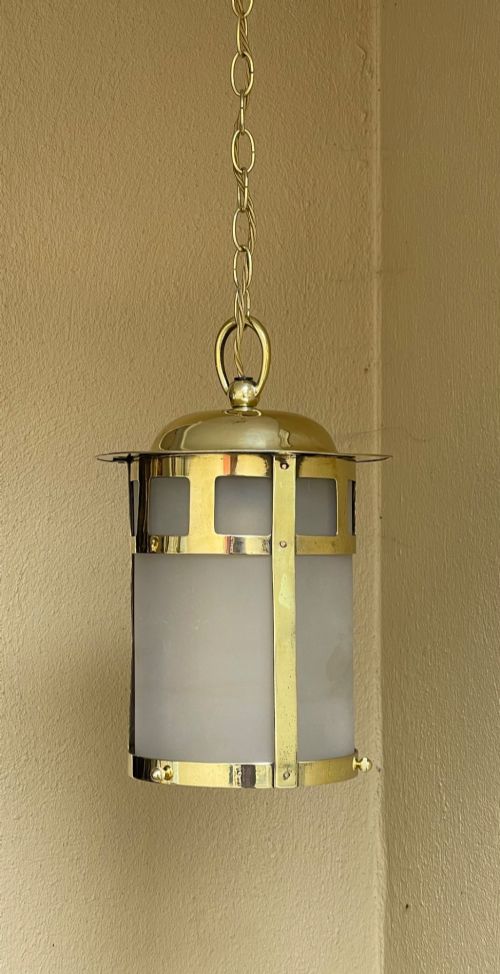
Hanging lights appear in styles such as Arts and Crafts, Art Nouveau, and French Regency. Formats vary from small bag chandeliers to large brass framed star lanterns and moonstone glass pendants.
Materials and Construction
Metalwork frames rely primarily on brass, bronze, copper, and iron to support the glass elements securely. These structural components take forms such as cast mounts, spun brass bands, and welded iron lantern frames.
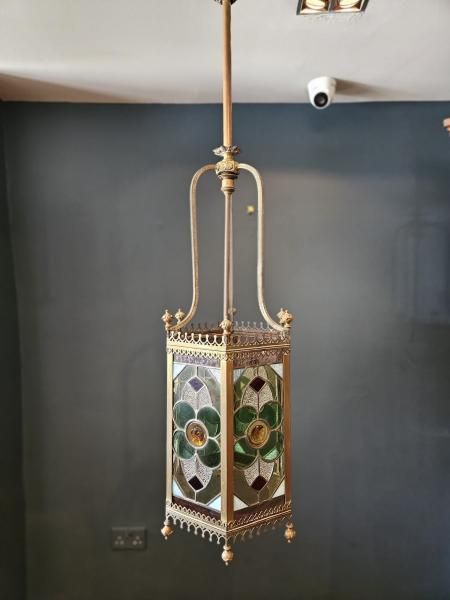
Glass components utilise cut glass, crystal, leaded glass, moonstone glass, and stained glass. Artisans shaped these materials into prisms, beads, panels, and moulded domes, often held together with wire loops or metal prongs.
The inventory spans the nineteenth century through the Edwardian era and into the nineteen thirties.
Assessing Quality
Quality depends upon the depth and clarity of the glass cutting, alongside the weight and rigidity of the metal frame. Superior pieces feature hand cut crystal prisms that disperse light evenly and substantial brass mountings rather than pressed sheet metal.
Distinction lies in the integrity of the design and the harmony of the components, such as matching crystal drops and integrated cast brass ornamentation like lion masks or leaf motifs.
F and C Osler
The Edwardian Glass Light Fixture Glossary
- Plafonnier
- A shallow ceiling light fitted flush or close to the ceiling surface. These fixtures often feature moulded or cut glass bowls held in metal mounts.
- Bag Chandelier
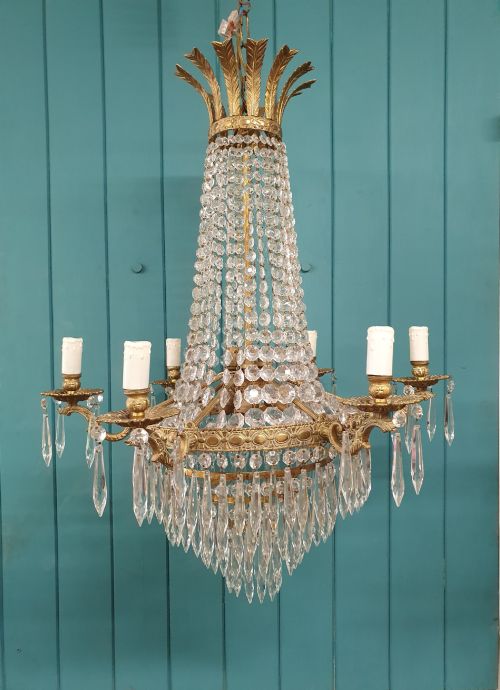
- A light fixture featuring a flat top ring from which numerous crystal strands taper downwards into a bag shape. This form contains internal bulb holders to illuminate the cascading glass.
- Moonstone Glass
- An opalescent, semi translucent white glass type popular in early twentieth century lighting. It diffuses bulb glare softly across a room.
- Tent and Bag Chandelier
- A lighting form combining an upper canopy of converging glass strings forming a tent shape with a lower basket or bag of beads. These fixtures rely on brass frames to support the glass assembly.
- Prism
- A cut glass pendant suspended from a chandelier to refract light. They appear in shapes such as spikes, coffin drops, and beads.
Edwardian Glass Light Fixture: Frequently Asked Questions
How do I hang a heavy brass chandelier safely?
Suspension requires fixing directly into ceiling joists using a suitable metal hook and mounting plate that matches the weight of the brass and glass fixture. Electrical connection should be handled by a qualified person to ensure internal wiring meets safety standards.
Heavier multi arm chandeliers need independent chain support rather than relying solely on the electrical flex. Care during installation prevents stress on antique brass loops and fragile glass mounts.
What rooms suit a glass hall lantern?
Hall lanterns provide concentrated overhead illumination suited to narrow entranceways, corridors, and high ceilinged stairwells. Their enclosed glass panels protect internal burners or bulbs from drafts.
Smaller hexagonal or star lanterns fit compact vestibules, whilst larger bronze or brass examples command space in grander period hallways.
How do I clean an antique crystal chandelier?
Cleaning involves wiping individual glass drops and prisms using a mild soapy solution and a soft cloth while the fixture hangs in place. Detaching every crystal is rarely necessary unless the frame requires restoration.
Harsh chemical cleaners should be avoided to protect the patina on brass and bronze metalwork. Drying each glass piece thoroughly restores its refractive sparkle.
How do I distinguish Edwardian lighting from Victorian pieces?
Edwardian fixtures generally exhibit lighter, more restrained decorative schemes compared to heavily ornamented Victorian designs. Brass frames from the Edwardian era often lean towards neoclassical revival or early Arts and Crafts simplicity.
Victorian lighting frequently incorporates heavier castings and darker bronze patination. Examining the manufacturing technique and glass style helps clarify the period.