



Etched Glass Goblets
Etched glass goblets bring substance and ornament to the table, uniting drinking vessels and display pieces through decorated lead crystal and clear glass.
Etched Glass Goblets
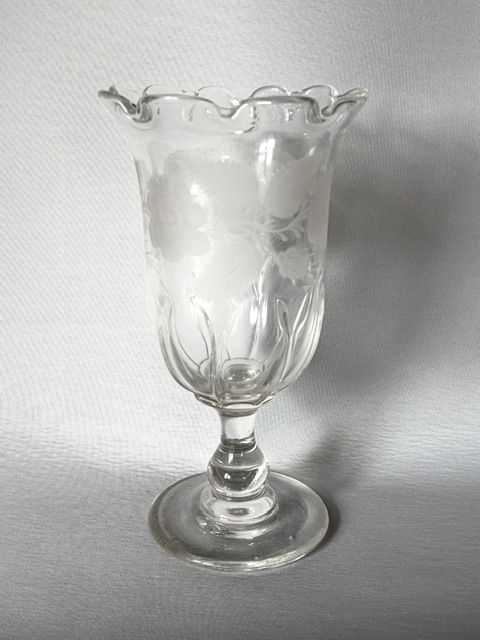
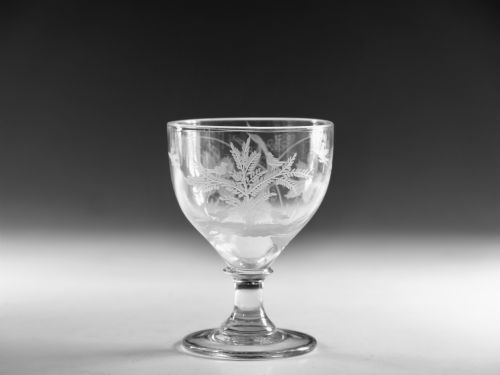
When you search for etched glass goblets, you encounter drinking vessels and display forms originating from the Georgian, Victorian, and Edwardian periods, extending into the 1930s. The selection on this page leans heavily toward Victorian wine glasses and rummers alongside Georgian rummers, alongside specialised forms such as celery vases, ale glasses, and cordial glasses.
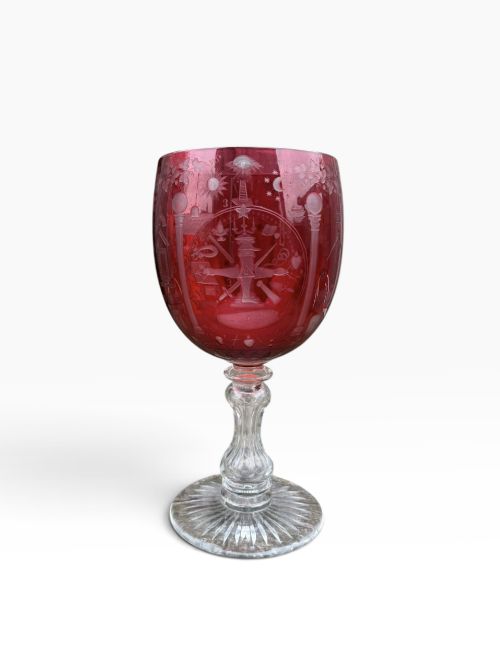
Forms span from small dessert wine glasses to substantial rummers with wide foot bases and square bases. Alongside traditional drinking vessels, the category includes decorative items like centrepiece bowls, chalices, and vases featuring animal decoration and architectural motifs.
Geographic origins recorded in the listings include English and Bohemian workshops, reflecting distinct regional drinking and manufacturing traditions. Pieces range from singular naive drinking vessels to matched harlequin sets and larger sets intended for formal dining.
What varies in quality
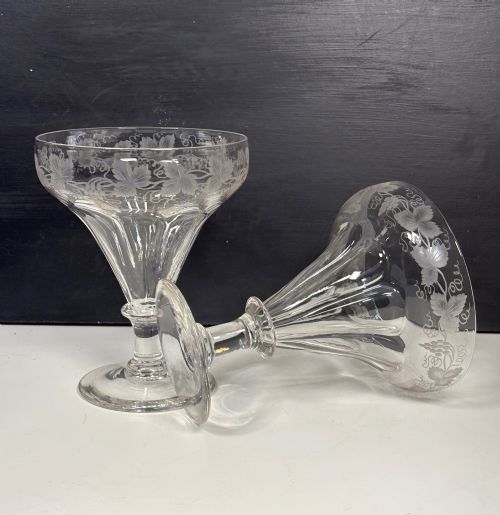
The distinction between standard domestic items and finer examples rests on the depth and crispness of the cutting and engraving. Superior pieces display deliberate control in the frosted or acid-cut details, where lines remain sharp and balanced across the surface of the bowl.
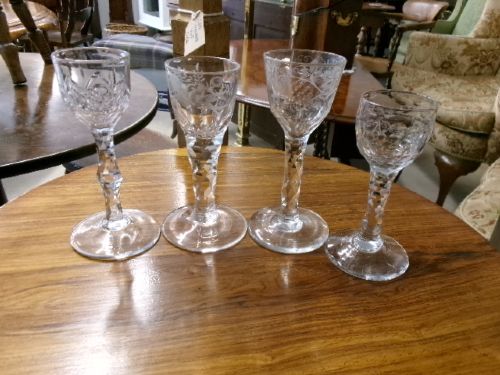
Proportion and weight dictate the presence of a piece, particularly in rummers and large goblets where the balance between the stem, foot base, and decorated bowl determines the structural harmony. Heavier lead crystal and well-proportioned air twist stems elevate the standing of a glass beyond mass-produced domesticware.
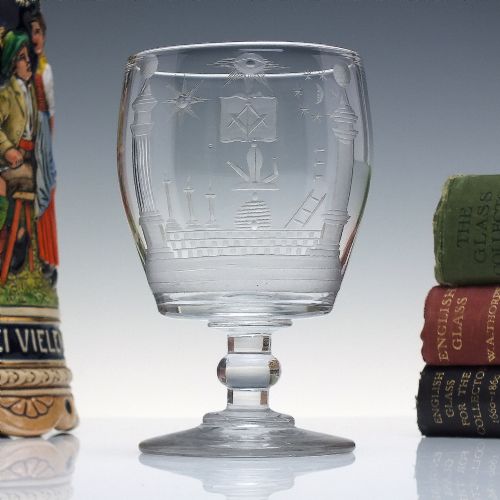
Several glasses bear Masonic symbols, reminding us that nineteenth-century toastings often involved secret handshakes and fraternal lodges.
Stevens & Williams·Riihimaki·Adelbert Niemeyer
The Etched Glass Goblets Glossary
- Rummer
- A heavy drinking glass with a short stem and wide bowl, commonly used in the eighteenth and nineteenth centuries for ale, wine, or rum.
- Air twist
- A decorative stem formation containing an elongated spiral of tiny air bubbles trapped within the glass during manufacture.
- Celery vase
- A tall, footed vessel designed to hold and display stalks of celery on the Victorian dining table.
- Roemer
- A traditional Germanic large wine glass, often made of green or amber glass with a broad, studded stem.
- Acid cut cameo
- A technique using acid to eat away layers of coloured glass to create a raised design against a contrasting background.
Etched Glass Goblets: Frequently Asked Questions
What were rummers used for?
Rummers served as heavy drinking glasses for ale, wine, or spirits during the Georgian and Victorian eras. Their sturdy build and wide bowls made them suited for everyday communal dining.
Over time, these versatile vessels transitioned from working taverns to middle-class dining tables, accommodating larger portions of beverages than standard wine glasses.
How do I date an etched goblet?
Dating relies on stylistic markers, weight, and the manufacturing method of the stem and foot. Georgian pieces often display naive cutting or air twist stems, while Victorian examples lean toward heavy pressed and etched ornamentation.
Examining the pontil mark on the underside of the base also helps establish the age and production technique of the glass.
Are these glasses safe for daily use?
Many antique rummers and wine glasses remain structurally robust enough for occasional modern use. Hand washing in warm water preserves the historic glass and prevents damage to delicate etched surfaces.
Avoid thermal shock by keeping extreme temperature changes away from older lead crystal and Victorian coloured glass.
What is the difference between cut and etched glass?
Cut glass involves grinding deep facets into the material using abrasive wheels to create geometric patterns and bright light refraction. Etched glass uses acid or engraving tools to scratch or eat finer, shallower lines into the surface.
Victorian and Edwardian makers frequently combined both techniques on a single goblet to contrast frosted textures with polished clear facets.