






Edwardian Crystal Stemware
Edwardian crystal stemware brings brilliant cut facets and delicate enamel work to the dining table, offering genuine period elegance.
Edwardian Crystal Stemware
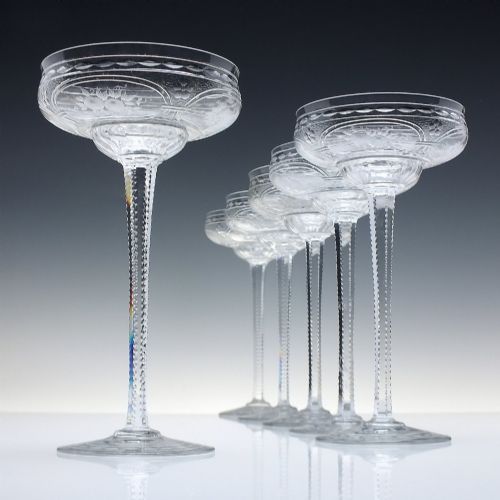
Edwardian crystal stemware encompasses drinking vessels and table glass produced during the early twentieth century, spanning from the Edwardian period into the 1920s with some related Victorian and Art Nouveau examples. Buyers seeking this phrase encounter wine glasses, champagne coupes and bowls, hock glasses, and dram glasses designed for formal dining.
How edwardian crystal stemware was made
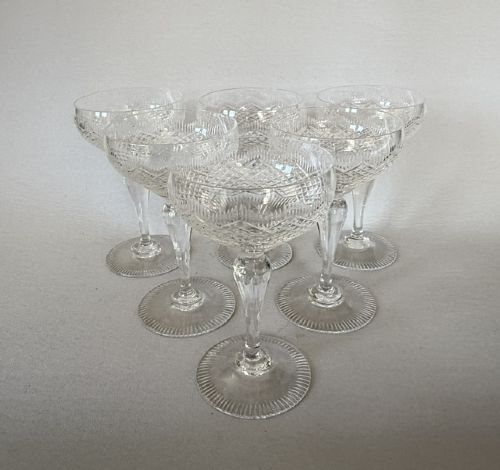
Maker craftsmanship relies heavily on heavy lead crystal and clear glass shaped through blowing and pressing, then finished with precise wheel-cut facets. This cutting creates the deep refraction characteristic of the period.
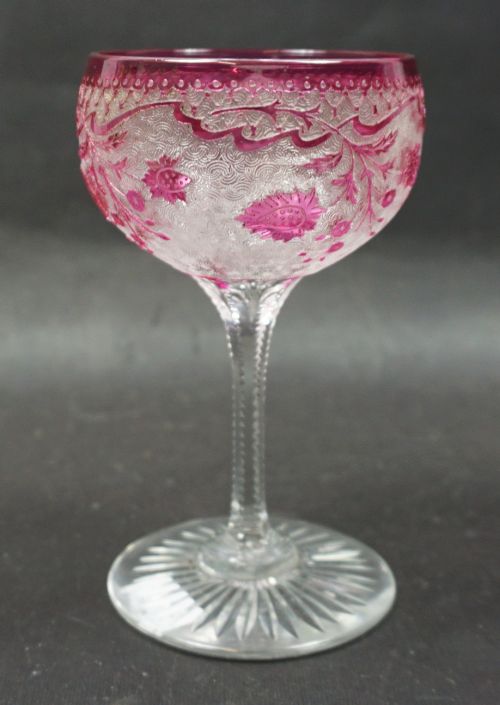
Decoration extends beyond cutting to include detailed enamel work and occasional applications of gold leaf. Certain continental pieces incorporate overlaid coloured glass or fluid Art Nouveau and Jugendstil motifs into the surface design.
Edwardian Crystal Stemware Retail Price Guide 2026
Typical asking prices for edwardian crystal stemware among the pieces listed under this phrase on Sellingantiques today, from the lower quarter to the upper quarter. They describe what is for sale here now, not the wider market.
Listings in this category span the Edwardian period, the 1910s, and the 1920s, alongside occasional Victorian precursors.
What varies in quality
Quality in these pieces is dictated by the crispness of the glass cutting and the weight and clarity of the lead crystal itself. Superior examples show precise geometric or organic cutting lines that catch the light cleanly without optical distortion.
The finesse of secondary decoration also separates standard production from finer work, particularly in the hand-painted execution of enamel details or the application of gold leaf. Completeness of a matched set further elevates the standing of the glassware.
Baccarat Vallee·Theresienthal·Webb Corbett
The Edwardian Crystal Stemware Glossary
- Lead crystal
- Glass containing a significant lead oxide content, which increases weight, brilliance, and the dispersion of light.
- Champagne coupe
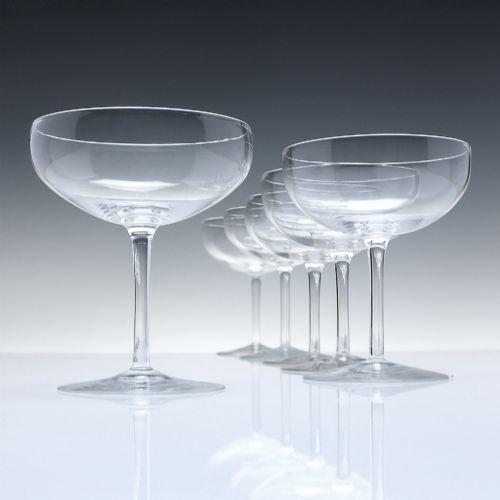
- A shallow-bowled stemmed glass traditionally used for champagne, popular throughout the Edwardian era.
- Hock glass
- A tall-stemmed wine glass, often featuring a coloured bowl or stem, traditionally used for German white wines.
- Intaglio
- A technique where designs are carved into the surface of the glass rather than raised in relief.
- Enamel decoration
- Opaque vitreous colours fused to the glass surface to create painted pictorial or abstract motifs.
Edwardian Crystal Stemware: Frequently Asked Questions
What drinks were served in these glasses?
Edwardian crystal stemware served specific beverages at formal meals, with dedicated glasses for white wine, hock, and drams of spirits. Champagne was poured into shallow coupes rather than flutes.
Larger drinking services also accommodated water and punch. The variety reflected the formal dining rituals of the early twentieth century.
Can I use them for daily dining?
These glasses can certainly be used for special occasions and quiet dinners, provided they are handled with care. Their robust lead crystal construction makes them surprisingly durable despite their delicate appearance.
Hand washing and careful storage remain essential precautions for daily use. Treat them with respect and they will continue to function as intended.
How do I distinguish Edwardian glass from Victorian?
Edwardian glass often reflects lighter, more restrained design influences such as early Art Nouveau alongside traditional cut crystal. Victorian pieces tend to feature heavier, more ornate cutting and denser forms.
Overlapped styles and transitional dates mean some pieces bridge both eras. Examining the specific cut motifs and accompanying maker details helps clarify the period.