


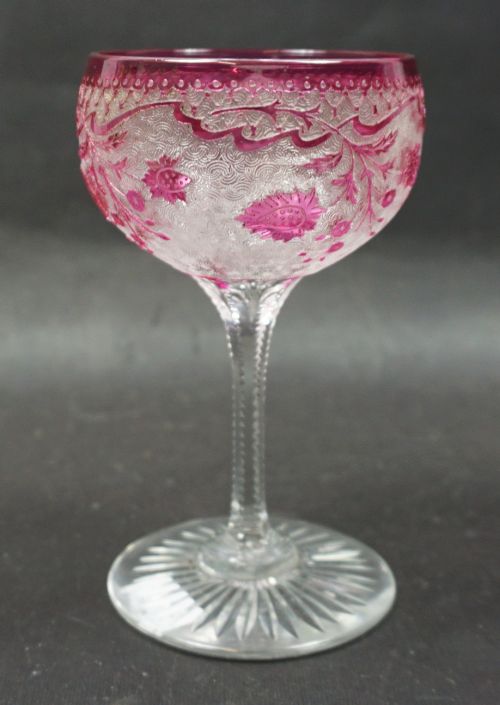





Antique Crystal Wine Hocks
These antique crystal wine hocks bring coloured glass and tall stems to the table, offering a traditional way to serve hock and white wine.
Antique Crystal Wine Hocks
When you search for antique crystal wine hocks, you look at tall stemmed wine glasses designed specifically for hock and German white wines. These pieces span periods from the Victorian era through the 1930s, encompassing Art Nouveau, Art Deco, and Jugendstil designs.
You are most likely to meet coloured glass variations on this page, including green over crystal, amber roemers, and vessels adorned with enamel decoration. Sets range from individual glasses to matching groups of six, alongside tall colour over crystal decanters.
The origins stretch across France, Germany, and Bohemia, featuring distinguished names such as Baccarat, St Louis Massenet, and Theresienthal. Forms vary from engraved Bohemian roemers to Harcourt pattern vessels and floral enamelled bowls.
How they were made
Maker workshops utilised lead crystal, lead glass, and standard glass as the base medium for these tall vessels. Artisans shaped the bowls and stems before applying overlay or cased glass techniques to achieve rich green and amber hues.
Decoration relied on skilled hand work, including deep cutting, precise engraving, and vibrant enamel painting. Select pieces received delicate gold leaf details to enhance the surface ornamentation.
Antique Crystal Wine Hocks Retail Price Guide 2026
Typical asking prices for crystal wine hocks among the pieces listed under this phrase on Sellingantiques today, from the lower quarter to the upper quarter. They describe what is for sale here now, not the wider market.
Listings feature lead crystal, overlay glass, and enamel decoration across periods from the Victorian era to the 1930s.
What varies in quality
The distinction between standard production and the top of the range rests on the depth of the cutting and the crispness of the engraving. Master workshops like Baccarat and St Louis achieved a sharper refraction in the lead crystal and greater precision in the overlay layers.
Enamel decoration and gold leaf application also separate ordinary examples from exceptional ones. Skilled hand painting remains crisp and well-adhered, while lesser pieces show simpler execution in their floral motifs.
Baccarat·Theresienthal·St Louis Massenet
The Antique Crystal Wine Hocks Glossary
- Hock
- A traditional British term for German white wine, which eventually became the name for tall-stemmed wine glasses with coloured bowls. These glasses were designed to showcase the bright tones of Rhine wines.
- Roemer
- A traditional Germanic wine glass form featuring a wide bowl atop a cylindrical stem decorated with applied prunts. Bohemian makers often engraved these amber vessels with detailed wildlife or foliage.
- Overlay glass
- A glass-blowing technique where a layer of coloured glass is fused over a clear crystal base. Artisans then cut through the outer coloured layer to reveal the clear crystal underneath.
- Enamel decoration
- A technique using powdered glass mixed with pigment, applied to the surface and fired to fuse it permanently. Theresienthal frequently utilised this method for floral patterns.
- Lead crystal
- Glass containing a high percentage of lead oxide, which increases weight, clarity, and light dispersion. This material allowed makers to achieve deep, sharp facets when cutting.
Antique Crystal Wine Hocks: Frequently Asked Questions
What are hock glasses used for?
These tall stemmed glasses were traditionally filled with hock, a British term for German white wines from the Rhine region. Their generous capacity and coloured bowls suited the serving of chilled white wines during formal dinners.
Today, collectors utilise them for white wine or display them to appreciate the coloured lead crystal and enamel work. Their distinctive height makes them stand out on a dining table.
Why are wine hocks coloured?
Coloured glass stems and bowls helped differentiate wine types and added visual warmth to the Victorian and Edwardian dining table. Shades like green and amber were particularly popular in Bohemian and French glasshouses.
Overlay and cased glass techniques allowed makers to combine clear lead crystal with vibrant outer layers. When cut, these coloured layers created striking contrast and visual depth.
How do I date antique hock glasses?
Dating relies on stylistic clues, manufacturing techniques, and known production periods of makers like Baccarat or Theresienthal. Art Nouveau and Jugendstil pieces display organic floral motifs typical of the 1900s.
Later pieces from the 1920s and 1930s often adopt geometric Art Deco lines or cleaner overlay patterns. Comparing the weight of the lead crystal and the style of the engraving also helps narrow down the decade.
How should I display antique crystal hocks?
Display these glasses where natural light can pass through the coloured crystal and highlight the cut facets or enamel work. Cabinets with glass shelves allow the tall stems and vibrant hues to remain fully visible.
Keep them away from direct heat sources and handle the delicate stems with care when rearranging your display. Hand washing in warm water preserves the gold leaf and enamel details.