




Vintage Glass Tumblers
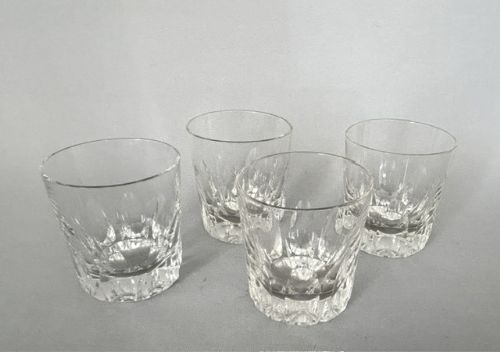
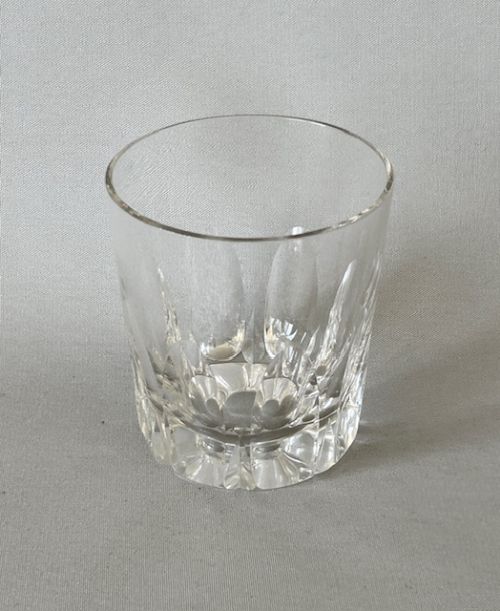
These vintage glass tumblers bring weight and clarity to the table, offering tactile drinking vessels shaped across the nineteenth and twentieth centuries.
Vintage Glass Tumblers
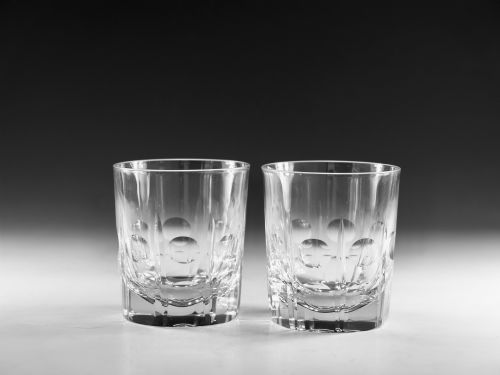
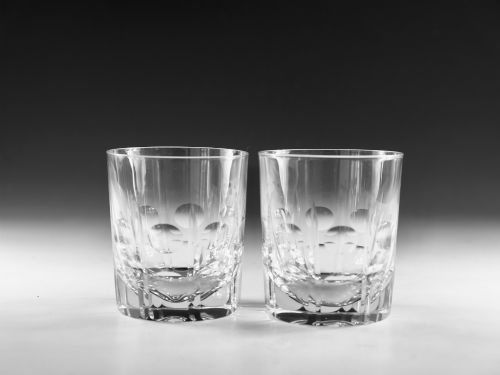
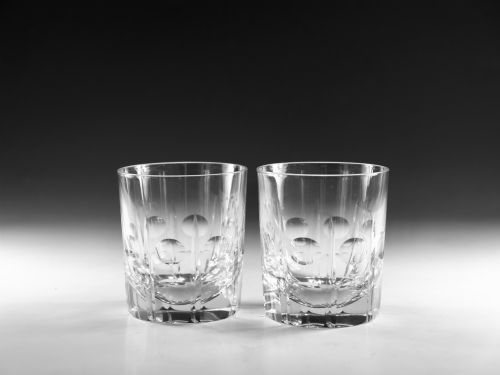
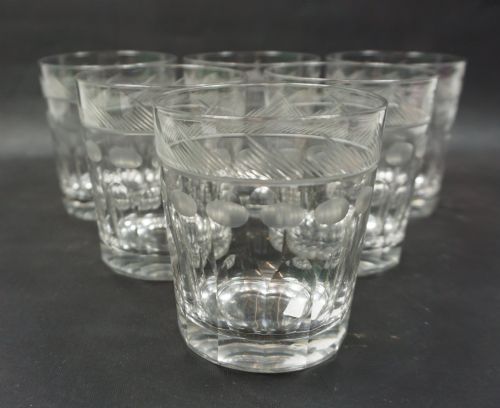
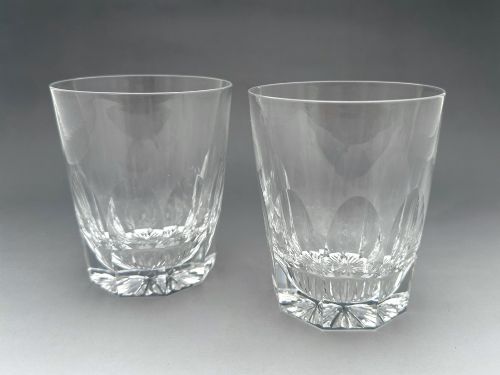
When searching for vintage glass tumblers, buyers encounter sturdy drinking vessels spanning periods from the Georgian era through Victorian, Edwardian, and Art Deco designs. These pieces range from heavy cut crystal whisky glasses to delicate cordials, etched beakers, and matching drinks sets.
The versions most frequently met on this page include English and Bohemian pieces from the nineteenth and early twentieth centuries, alongside 1930s Czech productions. They appear singly, in pairs, or in assembled sets of four, six, and eight.
Form follows function across these drinking vessels, shifting from flat-bottomed Regency blaze cut tumblers to tall Art Deco decanter sets and wheel-engraved ale glasses. Their survival preserves the domestic barware and table service of past generations.
Materials and manufacture
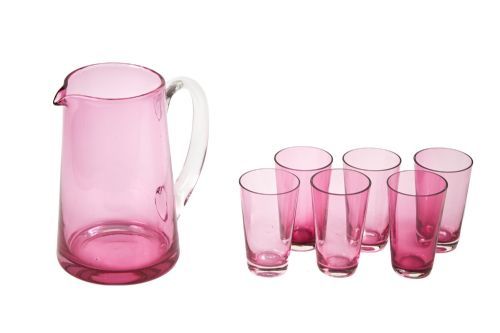
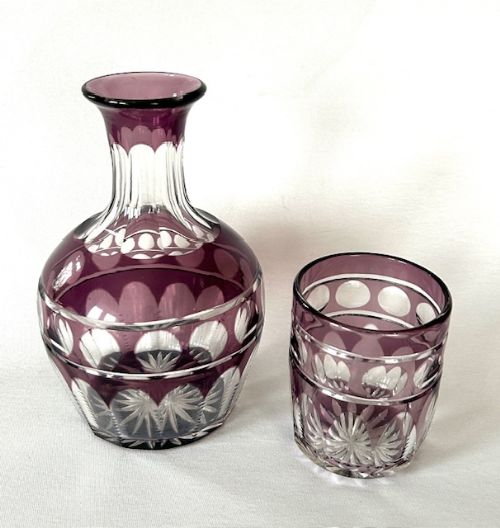
Makers utilised clear glass, lead crystal, and coloured variations such as ruby flash glass, cranberry glass, and amethyst glass. These materials were blown, moulded, and shaped into heavy drinking vessels designed for daily use or formal hospitality.
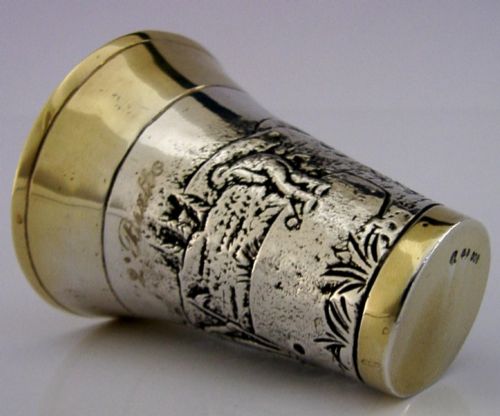
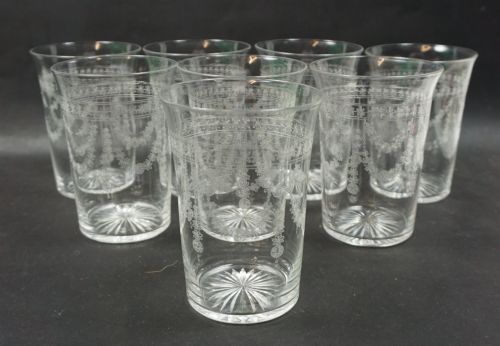
Decoration relied heavily on wheel engraving, acid etching, and hand enamelling to apply patterns onto the surface. Cut glass techniques added deep geometric facets that catch the light, while silver mounts occasionally reinforced rims and bases.
Factors of quality
Quality rests in the weight of the metal and the crispness of the cutting, where deep wheel-engraved details remain sharp and defined rather than blurred. Superior crystal displays high refractive brilliance and clear resonance when struck gently.
The integrity of applied colours, such as ruby flash or enamel work, distinguishes finer pieces from ordinary ware. Uniformity across matched sets, balanced wall thickness, and minimal surface wear separate master craftsmanship from standard production.
Karl Palda·Riihimaki·Whitefriars
The Vintage Glass Tumblers Glossary
- Lead crystal
- Glass containing a proportion of lead oxide that increases weight, brilliance, and softness for deep cutting. This material allows artisans to carve intricate facets that refract light sharply.
- Ruby flash
- A thin layer of red glass applied over a clear glass base before cutting or engraving. The cutting process exposes the clear glass underneath to create contrasting patterns.
- Wheel engraved
- A decorative technique using small rotating metal or stone wheels held against the glass. This method produces precise linear designs and pictorial scenes.
- Acid etched
- A process where acid eats into unprotected areas of the glass surface to create frosted designs. It offers a smooth, matte finish distinct from mechanical cutting.
- Blaze cut
- An early cutting style featuring broad, shallow facets that scatter light across the vessel. It is frequently encountered on Georgian and Regency drinking glasses.
Vintage Glass Tumblers: Frequently Asked Questions
What defines a vintage glass tumbler?
These drinking vessels are flat-bottomed glass containers without handles, produced across the nineteenth and twentieth centuries. They encompass various styles including heavy cut crystal, etched cordials, and coloured barware.
Their forms reflect changing dining habits, moving from early Georgian and Victorian heavy-walled designs to slender Art Deco silhouettes.
How were these tumblers used?
They served primarily for consuming spirits, water, ale, and wine at the dining table or from home bars. Sets often accompanied carafes and decanters for formal hospitality.
Smaller examples functioned as cordial or spirit glasses, while heavier cut variants were dedicated specifically to whisky.
How do I care for antique glass?
Wash these pieces by hand in warm water using mild soap, avoiding sudden temperature changes that can crack old metal. Dry them immediately with a lint-free cloth to maintain clarity.
Store them securely on stable shelving where rims will not touch neighbouring vessels.
How do I date a glass tumbler?
Dating relies on observing cutting styles, weight, pontil marks on the base, and decorative motifs characteristic of periods like Victorian, Edwardian, or Art Deco. Etched patterns and colour technologies also provide clear chronological markers.
Comparing pieces with documented factory production helps narrow down the decade of manufacture.