



Engraved Glass Tumbler
An engraved glass tumbler carries the weight of past toasts, secret societies, and brilliant tables.
Engraved Glass Tumbler
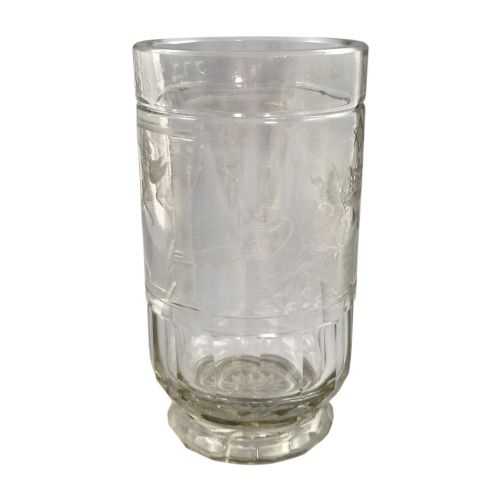
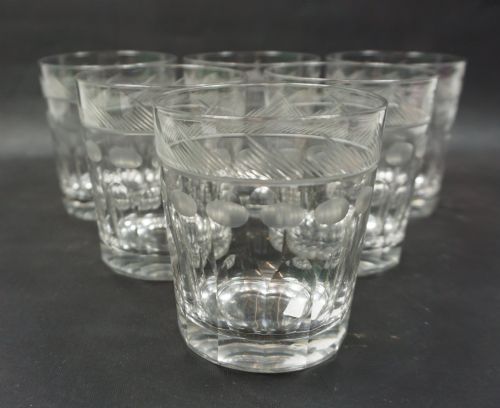
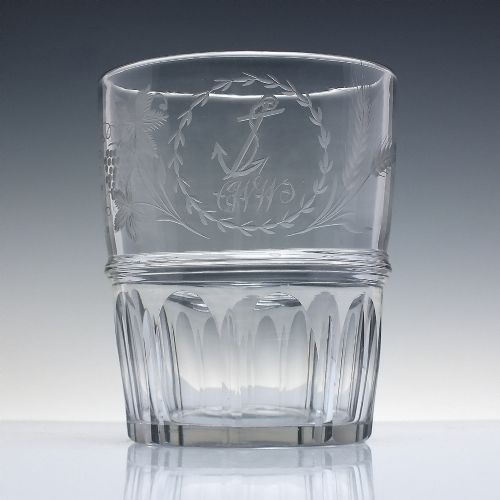
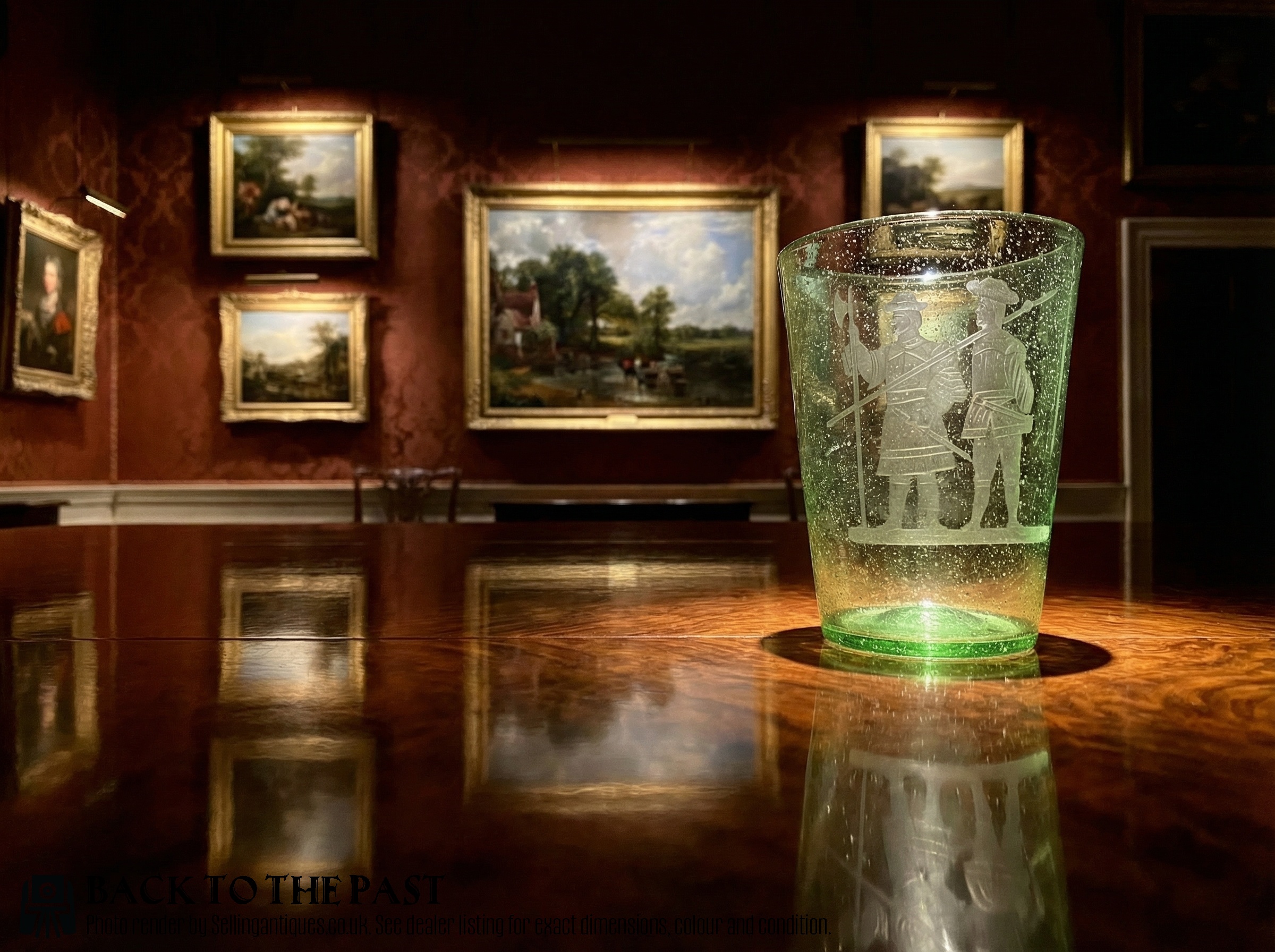
An engraved glass tumbler is a sturdy drinking vessel decorated with wheel-cut or diamond-point ornamentation, designed for spirits, ale, and wine. When you search for this phrase, you encounter forms spanning from heavy-bottomed Georgian drinking vessels to elaborate Victorian commemorative beakers.
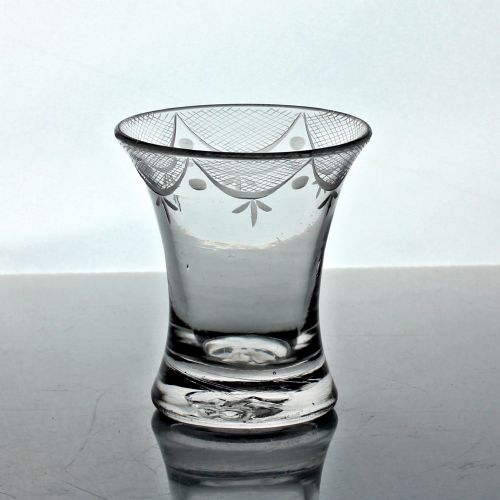
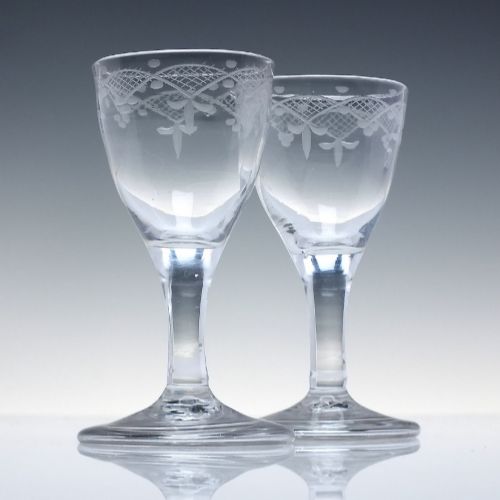
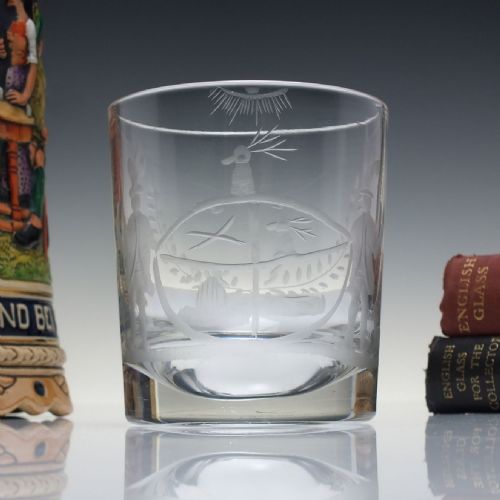
The selections available here range from small dram glasses and firing glasses to substantial nineteenth-century barrel tumblers and ruby flash glass pieces. English and Bohemian examples dominate, carrying motifs from heraldic crests and Masonic symbols to simple botanical swags.
Makers utilised lead glass, flint glass, and hand-blown metal to create these vessels, ensuring each object possesses the heft and clarity expected of period table glass. Many surviving pieces served fraternal lodges, gambling tables, or private clubs, marking them out as social objects rather than quiet ornaments.
How they were made
Glassmakers formed these vessels by gathering molten metal on a blowpipe, blowing and shaping the piece by hand before finishing the rim and base. Many eighteenth-century and nineteenth-century examples utilise lead glass or heavy flint glass, which provided the dense, clear body necessary for deep wheel engraving.
Artisans applied surface decoration using rotating copper or stone wheels fed with abrasive grit, cutting fine lines, facets, and allegorical scenes into the hardened glass. Diamond-point engraving also appears on select pieces, creating scratch-work heraldry and delicate floral details directly on the vessel wall.
Engraved Glass Tumbler Retail Price Guide 2026
Typical asking prices for engraved glass tumbler among the pieces listed under this phrase on Sellingantiques today, from the lower quarter to the upper quarter. They describe what is for sale here now, not the wider market.
Listings feature lead glass, ruby flash glass, and hand-blown flint glass across Georgian and Victorian periods.
What varies in quality
Quality in an engraved glass tumbler rests on the crispness and depth of the wheel work, together with the clarity of the metal itself. Superior pieces show confident, articulate lines in their motifs, whereas lesser examples display shallow, hesitant scratching that lacks dimensionality.
The weight and balance of the vessel also dictate its standing, with heavier lead glass and thick, stable bases marking out more desirable examples. Age-related wear on the underside provides reassurance of authenticity, but excessive chips or deep rim bruises diminish the integrity of the piece.
The Engraved Glass Tumbler Glossary
- Firing glass
- A heavy-bottomed drinking vessel designed to be banged on a table rather than set down quietly, often featuring engraved Masonic or patriotic motifs.
- Lead glass
- A heavy, brilliant glass containing lead oxide that increases the refractive index and makes the metal ideal for deep wheel engraving.
- Ruby flash glass
- Clear glass coated with a thin layer of red glass before being cut through to reveal the clear body underneath, creating high-contrast decoration.
- Diamond-point engraving
- A technique using a diamond-tipped stylus to scratch fine, detailed lines and inscriptions directly onto the surface of the glass.
- Barrel tumbler
- A drinking vessel with a slightly curved, barrel-like profile that sits comfortably in the hand, frequently encountered in eighteenth-century and nineteenth-century forms.
Engraved Glass Tumbler: Frequently Asked Questions
What were engraved glass tumblers used for?
These vessels served everyday drinking needs, formal toasts, and fraternal rituals across the eighteenth and nineteenth centuries. Spirits, ale, and wine were all poured into these heavy-bottomed glasses during club meetings and social gatherings.
Many bear specific emblems relating to gambling, Freemasonry, or political loyalties, marking them out as presentation pieces or club property rather than ordinary household tableware.
How can I tell an eighteenth-century tumbler from a Victorian one?
Eighteenth-century examples often feature thinner hand-blown metal, pontil marks on the base, and simpler wheel-cut swags or Jacobite emblems. They tend to feel lighter and display subtle irregularities from manual production.
Victorian tumblers usually showcase heavier lead crystal, deeper facet cutting, and more complex heraldic or fraternal engraving. The glass is typically brighter and thicker, reflecting mass-production advances of the mid-nineteenth century.
Are these glasses safe to drink from today?
Period drinking vessels can hold liquids safely provided they are washed by hand in lukewarm water. Avoid sudden temperature changes to prevent thermal shock in old glass.
Most collectors prefer to display or occasionally use these pieces with care, avoiding dishwashers entirely to protect the antique surface and engraved details.
What do Masonic or armorial motifs mean on these glasses?
Masonic symbols, crests, and cyphers indicate that a tumbler belonged to a specific lodge, club, or wealthy family. These commissioned pieces commemorated members, officers, or significant fraternal events.
Finding such symbols adds historical context to the vessel, linking the piece directly to the social networks of the Georgian or Victorian eras.