


Edwardian Glass Tumblers
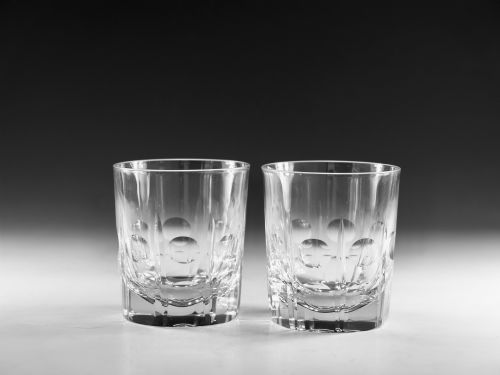
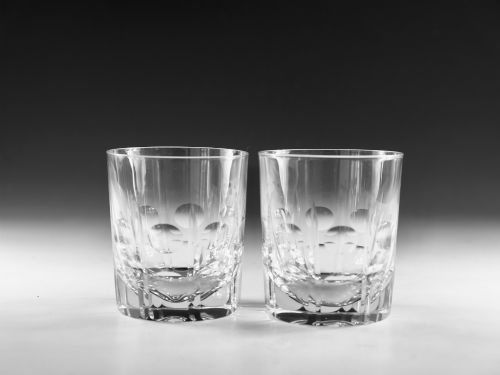
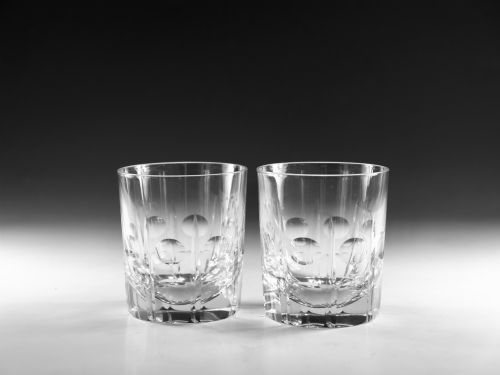
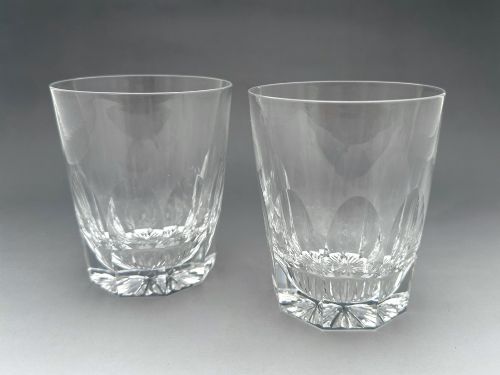
Edwardian glass tumblers bring weight and sparkle to a table, offering solid drinking vessels shaped by early twentieth-century hands.
Edwardian Glass Tumblers
The selection ranges from simple pairs to large sets spanning up to twelve pieces, sometimes accompanied by matching carafes or jugs. Alongside standard whiskey and water tumblers, related drinkware such as cordial glasses and shot glasses occasionally appear.
Materials and methods
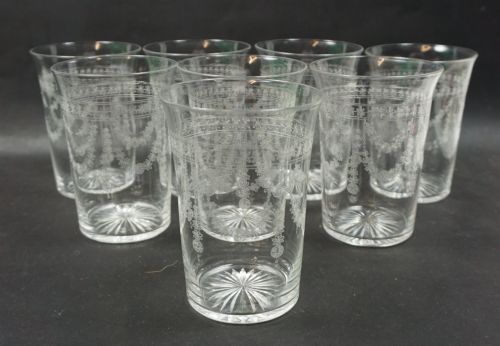
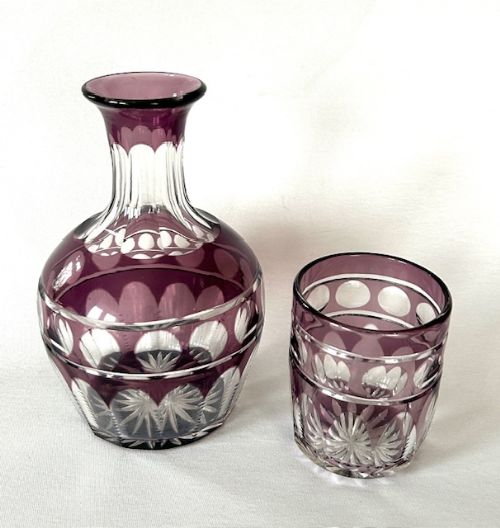
These vessels utilise lead crystal and clear glass, shaped to achieve substantial weight and clear refraction. Makers applied surface ornament through wheel-cutting to create geometric facets or used acid etching for delicate floral and scroll patterns.
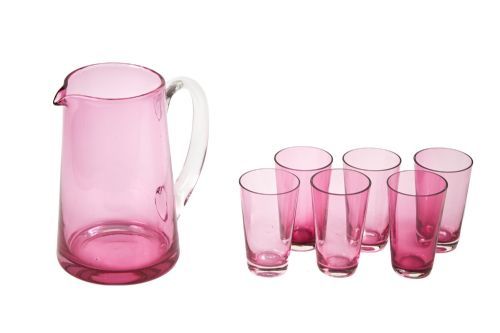
Coloured glass variations, notably cranberry and amethyst hues, required specialised mineral additions during the glass-melting process before finishing by hand. The resulting walls are thick and durable, designed to withstand frequent use.
Some Edwardian drinkers required vessels substantial enough to survive spirited toasts without a single chip.
Quality and manufacture
Quality rests upon the depth and crispness of the glass cutting, where sharper facets catch the light more brilliantly than shallow or rounded grooves. Heavier lead crystal exhibits superior clarity and a more resonant ring when struck lightly.
Uniformity across a matched set elevates the standing of the pieces, as hand-finished tumblers often display slight variations in height or wall thickness. Intricate acid-etched details require precise execution to maintain clean lines across every glass in a service.
Rene Lalique
The Edwardian Glass Tumblers Glossary
- Cut glass
- Glassware decorated by holding the vessel against a rotating abrasive wheel to carve grooves and patterns into the surface. This technique produces bright facets that scatter light.
- Lead crystal
- Glass containing a proportion of lead oxide, which increases the weight, refractive index, and clarity of the material. It allows for deeper cutting without fracturing.
- Acid etching
- A decoration method where wax or a resist covers the glass, and acid eats away the exposed areas to leave a frosted design. This creates delicate, matte patterns against clear glass.
- Cranberry glass
- A rich red glass produced by adding gold chloride to the molten batch. It appears frequently in Edwardian tableware alongside clear crystal.
- Whisky tumbler
- A straight-sided, handleless drinking vessel originally proportioned for spirits. These pieces usually feature heavy bases to provide stability.
Edwardian Glass Tumblers: Frequently Asked Questions
Were Edwardian glass tumblers used for daily dining?
Yes, these sturdy vessels were manufactured for regular household dining and entertaining rather than mere display. Their thick walls and robust lead crystal composition allowed them to endure frequent washing and everyday handling.
Larger sets often equipped a household for dinner parties, whilst smaller pairs served intimate family gatherings. Their practical shape made them suitable for water, juice, and spirits alike.
How do I identify genuine Edwardian glass?
Examine the weight, rim finish, and cutting style of the vessel to determine its period. Genuine pieces from this era typically feature hand-polished facets and a heavier feel due to lead content.
Look for subtle irregularities in the glass or hand-cut lines that distinguish older production from modern press-moulded replicas. The presence of polished pontil marks on the base can also indicate traditional manufacture.
Can I use antique tumblers for drinks today?
These historical drinking vessels remain fully functional for modern table use, provided you wash them by hand. The lead crystal is durable enough to hold water, whiskey, and soft drinks without issue.
Avoid placing them in automatic dishwashers, as harsh detergents and high temperatures can cloud the antique glass over time. Gentle hand washing preserves the clarity and surface polish of the cut patterns.
What is the difference between crystal and glass?
True crystal contains metallic oxides, traditionally lead oxide, which increases the density and brilliance of the material. This composition allows artisans to cut finer details into the surface without breaking the structure.
Standard glass lacks these additives, resulting in a lighter weight and less refractive sparkle. Edwardian makers utilised both materials depending on the desired price point and intended use of the drinkware.
Why do some Edwardian tumblers come in sets?
Households in the early twentieth century purchased matching drinkware sets to maintain visual harmony during formal dinner parties. A uniform service of six, eight, or twelve glasses ensured the table looked coordinated when serving guests.
Finding surviving sets intact is uncommon due to accidental breakages over the decades. Consequently, surviving matched groups remain sought after by collectors who prefer a complete table setting.