



Equestrian Watercolour Art
Equestrian watercolour art captures horses, riders and hunts across paper using fluid washes and fine ink lines.
Equestrian Watercolour Art
Equestrian watercolour art encompasses framed paintings, sketches and illustrations focusing on horses, racing, hunting and rural working scenes. The works span from the nineteenth century through the Edwardian era to mid-century modern interpretations.
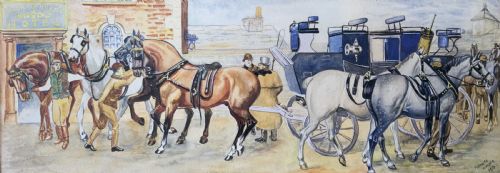
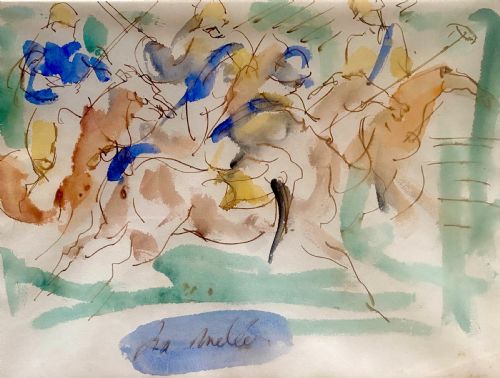
Buyers encounter detailed hunting scenes, portraits of horses and dynamic depictions of polo matches or horse fairs. Many pieces combine watercolour pigment with ink or gouache on paper, often preserved behind glass in period wooden frames.
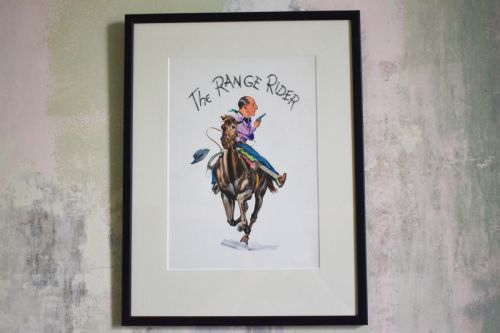
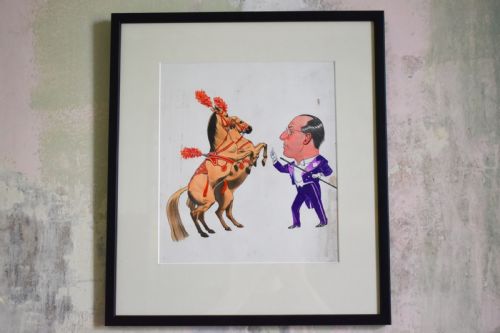
The selection ranges from precise Victorian illustrations to expressionist sporting art and caricature studies. These works record the changing role of the horse in transport, sport and rural life.
Materials and technique
Artists painted primarily with watercolour pigments and ink on paper sheets, sometimes applying opaque gouache to build highlights and dense areas of colour. These works relied on water-soluble pigments applied in washes to capture the light and movement of horses.
Finished paintings were commonly protected behind glass and mounted within timber frames, frequently using oak or gilt mouldings that match the period of the artwork.
Equestrian Watercolour Art Retail Price Guide 2026
Typical asking prices for equestrian watercolour art among the pieces listed under this phrase on Sellingantiques today, from the lower quarter to the upper quarter. They describe what is for sale here now, not the wider market.
Several watercolours focus entirely on horses stealing fruit from baskets or lounging around garrison towns.
Distinctions in quality
Quality rests upon the artist's command of anatomy, movement and proportion when rendering horses and riders in motion. Skilled painters convey tension and energy through confident brushwork and precise ink lines rather than heavy retouching.
The preservation of the paper and the vibrancy of the watercolour pigment also determine value. Works with minimal fading and original framing maintain greater integrity than those altered over time.
Herman S Melville·John Rattenbury Skeaping·Basil Nightingale·John Augustus Atkinson·Helena Maguire·John Atkinson·Thomas Mackay·Adrian Jones·Charles Clifford Turner·John Sanderson Wells·Charles Johnson Payne Snaffles·Tom Carr·Thomas Ivester Lloyd·William J Hodgson·Henry Charles Fox·Johan Noah Bemmel·George Cattermole·Frank Dadd·Peter Howell
The Equestrian Watercolour Art Glossary
- Gouache
- An opaque water-based paint that includes a white pigment binder, allowing artists to create solid highlights and dense colour areas over watercolour washes.
- Sporting Art
- Genre of artwork depicting blood sports, racing, hunting and animal portraits, prominent in British painting from the eighteenth century onwards.
- Wash
- A thin, fluid layer of diluted watercolour pigment applied across paper to create transparent fields of colour or atmospheric backgrounds.
- Framed Artwork
- A picture mounted behind protective glass and enclosed within a wooden or gilt border to facilitate hanging on a wall.
Equestrian Watercolour Art: Frequently Asked Questions
What subjects appear in equestrian watercolour art?
These works feature horse racing, fox hunting, cavalry scenes, carriage horses and working farm animals. Artists recorded both formal portraits of specific horses and dynamic action moments from rural life.
Scenes range from quiet country lanes with tethered ponies to crowded racecourses and hunt gatherings across various British and European settings.
How should I hang and protect these watercolours?
Watercolour pigments are sensitive to bright sunlight and moisture, so these pieces require placement away from direct UV exposure and damp walls. Maintaining stable indoor temperatures protects the paper support and wooden frames.
Glass fronts shield the delicate pigments from dust and atmospheric pollutants, ensuring the paper remains stable over decades.
How do I date an antique equestrian watercolour?
Dating relies on costume details, framing styles, artists' active working periods and paper characteristics noted in the signature or inscription. Victorian and Edwardian works often display specific clothing fashions and illustrative techniques characteristic of their decade.
Examine the back of the frame and any visible inscriptions for artist signatures, dates, or titles that place the work within a defined historical period.
What is the difference between watercolour and gouache?
Traditional watercolour uses transparent pigments that allow the white of the paper to show through, creating luminous washes of colour. Gouache incorporates an opaque white binder that creates solid, matte areas of paint.
Artists frequently combined both mediums on the same sheet of paper to render fine details against atmospheric washes.