


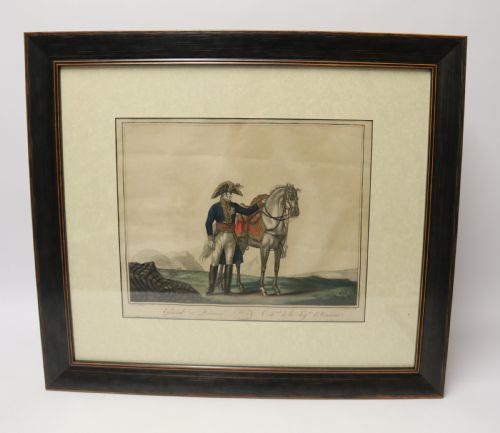


Antique Horse Illustration
An antique horse illustration brings the vigour of the stables, the hunting field and the parade ground directly onto the wall.
Antique Horse Illustration
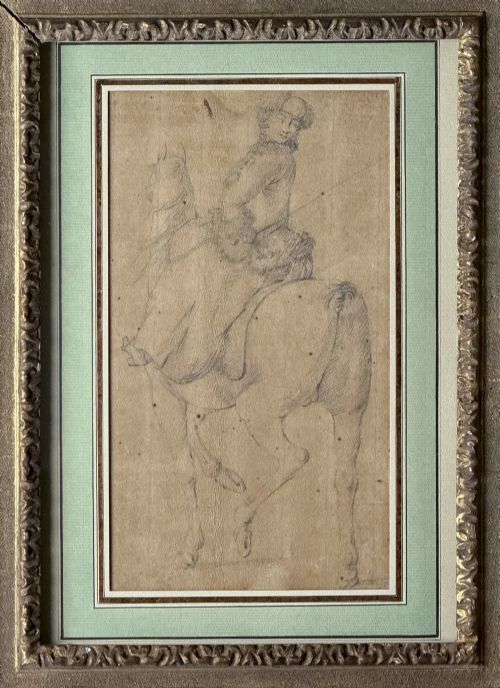
When you search for an antique horse illustration, you enter a visual record spanning from the early eighteenth century through the Edwardian era and into the interwar years. The selection encompasses finely rendered watercolours, chalk drawings, charcoal studies and period prints framed in oak or walnut.
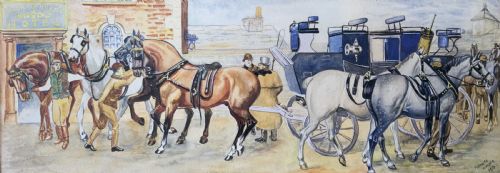
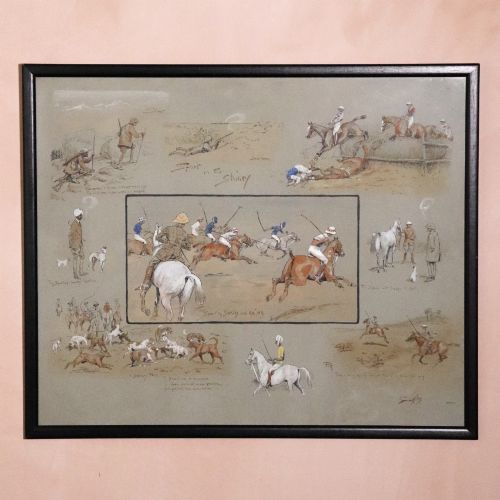
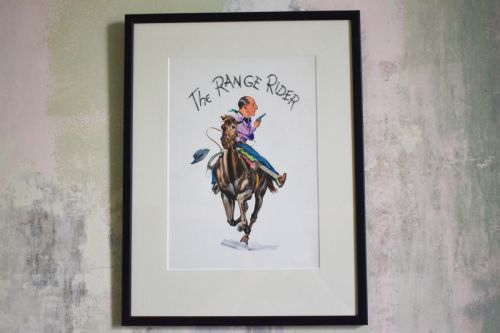
The most common pieces you will meet on this page are nineteenth century works and Edwardian sporting art, including original watercolours and framed prints that capture equestrian life. Subjects range from military scenes and coaching watercolours to humorous character studies and detailed portraits of horses and hounds.
Origins vary across British, French and Northern European traditions, reflecting local artistic schools of the period. Whether you encounter a nineteenth century British hunting scene or a French Orientalist charcoal drawing, each piece documents historical attitudes towards horses and carriage transport.
Assessing quality in equestrian art
Quality rests upon the sureness of the draftsmanship and the artist's ability to render equine anatomy correctly in motion. A superior drawing captures the tension in a trotting harness or the stride of a galloping racehorse with economy and precision.
The integration of the medium with its paper support also defines the calibre of the piece. Strong tonal contrast in monochrome works and well-preserved pigment vibrancy in watercolours elevate the visual impact of the composition.
A young foal gets caught red-handed stealing fruit from a wicker basket in a charming turn-of-the-century watercolour.
Cecil Charles Windsor Aldin·Charles Clifford Turner·William J Hodgson·Thomas Worth·Helena Maguire
The Antique Horse Illustration Glossary
- Chromolithography
- A planographic colour printing technique used to produce multi-coloured pictorial prints. This process builds images through the successive application of different coloured lithographic stones.
- Watercolour
- A painting method in which the pigments are suspended in a water-soluble vehicle. It produces transparent washes of colour particularly suited to paper supports.
- Equestrian
- Pertaining to horses, horse riding or horse-drawn vehicles. In art, this designates subjects focused centrally on the horse and its interaction with riders or handlers.
- Orientalism
- The imitation or depiction of aspects of Middle Eastern and North African cultures by Western artists. This style frequently appears in nineteenth century French and European drawings.
- Sporting art
- A genre of painting and illustration dedicated to rural sports such as hunting, racing and shooting. It holds a prominent place in British art history through the nineteenth and early twentieth centuries.
Antique Horse Illustration: Frequently Asked Questions
What periods do these horse illustrations cover?
The works span multiple centuries, with particular concentrations in the nineteenth century, the Victorian era, the Edwardian period and the early decades of the twentieth century. Early examples include eighteenth century Northern European school drawings.
Later pieces extend into the 1920s and 1930s, capturing the enduring popularity of equestrian subjects through changing artistic movements and printing techniques.
How were these framed works originally used?
Many of these pieces served as domestic wall art in country houses, libraries and town residences, reflecting the owner's sporting interests and military associations. Some items originated as published prints, magazine plates or illustrated Christmas cards.
Framing often occurred decades after creation to preserve the paper and suit contemporary interior decoration styles, using traditional timbers such as oak and walnut.
How do I distinguish between an original watercolour and a print?
Original watercolours and drawings reveal brushstrokes, pencil guidelines and the distinct texture of pigment sitting directly upon the paper surface. Examining the edges under magnification helps confirm the hand-applied nature of the medium.
Prints, including chromolithographs and Vanity Fair plates, display uniform dot patterns, ink transfer matrices or plate marks left by the printing press during production.
Where do the military and hunting scenes originate?
The selection includes works from British, French and Northern European traditions, reflecting local military campaigns and regional sporting cultures. Nineteenth century French works often record cavalry actions and Orientalist subjects.
British pieces frequently document local hunts, coaching routes and military portraits, illustrating the widespread cultural role of the horse in nineteenth and early twentieth century Europe.