
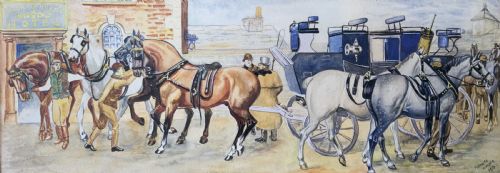


Brown Horse Watercolour Painting
A brown horse watercolour painting captures the strength and character of equines through delicate pigments on paper.
Brown Horse Watercolour Painting
A brown horse watercolour painting focuses on equine subjects rendered on paper using water-soluble pigments and ink. Buyers seek these works to bring historic rural scenes and equestrian studies into domestic spaces.
The pieces available span from the Georgian period through the Victorian and Edwardian eras up to the mid-twentieth century. Most examples depict working animals, racing scenes or quiet stable studies framed in wood and glass.
Victorian and Edwardian artists predominate in the selection, often presenting horses at work in fields, at fairs or pulling carts. These portrayals offer a direct window into agricultural and coaching history.
Materials and Technique
Artists painted these works primarily with watercolour pigment and gouache on paper surfaces, sometimes incorporating ink for finer line work. The translucent nature of watercolour allows for subtle shading across the musculature and coat of the animal.
Many surviving examples are preserved beneath glass within wooden frames, frequently made of oak, which protect the delicate paper from atmospheric moisture and handling. Gouache provides opaque highlights that give depth to the horse's coat and harness details.
Brown Horse Watercolour Painting Retail Price Guide 2026
Typical asking prices for brown horse watercolour painting among the pieces listed under this phrase on Sellingantiques today, from the lower quarter to the upper quarter. They describe what is for sale here now, not the wider market.
Listings feature works from the 1800s, 19th Century, 1900, 1910, 1920, 1930, 1960, and Mid-Century Modern periods.
Judging Quality
Quality rests upon the artist's command of anatomy and movement, distinguishing stiff or generic renderings from lively, observant studies. The handling of light and shadow across the animal's form dictates the visual depth of the composition.
Condition also plays a part, as works on paper are vulnerable to fading and foxing over the decades. Well-preserved sheets retain their original pigment vibrancy beneath clear glass.
Herman S Melville·John Rattenbury Skeaping·James William Booth·John Augustus Atkinson·Helena Maguire·John Atkinson·Adrian Jones·Robert Hollands Walker·Charles Clifford Turner·George Hamilton Constantine·William Manners·Snaffles·Frank Saltfleet·Fred Lawson·Charles James Adams
The Brown Horse Watercolour Painting Glossary
- Watercolour
- A painting method in which the paints are made of pigments suspended in a water-based solution. It is applied to paper to create translucent washes of colour.
- Gouache
- An opaque water-based paint that includes a white pigment filler, resulting in a heavier, more solid finish than traditional watercolour. Artists use it to add highlights and solid areas of tone.
- Foxing
- Brown spots or patches that appear on old paper due to chemical reactions over time. Collectors monitor this ageing process when assessing the condition of antique sheets.
- Equestrian
- Pertaining to horses and horseback riding. This term describes artwork where horses are the primary subject matter.
- Genre Art
- Pictorial representation of scenes from everyday life. In this context, it covers working horses in agricultural and coaching settings.
Brown Horse Watercolour Painting: Frequently Asked Questions
How should I frame a watercolour?
Watercolours require protection behind glass to prevent dust and moisture from damaging the paper surface. Acid-free mounts keep the paper from touching the glass directly.
Position the frame away from direct sunlight to prevent the pigments from fading over time.
What periods do these paintings cover?
The works span from the early nineteenth century through the Victorian and Edwardian eras into the mid-twentieth century. Each period brings a distinct approach to realism and equine anatomy.
Earlier pieces often focus on agricultural labour, while later twentieth-century works explore racing and sport.
Are these paintings original works?
The selection consists of original hand-painted watercolours and gouache pieces rather than printed reproductions. Each sheet bears the unique brushstrokes and touch of the artist.
Many examples feature signatures, dates or inscriptions from the period.
How do I care for antique paper?
Keep works on paper in stable indoor environments away from excessive humidity and temperature fluctuations. Consistent conditions prevent the paper from warping or developing further foxing spots.
Professional framing with conservation-grade materials ensures the longevity of the piece.