



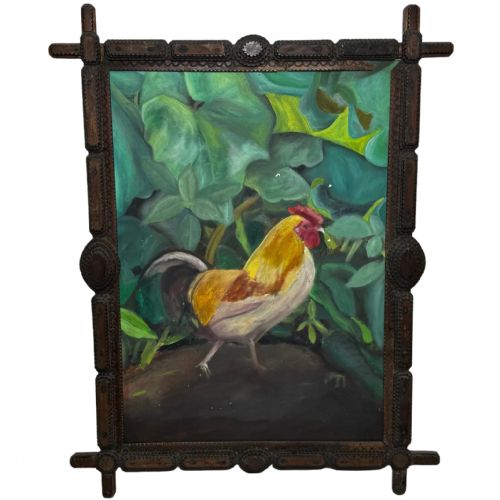
Farmyard Animal Painting
A farmyard animal painting brings rural life into a room through oil on canvas and watercolour, offering a glimpse of Victorian and Edwardian farming.
Farmyard Animal Painting
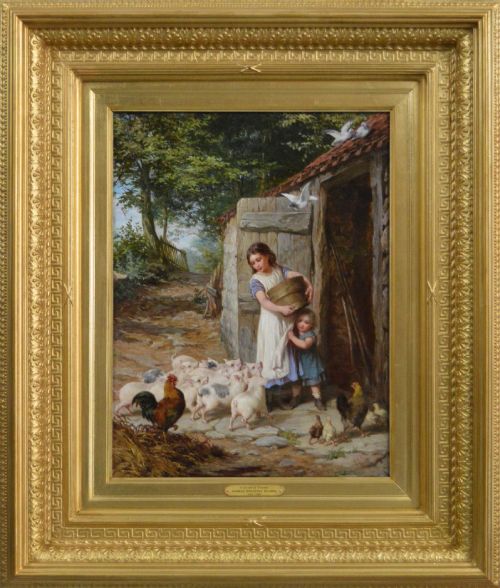
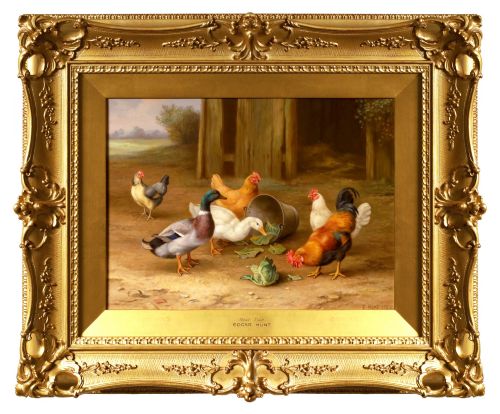
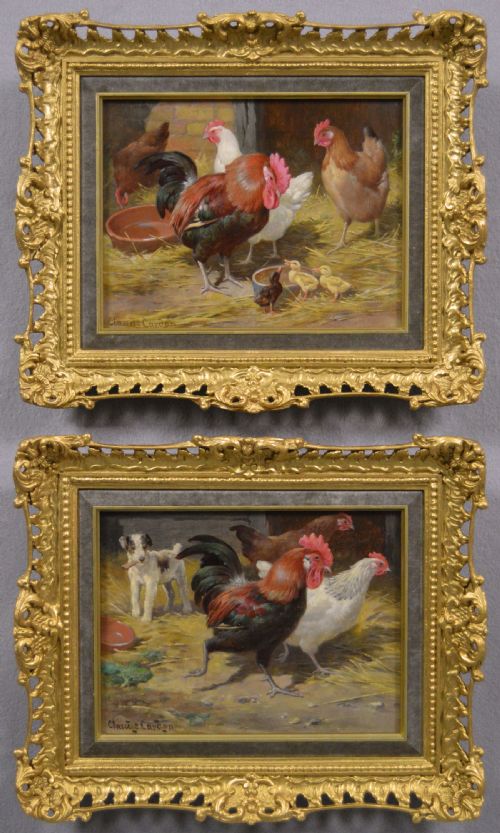
A farmyard animal painting captures rural scenes populated by horses, pigs, poultry, and cattle, often set against country landscapes or within rustic farm buildings. These works reflect a fascination with agrarian life during the Victorian and Edwardian periods.
The pieces you encounter here range from intimate watercolours of a single cockerel or foal to large, detailed oil paintings featuring bustling yards with multiple animals and human figures. Works by recognised nineteenth-century and early twentieth-century painters form the core of this selection.
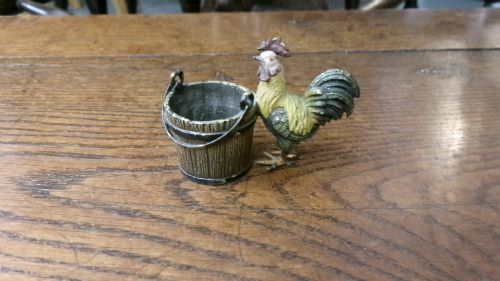
Oil on canvas remains the dominant medium, frequently housed within period giltwood frames that enhance the warmth of the rustic subjects. Alongside traditional British animalier works, occasional continental European pieces and desk accessories appear.
Materials and methods
Artists built these compositions primarily using oil paint on canvas or occasionally wood, applying rich pigments to render the textures of feathers, fur, and straw with precision. Skilled layering allowed painters to achieve depth in the farmyard background landscapes.
The selection includes works by British, German, and Catalan artists working within nineteenth and twentieth-century realism.
Distinguishing quality
Quality rests in the anatomical accuracy of the animals and the liveliness of the brushwork, distinguishing master practitioners from competent copyists. Painters who understood farmyard anatomy rendered horses, pigs, and poultry with convincing weight and posture.
The preservation of the original canvas and the integrity of the period frame contribute significantly to a piece's standing. Strong compositions balance the subjects against the broader landscape without crowding the frame.
George Augustus Holmes·Edgar Hunt·Claude Cardon·John Frederick Herring Jnr·Percival Glenfern·Helena Maguire·Pierre Emmanuel Dielmans·J L VAN Leemputten
The Farmyard Animal Painting Glossary
- Animalier
- A nineteenth-century artistic movement focused on the realistic depiction of animals. Practitioners specialised in capturing the natural behaviours and physical forms of farm stock and wildlife.
- Giltwood
- Wood carved and coated with gold leaf or a gold-coloured finish. This material was standard for framing fine art during the Victorian era.
- Cold-painted bronze
- A manufacturing technique where bronze sculptures received paint finishes without the application of heat. This method was popular for small decorative desk pieces and animal figures.
- Gesso
- A plaster-like mixture applied to wooden frames as a base for gilding. It allowed artisans to carve intricate decorative mouldings around oil paintings.
Farmyard Animal Painting: Frequently Asked Questions
What animals appear most often?
Chickens, cockerels, and horses dominate these scenes, frequently accompanied by pigs, ducks, and goats.
Artists also included cattle and sheep within the broader landscape and farmyard settings.
How do I date a piece?
Dating relies on stylistic markers, framing methods, and artist signatures recorded from the nineteenth and early twentieth centuries.
Victorian and Edwardian works often carry specific biographical dates associated with the painter's active years.
Are watercolours common?
While oil on canvas forms the majority of the works, watercolours do appear.
These works on paper often focus on single subjects, such as a young foal or a detailed cockerel.
Where were these displayed?
These paintings suited domestic interiors, bringing the perceived tranquility of the countryside into town and city homes.
Their framed formats made them suitable for principal reception rooms in Victorian households.