

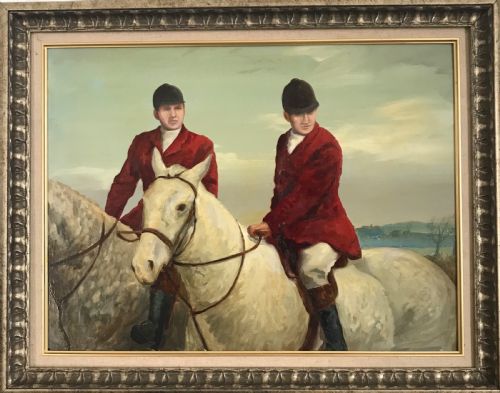
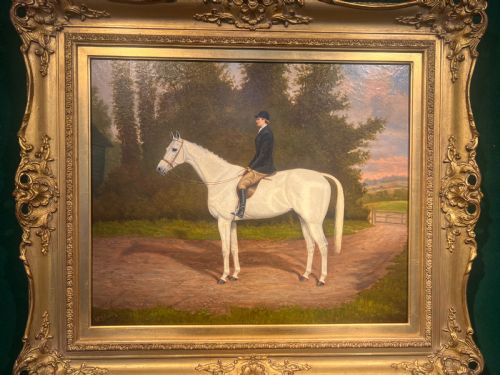
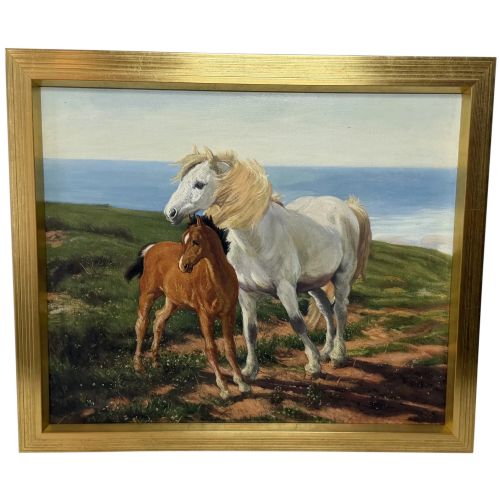
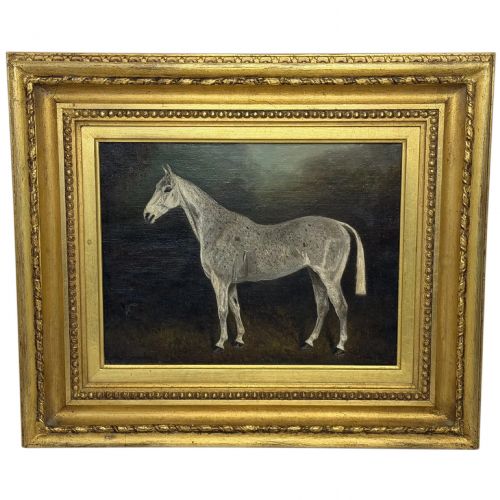


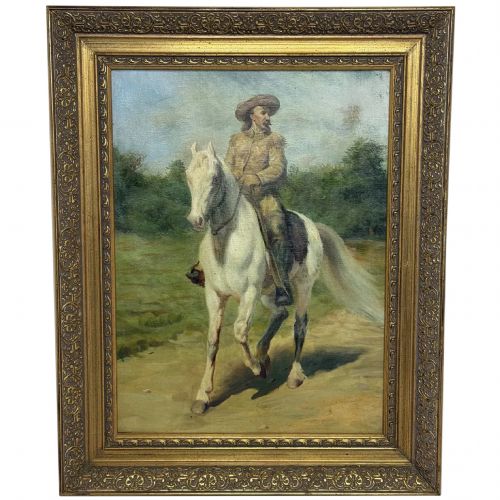


Antique Grey Horse Portrait
An antique grey horse portrait captures the strength and character of these equines, offering a timeless focal point for any country house interior.
Antique Grey Horse Portrait
When you search for an antique grey horse portrait, you encounter a diverse gathering of equestrian works spanning the Regency, Victorian, and mid-century periods. These portrayals range from formal studies of named mares and hunters to lively hunting scenes featuring riders and grooms.
The subjects appear across various forms, predominantly as oil paintings on canvas or wood panels, alongside delicate watercolours and drawings on paper. British sporting art traditions heavily influence the selection, though continental European masters also contribute distinct portrayals of workhorses and cavalry mounts.
Pieces frequently emerge from recognised hands or schools, depicting animals in stables, landscapes, or working environments. Buyers meet everything from detailed nineteenth-century realisms to mid-century compositions celebrating horses and riders.
Materials and methods
Artists created these works primarily using oil paint applied to canvas or wood panels, while others utilised watercolour on paper for lighter studies. The application of pigment captures the complex dappled tones and textures characteristic of grey horse coats.
Many surviving examples retain their original frames, often constructed from giltwood or wood that complements the depth of the palette. These traditional framing methods protect the delicate edges of the canvas and paper substrates over centuries.
Antique Grey Horse Portrait Retail Price Guide 2026
Typical asking prices for grey horse portrait among the pieces listed under this phrase on Sellingantiques today, from the lower quarter to the upper quarter. They describe what is for sale here now, not the wider market.
Listings feature works executed in oil on canvas, oil paint on wood, and watercolour on paper, spanning periods from the early eighteenth century to mid-century modern.
Distinguishing quality
Quality in these portraits rests upon the artist's anatomical accuracy and ability to render the intelligent expression and muscular form of the animal. Superior works display a careful handling of light across the grey coat, revealing subtle shifts in tone from silver to charcoal.
The depth of the surrounding landscape or stable interior also dictates distinction, where master painters integrate horse and setting into a cohesive narrative. Condition of the canvas, paper, and original pigment preservation further elevate certain pieces above others.
Basil Nightingale·Edwin Frederic Holt·Clifton Tomson·Johan Noah Bemmel·Albert Ferdinand Le Dru·Maurice Wagermans
The Antique Grey Horse Portrait Glossary
- Grisette
- A term historically applied to grey horses, often denoting a specific mare as seen in regional Cheshire sporting works. This descriptor helps identify the particular colouration of the animal within older records.
- Giltwood
- Wood carved and coated with gold leaf or gold paint, frequently utilised for the ornate frames enclosing nineteenth-century canvases. This material enhances the warmth of the darker equine backgrounds.
- Watercolour
- A painting method utilising water-soluble pigments on paper, producing translucent effects seen in lighter nineteenth-century animal studies. It requires a steady hand and offers immediate, luminous results.
- Equestrian
- Pertaining to horse riding or the representation of horses in art, forming the core genre of these sporting works. It encompasses everything from hunt portraits to military cavalry depictions.
- Realism
- An artistic movement focusing on everyday subjects without idealisation, evident in the truthful rendering of working horses and their handlers. This style prioritises accurate observation over romantic convention.
Antique Grey Horse Portrait: Frequently Asked Questions
What periods do these horse portraits date from?
The works span from the early eighteenth century through the Regency and Victorian eras up to the mid-twentieth century. This timeline reflects shifting artistic approaches to sporting subjects.
Earlier pieces often lean towards detailed realism and formal compositions, while later twentieth-century examples embrace broader mid-century styling.
How were these paintings displayed originally?
Owners typically hung these portraits in country houses, libraries, and estate reception rooms to celebrate prized hunters, racehorses, or working animals. Their substantial frames allowed them to command attention above mantelpieces or along panelled walls.
Today, they serve a similar decorative purpose in traditional and contemporary interiors alike.
Are these works signed by the artists?
Several pieces feature signatures from recorded painters, while others belong to specific artistic schools or carry attributions to notable equestrian masters. Unsigned works frequently rely on stylistic markers and subject matter to indicate their period.
Documentation and framing often provide further clues regarding the creator's identity.
What is the difference between an oil and a watercolour portrait?
Oil paintings utilise pigment suspended in drying oil on canvas or wood, offering rich textures and deep tones that capture the sheen of a horse's coat. Watercolours employ gum-based pigments on paper, yielding a softer, more translucent finish.
Oils generally endure with heavier structural support, whereas watercolours require careful framing behind glass.