


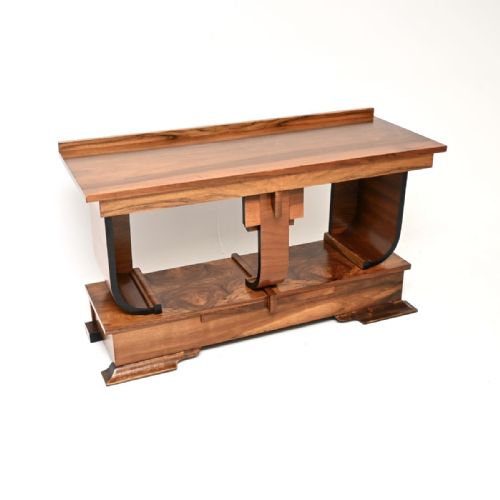
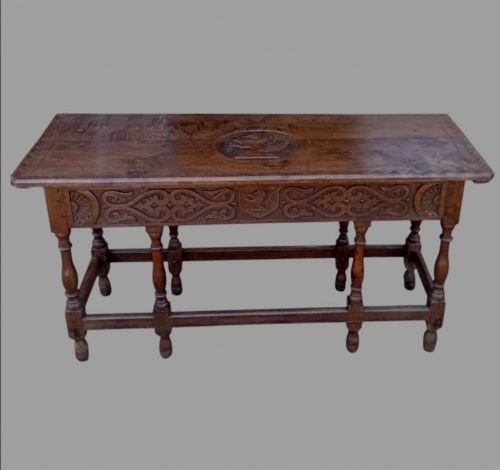
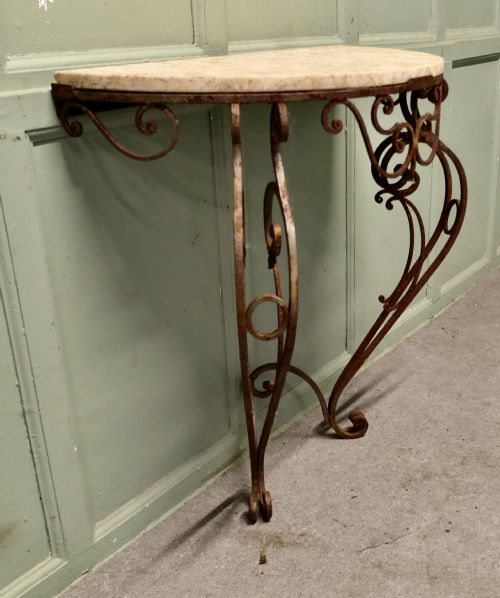
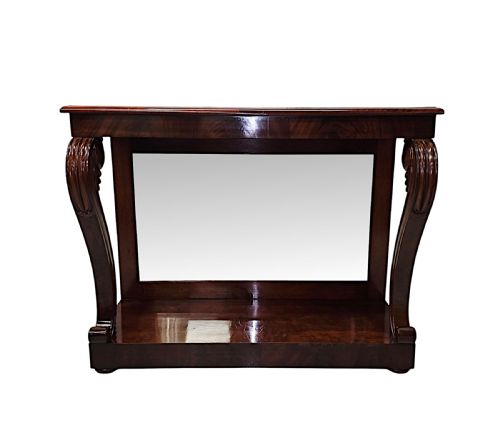
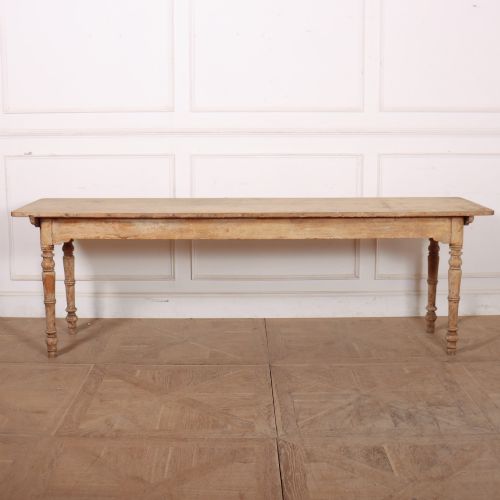
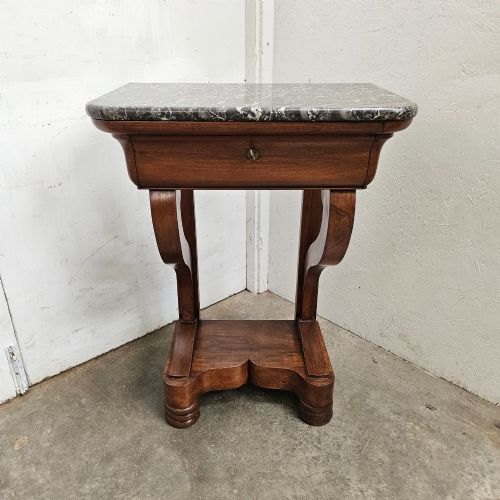
Entryway Side Table
An entryway side table sets the tone for a home, offering a purposeful surface where timber and marble meet.
Entryway Side Table
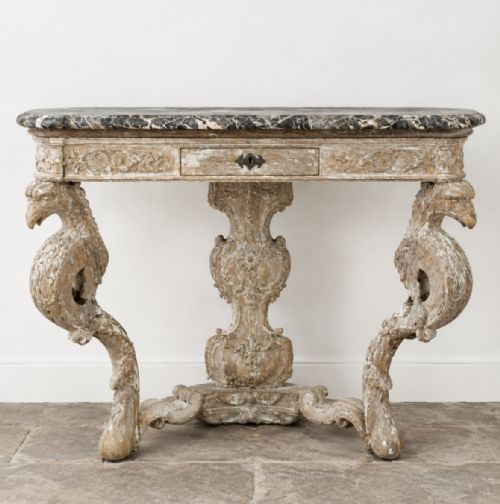
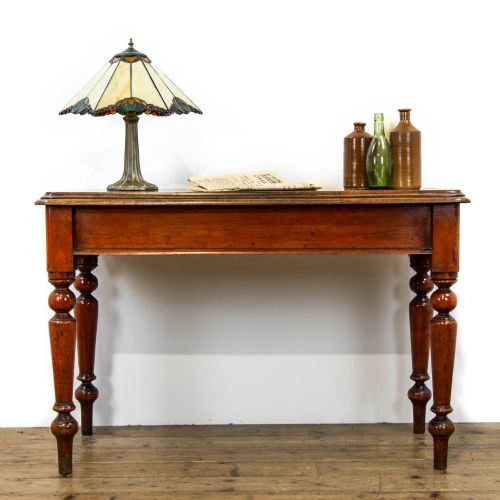
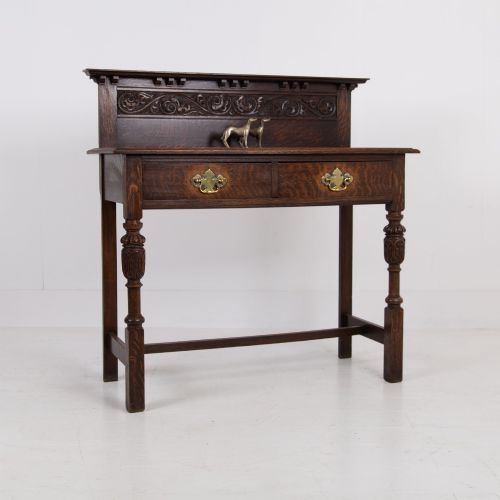
An entryway side table appears across this selection in forms such as console tables, hall tables, and compact sideboards designed to anchor a narrow corridor or reception space. The material record spans sturdy oak and mahogany alongside painted and gilt surfaces, often paired with shaped marble tops.
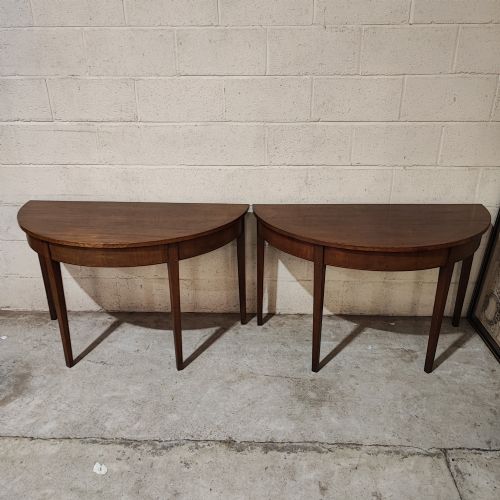
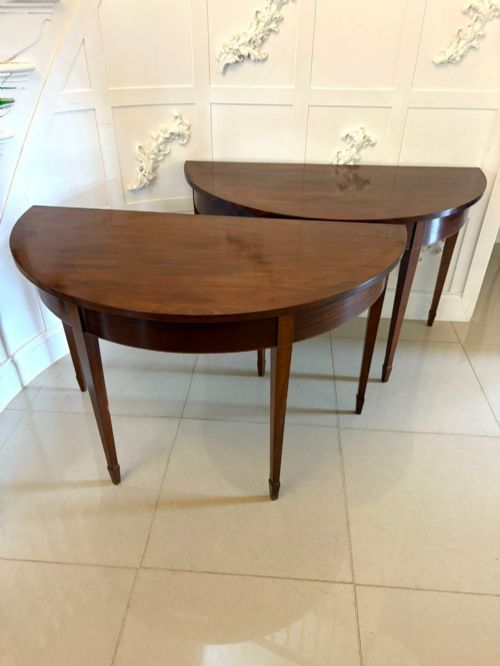
Pieces stretch from the eighteenth century through the Victorian era and into the early twentieth century, taking stylistic cues from Georgian, Regency, and Neoclassical design. Buyers frequently encounter demi-lune shapes and slender console tables built specifically to stand flush against a wall.
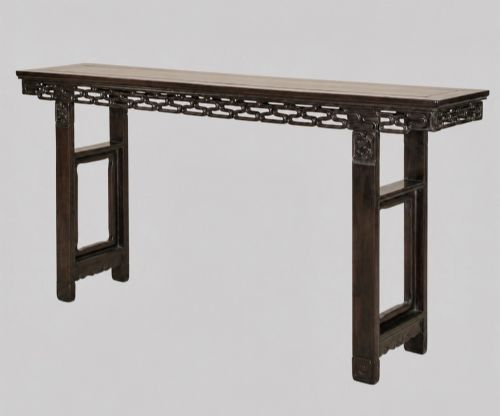
Origins range widely across English workshops, French studios, and Italian makers, alongside examples from China including hardwood altar tables. This geographic breadth ensures that timber choices vary from rich figured walnut and rosewood to simpler country pine and ash.
How they were made
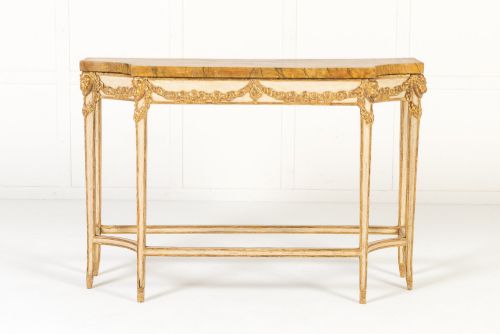
Joinery relies heavily on traditional cabinet-making methods, utilising solid timbers like mahogany, oak, and walnut often enhanced by decorative veneers and crossbanding. Carved details emerge from seasoned hands, while painted and parcel-gilt finishes apply layers of colour and gold leaf over prepared timber bases.
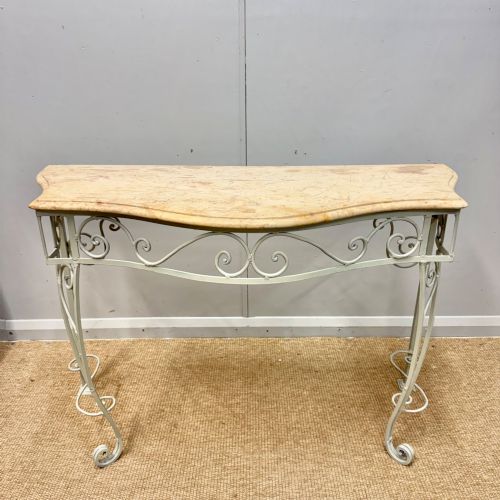
Heavy stone elements such as marble and fossil marble are shaped to fit flush into recessed wooden frames or secured atop wrought iron and giltwood bases. Brass mounts and hardware provide structural punctuation and decorative contrast to the polished wood and stone surfaces.
Some tables feature carved lion paws to keep your mail safe from imaginary jungle predators.
What varies in quality
Construction standards reveal themselves in the selection of timber and the precision of the joinery, where finely figured grain and tightly fitted joints distinguish workshop output. The presence of original marble tops, intact parcel-gilt, and authentic period brass mounts elevates a piece far above simpler utility items.
Proportion and decorative ambition set the standard for console and hall tables, ranging from restrained country oak designs to elaborate Italian Baroque Revival carvings with lion paw supports. The survival of original paint or untouched surface patination remains a primary indicator of historical integrity.
The Entryway Side Table Glossary
- Demi-lune
- A half-moon shape popular for console tables designed to sit flat against a wall. This profile saves floor space in narrow corridors.
- Console table
- A table supported by wall brackets or console legs, traditionally standing in a hallway or reception room. It holds decorative objects rather than serving for dining.
- Parcel-gilt
- Partially gilded with gold leaf, highlighting carved details against a painted or polished wood ground. This technique adds depth to Neoclassical and Regency furniture.
- Crossbanding
- A border of veneer laid with the grain running perpendicular to the main surface. It frames the top of a table to create a neat visual edge.
- Altar table
- A traditional Asian table form featuring elevated ends and heavy timber construction. These pieces function well as striking entryway surfaces.
Entryway Side Table: Frequently Asked Questions
Where should an entryway side table go?
These tables belong against a hallway or corridor wall where floor space is at a premium. Their shallow depth allows foot traffic to pass freely while providing a surface for keys and decorative objects.
Placing one beneath a mirror or painting creates a focal point immediately upon entering a home. Narrow console designs fit particularly well in tight spaces.
How do I identify a Georgian console table?
Georgian pieces typically feature dense mahogany timber, classical proportions, and restrained carved ornamentation. Look for geometric precision and traditional joinery methods characteristic of the eighteenth century.
Many examples utilise a demi-lune shape designed to hug the wall closely. Their legs often display spade feet or subtle fluting rather than heavy Victorian carving.
Can I use a marble top table in a hallway?
Marble top tables suit entryways exceptionally well because the stone surface withstands daily use and moisture from keys or small items. French and Italian examples frequently pair heavy marble with carved wooden bases.
The cool stone provides a distinct textural contrast against warm mahogany or giltwood frames. Maintenance involves simple wiping rather than intensive wood polishing.
What is the difference between a console and a hall table?
Console tables historically required wall attachment for stability, whereas hall tables often stood independently on four legs. Over time, the terms merged to describe narrow tables suited for corridors.
Both types prioritise shallow depths to accommodate restricted hallway dimensions. Selection depends more on leg style and surface material than strict historical definitions.