


Engraved Silver Vinaigrette
An engraved silver vinaigrette is a small, pocket-sized container designed to hold a fragrant sponge, offering a portable remedy for unpleasant odours.
Engraved Silver Vinaigrette
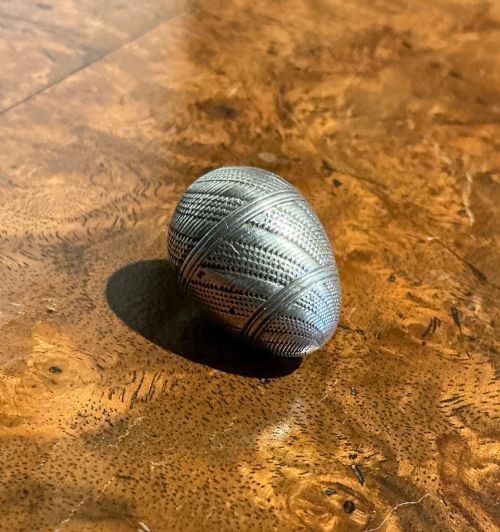
An engraved silver vinaigrette is a miniature personal accessory designed to hold a sponge soaked in aromatic vinegar. These portable containers belong primarily to the Georgian and Victorian periods, spanning from the late eighteenth century through the nineteenth century.
Materials and construction
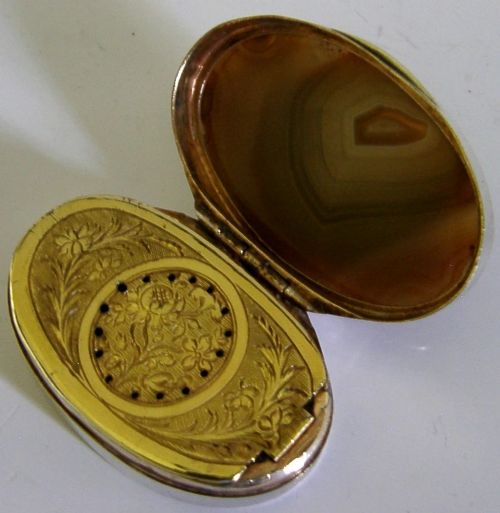
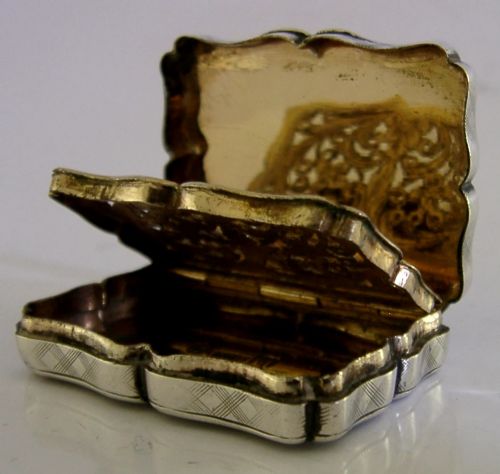
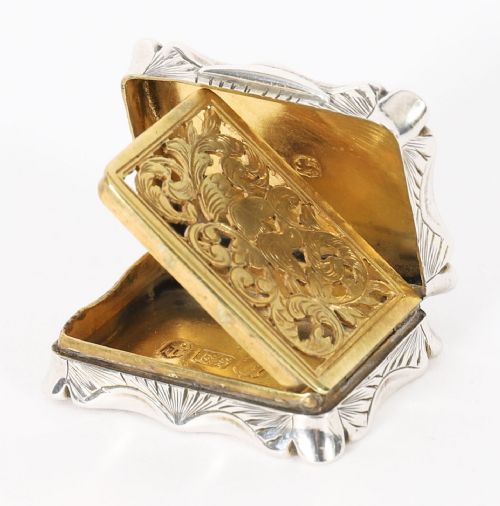
Silversmiths utilised sterling silver and silver gilt to form the body and intricate interior grille of each vinaigrette. Gold gilding frequently coated the interior compartment to protect the silver from the corrosive properties of acidic vinegar.
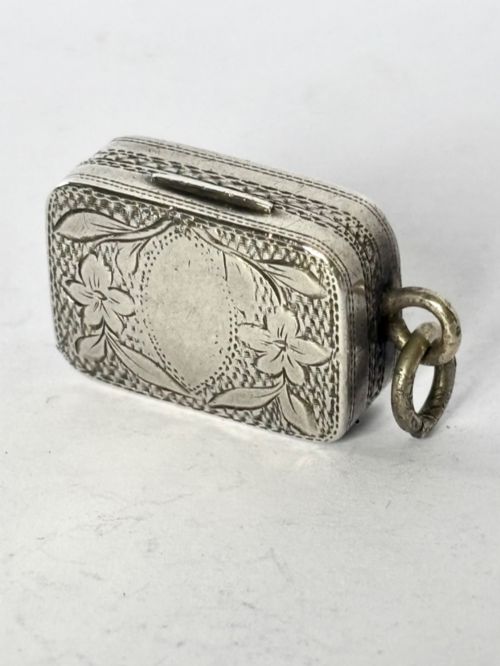
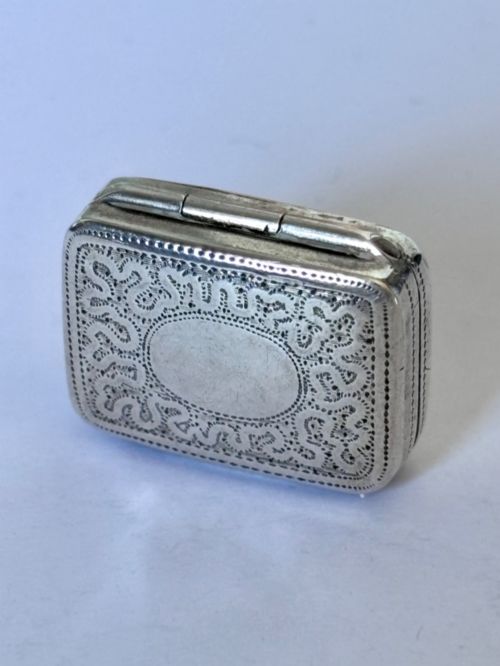
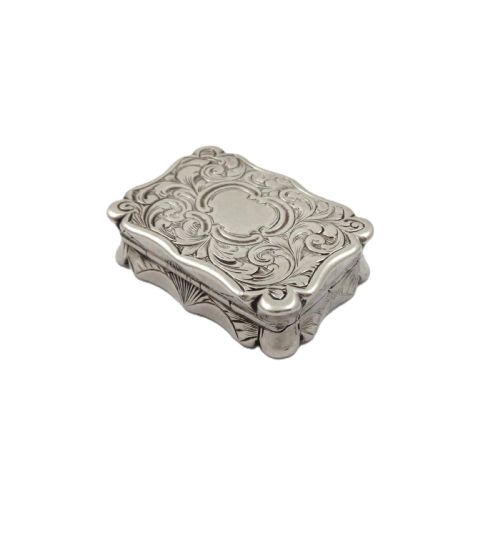
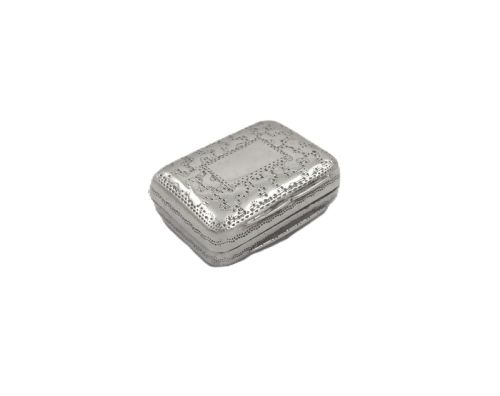
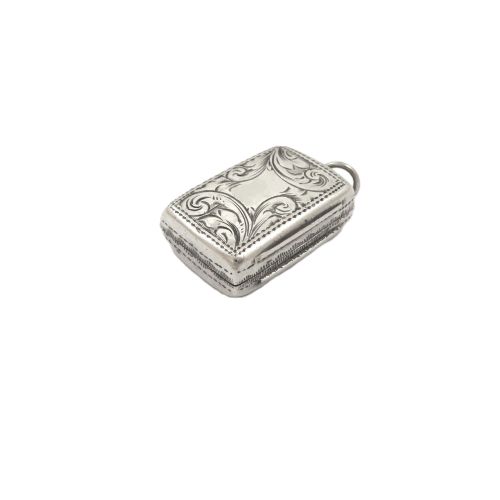
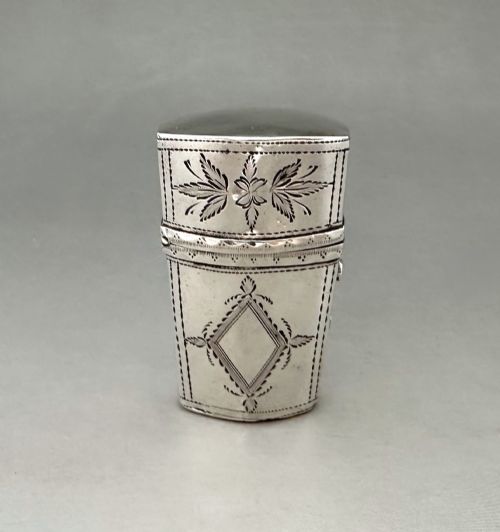
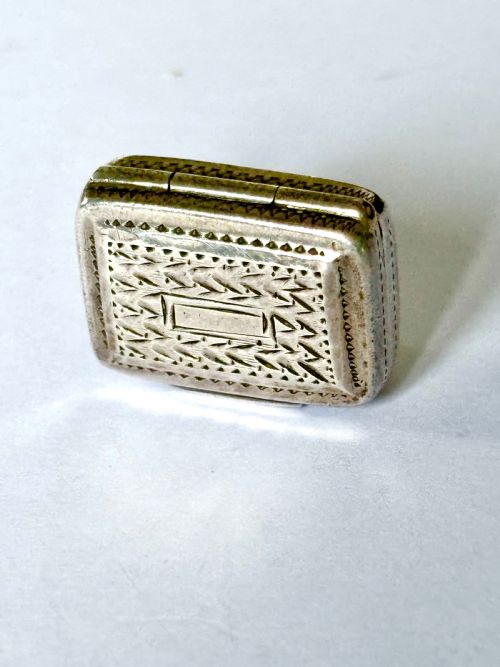
External decoration relied heavily on precision hand engraving, including bright-cut techniques and floral motifs. Selected pieces also incorporated hardstone panels such as agate, requiring careful bezel setting into the silver lid.
Engraved Silver Vinaigrette Retail Price Guide 2026
Typical asking prices for engraved silver vinaigrette among the pieces listed under this phrase on Sellingantiques today, from the lower quarter to the upper quarter. They describe what is for sale here now, not the wider market.
Agate stone panels appear inset into sterling silver lids alongside standard bright-cut engraved boxes.
Factors determining quality
Quality rests significantly on the intricacy and depth of the exterior engraving, with pictorial and castle top scenes representing superior craftsmanship. Plain or worn surface decoration places an item lower in the scale.
The complexity of the internal grille also dictates value, as pierced, engraved, and floral-cast grilles require far more skill than simple pierced sheets. Furthermore, the presence of original gilding inside the box and clear hallmarks add to the desirability.
Samuel Pemberton·Thomas Johnson·Nathaniel Mills·Edward Smith·John Bettridge·George Unite
The Engraved Silver Vinaigrette Glossary
- Vinaigrette
- A small pocket container fitted with a pierced internal grille, used to hold an aromatic vinegar-soaked sponge. This object served as a personal deodoriser in crowded or unsanitary environments.
- Silver Gilt
- Sterling silver that has been coated with a thin layer of gold. This technique prevented the acidic vinegar from tarnishing and corroding the interior of the box.
- Bright-Cut Engraving
- A surface decoration technique using a faceted graver to cut shiny geometric patterns into the metal. It catches the light effectively on small silver items.
- Chatelaine
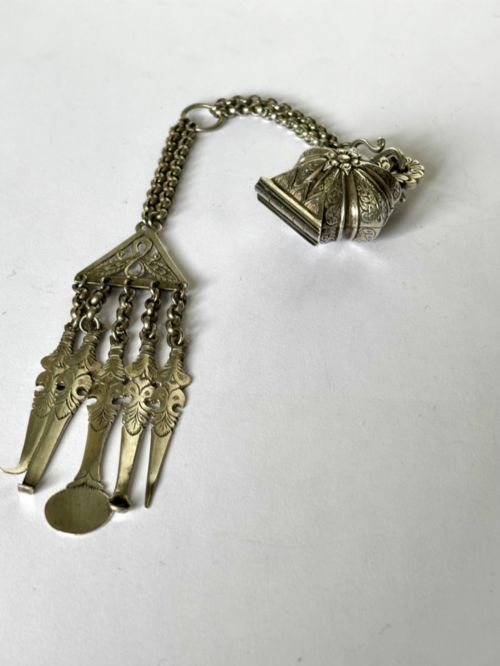
- A decorative belt hook worn with suspended chains carrying everyday household tools. Vinaigrettes sometimes hung from these assemblies alongside items like scent bottles and keys.
- Castle Top
- A specialised form of lid decoration stamped or engraved with a specific architectural landmark. Christchurch College, Oxford, appears in this manner.
Engraved Silver Vinaigrette: Frequently Asked Questions
What is inside a vinaigrette?
Inside the outer lid lies a hinged or removable pierced metal grille. Beneath this grille sits a small sponge that held aromatic vinegar.
Owners opened the box to inhale the refreshing scent when confronted with foul odours in public spaces.
How do I date a silver vinaigrette?
Dating relies heavily upon the stamped hallmarks found on the silver components. These marks typically indicate the assay office, the maker, and a specific year letter.
Stylistic clues such as bright-cut engraving point to the Georgian era, while heavier floral motifs often suggest the Victorian period.
Were these boxes used for snuff?
While similar in size to snuff boxes, vinaigrettes served a distinct purpose. Snuff boxes held dry tobacco powder for inhalation through the nose.
Vinaigrettes specifically required a pierced internal grille to diffuse liquid scents rather than dry powder.