


Antique Scent Box
An antique scent box holds the small vessels and aromatic compounds that people carried to refresh the air.
Antique Scent Box
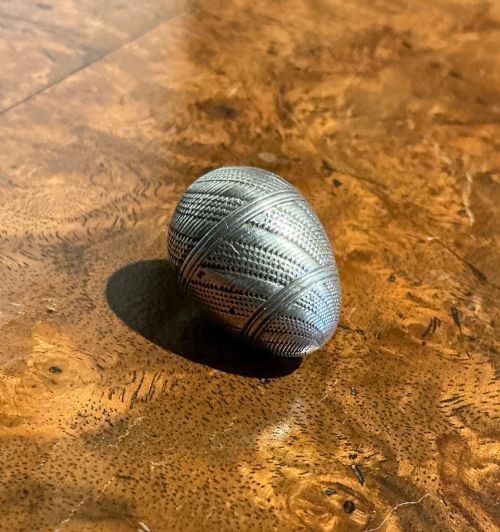
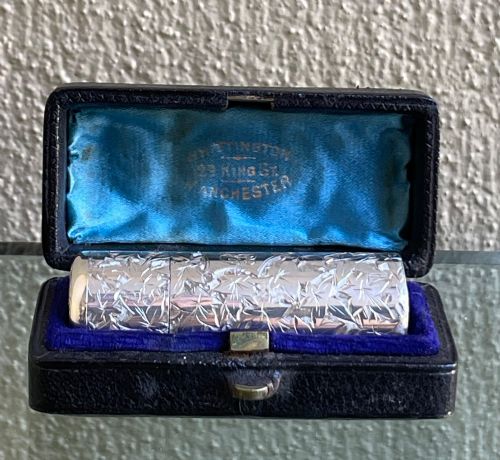
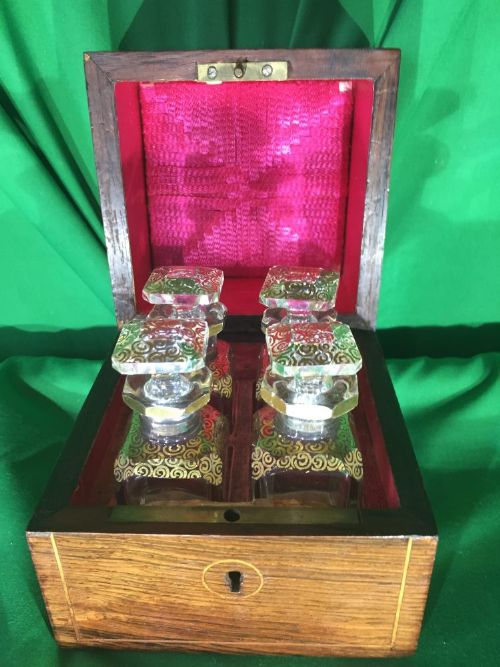
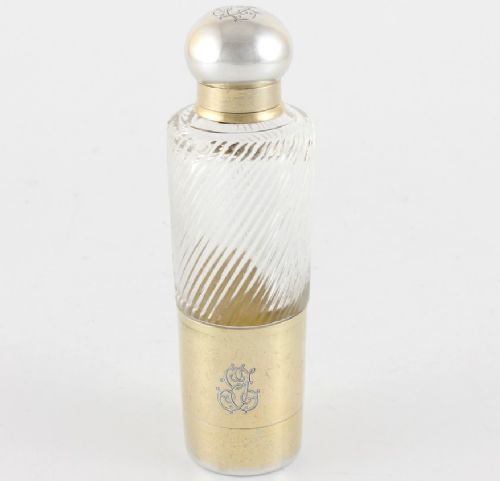
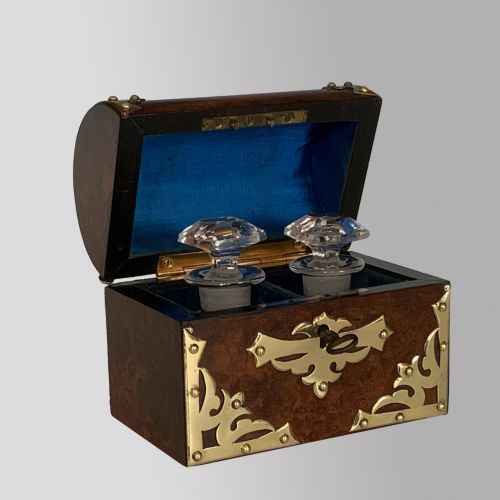
An antique scent box encompasses small portable receptacles, hinged caskets, and fitted cases designed to hold perfume bottles and vinaigrettes. The forms span Georgian silver vinaigrettes, Victorian timber caskets housing cut glass bottles, and French velvet or leather-lined travel boxes.
The pieces on this page appear in various styles ranging from Neoclassical and Georgian to Victorian, Edwardian, and Art Deco. Buyers encounter small pocket vinaigrettes alongside larger desktop scent caskets and multi-bottle travelling sets.
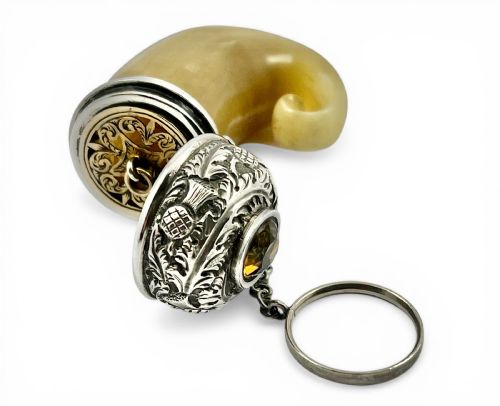
Origins include English workshops in Birmingham and London, Scottish craft traditions involving horn and citrine, and continental French or Swiss makers working in silver, gold, and enamel.
How They Were Made
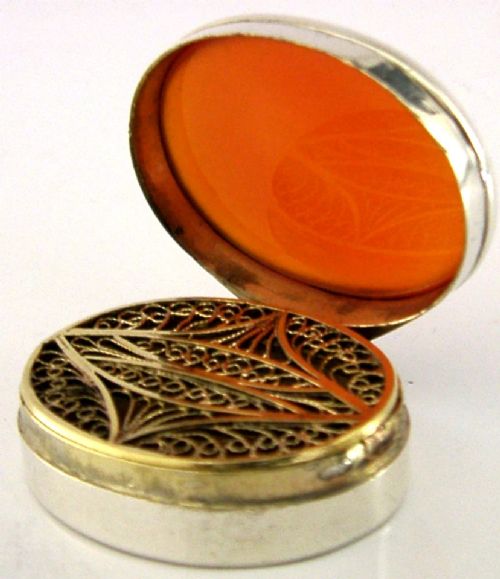
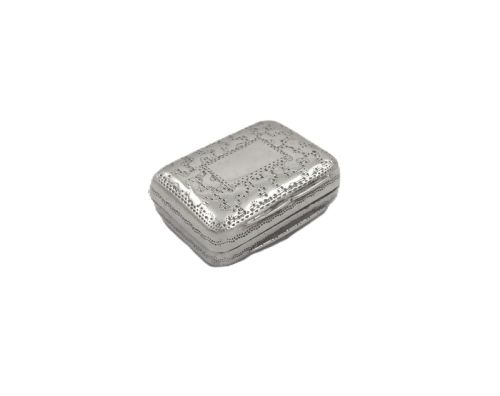
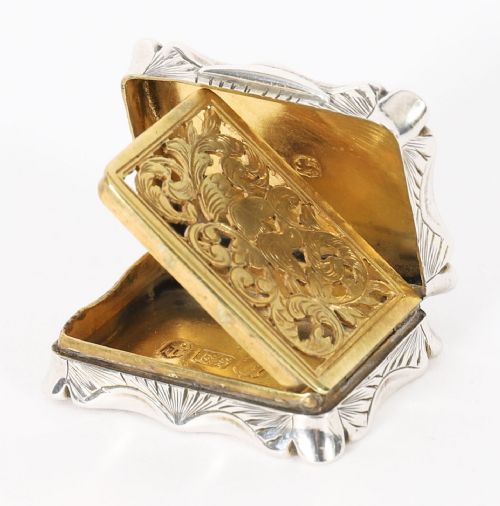
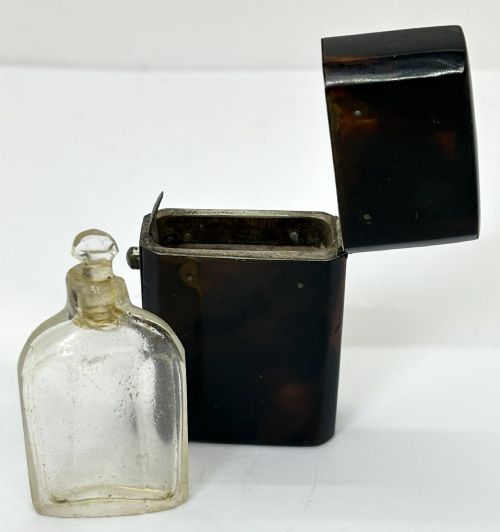
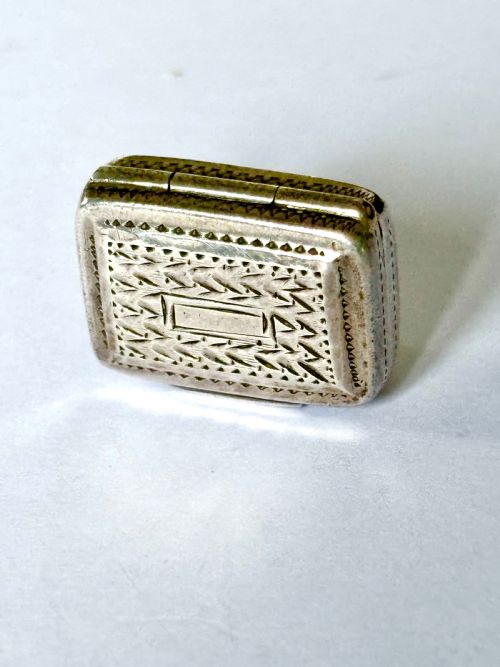
Metalsmiths formed pocket vinaigrettes from sterling silver and gold, often employing casting, engine-turning, and gilt interiors. Larger caskets utilised exotic hardwoods like coromandel, rosewood, and walnut, frequently mounted with brass, ormolu, and tortoiseshell.
Interiors combined cut glass and crystal scent bottles with fitted linings of velvet, silk, and leather. Specialised items incorporated stone insets such as orange agate, mother of pearl, and enamel decoration.
Materials span sterling silver, 18ct gold, tortoiseshell, cut glass, coromandel, rosewood, walnut, brass, velvet, and leather.
What Varies in Quality
The grade of an antique scent box depends on the integrity of its internal fitments, such as complete sets of matching cut glass bottles and original stoppers. Craftsmanship shows in the precision of silver grille pierced work within vinaigrettes and the tight joinery of wooden caskets.
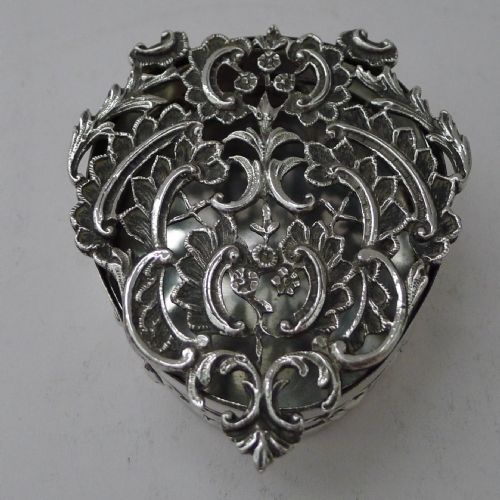
Artistic execution distinguishes standard production from exceptional pieces, visible in hand-painted papier-mâché, detailed cast architectural motifs like castle tops, and specialist materials including gold, enamel, and specific agates.
Horton & Allday·William Comyns·Edward Smith·Giles Loyer·Samson Mordan·John Bettridge·Rene Lalique·Tonnel Paris
The Antique Scent Box Glossary
- Vinaigrette
- A small pocket container featuring a pierced internal grill, designed to hold a sponge soaked in aromatic vinegar. These silver or gold boxes date predominantly from the Georgian and Victorian eras.
- Scent casket
- A larger fitted box or case constructed to house multiple perfume bottles, often lined with velvet or silk. They frequently include travel locks and matching cut glass or crystal flasks.
- Guilloche
- An ornamental pattern produced by a mechanical lathe that etches precise geometric designs into metal surfaces. This technique appears on silver and gold boxes from the nineteenth century.
- Ormolu
- Gilt bronze mounts applied to furniture and boxes during the eighteenth and nineteenth centuries. The technique involves coating bronze in a mercury-gold amalgam to achieve a rich gold finish.
- Tantalus
- A locking wooden frame or box that secures decanters or scent bottles while leaving their contents visible. The mechanism prevents unauthorized removal of the bottles without a key.
Antique Scent Box: Frequently Asked Questions
What is the difference between a vinaigrette and a scent bottle box?
A vinaigrette is a small pocket-sized metal box containing a pierced internal grill for aromatic vinegar sponges. In contrast, a scent bottle box is a larger fitted container designed to house standalone perfume flasks.
Vinaigrettes were carried for personal freshness in crowded spaces, whereas scent bottle boxes usually remained on a dressing table or travelled inside larger luggage sets.
How do I date an antique scent box?
Dating relies on hallmarks stamped on silver and gold components, specific wood choices like coromandel or rosewood, and stylistic indicators such as Georgian proportions or Art Deco geometry.
Makers' marks and assay office symbols provide precise years for precious metal pieces, while construction methods help place unmarked wooden and leather caskets into broader periods.
Were these boxes meant for travel?
Many examples were engineered specifically for journeys, featuring secure locks, fitted internal partitions, and sturdy leather or exotic wood construction. Travelling sets protected fragile glass bottles from movement.
Smaller items like pocket vinaigrettes and etuis were designed to be carried on a person or inside a pocket, while larger caskets served stationary roles in bedrooms.
What materials are typical for these pieces?
The exterior structures utilise sterling silver, gold, tortoiseshell, papier-mâché, and dense hardwoods such as rosewood, walnut, and coromandel. Interiors feature silk, velvet, leather, and cut glass.
Decorative elements incorporate agate, mother of pearl, brass mounts, enamel, and bronze, reflecting the dominant luxury aesthetics of their respective centuries.