



Engraved Silver Trophy
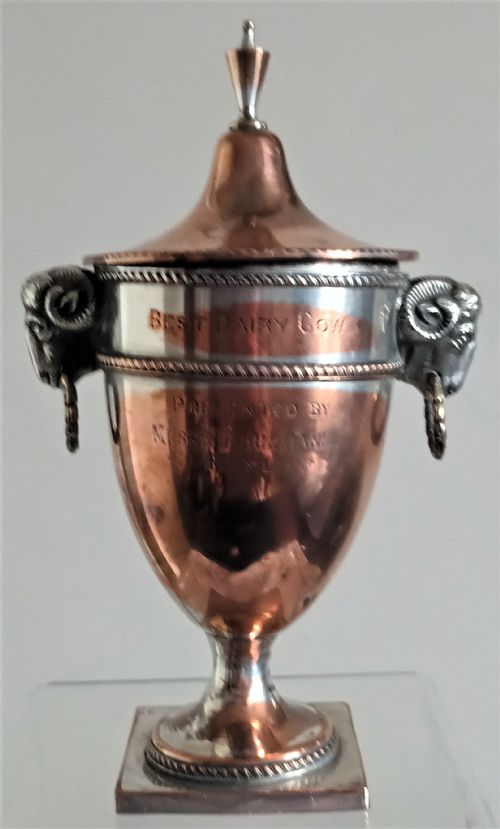
An engraved silver trophy carries the weight of a past victory, forged in sterling silver, silver plate or Old Sheffield Plate.
Engraved Silver Trophy
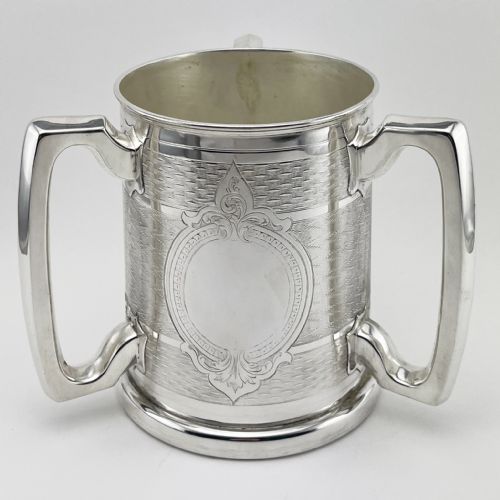
When you search for an engraved silver trophy, you encounter a specialised category of silverware encompassing presentation cups, loving cups, goblets and decorative urns. These objects commemorate sporting triumphs, military achievements and civic milestones, spanning periods from the eighteenth century through to the mid twentieth century.
The selection here draws from diverse regional traditions, ranging from Georgian Irish cups and English Victorian presentation pieces to Anglo Indian colonial items, Chinese export work and Art Deco cricket medals. Loving cups and pedestal goblets emerge frequently across both current listings and past sales, often featuring detailed hand engraving that records specific dates, clubs and events.
Materials and construction methods
Silversmiths utilised sterling silver, solid silver, silver plate and Old Sheffield Plate, occasionally applying silver gilt or parcel gilt finishes to accentuate inscriptions and decorative borders. Base metals such as copper and electroplated nickel silver support plated wares, whilst ebonised wood often forms the plinths and liners associated with these drinking vessels.
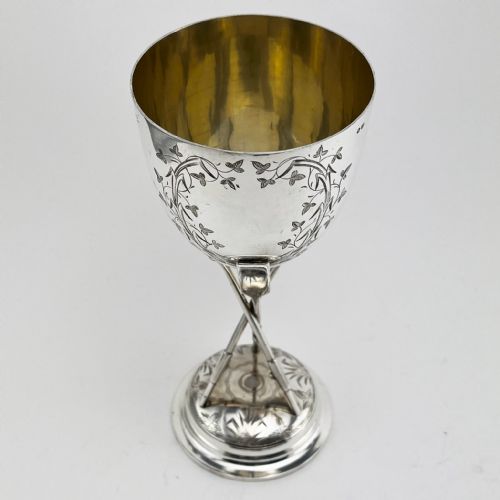
Craftsmanship relies on traditional raising, spinning and casting techniques to shape the body of the cup or urn, followed by manual chasing, repoussé work and hand engraving. Artisans inscribed dedication texts, crests and floral or fern motifs directly into the metal surface using gravers and burins.
Several trophies record nineteenth century cricket matches, preserving the names of local teams and victorious batsmen forever in silver.
Distinctions in quality and execution
Quality rests upon the crispness and depth of the hand engraving, the proportional balance of the vessel, and the integrity of the underlying metal. Pieces executed with bold, well composed lettering and intricate floral or fern chasing demonstrate superior workshop standards compared to simpler, mechanically etched examples.
The weight of the silver, the refinement of applied handles and cast mounts, and the preservation of original gilding or plating further distinguish finer items. Maker marks and clear hallmarks indicating specific assay offices provide additional assurance of provenance and material standard.
Henry Tatton & Son·Thomas Sutton·Barnard·Blackensee & Son
The Engraved Silver Trophy Glossary
- Old Sheffield Plate
- A composite material formed by fusing a sheet of silver to a thicker copper core, popular before the advent of electroplating.
- Loving Cup
- A large drinking vessel typically featuring two or three handles, designed to be passed amongst company during celebrations.
- Parcel Gilt
- An object made of silver where selected areas, often the interior of a goblet or specific decorative details, receive a coating of gold.
- Repoussé
- A metalworking technique where the artisan hammers the design from the reverse side to create a raised relief on the front.
- Assay Office
- An official body charged with testing the purity of precious metals and stamping items with appropriate hallmarks.
Engraved Silver Trophy: Frequently Asked Questions
What is an engraved silver trophy?
An engraved silver trophy is a commemorative metal vessel, such as a cup, goblet or urn, inscribed to mark a specific victory, club event or presentation.
These pieces were produced in sterling silver, silver plate and Old Sheffield Plate across the eighteenth, nineteenth and twentieth centuries.
How were these trophies used?
Many function as presentation pieces for sporting achievements, military regiments and civic competitions, often featuring names of winners and dates.
Some larger examples, such as loving cups, were designed to be shared during communal toasts at banquets and club gatherings.
How do I date a silver trophy?
Dating relies primarily on official hallmarks stamped into the metal, which indicate the assay office and year of manufacture.
Stylistic indicators such as Victorian aesthetic movement engraving, Georgian proportions or Art Deco geometry also help determine the period.
How should I display silver trophies?
Silver trophies suit placement on sideboards, mantelpieces or within cabinet displays away from direct sunlight and excessive moisture.
Routine maintenance involves gentle cleaning with appropriate silver polish to preserve the engraved details and original finish.