




Engraved Silver Milk Pitcher
An engraved silver milk pitcher brings the bright elegance of the Georgian and Victorian eras straight to the breakfast table.
Engraved Silver Milk Pitcher
An engraved silver milk pitcher spans the Georgian and Victorian periods, appearing in forms such as cream jugs, milk jugs, and pedestal cream jugs. These pieces serve as essential tea accessories designed to complement the broader tea service.
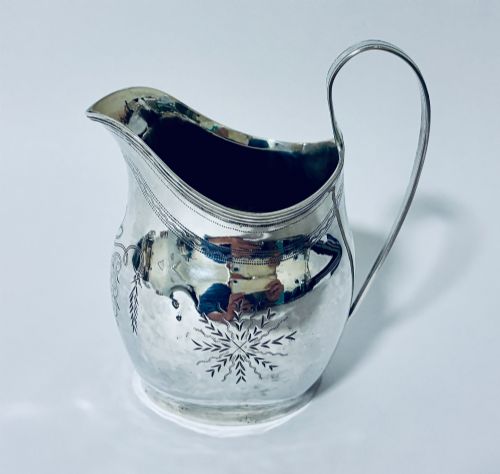
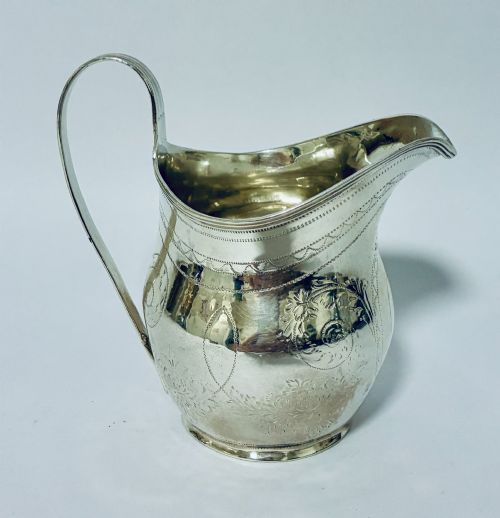
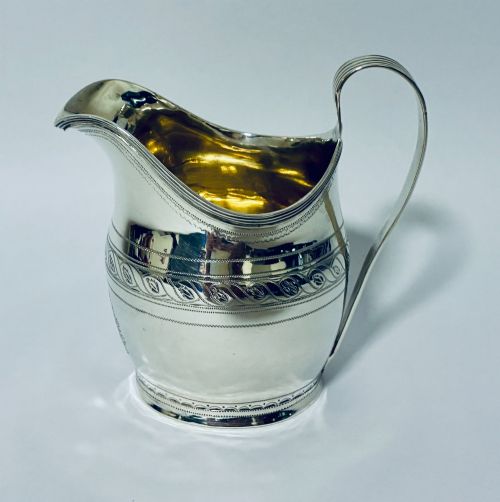
The version most commonly met on this page is the Georgian cream jug, often featuring bright cut engraving and sterling silver construction. Makers from the late eighteenth century onward shaped these vessels for daily domestic use.
Examples stretch from the eighteenth century into the late nineteenth century, including specific dated items from eighteen hundred and eighteen seventy-five. Collectors encounter various styles ranging from early George III pieces to later Victorian lidded designs.
Materials and construction
Silversmiths utilised sterling silver and solid silver for these pitchers, occasionally applying gilt or a gold wash to the interior surfaces. Structural variety includes pieces with woven cane handles or hand-engraved floral designs.
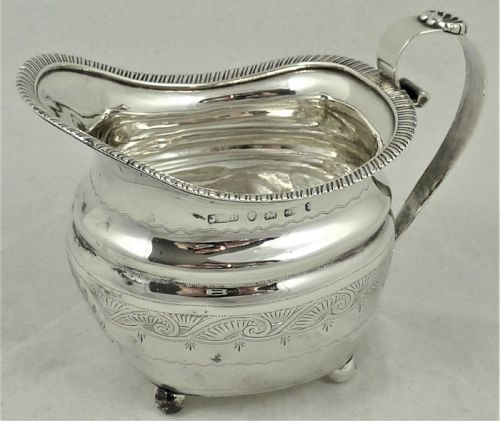
Decoration relies heavily on hand engraving and bright cut techniques applied directly to the silver body. Workshops in London stamped their creations with hallmarks that record the year of production and the maker's mark.
Listings feature sterling silver and solid silver pieces spanning the Georgian and Victorian periods, alongside specific items with gold wash interiors.
Assessing the craftsmanship
Quality rests upon the crispness of the hand engraving and the integrity of the silver form. Pieces featuring intricate floral designs or bright cut work demonstrate superior artistic execution by skilled silversmiths.
The weight of the solid silver and the balance of handles, whether formed in metal or woven cane, distinguish finer examples. Maker attribution to notable workshops further elevates the standing of an individual milk jug.
John Emes·Peter and Ann Bateman·Robert Hennell
The Engraved Silver Milk Pitcher Glossary
- Bright cut
- A style of engraving characterised by faceted cuts made with a sharp V-shaped graving tool that reflects light brilliantly.
- Sterling silver
- An alloy comprising ninety-two point five percent silver by mass, forming the standard material for quality domestic hollowware.
- Gilt
- A thin layer of gold applied to the interior silver surface to protect the metal from the acidic nature of dairy.
- Pedestal
- A raised foot or base that elevates the body of the jug above the surface of the table.
Engraved Silver Milk Pitcher: Frequently Asked Questions
What is an engraved silver milk pitcher?
These vessels are small serving containers designed for milk or cream during tea service, fashioned from sterling or solid silver. Silversmiths decorated the exteriors using hand-engraved floral motifs and bright cut patterns.
Originating primarily across the Georgian and Victorian eras, they function as both practical table wares and decorative silver antiques.
How do I date a silver jug?
Dating relies heavily on official hallmarks stamped into the silver, which indicate the assay office, the year of testing, and the maker. Stylistic clues such as bright cut engraving or pedestal forms also point toward specific decades like the late eighteenth century.
Examining the handle construction and overall shape helps narrow down whether a piece belongs to the Georgian or Victorian period.
Are these pitchers meant for daily use?
Many buyers choose to use their silver cream jugs for serving milk or cream during meals, as solid silver is remarkably durable. The interior gold wash found on some pieces specifically protects the silver from dairy acids.
Gentle hand washing in warm soapy water keeps the metal bright without harming the historic engraving or any woven cane elements.
What styles are available?
The selection includes classical George III designs alongside later Victorian lidded jugs and pedestal forms. Decorative choices range from simple polished surfaces to elaborate hand-engraved floral patterns and bright cut borders.
Some unusual variations incorporate woven cane handles, offering a distinct textural contrast to the smooth silver body.