


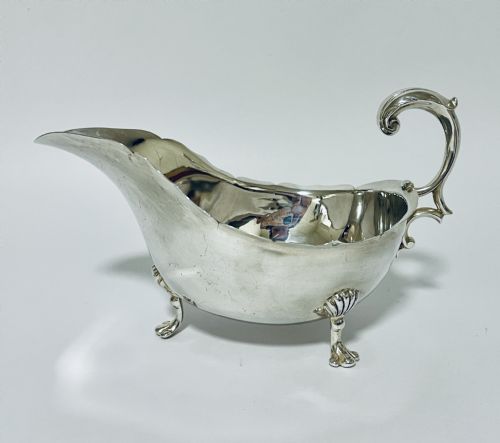


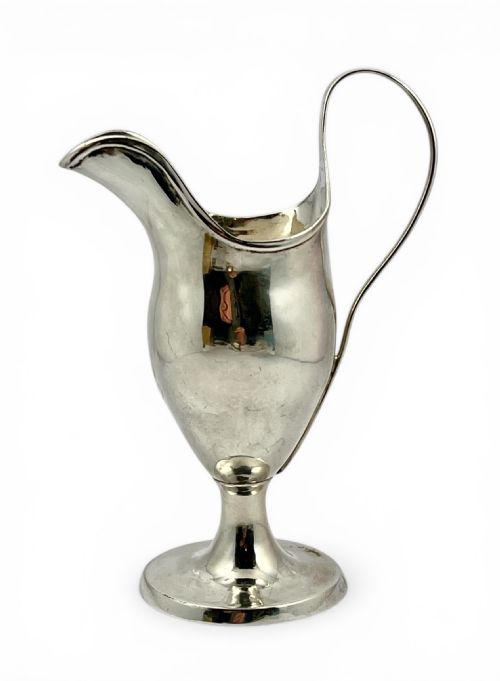


Georgian Sterling Silver Pitcher
A georgian sterling silver pitcher brings robust metalwork and classic neoclassical lines directly to the table.
Georgian Sterling Silver Pitcher
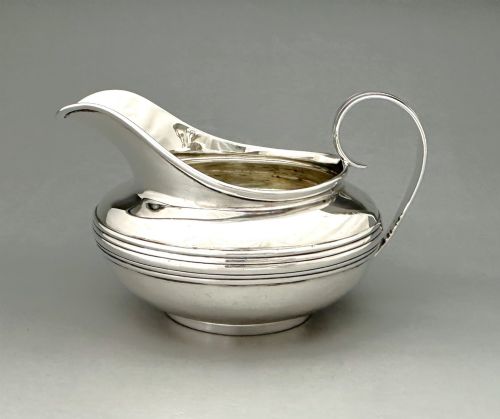
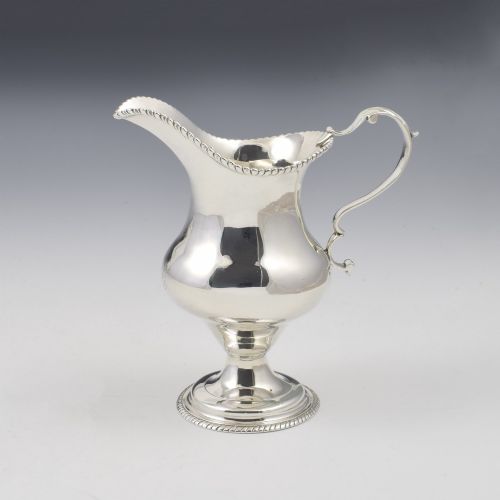
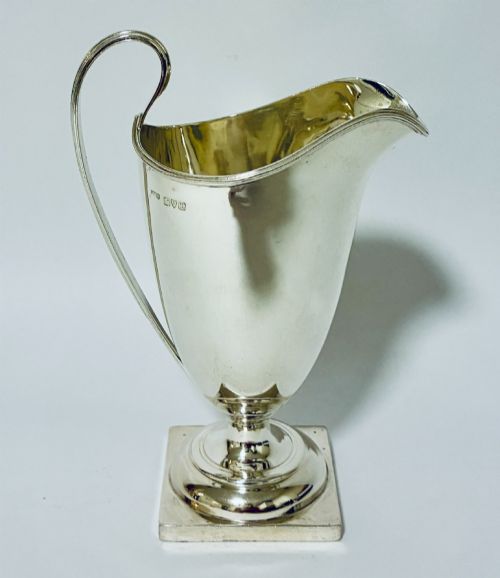
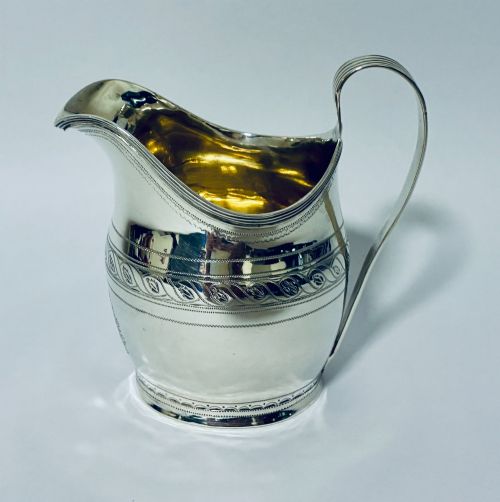
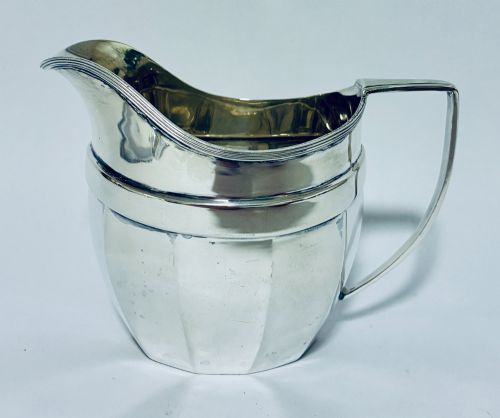
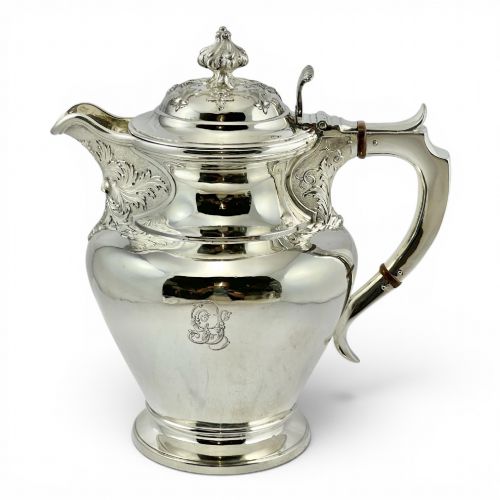
When you search for a georgian sterling silver pitcher, you encounter domestic vessels designed for serving milk, cream, water, or sauce. The pieces appearing here span compact sparrow beak cream jugs, tall helmet jugs, and substantial lidded tankards with spouts.
Most items on this page originate from the eighteenth and early nineteenth centuries, though later revivals also appear. Makers employed distinct regional styles, from Scottish provincial forms to traditional London-hallmarked bodies.
Materials and construction methods
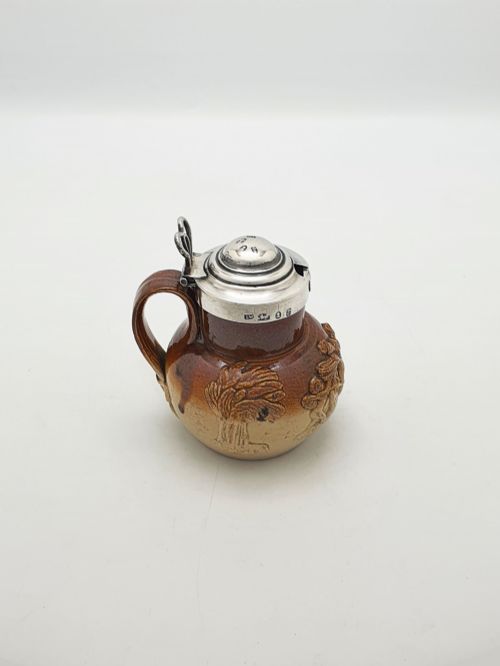
Silversmiths constructed these vessels primarily from sterling silver, occasionally combining stoneware bodies with sterling silver collars and hinged lids. Select pieces incorporate gold wash or silver gilt surfaces to accent the interior and handle details.
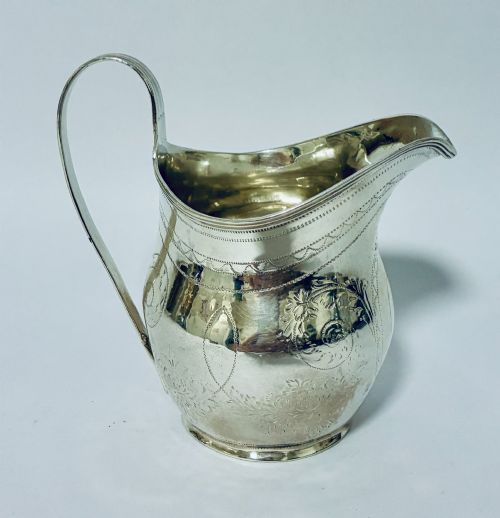
Workshops shaped the metal through hammering and soldering, adding applied wire borders, cast handles, and detailed bright-cut engraving. Hallmarks stamped directly into the silver record the assay office, date letter, and maker's mark.
The listings show materials including sterling silver, silver, wood, gilt, stoneware, and gold wash across Georgian and Victorian periods.
Standards of craftsmanship
Quality rests in the crispness of the chasing, the balance of the handle, and the weight of the silver relative to the vessel's size. Superior examples exhibit clean solder seams, sharp bright-cut engraving, and well-defined maker marks without heavy polishing wear.
The distinction between standard domestic ware and top-tier workshop production lies in the precision of the casting and the proportional harmony of spout, body, and foot.
Stalker & Mitchison·James Gordon·John Emes·Peter & Ann Bateman·George Unite·Robert Pringle & Sons·John Scofield
The Georgian Sterling Silver Pitcher Glossary
- Sterling silver
- An alloy consisting of ninety-two point five percent silver and seven point five percent other metals, chosen for durability in tableware. This standard has governed British silver production for centuries.
- Bright-cut engraving
- A faceted surface cutting technique that creates sparkling geometric and floral patterns. Artisans used sharp gravers to cut shallow angles that reflect light from multiple directions.
- Sparrow beak
- A small, pinched-spout form typical of early eighteenth-century cream jugs. The profile resembles the short, sharp beak of a sparrow.
- Hallmark
- An official stamp applied by an assay office to guarantee metal purity. These marks typically include a maker's mark, standard mark, town mark, and date letter.
Georgian Sterling Silver Pitcher: Frequently Asked Questions
What is the difference between a cream jug and a milk jug?
Milk jugs generally offer a larger capacity to accommodate family tea service, while cream jugs are smaller and more compact. Both share similar handle and spout configurations.
Review the overall scale and volume when comparing pieces from the same decade. The distinction rests purely on functional capacity rather than decorative technique.
How should I clean antique sterling silver?
Clean antique sterling silver gently with a soft cloth and a specialised silver polish designed to preserve patination. Avoid harsh abrasive compounds that wear away bright-cut engraving and crisp hallmarks.
Store the vessel in a dry environment free from chemical fumes. Regular dusting prevents tarnish build-up without requiring frequent polishing.
What do bright-cut engravings look like?
Bright-cut engravings display sharp, faceted cuts that catch the light against plain silver surfaces. Artisans created these linear patterns using angled gravers during the late eighteenth and early nineteenth centuries.
Look closely at the shoulder or body of the vessel for repeating geometric borders. This technique adds texture without increasing the physical weight of the piece.