

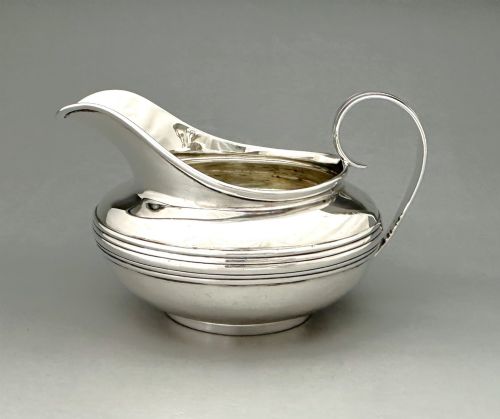
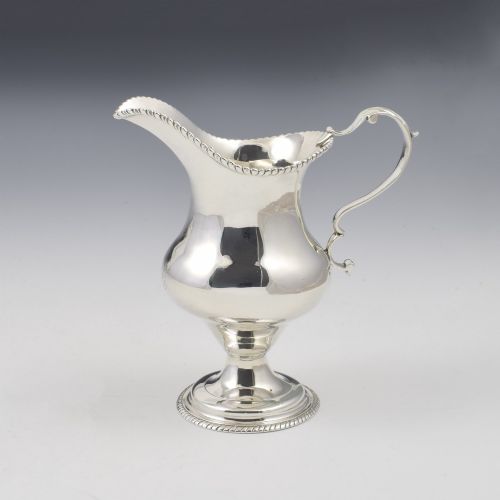
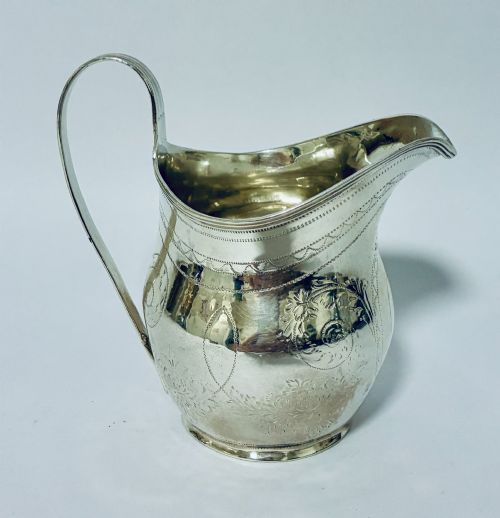
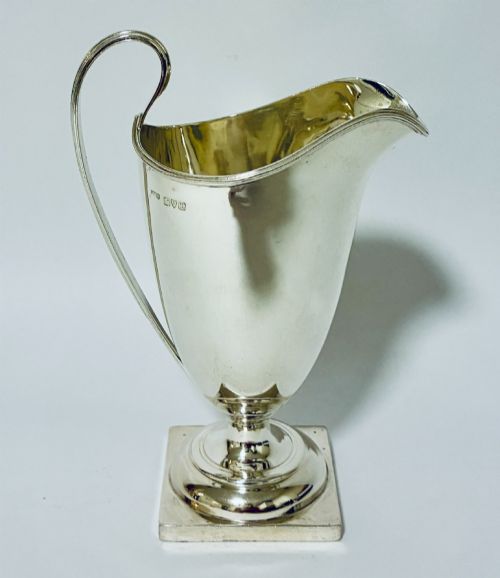







Georgian Sterling Milk Pitcher
These georgian sterling milk pitcher selections are solid silver table vessels shaped for pouring cream, prized for their classic forms and period craftsmanship.
Georgian Sterling Milk Pitcher
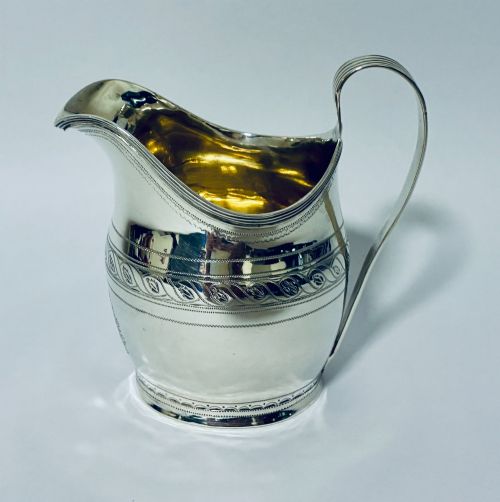
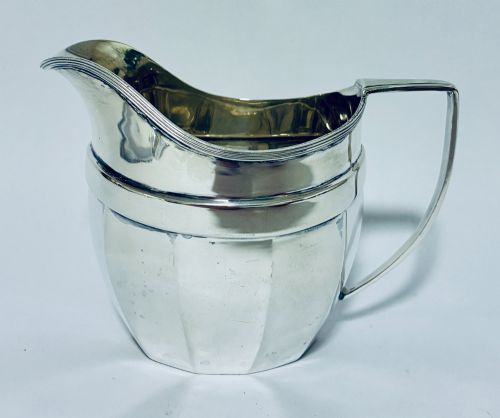
When you examine a georgian sterling milk pitcher on this page, you encounter small pouring vessels designed for tea and coffee service. The selection spans the eighteenth century through the regency and victorian eras, alongside later nineteenth and twentieth century examples.
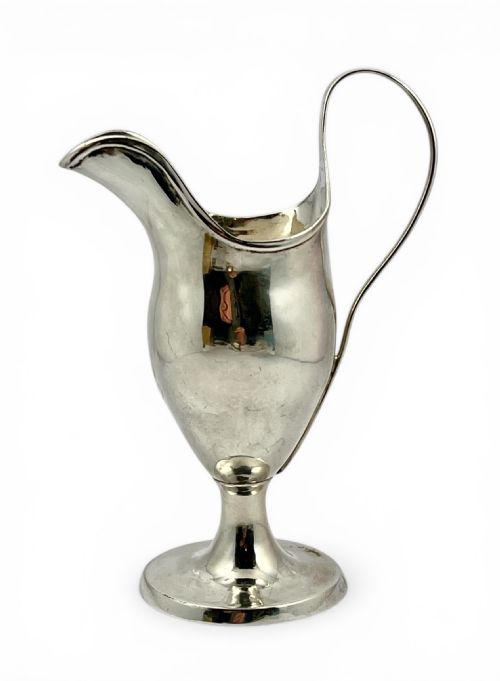
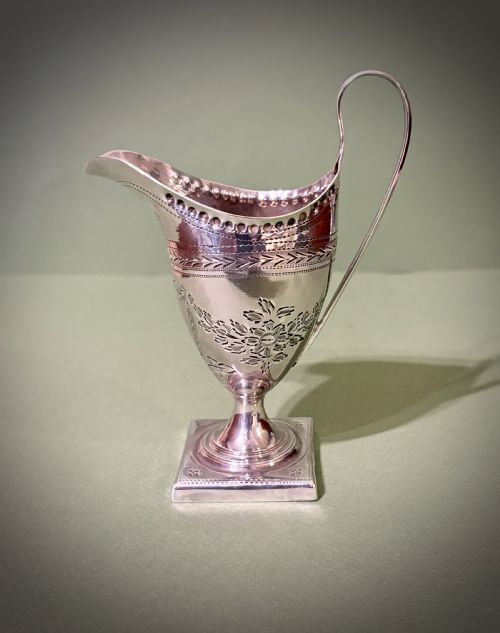
The forms vary from early sparrow beak jugs to helmet profiles and bright cut designs. Most pieces on this page originate from the georgian period, featuring provincial and london hallmarked items.
How they were made
Silversmiths constructed these jugs from sterling silver, shaping the metal through raising and hammering techniques. Some pieces incorporate a gold wash or silver gilt interior.
Decoration includes bright cut engraving and neoclassical motifs applied by hand during manufacture.
Listings feature sterling silver and silver gilt materials across georgian, regency, and victorian periods.
What varies in quality
Quality rests in the crispness of the chasing and engraving, and the structural integrity of the handle and spout. Heavier gauge silver provides a more substantial feel in the hand.
Maker marks and clear hallmarks contribute to the distinction of individual pieces across different reigns and periods.
Stalker & Mitchison·James Gordon·John Emes·Peter & Ann Bateman·George Unite·Robert Pringle & Sons
The Georgian Sterling Milk Pitcher Glossary
- Sterling silver
- A standard alloy consisting of 92.5 percent silver by mass and 7.5 percent other metals, usually copper. This composition provides durability for domestic tableware.
- Sparrow beak jug
- An early eighteenth century form of cream jug featuring a narrow, projecting spout resembling a bird's beak. This profile characterises pieces from the reigns of George I and George II.
- Helmet cream jug
- A vessel shape tapering outward toward the top, mimicking the profile of a classical helmet. This style appears frequently in George III examples.
- Bright cut engraving
- A surface decoration technique using faceted angled cuts to catch the light. It creates a glittering geometric or floral pattern on the silver body.
- Silver gilt
- Sterling silver that has been coated with a thin layer of gold on the interior or exterior. This treatment protected the metal from tarnishing by acidic cream.
Georgian Sterling Milk Pitcher: Frequently Asked Questions
How do I identify a georgian milk pitcher?
Check for hallmarks indicating London, provincial assay offices, or specific reigns from George I to George IV. The presence of sparrow beak forms or bright cut engraving often points to the eighteenth century.
Examine the weight and construction methods, as domestic silver from this era relied on hand raising rather than modern industrial pressing.
What is a sparrow beak jug?
A sparrow beak jug is an early form of cream container characterised by its small size and distinctively narrow, pointed lip. These pieces typically date from the first half of the eighteenth century.
The compact body usually rests on a plain rounded base, designed for serving small quantities of cream with tea.
Why do some jugs have gold inside?
Gilt interiors, or gold wash, protected the sterling silver from the corrosive effects of dairy cream and vinegar. This interior plating prevented tarnishing and metallic tastes.
Silversmiths applied a thin layer of gold to the inner bowl while leaving the exterior polished silver.
How should I clean antique silver?
Wash silver gently in warm water with mild soap and dry immediately with a soft cloth. Avoid abrasive dips or harsh commercial polishes that remove the historic surface layer.
Regular handling helps maintain a natural glow without requiring aggressive cleaning methods.