

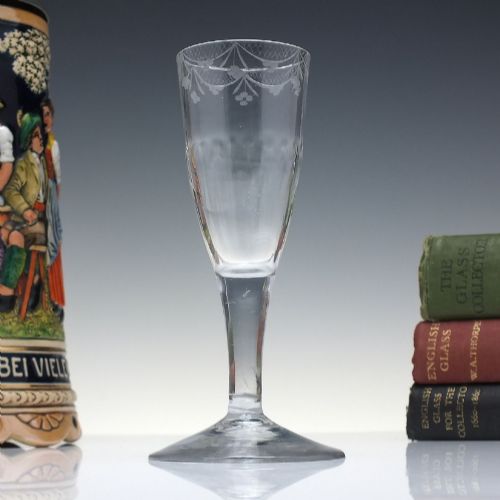
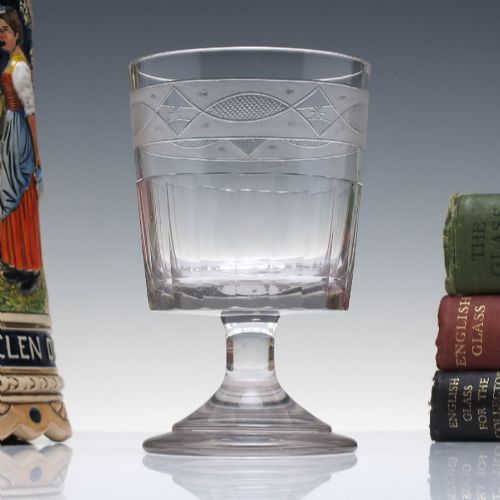
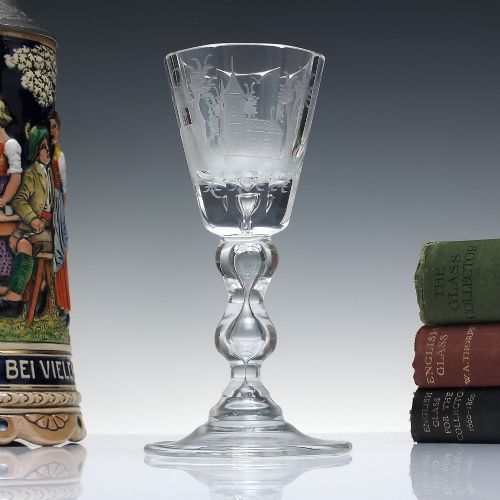
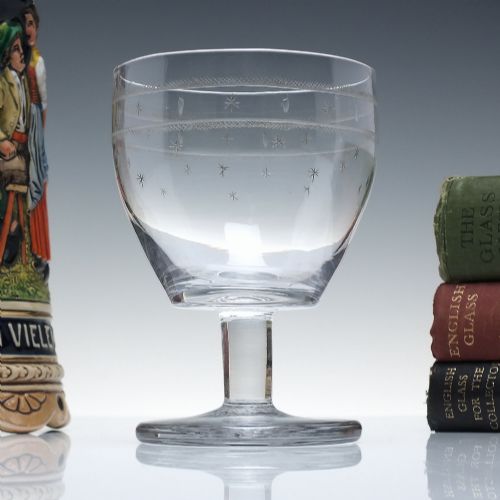

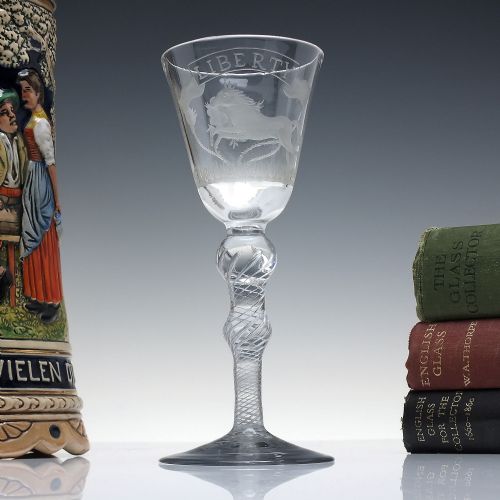
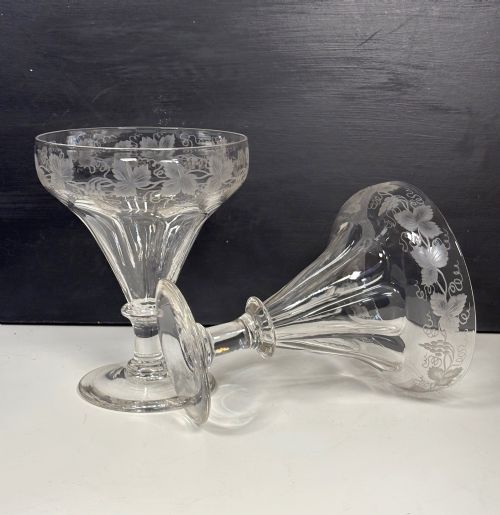
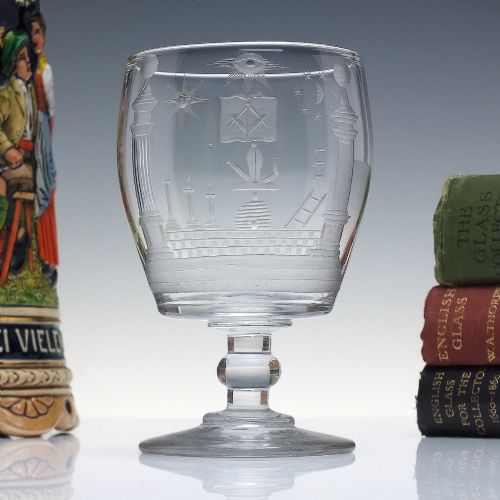
Engraved Flint Glass Goblet
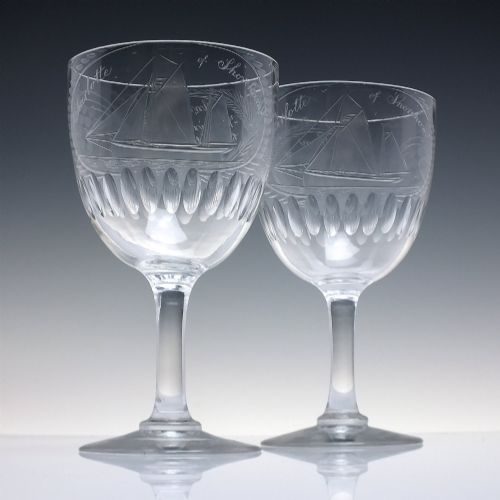
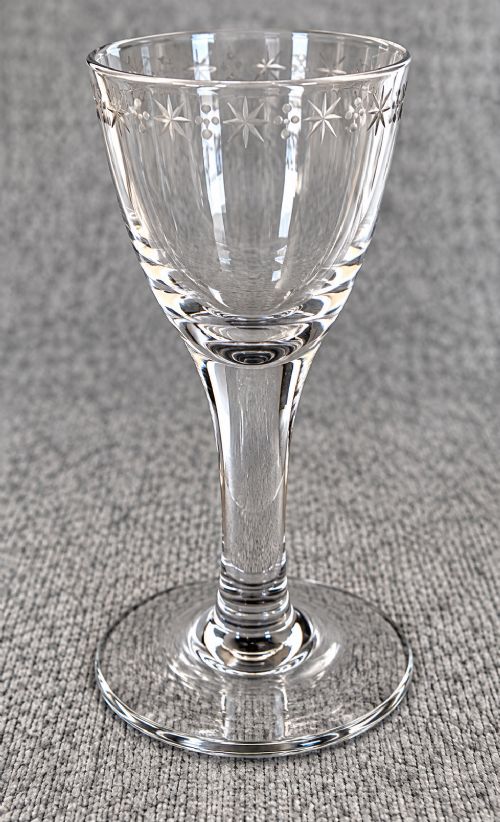
These heavy, resonant vessels are engraved flint glass goblet examples, prized for their bright handle and deep wheel-carved ornament.
Engraved Flint Glass Goblet
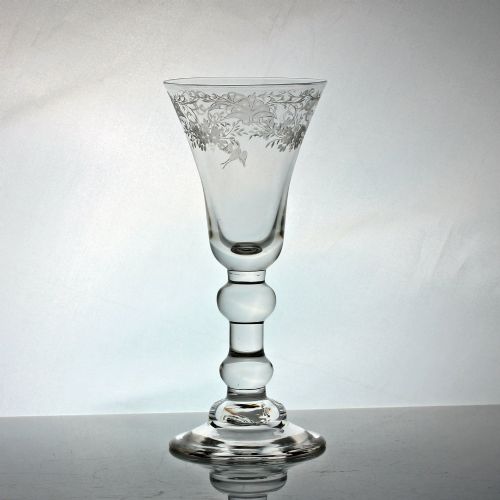
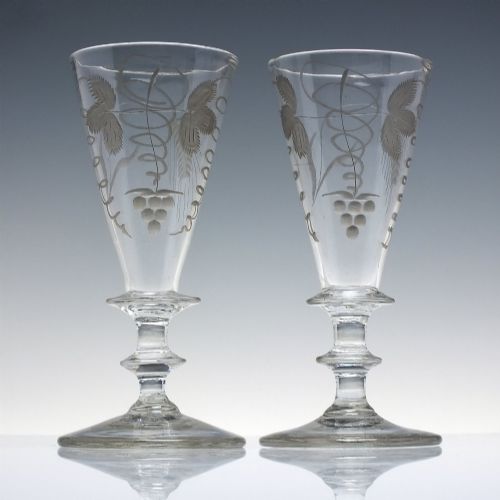
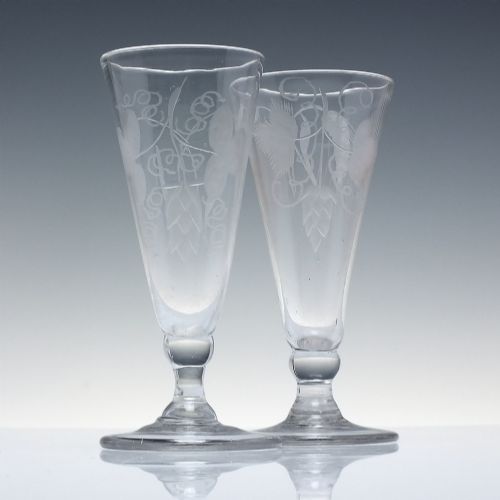
An engraved flint glass goblet represents the heavy, light-catching drinking vessels produced across the eighteenth and nineteenth centuries. Collectors seeking an engraved flint glass goblet encounter forms ranging from deep bell-bowl rummers to tall baluster ale glasses.
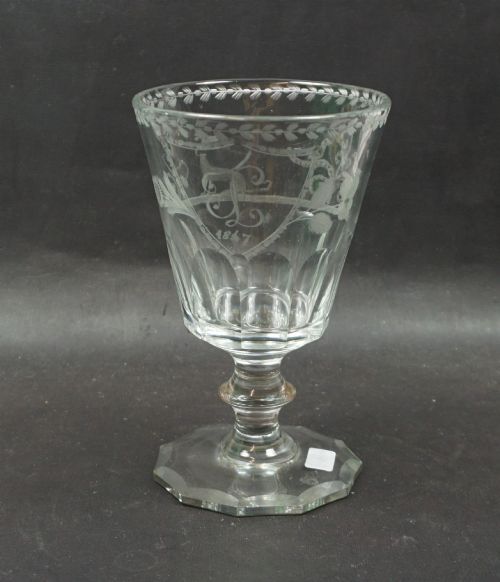
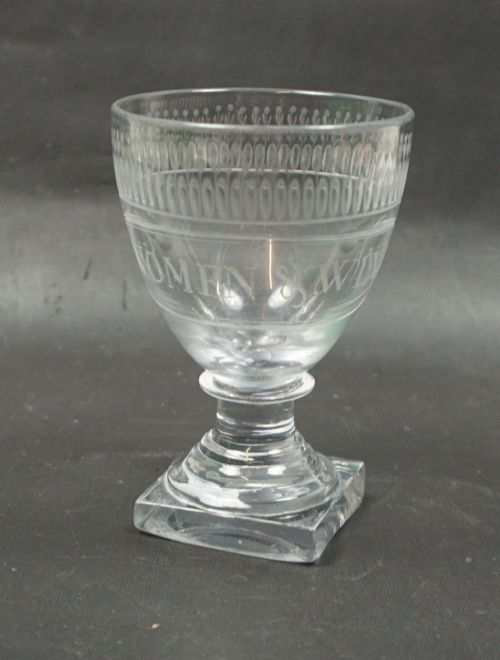
The pieces on this page span the Georgian and Victorian eras, taking the shape of heavy rummers, presentation goblets, and marriage vessels. English and continental workshops produced these heavy lead glass pieces for toasts, commemorations, and daily dining.
The designs draw on Georgian baluster traditions, Rococo motifs, and Victorian commemorative styles. Each engraved flint glass goblet displays surface decoration cut into clear crystal, varying from hop and barley motifs to Masonic emblems and love birds.
Materials and construction
Makers fashioned these pieces from heavy lead glass, clear crystal, and flint glass, utilising high lead content to achieve weight and clarity. The metal allowed for deep wheel engraving and faceted stems that caught the candlelight.
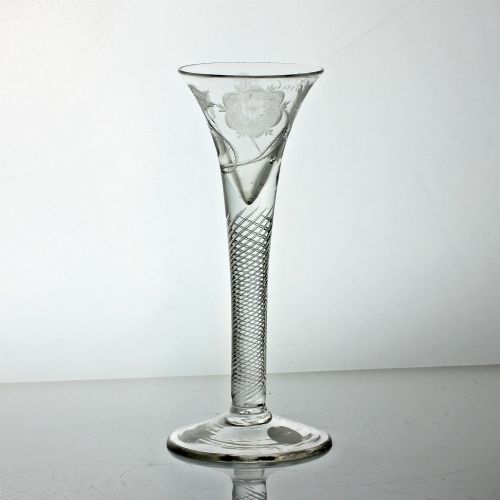
The production combined free-blowing into moulds or forming by hand, followed by intricate wheel-cutting and diamond-point engraving. Master hands shaped domed feet, folded rims, and complex air-twist or opaque-twist stems while the metal remained hot.
Engraved Flint Glass Goblet Retail Price Guide 2026
Typical asking prices for engraved flint glass goblet among the pieces listed under this phrase on Sellingantiques today, from the lower quarter to the upper quarter. They describe what is for sale here now, not the wider market.
The listings on this page span the Georgian and Victorian periods, utilising clear lead glass, flint glass, and crystal.
Distinctions in quality
The clarity and weight of the metal set the foundation for a superior vessel. Heavy lead glass with high refractive qualities creates a sharper ring and deeper brilliance than standard soda metal.
The precision and depth of the wheel engraving determine the artistic merit. Crisp, confident lines and well-composed pictorial scenes distinguish master glass-cutters from routine domestic production.
The Engraved Flint Glass Goblet Glossary
- Flint glass
- A heavy, clear glass containing lead oxide, known for its high refractive index and bright resonance when struck.
- Rummer
- A large, heavy drinking glass with a short stem and ovoid or bucket bowl, popular for ale and wine.
- Baluster stem
- A thick, swelling stem form reminiscent of architectural balusters, common in eighteenth-century drinking vessels.
- Air twist
- A decorative stem enclosing spiral threads of trapped air created during the drawing and twisting of the glass.
- Firing foot
- A heavy, thickened glass foot designed to withstand the sharp impact of being slammed onto a table during toasts.
Engraved Flint Glass Goblet: Frequently Asked Questions
How do I date an old glass goblet?
Dating relies on observing the form of the bowl, the construction of the stem, and the shape of the foot. Eighteenth-century pieces often display heavy baluster stems or folded feet, while Victorian examples tend toward larger, heavier rummers with wheel-engraved commemorative inscriptions.
The pontil mark on the underside also offers clues regarding age and manufacturing method. Examining the wear patterns on the base helps confirm the handling history over the centuries.
What is the difference between flint glass and crystal?
Flint glass and lead crystal both contain significant amounts of lead oxide, which imparts brilliance, weight, and a clear musical ring. Historically, English flint glass was developed to emulate the heavy, clear glass prized by collectors.
Modern terminology often groups these terms together, but eighteenth-century flint glass carried a specific weight and optical clarity suited to deep wheel engraving.
How were these goblets used historically?
These vessels served formal dining tables, taverns, and ceremonial gatherings for drinking wine, ale, and beer. Many recorded specific toasts, marriages, political loyalties, or maritime presentations.
Specialised forms like marriage goblets and Masonic rummers marked significant personal and social milestones, often passed down as family heirlooms.
Can I use antique glass for drinking?
Using antique lead glass for occasional toasts remains possible, provided the vessels are handled with extreme care. Hand washing in tepid water protects the fragile metal from thermal shock and modern detergents.
Most collectors prefer to display these pieces rather than risk damage to the historic glass surfaces and delicate engraved details.