







Cut Crystal Rummers
Cut crystal rummers are heavy drinking vessels made for spirits and wine, prized for their deep wheel-cut decoration and solid presence on the table.
Cut Crystal Rummers
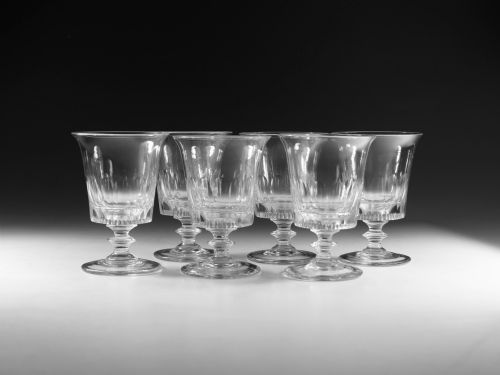
Cut crystal rummers represent a sturdy form of drinking vessel designed during the Georgian and Victorian eras for everyday enjoyment of spirits, beer, and wine. These heavy glasses appear in forms ranging from pairs to sets of six, reflecting domestic entertaining habits across the nineteenth century.
The most common examples on this page date from the Georgian and Victorian periods, showcasing traditional English craftsmanship. Buyers encounter forms with square lemon squeezer feet, baluster stems, and bucket bowls alongside large table rummers.
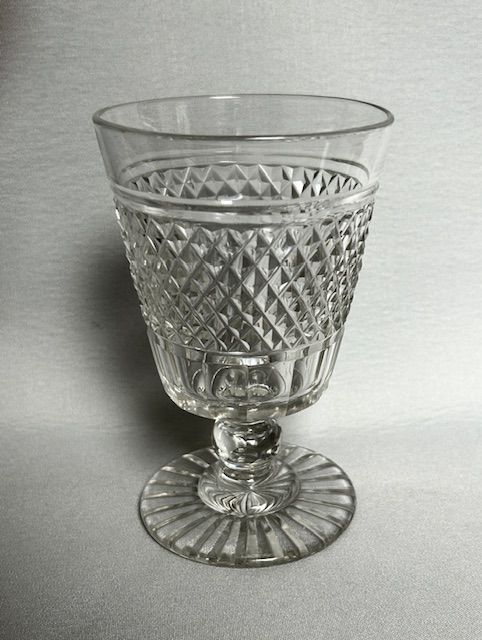
Makers produced these pieces using lead glass, flint glass, and clear glass, occasionally introducing cranberry glass for coloured variety. Engraved details and hobnail cutting frequently adorn the surface of these substantial drinking glasses.
Materials and Techniques
Craftsmen manufactured these drinking vessels using heavy lead glass and flint glass, which provided the necessary weight and clarity for deep decorative cutting. The high lead content allowed glassmakers to achieve brilliant light refraction across the surface of each bowl.
Workers shaped the glass while hot, applying stems and feet before utilising rotating wheels to cut geometric patterns like hobnail designs into the body. Artisans sometimes finished the pieces with fine wheel engraving to complement the bolder facet cuts.
Materials recorded across the selection include lead crystal, flint glass, cranberry glass, and standard clear glass.
Assessing Quality
Quality in these drinking vessels depends heavily on the crispness and depth of the wheel-cut decoration and the overall weight of the metal. Superior examples exhibit sharp, precise facet cutting that catches the light cleanly, whereas lower-grade pieces show softer, shallower incisions.
Proportion and stability also distinguish finer items, particularly those featuring square lemon squeezer feet or well-balanced baluster stems. The clarity of the lead glass and the absence of heavy internal distortion mark the difference between standard production and exceptional work.
The Cut Crystal Rummers Glossary
- Rummer
- A large, heavy drinking glass designed for wine, grog, or beer during the eighteenth and nineteenth centuries. These vessels typically feature a short stem and a capacious bowl.
- Hobnail cut
- A raised, multi-faceted decorative pattern resembling the head of a traditional clout nail. This texture provides both tactile grip and brilliant light reflection.
- Lemon squeezer base
- A square, pressed glass foot with sloping sides that mimics the shape of a kitchen juicer. These bases are characteristic of late Georgian table glass.
- Baluster stem
- A thick, profiled stem featuring swelling curves reminiscent of architectural balusters. This form adds substantial weight and grip to drinking vessels.
- Flint glass
- A heavy, clear glass containing lead oxide that increased refractive index and brilliance. The term often denotes high-quality historic tableware.
Cut Crystal Rummers: Frequently Asked Questions
What were rummers used for?
These large vessels served robust drinks such as ale, punch, and fortified wines during family meals and gatherings.
Their substantial size and heavy base made them practical for daily use on dining tables across the Georgian and Victorian periods.
How do I date an old rummer?
Dating relies on examining the shape of the bowl, the form of the stem, and the style of the foot. Square lemon squeezer feet and bucket bowls point toward the Georgian era, while later Victorian pieces often show different proportions.
Tool marks, pontil scars on the underside, and the weight of the lead glass also offer key clues to the manufacturing period.
Can I use antique rummers for drinks?
Many collectors enjoy using these sturdy glass vessels for modern dining, provided they are hand-washed with care.
The robust lead glass makes them surprisingly durable, though rapid temperature changes should be avoided to protect the historic material.
Why are some rummers so heavy?
The inclusion of lead oxide in the glass batch increased the overall density and weight of the metal. This heavy composition was intentional, giving the vessels stability on uneven tables and allowing deeper facet cutting.