







Large Glass Wine Goblets
Large glass wine goblets are substantial drinking vessels that bring historic presence and tactile weight to the table.
Large Glass Wine Goblets
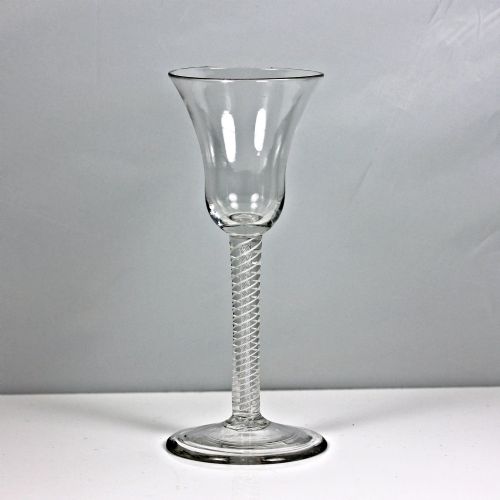
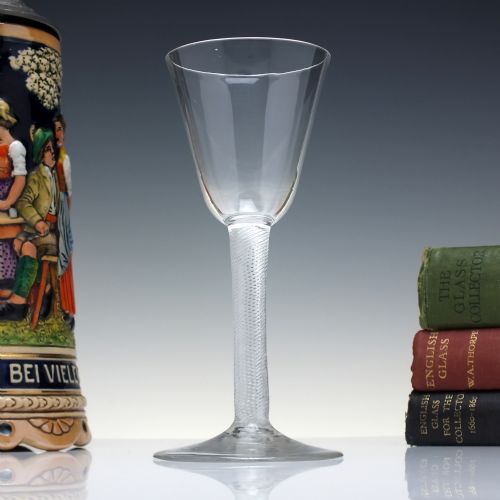
When you search for large glass wine goblets, you encounter drinking vessels spanning the Georgian, Victorian, and Edwardian periods, including robust rummers, roemers, and air twist wine glasses.
The versions you are most likely to meet on this page include Victorian cut glass rummers, Georgian ovoid bowl goblets, and engraved ale or wine glasses from the nineteenth century.
These items encompass functional table glass and decorative pieces originating from British and European workshops, featuring forms designed for capacity and display.
How they were made
Makers utilised lead crystal, clear lead glass, and plain blown glass, shaping the metal while hot to achieve thick walls and stable feet.
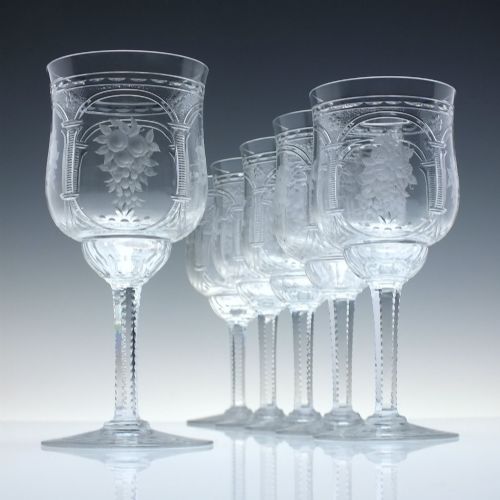
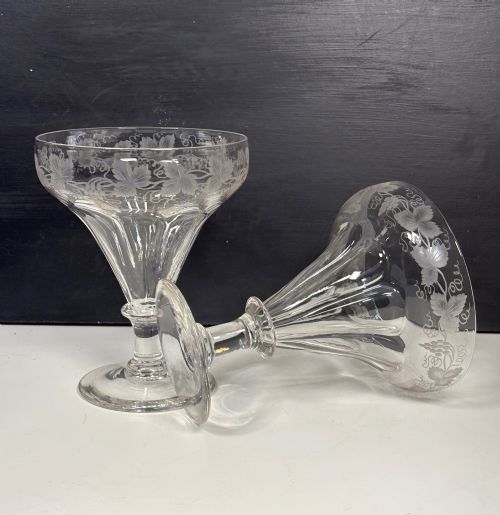
Decoration relied on wheel cutting, fine engraving, and polychrome enamel work, applying colour or facets directly to green glass, clear glass, and lead crystal surfaces.
The listings span eight distinct periods, from early eighteenth-century Queen Anne balusters to Edwardian pieces from 1910.
What varies in quality
Quality rests in the clarity of the metal and the precision of the cutting or engraving, where crisp facets and deep wheel work distinguish finer examples.
Proportion and weight dictate the tier of a piece, with balanced stem thickness, well-formed feet, and deliberate wall weight separating standard table use from superior production.
Frits Hechert·Lobmeyer
The Large Glass Wine Goblets Glossary
- Air twist
- A decorative stem technique containing elongated spiral bubbles of air trapped within the glass. Makers created these by drawing and twisting heated rods before forming the stem.
- Roemer
- A traditional Germanic drinking vessel with a wide bowl sitting on a hollow, studded stem. These pieces frequently appear in green glass with applied enamel decoration.
- Baluster
- A heavy, turned stem style resembling an architectural column, common in early eighteenth-century drinking vessels. The profile swells and tapers in defined sections.
- Pan top
- A straight-sided bowl shape with a slight flare at the rim, frequently found on heavy nineteenth-century rummers. This silhouette provides a wide opening for drinking.
Large Glass Wine Goblets: Frequently Asked Questions
What is the difference between a rummer and a wine glass?
Rummers are substantially larger and heavier drinking vessels designed with short stems and capacious bowls for ale, wine, or spirits during the Georgian and Victorian eras.
Standard wine glasses generally feature taller stems and smaller bowls suited for measured pours of lighter table wines.
How do I identify eighteenth century air twist stems?
Air twist stems display delicate, continuous internal threads of trapped air running through the transparent glass column. Makers produced these effects by manipulating molten metal before drawing and twisting the stem.
These optical patterns catch the light differently than modern pressed glass imitations.
Were green glass roemers used for white wine?
Roemers served as general table vessels for Germanic white wines and hock throughout the nineteenth and early twentieth centuries. The tinted glass helped mask sediment in early bottled beverages.
Their robust construction made them practical for communal dining and tavern settings.
Can I use these goblets for modern dining?
Many people enjoy using antique glass goblets for special occasions, as their substantial weight and tactile form enhance the dining experience. Their sturdy construction suits contemporary table use.
Careful handling during use and washing protects the engraved surfaces and polished rims from damage.