
English School Clock
An English school clock brings clear round dials and robust timber frames into a room, offering both reliable timekeeping and period character.
English School Clock
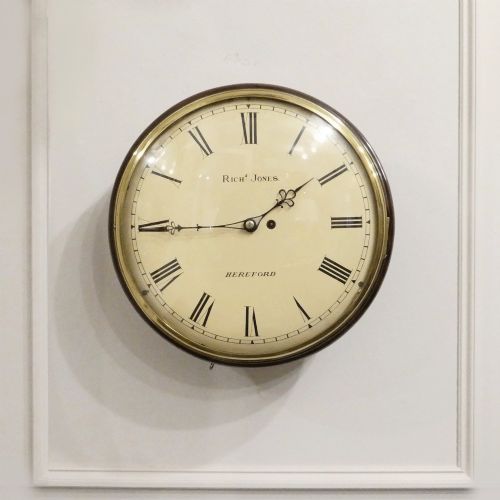
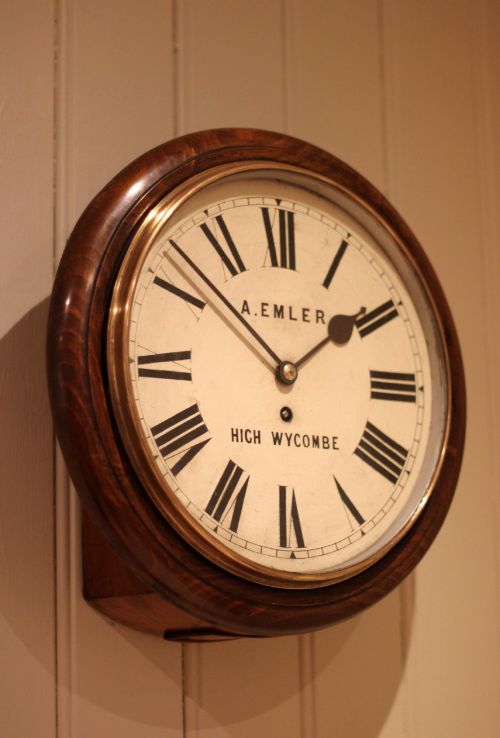
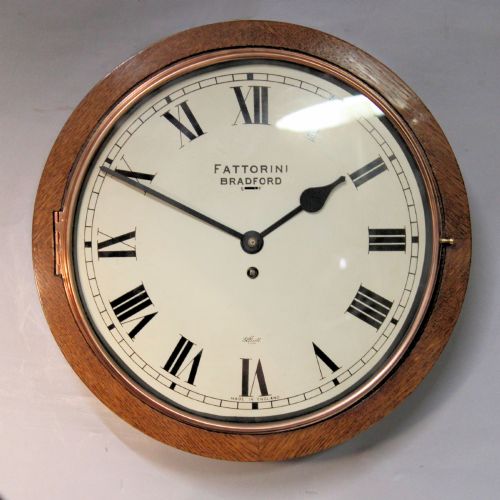
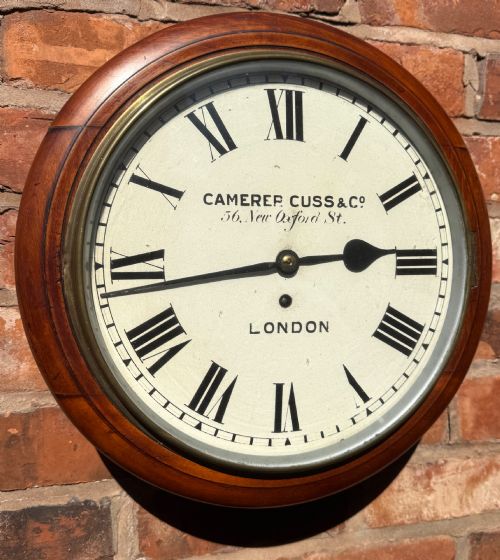
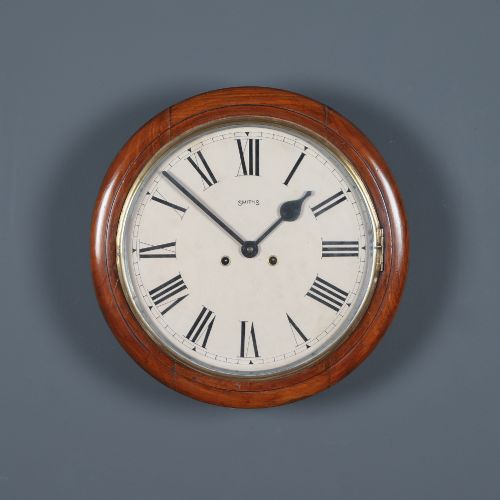
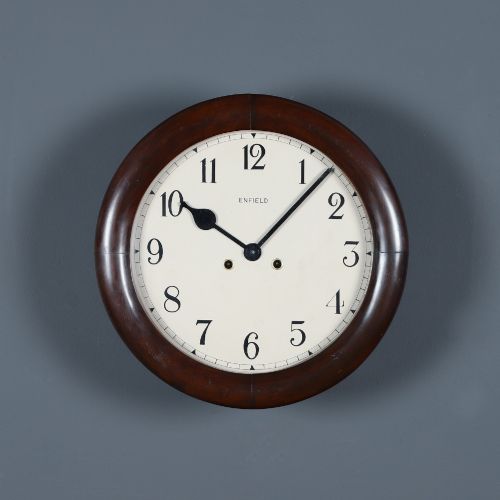
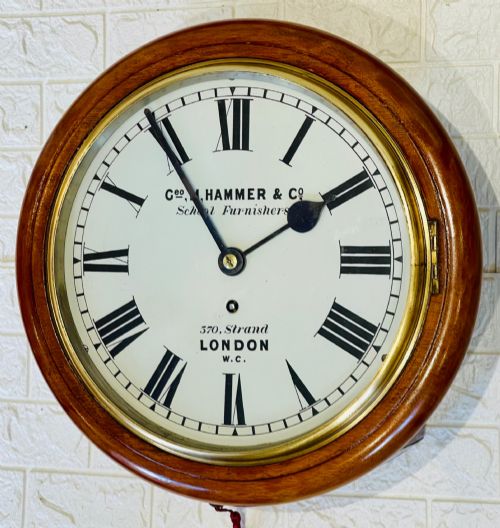
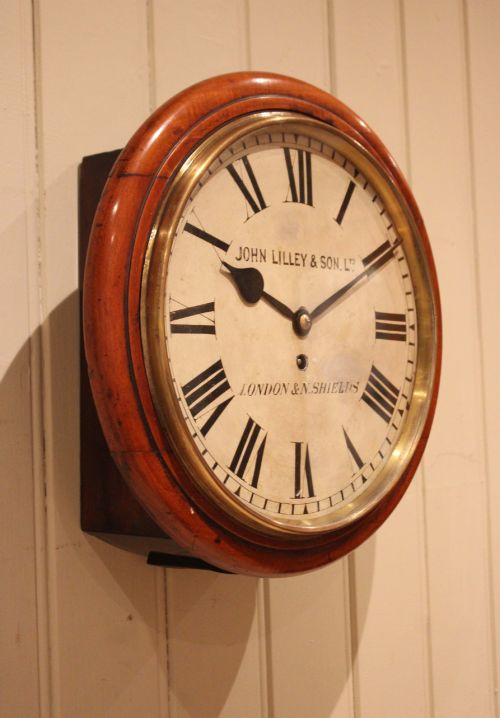
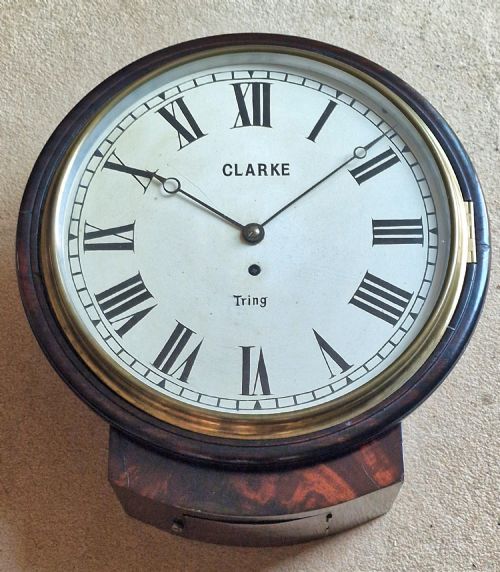
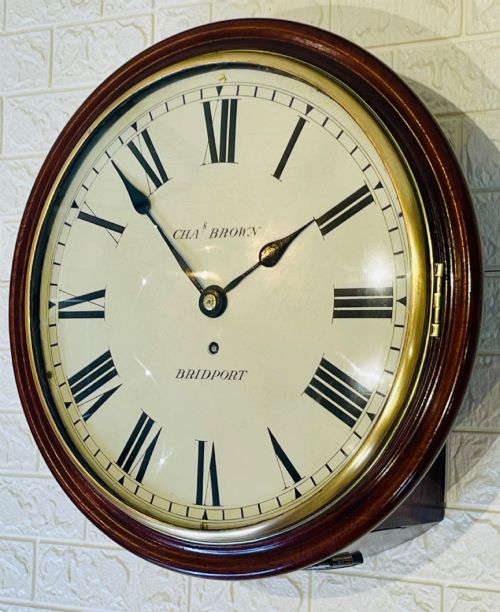
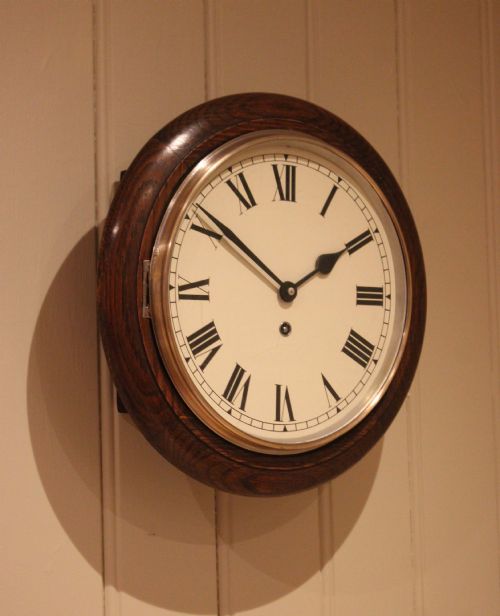
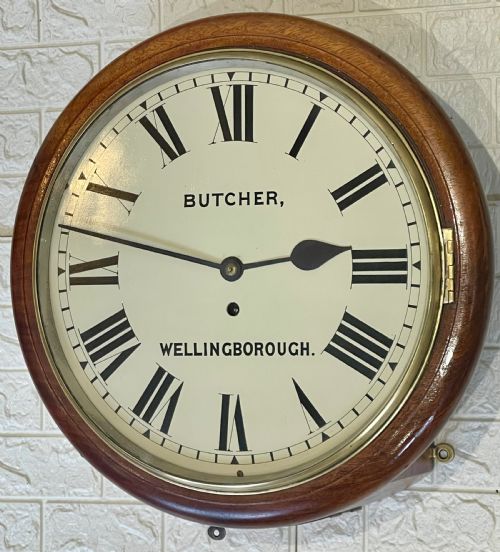
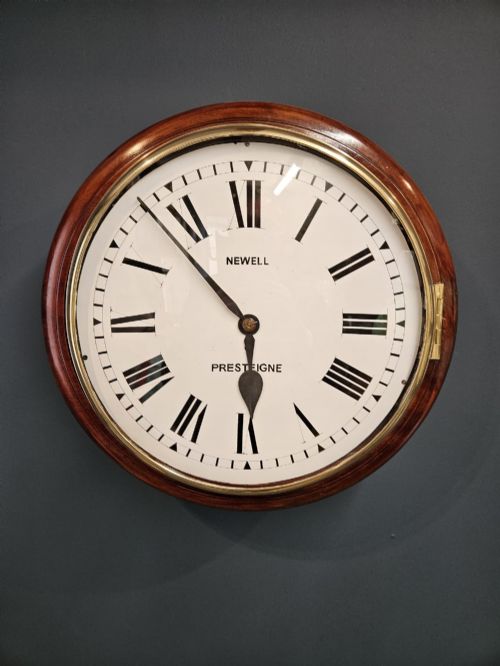
An English school clock is a circular wall timepiece designed for legibility and steady performance in public spaces, railway stations and classrooms. These pieces usually feature a bold painted iron or wood dial protected by a brass bezel and glass door.
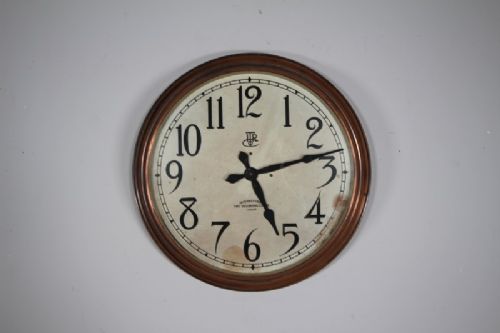
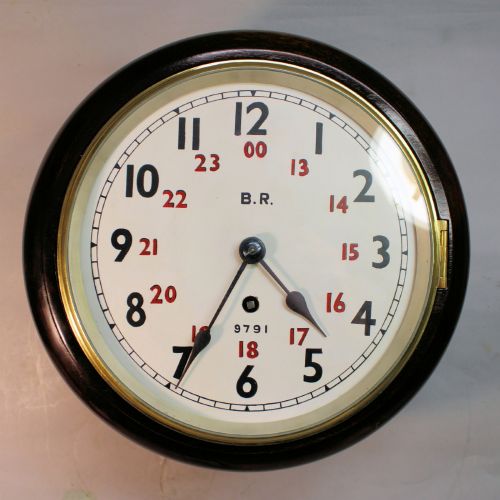
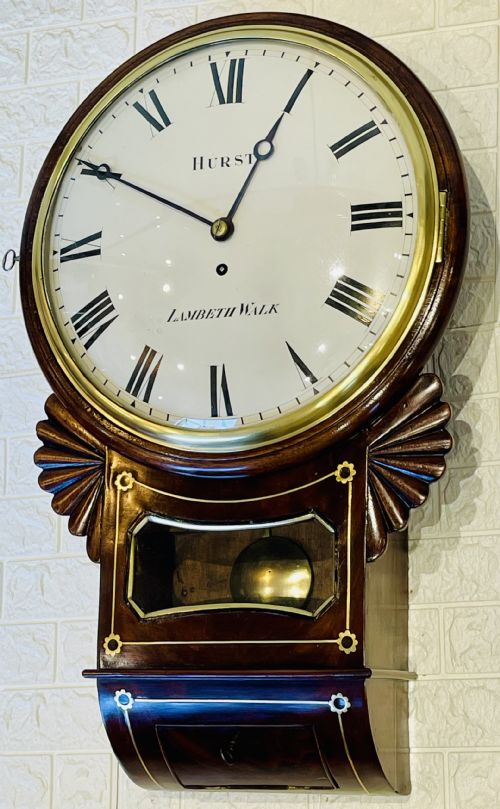
The versions most commonly met on this page span the Victorian and Edwardian eras, alongside later pieces from the 1930s. Mahogany and oak timber cases predominate, formed in round or drop-dial configurations designed to hang securely against plaster walls.
Makers ranged from provincial watchmakers to major London retailers, stamping their identities directly onto the painted dials. Buyers select these timepieces for functional kitchen use or as architectural focal points in hallways and studies.
Materials and Construction
Cases rely on seasoned hardwoods, principally mahogany and oak, turned or joined into deep surrounds that house the heavy brass movement. Bevelled timber or brass bezels secure the glass face over the dial.
The mechanical heart typically involves a chain or cord-driven fusee movement, which maintains even tension on the gear train as the mainspring unwinds. Later 1930s examples incorporate simpler lever escapements or chiming trains driven by robust iron and steel components.
Many surviving school clocks bear the faint aroma of classroom floor polish trapped inside their deep wooden drums for over a century.
Judging Quality
Quality rests in the crispness of the dial painting, the original legibility of the maker's signature and the structural integrity of the timber case. A well-preserved mahogany drum or drop-dial case retains sharp mouldings and original side doors that close flush.
Movement finish also separates standard examples from superior pieces, with hand-engraved backplates and substantial brass pillars indicating careful workshop production. Original matching pendulum rods and well-cut fusee cones ensure the mechanism performs reliably.
Richard Jones of Hereford·Elliott·Camerer Cuss and Co London·George Clarke Tring·Joseph Bird of Stroud·Dent of London·L Morris Islington·R Roberts of London
The English School Clock Glossary
- Fusee
- A conical pulley connected to the mainspring by a chain or cord that equalises the driving force as the spring uncoils. This mechanism is central to achieving accurate timekeeping in older wall clocks.
- Drop-dial
- A clock case featuring an extended lower wooden trunk beneath the circular dial. This drop often houses a pendulum bob and access doors.
- Bezel
- The brass or wooden ring that holds the glass door protecting the dial. It usually hinges open to allow hand adjustment.
- Escapement
- The mechanism that controls the release of gear train energy into the pendulum or balance wheel. It produces the steady ticking sound characteristic of mechanical clocks.
- Dial
- The visible face of the clock, painted with numerals and often bearing the retailer or maker name. Materials include wood, painted iron and convex metal.
English School Clock: Frequently Asked Questions
How do I wind an English school clock?
Most fusee wall clocks require a matching brass winding key inserted into the dial face once a week. Turn the key gently until firm resistance indicates the spring is fully tensioned.
Take care not to overwind the movement, and ensure the pendulum hangs evenly to maintain a steady beat.
Where should I hang a heavy wall clock?
Mount the clock directly into a solid wall stud or use heavy-duty wall anchors rated for timber and glass weights. The sturdy mahogany and oak cases require secure fixing to prevent vibrations from disrupting the pendulum.
Position the dial at eye level in a room with stable temperature to keep the mechanical parts functioning smoothly.
How do I identify the date of a dial clock?
Examine the timber housing, dial materials and movement construction for period indicators. Victorian fusee clocks often feature mahogany cases and hand-painted iron dials signed by local retailers.
Later 1930s versions frequently utilise oak frames, simpler lever escapements and bolder numbering suited to railway stations and public offices.
Why does my clock lose time?
Mechanical clocks require regular adjustment of the pendulum bob regulation nut to speed up or slow down the beat. Seasonal temperature changes can alter metal parts and affect timekeeping accuracy.
If regular regulation fails to correct the time, the movement may need professional cleaning and fresh oil to remove dried residue.