


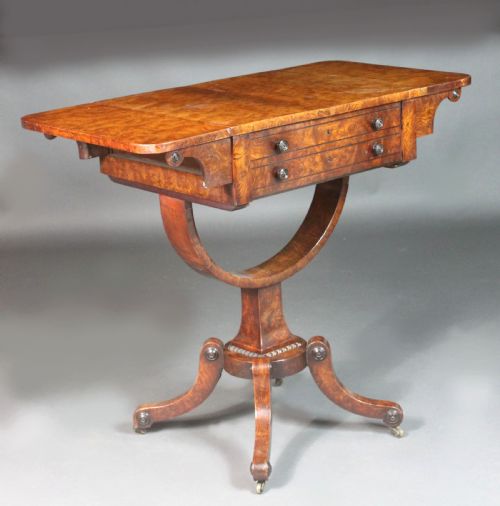


English Regency Drop Leaf
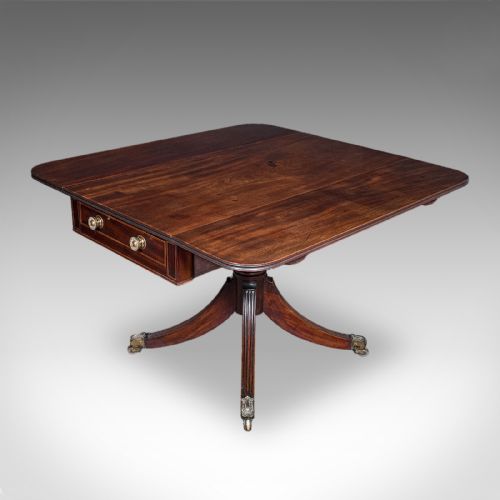
An English Regency drop leaf table brings fluid versatility to a room, folding down to save space or expanding to seat guests.
English Regency Drop Leaf
When you search for an english regency drop leaf table, you encounter practical furniture designed to adapt to changing room layouts. The selections span the Regency, Georgian, and William IV periods, crossing into the early nineteenth century and Victorian eras.
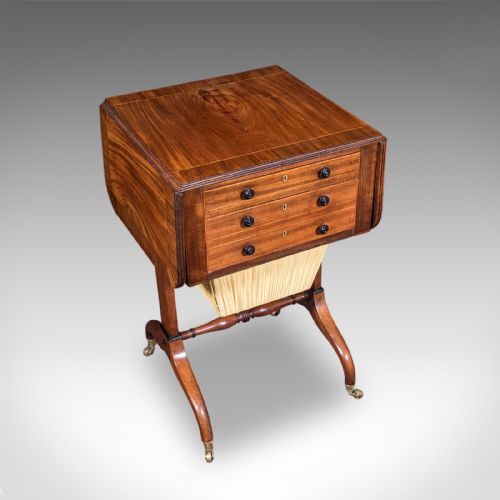
Pembroke tables and sofa tables dominate the available forms, alongside dining tables, side tables, and occasional pieces. Many examples serve specific historical functions, appearing as sewing tables, writing desks, tea tables, and reader's tables.
Mahogany and rosewood serve as the primary timbers, frequently enriched by satinwood, flame mahogany, and burr ash. Brass hardware and iron components provide structural support and functional movement.
Materials and construction
Cabinet makers utilised dense timbers like mahogany and rosewood to construct stable frames that could support hinged leaves. Flame mahogany and satinwood veneers added decorative contrast to table tops and drawer fronts.
Brass casters, hinges, and drawer pulls were integrated into tables designed for mobility in drawing rooms and dining spaces. Iron and ebonised wood details provided additional structural stability and visual contrast.
Several pembroke tables served double duty as reader's tables, holding open heavy volumes while family members gathered in the drawing room.
Judging execution and timber
The distinction between tiers rests upon the selection of timber and the precision of the cabinet work. Superior pieces exhibit figured mahogany or rosewood with consistent grain patterns across the folding leaves and main surface.
Fitted interiors, such as silver drawers with original keys or compartmentalised sewing trays, separate standard utility tables from finer salon pieces. The smoothness of the drop leaf action and the integration of brass mounts reflect the original maker's skill.
Williamson
The English Regency Drop Leaf Glossary
- Pembroke table
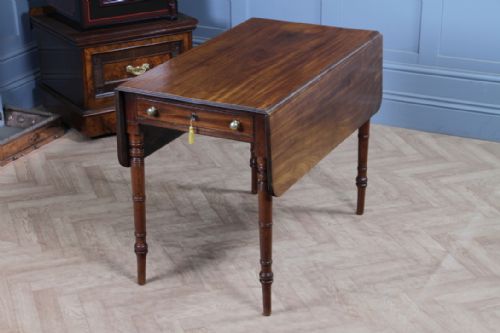
- A small occasional table featuring two hinged leaves on opposite sides. These versatile pieces often include a single drawer.
- Sofa table
- A rectangular table traditionally placed in front of a sofa, equipped with drop leaves and often supported by twin pillar pedestals or trestle ends.
- Cumberlands table
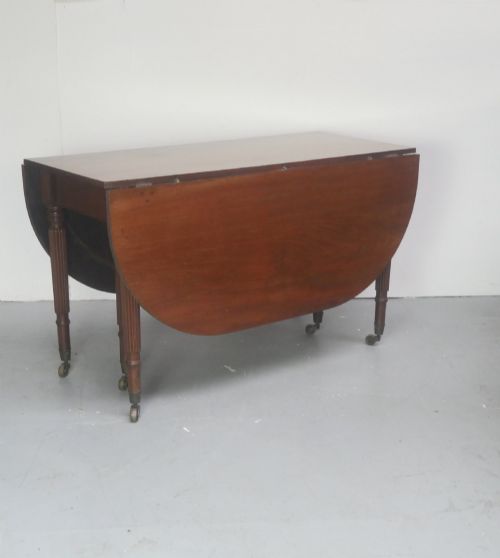
- A form of drop leaf dining table featuring hinged leaves that allow the central section to fold down flat for compact storage.
- Flame mahogany
- A distinct timber veneer showing a flamelike grain pattern. Cabinet makers selected it for prominent surfaces on high-status furniture.
- Ebonised wood
- Timber treated to resemble ebony through staining or painting. Makers utilised this finish to create dark contrasts on mouldings and supports.
English Regency Drop Leaf: Frequently Asked Questions
How were sofa tables used?
Sofa tables were designed during the Regency period to stand directly behind a sofa or settee in the drawing room. Their drop leaves allowed them to expand for writing or serving tea.
Many examples include small drawers for stationery or sewing equipment, making them functional centres for daily domestic tasks.
How do I distinguish Regency from Victorian pieces?
Regency furniture typically displays restrained classical proportions, elegant sabre legs, and subtle brass inlay or mounts. The timber selection focuses heavily on figured mahogany and rosewood.
Victorian pieces from the later nineteenth century often feature heavier proportions, bolder carving, and darker finishes such as William IV flame mahogany.
Can I use an antique pembroke table daily?
These tables were built to withstand active daily use in nineteenth-century households, utilising robust timbers like solid mahogany and rosewood. Regular domestic use requires only basic care and protection from moisture.
The hinged drop leaves operate on sturdy wooden or brass pivots designed for frequent movement.