


Reeded Leg Drop Leaf
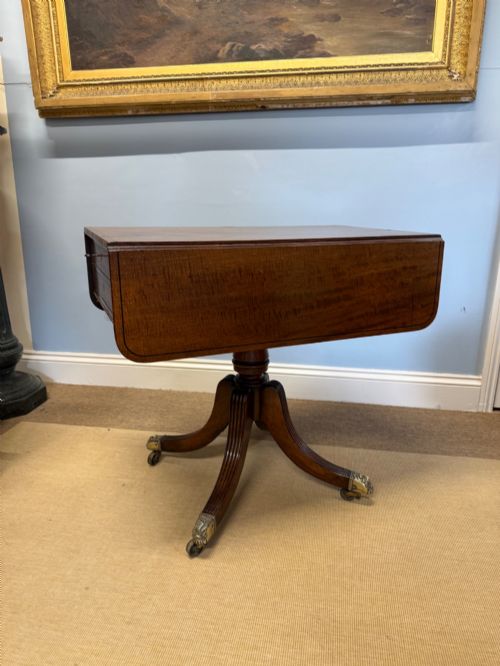
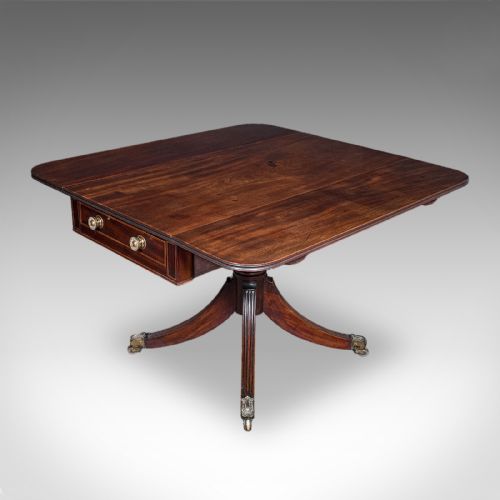
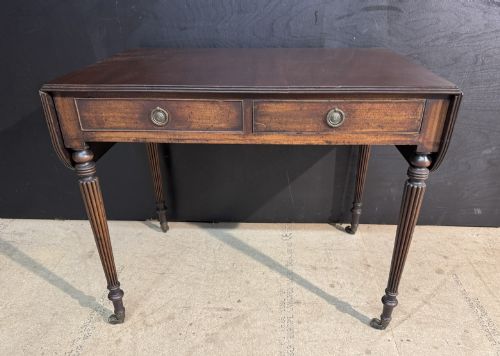
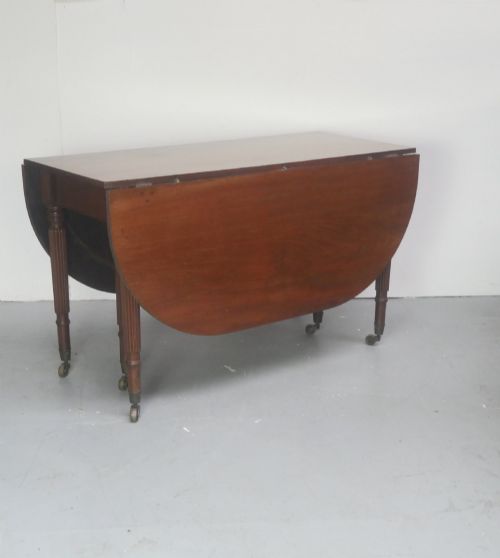
Reeded leg drop leaf tables combine adaptable folding leaves with carved uprights, offering surface space that shrinks when rooms require floor space.
Reeded Leg Drop Leaf
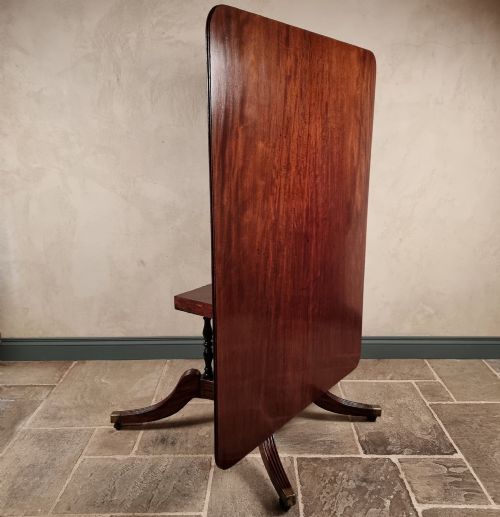
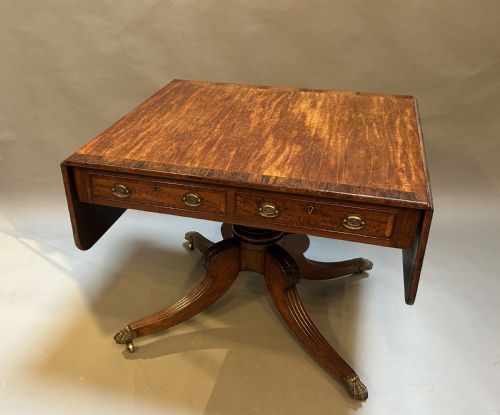
When searching for reeded leg drop leaf tables, buyers encounter dining tables, sofa tables, pembroke tables, and work tables originating from the Georgian, Regency, and Victorian periods. These pieces provide surface flexibility through folding leaves supported by hinged brackets or swinging gates.
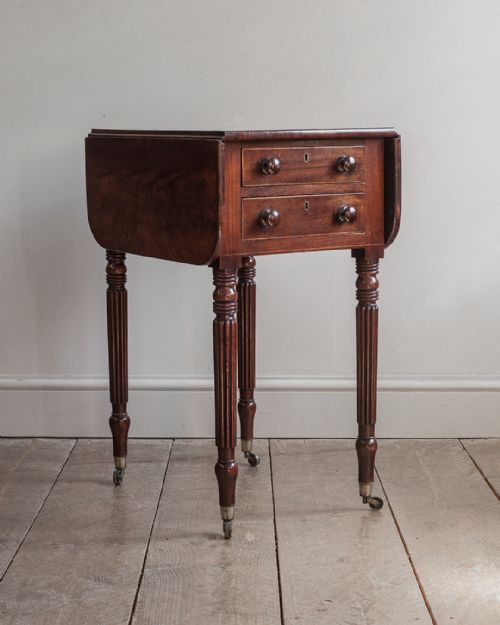
The most common examples on this page date to the Regency and 19th Century eras, predominantly constructed in mahogany with figured veneers. Formats range from large dining tables seating multiple people down to compact pembroke and work tables fitted with drawers.
Materials and construction methods
Cabinetmakers utilised solid mahogany and Cuban mahogany alongside satinwood, oak, and pine for internal framing and secondary timbers. Brass castors, hinges, and drawer pulls feature frequently across the surviving pieces.
Legs were shaped on a lathe to create vertical reedings, paired with drop leaves attached by rule joints that allow the flaps to hang smoothly when lowered.
Listings span Georgian, Regency, and Victorian periods, showcasing mahogany, satinwood, and brass hardware across dining, pembroke, and sofa tables.
Assessing quality in construction and timber
The calibre of a piece depends on the choice of figured mahogany and the crispness of the reeded carving on the legs. Superior examples show careful grain matching across the leaves and top.
Structural integrity relies on the snugness of the rule joints and the smooth action of the drop leaf supports and drawer mechanisms.
Gillows·William Trotter·Duncan Phyfe
The Reeded Leg Drop Leaf Glossary
- Drop leaf
- A table with a fixed central section and hinged flaps that fold down to reduce the footprint. This design allows the furniture to expand for dining or working and contract for storage.
- Reeded
- A decorative moulding consisting of parallel convex strips carved directly into timber legs or columns. It provides texture and visual verticality.
- Pembroke
- A small rectangular table featuring two drop leaves on opposing sides and frequently one or two end drawers. These versatile items served as breakfast, writing, or sewing tables.
- Sofa table
- A low rectangular table traditionally placed in front of a sofa, equipped with drop leaves and small drawers. They emerged during the Regency period.
- Rule joint
- A moulded joint connecting a table top to its drop leaf, leaving no gap when the leaf is raised and a neat semi-circular profile when lowered.
Reeded Leg Drop Leaf: Frequently Asked Questions
What is a reeded leg drop leaf table used for?
These tables function primarily as dining surfaces, pembroke desks, or sofa tables depending on their proportions and internal fittings. The folding leaves allow the furniture to expand for meals or tasks and fold down against walls when floor space is needed.
Smaller formats often include drawers or compartments for sewing equipment and writing materials, making them adaptable for multiple rooms in a house.
How do I identify a Regency reeded leg table?
Regency pieces often display classical proportions influenced by ancient Greek and Roman design, utilising dark Cuban mahogany and brass fittings. The legs feature crisp parallel reedings turned on a lathe, frequently tapering toward brass castors.
Construction details like hand-cut dovetails in the drawers and solid mahogany secondary woods help distinguish these 19th century items from later reproductions.
Where should I place a drop leaf table?
Drop leaf tables suit dining rooms, living spaces, and hallways because their adjustable leaves fit diverse room dimensions. With both leaves lowered, a pembroke or sofa table rests flat against a wall or behind seating.
Raising one or both leaves creates a central surface for dining, games, or displaying lamps and objects.
How do I care for antique mahogany tables?
Keep mahogany furniture away from direct sunlight and heat sources to prevent the wood veneers from drying and splitting. Regular dusting with a dry, soft cloth maintains the finish without moisture damage.
Apply natural beeswax occasionally to nourish the timber and preserve the natural sheen of the figured grain.