


English Regency Console Table
An English regency console table brings balanced neoclassical proportion and rich timbers to a formal hallway or drawing room.
English Regency Console Table
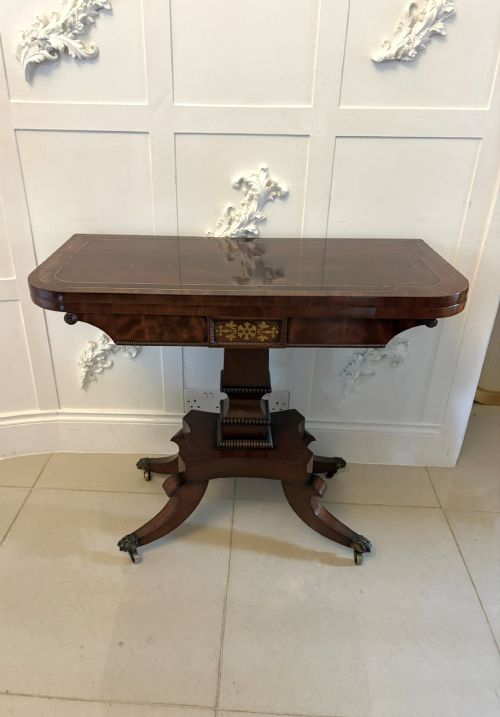
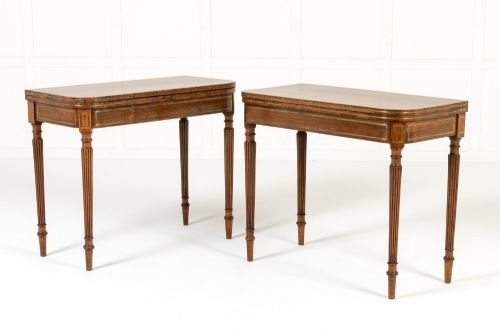
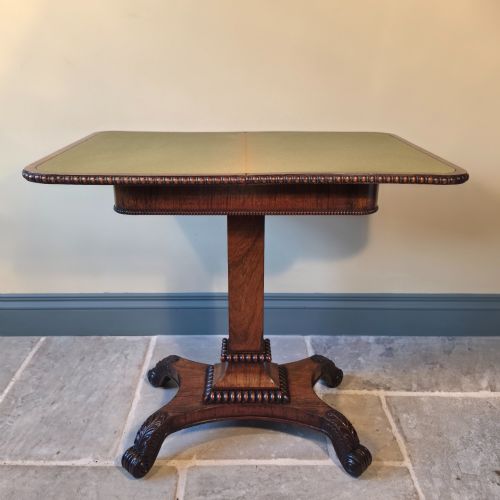
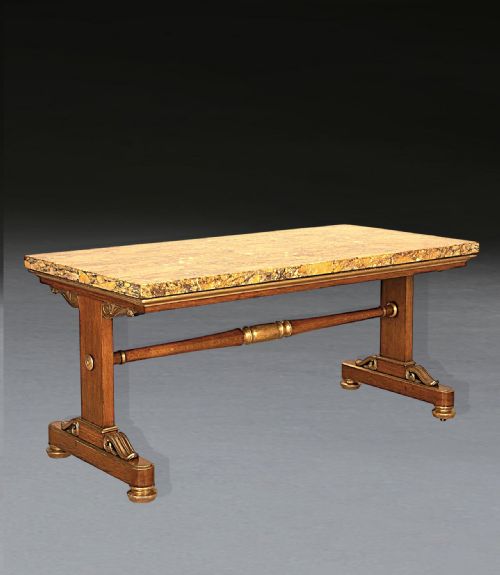
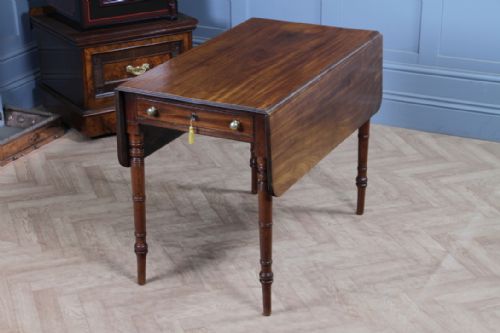
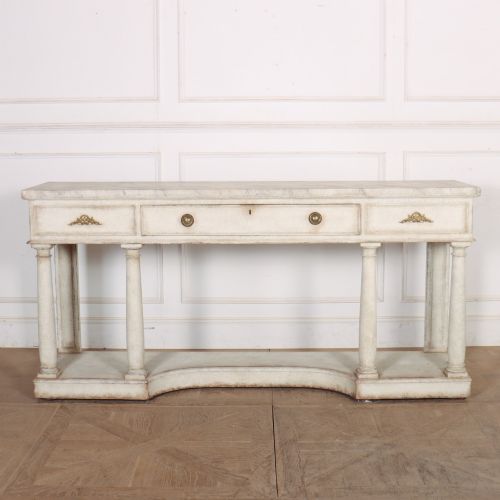
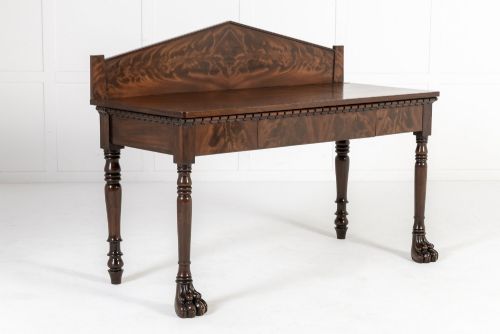
When you search for an english regency console table, you look at narrow side furniture designed to stand against a wall, frequently accompanied by related forms such as card tables, serving tables, and library tables from the early nineteenth century. The examples met on this page span the Regency, William IV, and Georgian periods, alongside later revival pieces.
The primary woods recorded in the listings are mahogany and rosewood, often enhanced with brass inlay, flame mahogany veneer, or giltwood and paint. Forms range from D-shaped side tables and demi-lune consoles to fold-over card tables and serving tables featuring marble or timber tops.
What varies in quality
The standard of timber selection and veneer matching defines the visual impact of the piece, with well-figured flame mahogany or richly grained rosewood marking out superior examples. Precision in brass inlay work and the crispness of carved wooden details distinguish workshop production from standard output.
Structural integrity relies on the quality of the internal joinery within drawers and table frames, particularly on folding mechanisms for card tables and support structures for heavy marble tops. Original painted surfaces and patination preserved over time contribute significantly to the standing of a piece.
Fold-over card tables and library tables appear alongside standard console forms.
Gillows·T & G Seddon
The English Regency Console Table Glossary
- Console table
- A table designed to be fixed or placed flat against a wall, frequently supported by brackets or front legs. These pieces served as decorative side furniture in nineteenth-century interiors.
- Card table
- A folding table with a hinged top that opens to reveal a baize-lined surface for playing games. Many feature clever pivoting actions to support the open leaf.
- Demi-lune
- Having a half-moon or semicircular shape. This profile allowed tables to fit tightly against walls in narrow hallways and rooms.
- Giltwood
- Wood that has been coated with gold leaf or gold paint. It appears on neoclassical frames and decorative mouldings.
- Flame mahogany veneer
- A thin slice of mahogany timber cut from the fork of the tree where branches meet. This produces a distinctive flickering flame-like grain pattern.
English Regency Console Table: Frequently Asked Questions
What is an English regency console table?
An English regency console table is a narrow nineteenth-century wall table characterised by neoclassical design, clean architectural lines, and rich timbers like mahogany or rosewood.
These tables were built for formal reception rooms and hallways to display decorative objects or provide a surface for lamps.
How were card tables used?
Card tables served a social function in nineteenth-century drawing rooms for evening games like whist or bridge. The hinged top folded flat when not in use to save space.
Opening the top revealed a baize-lined playing surface, often with concealed compartments for cards and counters.
How can I tell a genuine period piece?
Authenticating a period piece involves examining the construction methods, timber ageing, and secondary woods used in the frame and drawer linings. Hand-cut dovetails and natural wax patination indicate nineteenth-century manufacture.
Matching the stylistic markers, such as neoclassical brass inlay or faux bamboo turning, helps confirm the era.
How do I live with a console table?
Console tables suit narrow spaces because their shallow depth prevents them from obstructing walkways. Placing one in a hallway creates a practical drop-spot for keys and post.
Pairing the table with a wall mirror or decorative lamp completes the traditional arrangement.