


Regency Rosewood Pier Table
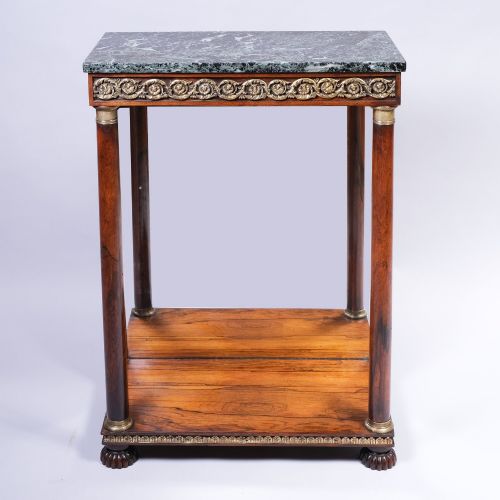
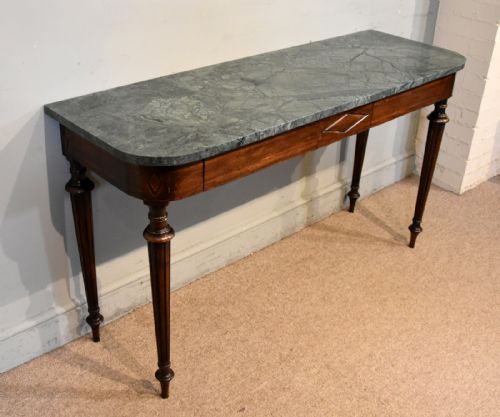
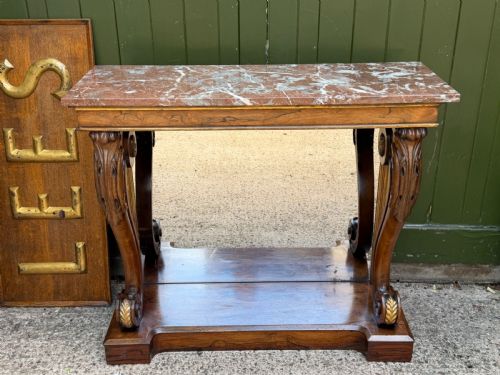
These regency rosewood pier table examples combine dense tropical timbers with pale marble and gilt mounts to anchor a formal hall.
Regency Rosewood Pier Table
A regency rosewood pier table is a foundational piece of nineteenth-century domestic furnishing designed to sit flush against the wall between architectural windows. The examples seen here span the regency, grand regency, william iv, and french empire styles, originating mostly from the nineteenth century around eighteen hundred.
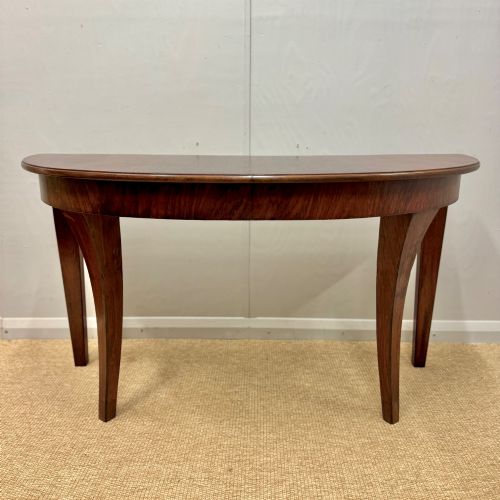
Most entries on this page take the form of console tables, alongside related forms like chiffoniers, card tables, and cabinets. These pieces utilise distinctive rosewood grain, frequently paired with white or figured marble tops and mirror glass backs to reflect light in reception rooms.
How they were made
Cabinetmakers constructed these tables using heavy rosewood veneers applied to secondary timbers, often accenting the polished surfaces with parcel-gilt details, brass mounts, and ormolu. Tops were fitted with heavy slabs of marble or mirror glass, supported on concave legs or columns.
Joinery methods of the period relied on solid framing to support the substantial weight of the stone tops. Metal mounts and inlay work required precise hand-fitting into the dense rosewood substrate.
Listings feature console tables, chiffoniers, card tables, and cabinets constructed from rosewood, marble, glass, and brass.
What varies in quality
The distinction between standard domestic pieces and the finest work lies in the selection of figured timber and the crispness of the carving. Richly marked rosewood veneers and carefully matched grain patterns elevate the visual impact of the facade.
Subtlety of proportion and the integration of mirror glass, giltwood, or parcel-gilt elements define the upper tier of the range. Tables showing balanced architectural lines and heavier brass mounts demonstrate superior workshop execution.
Gillows
The Regency Rosewood Pier Table Glossary
- Pier table
- A side table designed to stand against the wall between two windows, usually beneath a pier glass mirror.
- Rosewood
- A dense, heavily figured dark timber utilised throughout the nineteenth century for high-status cabinet furniture.
- Parcel-gilt
- Partially gilded woodwork where gold leaf is applied only to specific carved details or raised ornaments.
- Console table
- A wall-mounted or bracketed table supported on front legs, frequently topped with marble.
Regency Rosewood Pier Table: Frequently Asked Questions
Where should a pier table be placed?
These tables are traditionally positioned flat against a wall in a hallway or drawing room, frequently underneath a matching wall mirror.
Their shallow depth allows them to sit neatly in narrow spaces without obstructing traffic flow.
Are the marble tops original?
Many nineteenth-century tables retain their original white or figured marble slabs, though replacements do occur due to the fragile nature of stone.
Examining the underside and the fit within the wooden frame helps determine if the marble is contemporary to the base.
How do I care for rosewood veneer?
Keep the timber away from direct sunlight and strong heat sources to prevent the rosewood veneer from drying and splitting.
Dust gently with a dry cloth and avoid silicone-based polishes that can damage the historical polish finish.
What is the difference between a console and a pier table?
While the terms are often used interchangeably in historical listings, a pier table specifically references placement against the wall space between architectural openings.
Console tables encompass a broader range of wall-fixed or front-supported side tables regardless of exact room location.