

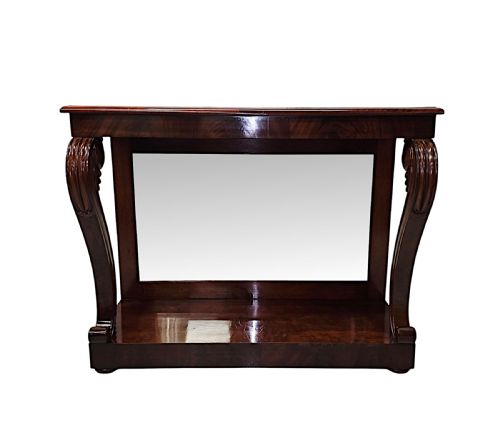
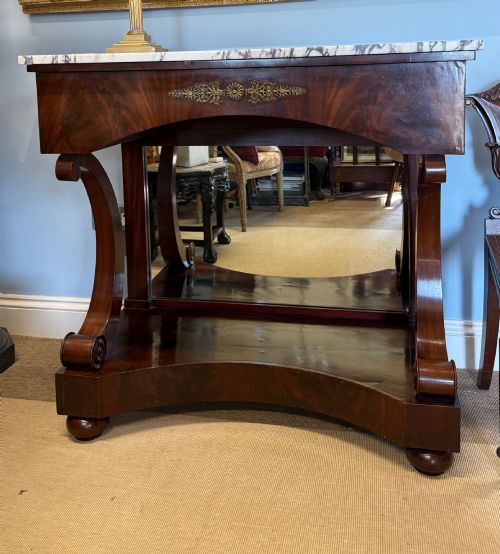
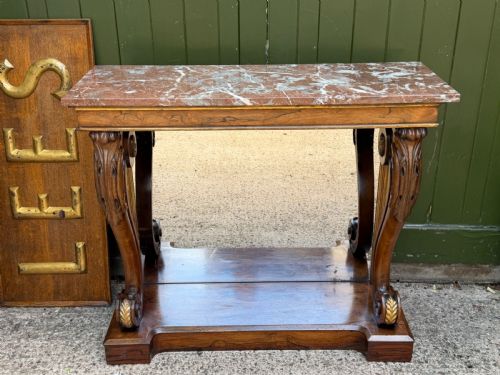


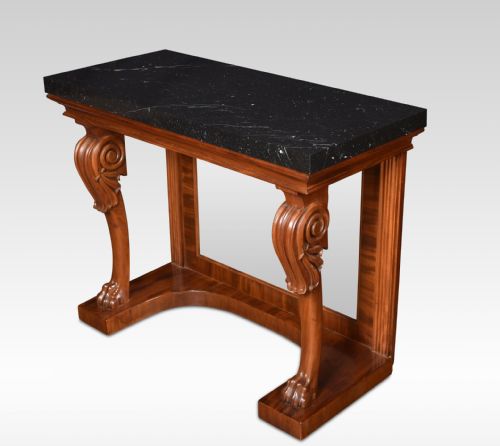


Regency Mirror Back Console
A regency mirror back console brings the deep warmth of rosewood and mahogany together with clever optics to brighten a period room.
Regency Mirror Back Console
A regency mirror back console serves as a striking focal point against a wall, combining a heavy timber base with a reflective plate designed to bounce light around the interior. These pieces date principally from the nineteenth century, including the Regency, William IV, and Victorian periods.
The form typically rests against a wall in a hallway or principal reception room, often topped with a heavy slab of figured marble. The combination of polished wood and glass creates an illusion of greater depth and luminosity within the space.
Buyers will encounter various interpretations of the form on this page, ranging from grand rosewood examples with parcel-gilt details to robust mahogany pieces. Regional variations such as Irish or Scottish origins appear alongside Italian Empire influences.
How they were made
Cabinet makers utilised dense timbers such as mahogany and rosewood, often selecting flame-figured veneers for the primary surfaces. These woods provided a stable canvas for rich French polishing and delicate carving.
Marble slabs were cut and polished to form heavy, durable counter tops that sat directly upon the timber framing. Mirror glass was set securely into the wooden back panels, frequently framed with giltwood or parcel-gilt mouldings to enhance the reflective quality.
What varies in quality
The refinement of the timber selection dictates much of the visual weight, with highly figured flame mahogany and rich rosewood marking the upper end of the range. Finer examples display crisper carved details, such as giltwood dolphins or intricate parcel-gilt accents.
The integration of the mirror plate within the rear structure affects the overall harmony of the piece, as do the weight and markings of the marble top. Construction integrity in the joints and the preservation of the original polish distinguish superior examples.
The Regency Mirror Back Console Glossary
- Console table
- A table designed to stand against a wall, traditionally supported by front legs or brackets while relying on the wall for balance. They often feature decorative bases and stone tops.
- Chiffonier
- A low cabinet featuring shelving or enclosed storage beneath a surface, frequently incorporating mirror glass in the back structure during the nineteenth century. The form shares close ties with the console table.
- Parcel-gilt
- A decorative treatment where specific carved areas or mouldings are partially gilded with gold leaf while the surrounding timber remains visible. This technique highlights particular architectural details.
- Giltwood
- Timber that has been coated with a thin layer of gold leaf or gesso and gold paint. It appears on frames and decorative mounts to catch the light.
- Flame mahogany
- Mahogany timber cut to reveal a flickering, flame-like grain pattern. Cabinet makers reserved this highly decorative veneer for prominent surfaces.
Regency Mirror Back Console: Frequently Asked Questions
What is a mirror back console?
A mirror back console is a heavy wall table featuring an integrated glass panel behind the base frame. The design reflects light and the contents of the room.
These pieces were constructed in timber such as mahogany and rosewood, frequently topped with marble. They served both decorative and functional roles in period interiors.
How do I date a console table?
Dating relies upon timber choices, construction methods, and stylistic markers associated with periods like the Regency or William IV. Rosewood and heavy flame mahogany veneers are common indicators of nineteenth-century manufacture.
Secondary woods and the fixings used behind the mirror plate also help establish the age. Comparing the carved details to documented period examples provides further context.
Where should I place a console?
Console tables sit flush against a wall in hallways, living rooms, or dining spaces where floor depth is restricted. The mirror back helps brighten darker corridors by reflecting natural and artificial light.
Their heavy marble tops require stable flooring and secure placement. They are best kept away from direct heat sources to protect the polished wood surfaces.
What woods were used?
Nineteenth-century cabinet makers relied heavily on imported mahogany and dark rosewood for these console tables. These timbers provided durability and a rich dark ground for polished finishes.
Secondary woods like pine or oak frequently appear in the internal framing and backboards. Giltwood and parcel-gilt highlights were often added to contrast with the dark primary timbers.