




Georgian Rosewood Console
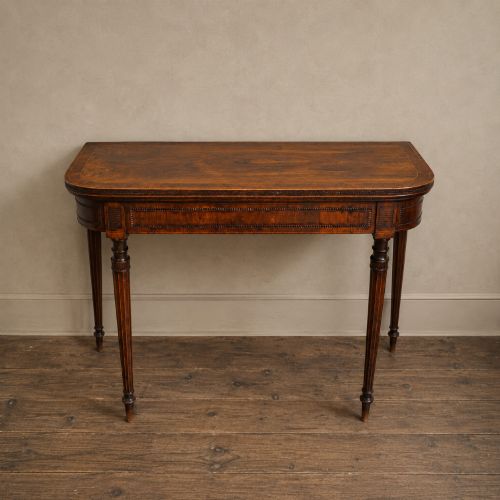
A georgian rosewood console brings dense grain and architectural presence into a room, serving primarily as a side or games table.
Georgian Rosewood Console
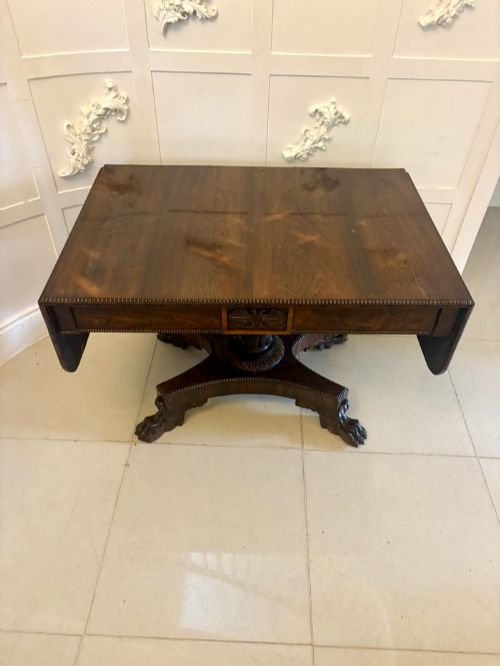
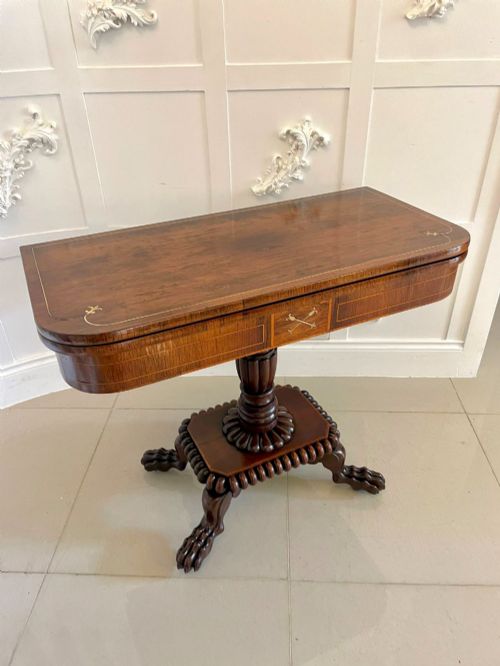
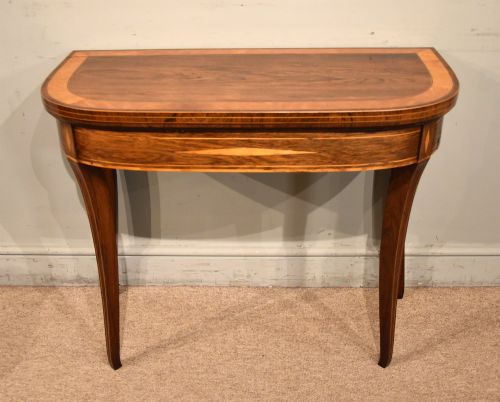
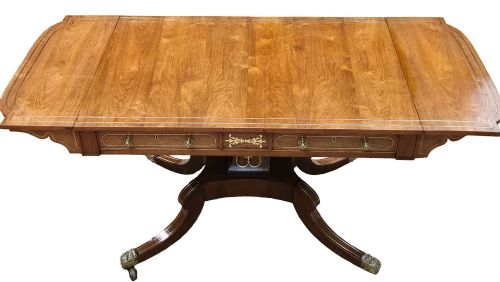
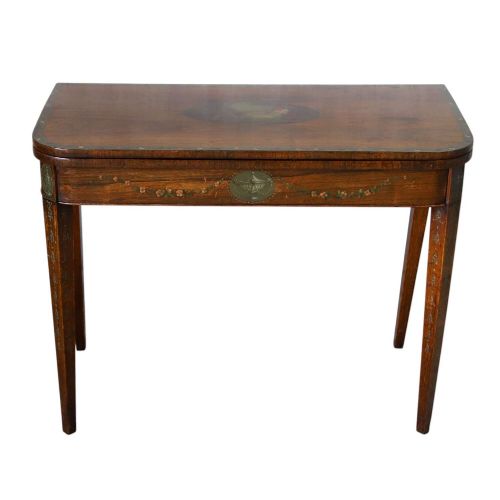
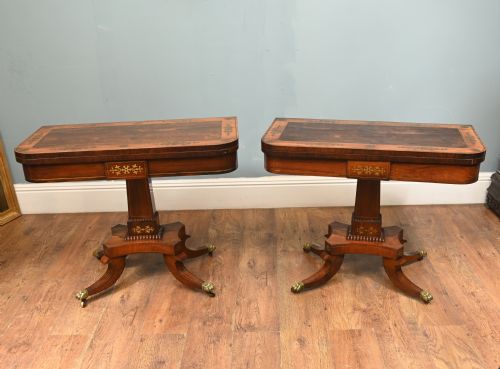
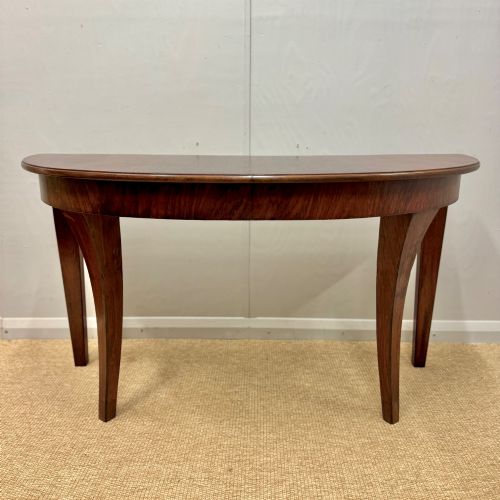
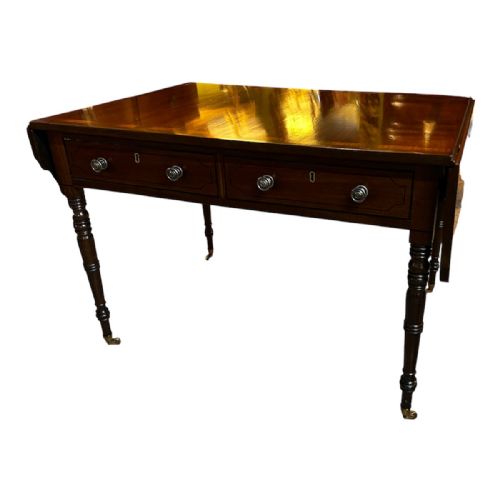
A georgian rosewood console encompasses several forms built during the Georgian, Regency, and nineteenth century periods. The selection includes sofa tables, card tables, games tables, library tables, and dedicated console or side tables.
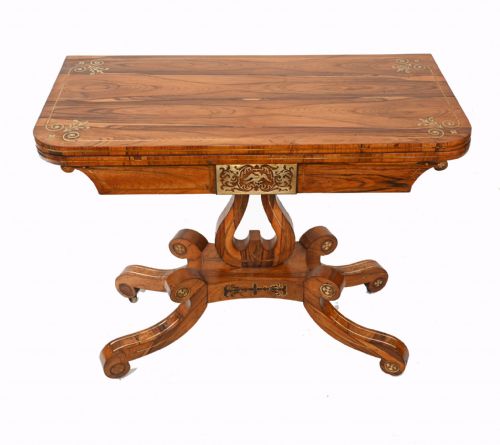
Makers produced these pieces across varying stylistic sub-periods such as George III, George IV, William IV, Sheraton, and English Empire. The versions most commonly encountered on this page date from the Regency era, often featuring fold-over tops or freestanding bases.
Origins trace directly to English cabinet makers working with imported tropical hardwoods during the height of the Regency and late Georgian periods.
Materials and construction
Rosewood forms the primary structural and visual surface, frequently complemented by secondary timbers like mahogany and satinwood, along with crossbanding in burr yew or ebony.
Decorative embellishment relies on brass inlay, brass mounting, boxwood stringing, parcel gilding, and occasional marquetry or later painted decoration.
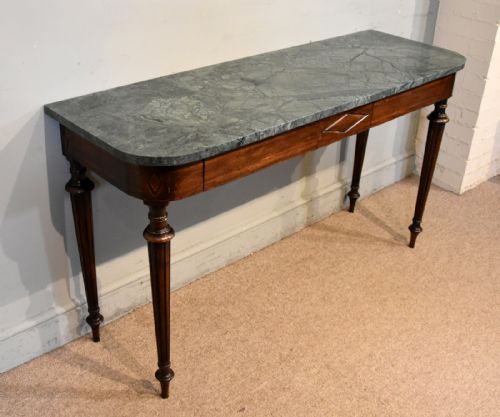
Certain examples incorporate contrasting marble tops or carved elements to define the legs and frieze.
Listings feature rosewood combined with brass, mahogany, satinwood, boxwood, marble, giltwood, and leather across Georgian and nineteenth-century periods.
Judging execution
Quality separates through the precision of the brass inlay, the crispness of any carved wood details, and the depth of figure in the rosewood veneer.
The integration of secondary timbers, such as satinwood crossbanding or boxwood stringing, demonstrates the maker's technical skill and expenditure of time.
Structural stability in freestanding pieces and the alignment of fold-over mechanisms on card and games tables indicate superior workshop execution.
The Georgian Rosewood Console Glossary
- Console table
- A table designed to stand against a wall, sometimes supported by brackets or console legs. They frequently function as side furniture in hallways or principal rooms.
- Sofa table
- A rectangular table traditionally placed in front of or behind a sofa, equipped with drop leaves on either end. These pieces often feature double pedestals or trestle supports.
- Card table
- A folding table designed for playing cards, containing a hinged top that opens to reveal a baize-lined playing surface. Many examples double as side or console tables when closed.
- Crossbanding
- A strip of veneer applied perpendicularly to the grain of the main surface around the border. It provides a decorative framing effect using contrasting timbers like satinwood or burr yew.
- Parcel gilt
- Partially gilded surfaces where gold leaf highlights specific carved details or mouldings. This technique accents the architectural lines of the piece.
Georgian Rosewood Console: Frequently Asked Questions
How were these tables used?
Original usage involved serving as sideboards, writing surfaces, or gaming stations in affluent homes. Fold-over card tables opened during evening entertainment.
Library and sofa tables provided specialised surfaces for reading and social gatherings. Their freestanding nature allowed placement in the centre of rooms as well as against walls.
How do I live with rosewood furniture?
Living with these tables requires keeping them away from direct sunlight and radiators to prevent timber splitting and veneer lifting. Regular dusting with a dry cloth maintains the polish.
Because rosewood is dense and dark, placing the console against a light wall helps define its silhouette. Use coasters to protect the French polished surface from moisture.
How do I tell periods apart?
Distinguishing periods relies on observing stylistic markers such as brass inlay, leg shapes, and secondary woods. Earlier George III pieces often show restrained classical lines.
Regency and late Regency pieces introduce bolder brass mounts, concave or parcel-gilded legs, and elaborate crossbanding. Nineteenth-century interpretations may incorporate marble tops or heavier carvings.