
English Regency Clock
An English regency clock brings precision engineering and architectural cabinetry together in a timepiece designed to anchor a room.
English Regency Clock
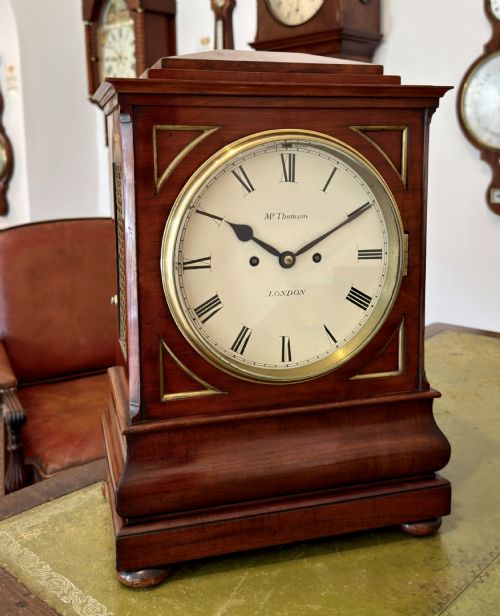
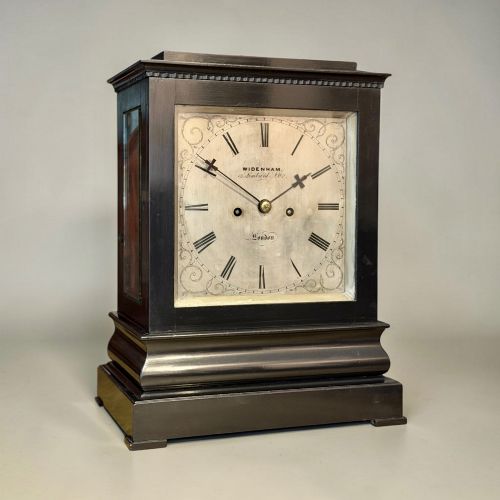
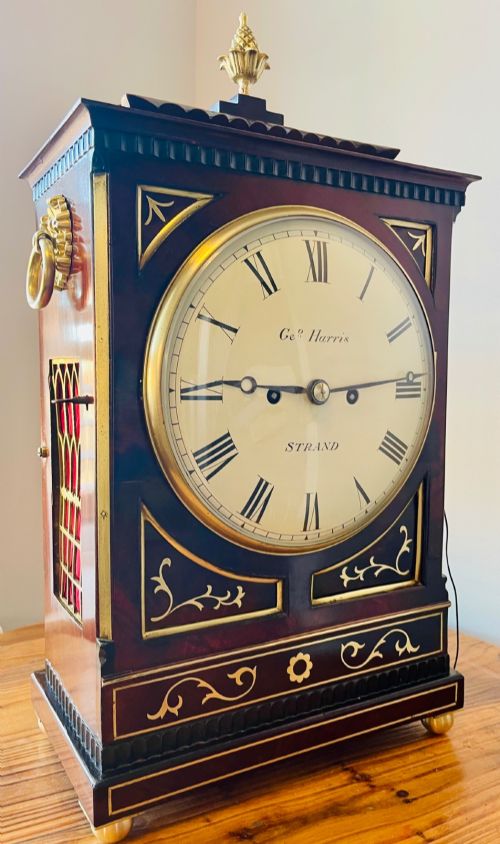
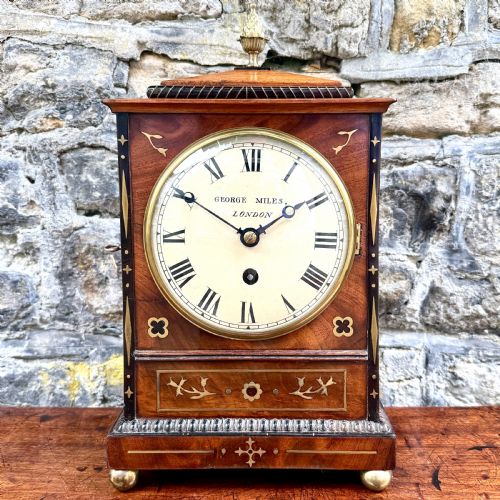
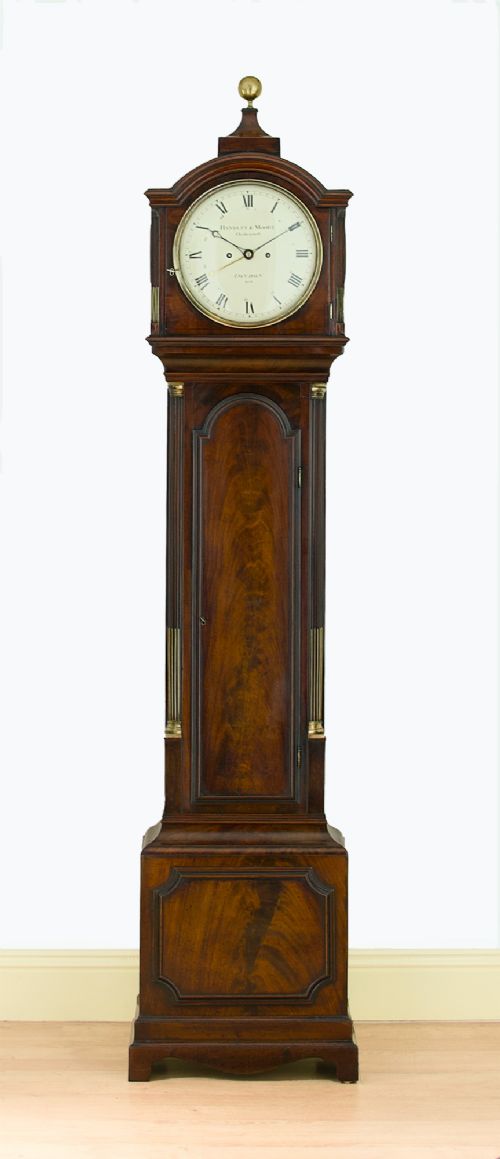
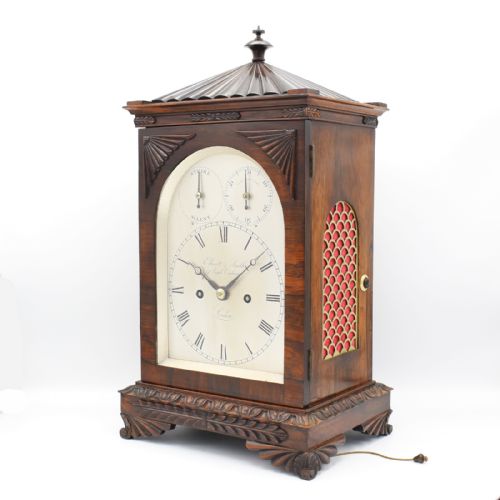
When you search for an English regency clock, you encounter timepieces spanning the Georgian, Regency, and early Victorian periods, with mahogany and rosewood cases appearing most frequently.
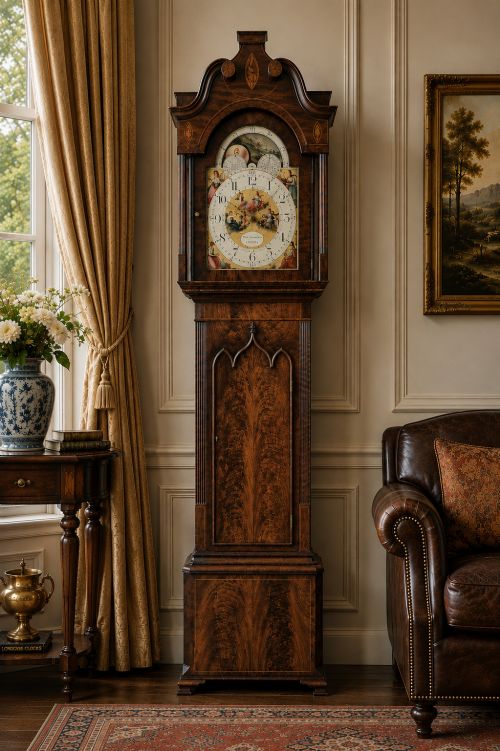
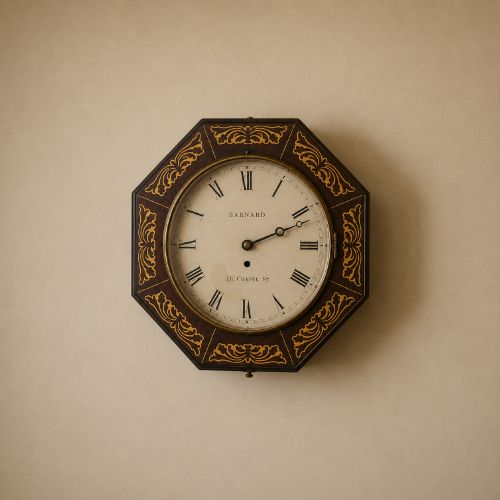
The selections range from tall longcase and grand bracket clocks to compact mantel timepieces and octagonal wall dials designed for domestic and public spaces.
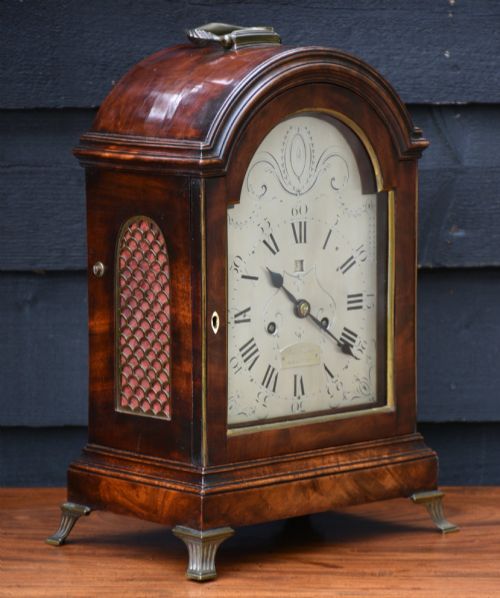
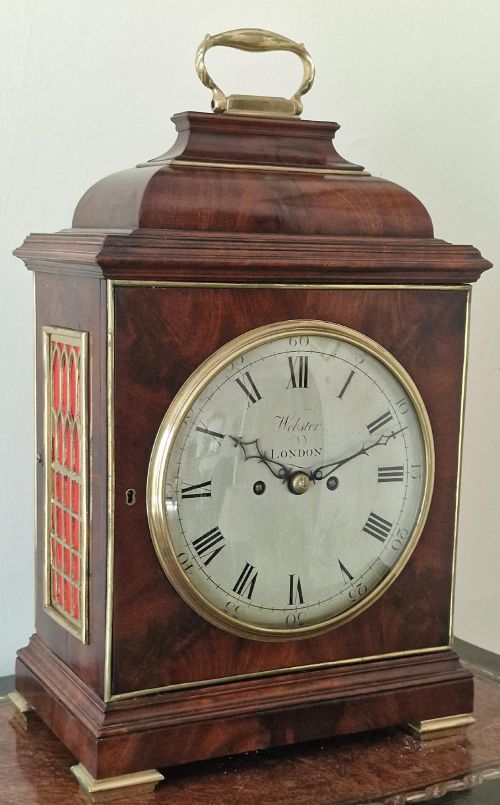
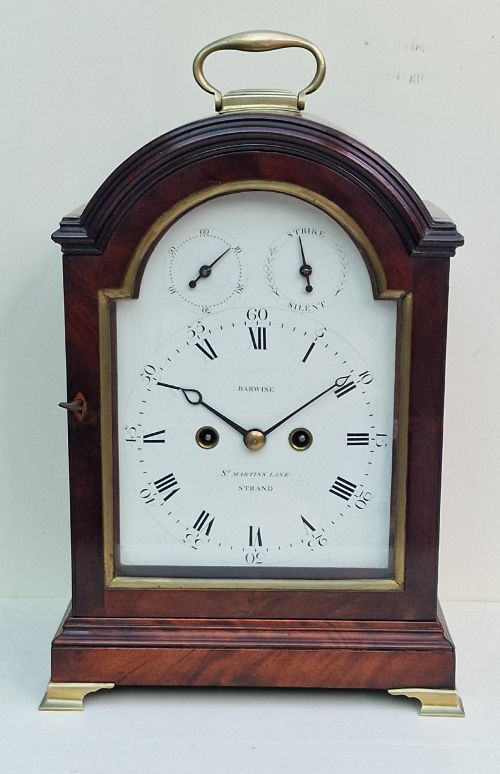
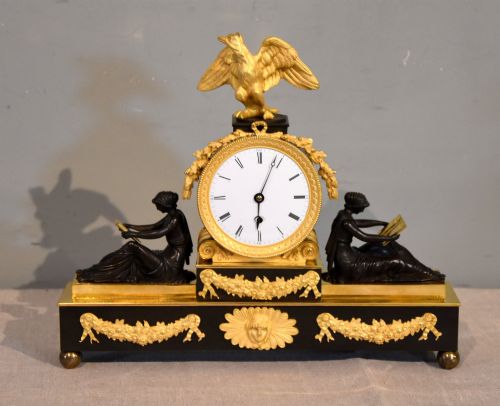
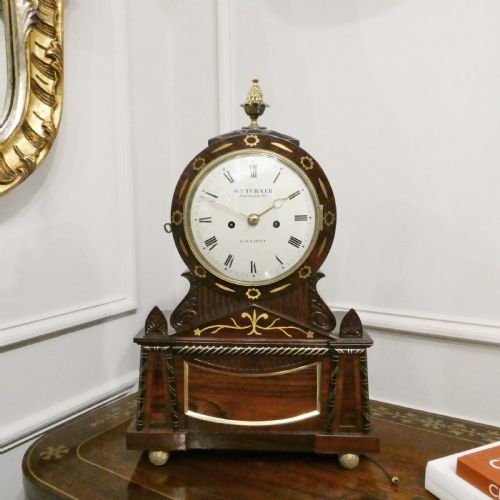
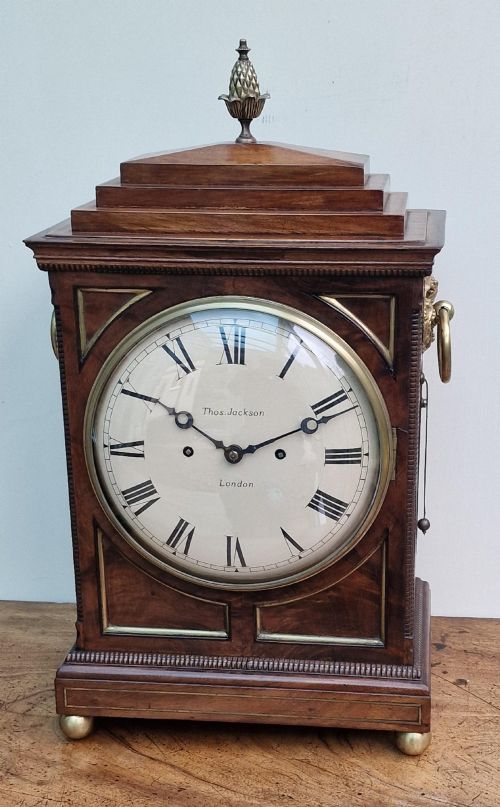
Mantel and bracket clocks dominate the listings, often featuring fusee movements housed in rich timber or gilt bronze cases characteristic of the early nineteenth century.
Materials and Construction
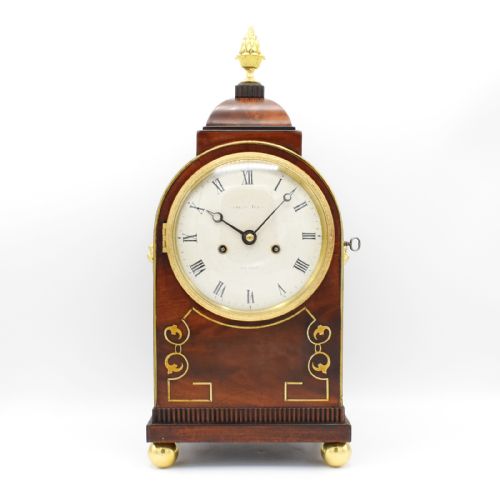
Cabinetmakers utilised dense timbers such as mahogany, rosewood, and ebonised wood, frequently embellishing the surfaces with inlaid brass lines and brass mounts.
Dial construction typically involved painted enamel, silvered metal, or convex wood, protected by glass bezels set within sturdy wooden or cast metal frames.
Mechanically, these pieces rely on brass fusee movements to maintain even tension on the chain or cord as the mainspring unwinds.
Some wall dials bear the cryptic stamp GWR, marking time for the Great Western Railway.
Craftsmanship and Proportion
Superior examples demonstrate meticulous proportion in the case architecture and crisp, well-defined brass inlay or ormolu casting rather than heavy or clumsy detailing.
The refinement of the movement itself, signed by recognised makers, separates standard production items from pieces executed with exceptional mechanical ambition.
Thomson of London·Widenham of London·Handley and Moore·Samuel Kellett·Ellicott and Smith·Baetens London·Thomas Jackson·George Orpwood·Bush of London·L Vick of Stroud·Spurge Dunmow·Viner London·Seller of Reading·Thomas Moss·William Moon London·Cording of London·Litherland Davies·John Bull of Bedford·Des Granges·John Barwise·Arnold and Frodsham·James Tupman·Thomas Lindey·George Yonge·Perigal and Duterrau
The English Regency Clock Glossary
- Fusee
- A conical pulley used in a clock movement to equalise the torque of the mainspring as it runs down. This mechanism ensures consistent timekeeping from a fully wound spring to an unwound one.
- Bracket clock
- A portable household clock originally designed to sit on a wall bracket or a table. Many examples feature swing handles for carrying between rooms.
- Drop dial clock
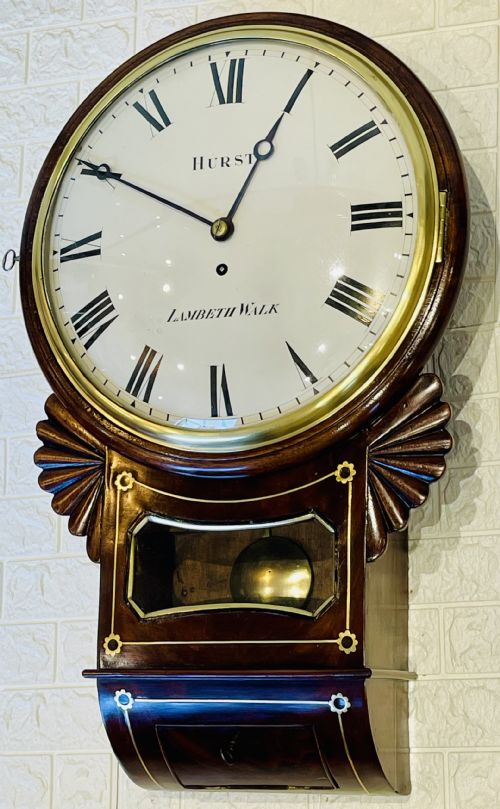
- A wall clock featuring a circular dial above a short wooden trunk or drop case that houses the pendulum. These were common in railway offices and public buildings.
- Ormolu
- Gilded bronze ornamentation applied to clock cases during the period. The technique involves fusing a mixture of gold and mercury to a bronze base.
- Moonphase
- A dial mechanism tracking the phases of the lunar cycle. It appears beneath an arched aperture on grander longcase and bracket clock dials.
English Regency Clock: Frequently Asked Questions
How do I wind an English regency clock?
Most fusee movements require a specific winding key inserted into the dial face to tension the mainspring via the cord or chain. Care must be taken not to overwind the mechanism.
Consult the winding arbors carefully to establish whether the clock strikes or functions purely as a timekeeper before applying pressure.
Where should I place a bracket clock?
These clocks sit comfortably on heavy sideboards, mantelpieces, or dedicated wall brackets where vibrations are minimal. Placement away from direct sunlight preserves the timber finish.
Ensure the surface is entirely level so the pendulum swings with an even beat and the escapement does not stall.
How do I tell a Regency clock from a Victorian one?
Regency clocks generally display cleaner architectural lines, subtle brass inlay, and restrained classical motifs reflecting early nineteenth-century design tastes. Victorian pieces often introduce heavier proportions and more ornate carving.
Examining the maker signature and secondary woods inside the case provides further context for dating the piece accurately.
Do wall clocks require a pendulum?
Drop dial wall clocks rely on an internal pendulum swinging within the lower case to regulate the gear train. The correct suspension spring length is vital for accurate timekeeping.
Securing the pendulum during transport prevents damage to the delicate suspension spring and the backplate.