
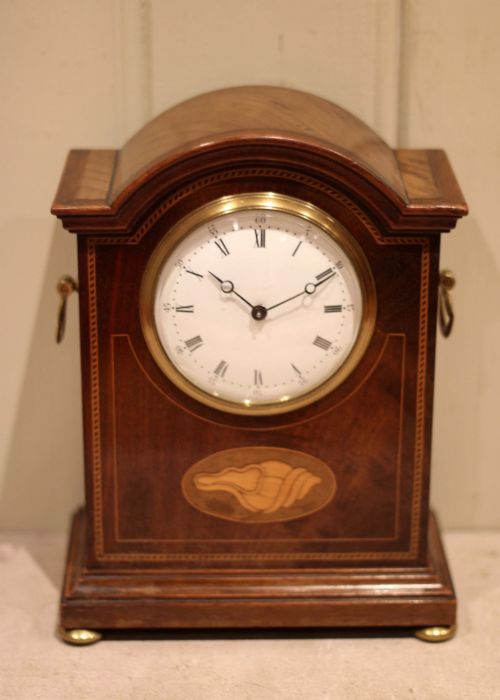
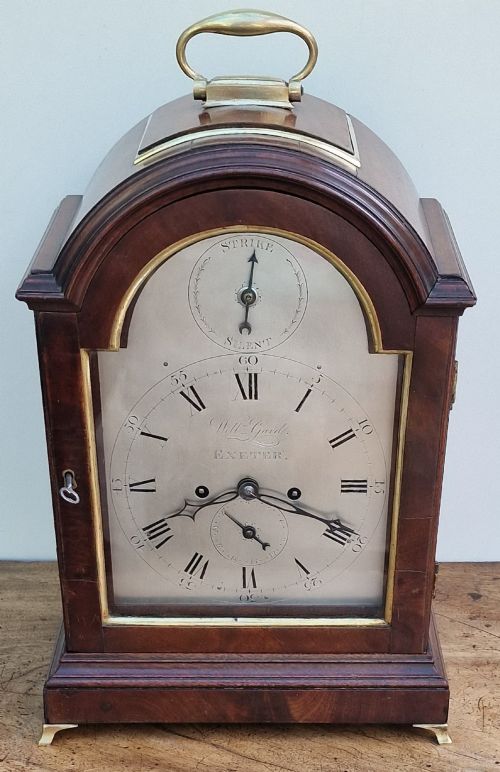
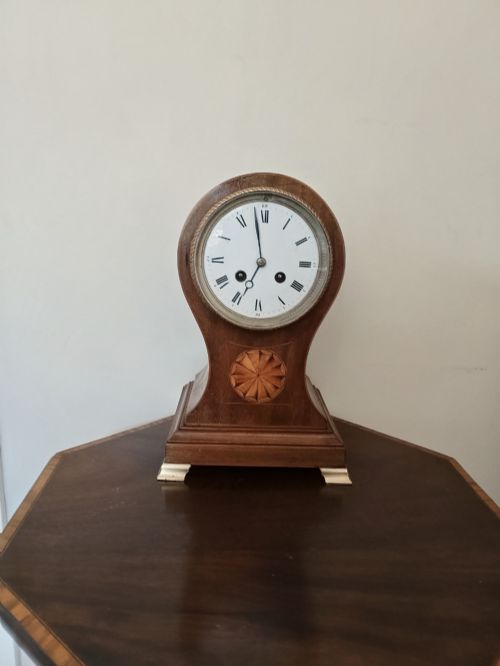
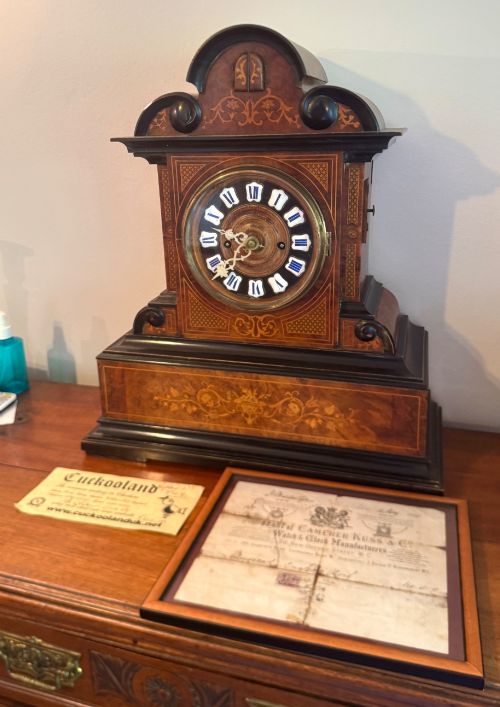

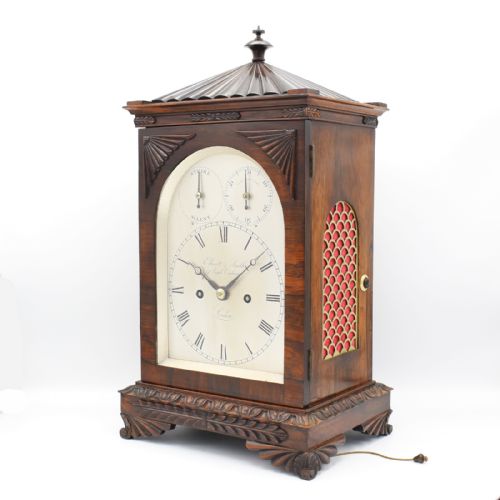
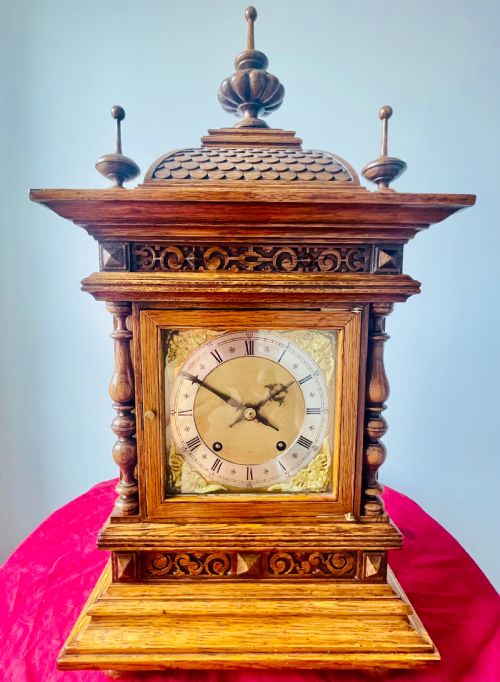
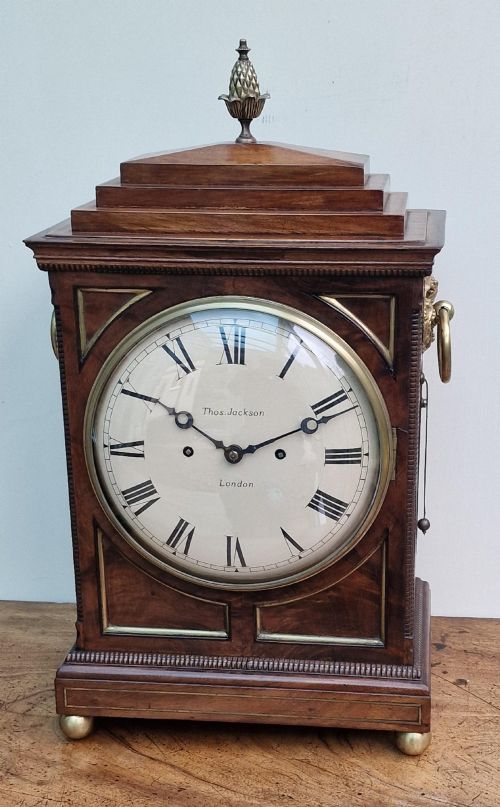
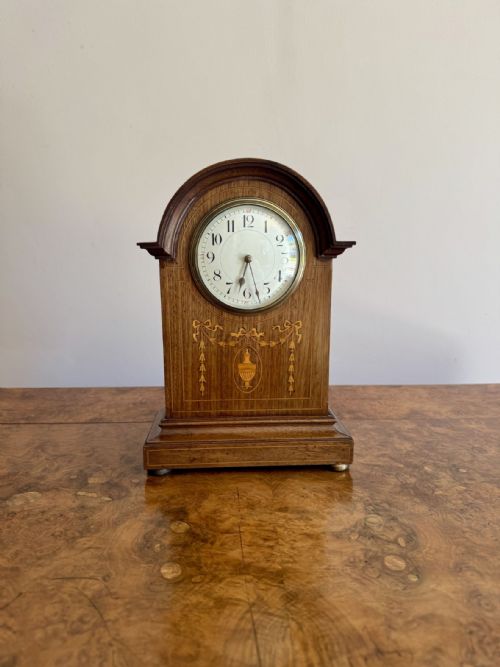


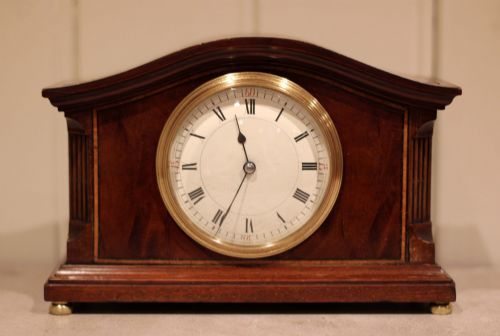

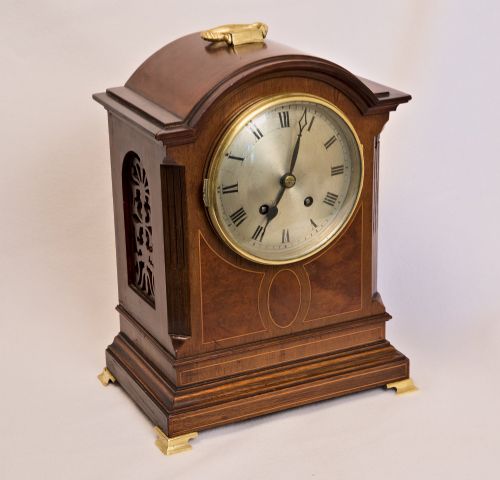
Brown Wooden Bracket Clock
A brown wooden bracket clock brings architectural weight and precision timekeeping to a room, drawing the eye with rich timber grain and traditional dial work.
Brown Wooden Bracket Clock
When searching for a brown wooden bracket clock, buyers encounter portable timepieces designed historically to sit on brackets or table surfaces. The pieces listed on this page span several centuries and styles, ranging from Georgian and Regency eras through to the Victorian period, Edwardian years, and mid-twentieth century designs. Mahogany and walnut dominate the selection, often complemented by satinwood inlay, oak, and brass mounts.
The forms vary from traditional arched and lancet top cases to library clocks and miniature striking models. Makers recorded in the inventory include provincial watchmakers alongside notable names like Mappin & Webb and Dent, reflecting both domestic output and specialised London workshops. Buyers are most likely to meet mahogany examples dating from the nineteenth and early twentieth centuries, fitted with enamel dials and glass panels.
How they were made
The construction relies heavily on dense timbers such as mahogany, walnut, and oak, selected for stability and polished to a deep lustre. Cabinetmakers shaped these woods into architectural cases, frequently incorporating satinwood inlay, ebony stringing, or brass bracket feet and carrying handles.
Internal movements use brass gears and fusee or spring-driven mechanisms, often paired with white enamel dials protected behind bevelled glass doors. Dial surrounds and bezel mounts utilise cast brass, while movements themselves were frequently engraved by the maker.
What varies in quality
Quality rests in the crispness of the cabinetwork and the refinement of the dial execution, distinguishing standard production pieces from master-built examples. Timber selection plays a primary role, with finely figured mahogany or rich walnut veneer marking out superior pieces.
The sophistication of the internal movement further separates the range, where signed plates, complex striking trains, and fusee mechanisms demonstrate superior craftsmanship compared to simpler timepieces.
William Gard Exeter·Mappin & Webb·Ellicott & Smith·Winterhalder·Thomas Jackson London·Bush of London·L Vick Stroud·Webster Cornhill London·Thomas Moss·Turner of London·S Simpson Southampton·Dent·Cording of London·Connell of London·W Burton·Piggin Norwich·Geo Carter Hackney·Wilkinson Leicester·J Kingerley Manchester·Hyde of Salisbury
The Brown Wooden Bracket Clock Glossary
- Fusee
- A conical pulley used in clock movements to maintain an even tension on the gear train as the mainspring unwinds. This mechanism improves timekeeping accuracy across the power reserve.
- Bracket clock
- A portable spring-driven clock originally designed to sit upon a wall bracket to project sound more effectively. Over time the term came to describe table and mantel clocks of similar architectural proportion.
- Lancet top
- A clock case shape featuring a pointed, gothic arch at the summit, popular during the nineteenth century. This silhouette draws the eye upward and provides a slender profile.
- Timepiece
- A clock that tells the time without incorporating a striking or chiming mechanism. These movements focus purely on the escapement and gear train for temporal measurement.
- Enamel dial
- A clock face made by fusing powdered glass to a metal substrate at high temperature, producing a glossy white surface. Roman or Arabic numerals are then painted onto the glaze.
Brown Wooden Bracket Clock: Frequently Asked Questions
Where should I place a bracket clock?
These clocks sit well on sturdy mantelpieces, bookcases, or dedicated wall brackets where the timber case can be appreciated from multiple angles. Stability is essential to keep the pendulum or balance wheel beating evenly.
Avoid placing them in areas subject to direct sunlight or damp conditions, as fluctuations in temperature can affect the wood and the movement's lubrication.
How do I tell a Georgian clock from a Victorian one?
Georgian examples often display restrained classical proportions, architectural mahogany cases, and understated brass dial work. Makers during this era frequently signed directly on the dial face or backplate.
Victorian pieces tend to show heavier proportions, more ornate carving, and sometimes darker walnut timbers. Movement complexity also increased during the Victorian period with the widespread adoption of quarter-striking trains.
What is the difference between a timepiece and a striking clock?
A timepiece measures and displays the hours and minutes without producing any sound on the hour or half-hour. Its movement is dedicated solely to the gear train required for timekeeping.
A striking clock includes an additional gear train and hammer mechanism that sounds bells or gongs at set intervals. This requires extra spring power and a more complex internal layout.